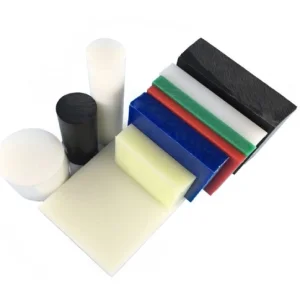
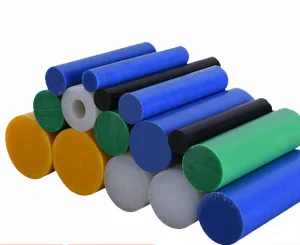
High-Performance Engineering Materials & Precision Components
Direct from leading polymer and elastomeric manufacturing facilities: heavy-duty stock, CNC finished hardware, and impact attenuation assemblies engineered for demanding OEM deployments.
Engineering Fundamentals: Mechanics of Elastomeric Blind Expansion Fasteners
Understanding how captive threaded elastomeric inserts solve chronic NVH (Noise, Vibration, and Harshness), galvanic corrosion, and hermetic sealing challenges across critical mechanical interfaces.
Radial Bulbing Dynamics
Unlike rigid rivet nuts, rubber nuts (commonly known as well nuts or elastomeric expansion nuts) feature a flanged chloroprene (Neoprene) or EPDM sleeve with an internally vulcanized brass or stainless steel insert. Under axial screw tightening torque, the ductile elastomer deforms into a thick, uniform annular radial bulb behind blind thin-sheet substrates, providing robust clamping force without denting or scratching sensitive composite or painted panels.
NVH & Resonant Decoupling
Solid mechanical joints act as structural sound bridges that amplify harmonic resonance. The elastomeric body of a rubber nut functions as a built-in viscoelastic spring-damper system. By dissipating kinetic vibration energy through internal molecular friction, rubber nuts decrease resonant transmission by up to 82% across 20 Hz to 2,000 Hz frequencies, protecting delicate electronics and automotive assemblies from fatigue failure.
Hermetic Seal & Galvanic Isolation
When compressed, the resilient elastomeric flange flows micro-conformally across uneven bore tolerances and panel surfaces, achieving an IP67-rated waterproof and dustproof seal against moisture, hydrocarbons, and ozone. Furthermore, it completely breaks electrical continuity between dissimilar metals (e.g., stainless steel bolts and carbon fiber or magnesium skins), preventing catastrophic galvanic electrolytic oxidation.
Global Manufacturing Landscape: What Distinguishes Top Rubber Nut Factories
The transition from commoditized rubber molding to aerospace-grade fastening hardware requires strict raw compound formulation, in-mold chemical bonding, and zero-defect quality assurance.
Polymer Compounding Control
Premier factories operate dedicated internal Banbury mixers and twin-screw extruders. Controlling carbon black dispersion, plasticizer ratios, and sulfur/peroxide curing packages ensures consistent durometer hardness (50 to 75 Shore A) and prevents embrittlement or compression set degradation over extended thermal cycling.
In-Mold Silane Chem-Bonding
Delamination between the internal metal insert (brass, aluminum, or 316 stainless) and the outer rubber sleeve is the number one cause of fastener failure. World-class plants utilize multi-stage chemical degreasing, zinc phosphate conversion coating, and high-temperature silane bonding agents that achieve a failure-proof cohesive bond stronger than the elastomer tear strength.
Cryogenic Deflashing & CNC Trimming
Flash on the sealing flange compromises waterproof integrity. Modern factories employ liquid nitrogen cryogenic tumbling deflashers combined with automated robotic laser inspection to eliminate particulate flash and maintain outer diameter tolerances within ±0.05 mm for rapid automated assembly.
High-Precision Thread Integrity
Internal inserts are precision turned on multi-axis Swiss CNC lathes using C3604 lead-free eco-brass or SUS316 austenitic stainless steel. Every thread is verified using optical sorting machines for 6H/2B thread pitch, ensuring zero burrs, cross-threading resistance, and smooth screw engagement under dynamic field installations.
Elastomeric Formulations: Comparative Performance Matrix
Selecting the optimal polymer base depends directly on operating thermal envelopes, mechanical load vectors, UV/ozone exposure, and environmental chemical contact.
| Elastomeric Compound | Operating Temp | Tensile Strength | Chemical & Oil Resistance | Ozone & UV Resistance | Optimal Industrial Application |
|---|---|---|---|---|---|
| Chloroprene (Neoprene / CR) | -35°C to +105°C | 12 - 18 MPa | Moderate Fuels / Greases | High | General automotive body panels, HVAC mounting, motorcycle fairings |
| EPDM (Terpolymer Rubber) | -45°C to +135°C | 10 - 16 MPa | Poor Hydrocarbons / Acids Excellent | Superior | Outdoor solar racking, architectural cladding, marine rail mounts |
| Nitrile Butadiene (NBR) | -30°C to +110°C | 14 - 20 MPa | Superior Fuel & Mineral Oils | Moderate | Engine bays, agricultural machinery fuel tanks, hydraulic manifolds |
| Fluorocarbon (FKM / Viton) | -20°C to +220°C | 10 - 15 MPa | Extreme Petrochemicals & Solvents | Maximum | Aerospace propulsion cowling, chemical processing, high-temp exhaust guards |
| Silicone Rubber (VMQ) | -60°C to +200°C | 6 - 10 MPa | Moderate | Exceptional | Medical diagnostics equipment, food-grade instrumentation, cryogenic chillers |
Over-tightening is the primary failure mode of elastomeric nuts. Unlike all-metal fasteners that rely on bolt stretch, rubber nuts function via controlled radial bulge. Exceeding recommended seating torque (typically 1.2 Nm to 3.5 Nm for M4 to M8 sizes) causes insert push-through, thread stripping, or severe elastomer extrusion. Factory-calibrated torque limiters or built-in shoulder stop collars are strongly recommended for high-speed production lines.
Macro Industry Solutions: Engineering Applications & Global Procurement
From electric vehicle battery enclosures to deep-sea navigation hardware, specialized rubber nuts deliver game-changing structural reliability.
Automotive & Electric Vehicles
Used extensively in automotive lighting pods, bumper fascias, luggage roof rails, and EV battery management system (BMS) covers. Rubber nuts absorb high road vibrational harmonics, prevent stress cracks in brittle polycarbonate lamp housings, and eliminate thermal expansion clatter between dissimilar plastic and aluminum body panels.
Marine & Offshore Navigation
Yacht dashboards, sonar transducer brackets, outboard motor cowling, and marine radar masts rely on 316 stainless/EPDM rubber nuts. They withstand continuous salt-spray exposure, dynamic wave slap cavitation, and blind-hole mounting into fiberglass (FRP) and rotomolded polyethylene hulls without cracking delicate gel coats.
Industrial Machinery & Automation
In automated robotics, semiconductor manufacturing conveyors, and heavy diesel generators, rubber nuts mount delicate sensor brackets, safety interlock switches, and access doors. By providing acoustic attenuation, they safeguard optical proximity sensors from high-frequency false triggers caused by mechanical shaking.
When selecting a qualified manufacturing partner for rubber nuts, procurement directors must mandate: (1) ASTM D2000 rubber classification line calls, (2) IATF 16949 automotive quality certification for batch PPM control, (3) Automated 100% optical eddy-current sorting for thread presence, and (4) Verified salt-spray chamber test reports (ISO 9227) exceeding 720 hours for internal metal inserts.
Regulatory Compliance Standards & Future Engineering Roadmap
Navigating strict international trade mandates while integrating next-generation material science into smart elastomeric fastening solutions.
RoHS & REACH Compliance
Global supply chains require full trace-metal disclosure. Tier-1 factories ensure compliance with EU RoHS Directive 2011/65/EU and REACH SVHC criteria by deploying lead-free CW510L brass alloys and non-toxic, PAH-free (Polycyclic Aromatic Hydrocarbons) carbon black additives.
Recyclable TPV & Bio-Elastomers
In response to circular economy mandates, advanced polymer labs are replacing thermoset vulcanized rubber with cross-linked Thermoplastic Vulcanizates (TPVs) and bio-based EPDM derived from sugarcane ethanol, enabling 100% recyclability at vehicle end-of-life.
Smart Fasteners & Sensor Integration
The emerging technological frontier incorporates conductive carbon nanotube networks directly into the elastomeric matrix. These piezoresistive "smart rubber nuts" measure real-time bolt clamping tension and vibrational frequency shifts, alerting maintenance crews via IoT before fastener failure occurs.
Engineering FAQ: Answers for Procurement & Design Teams
Direct answers from application engineers to help you evaluate, specify, and install elastomeric blind fasteners across your projects.
Engineered Polymer Shapes, Heavy Cushions & Machined Stock
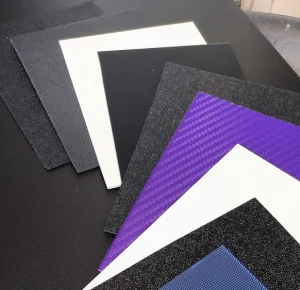
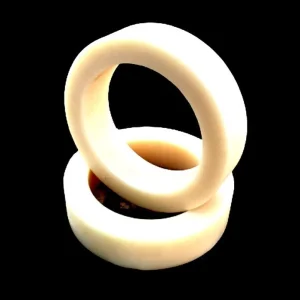
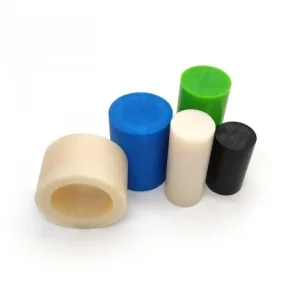
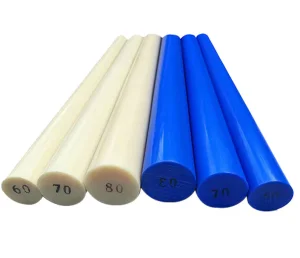
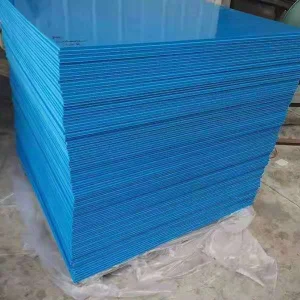
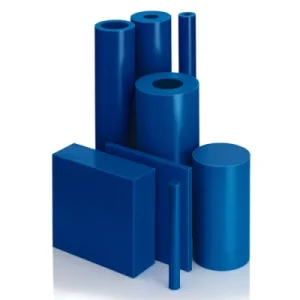
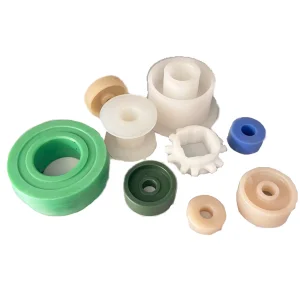
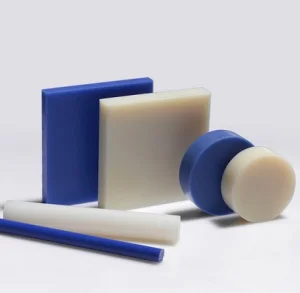
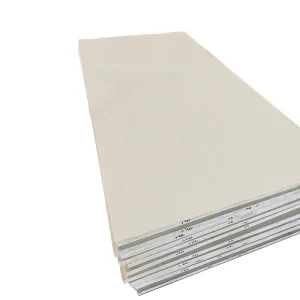
Explore our full scope of heavy-duty polymer products, impact vibration cushions, extruded nylon rods, and customized engineering plates manufactured to international tolerances.