
Extrusion Stock
Featured Semi-Finished Engineering Stock & Machined Billets
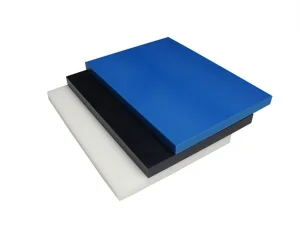
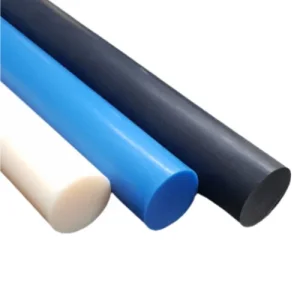
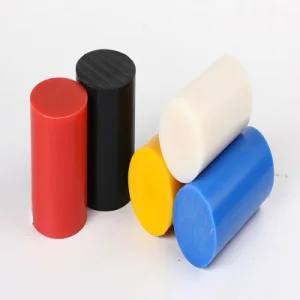
Standard and custom calibrated round bars, hollow profiles, and polymer plates engineered directly for tight-tolerance CNC turning centers and automated production lines.
Industry Intelligence
The Engineering Metamorphosis of Polyoxymethylene (POM-C / POM-H)
As global original equipment manufacturers transition away from brass, bronze, and die-cast zinc to lightweight structural polymers, POM round bars represent the forefront of metallurgical replacement.
68%
Weight Reduction vs Brass
0.22%
24h Equilibrium Water Abs.
3,100 MPa
Standard Tensile Modulus
±0.02 mm
CNC Repetitive Tolerance
Centerline Porosity Elimination
Conventional heavy-wall extruded POM bars suffer from thermal contraction voids. Famous POM rod factories employ continuous liquid-bath controlled cooling and multi-stage downstream draw calibrators to yield 100% void-free solid cores optimized for high-pressure fluid valves.
Sub-Micron Tribological Performance
Polyacetal exhibits native boundary lubrication under continuous kinematic friction. By incorporating internal silicone, PTFE additives, or carbon fiber matrices, modern POM rods provide dynamic friction coefficients as low as µ = 0.15 without auxiliary hydrocarbon greases.
Controlled Annealing Cycles
Residual extrusion stress causes instantaneous deflection during CNC turning. Our proprietary inline dry-air thermal annealing runs continuously for 48 hours, yielding zero-deflection billets capable of holding tight ISO 2768-mK tolerances without post-machining warping.
Quantitative Analysis
Engineering Polymer Comparison Matrix
Comprehensive material benchmarks compiled by SHUNDA polymer engineers to assist design authorities in specifying polyacetal versus polyamide and high-performance polyolefins.
| Property Parameter | Test Standard | POM-C (Polyacetal Copolymer) | PA66 (Extruded Polyamide) | UHMWPE (Molecular Weight >4M) |
|---|---|---|---|---|
| Specific Density | ISO 1183 | 1.41 g/cm³ | 1.14 g/cm³ | 0.93 g/cm³ |
| Yield Tensile Strength | ISO 527 (50 mm/min) | 68 - 72 MPa | 82 - 88 MPa (Dry) | 21 - 25 MPa |
| Tensile Modulus of Elasticity | ISO 527 | 2,900 - 3,200 MPa | 3,100 MPa (Conditioned 1,600) | 700 - 900 MPa |
| 24-Hour Water Absorption (23°C) | ISO 62 | 0.20% | 1.80% - 2.20% | <0.01% |
| Dimensional Stability Index | Internal Empirical | Class 1 (Superior) | Class 3 (Moderate Shift) | Class 2 (Thermal Sensitive) |
| Continuous Service Temp | UL 746B | -40°C to +105°C | -30°C to +95°C | -150°C to +80°C |
| Machinability & Chip Breaking | CNC Turning Index | Continuous fine ribbons/powders | Stringy, high thermal accumulation | Ductile, requires razor tooling |
Procurement Strategy
Resolving Global Supply Chain Challenges for Industrial Buyers
Modern purchasing teams face compounding supply chain risks ranging from resin price volatility to non-compliant raw materials. Here is how Tier-1 enterprises de-risk their supply pipelines.
Batch Traceability
Every shipment carries an EN 10204 3.1 Material Test Report (MTR). Incoming polyacetal raw resins undergo Melt Flow Index (MFI) and density checks before batch extrusion initialization.
Total Cost Optimization
Procuring custom-calibrated rod diameters eliminates unneeded material waste on CNC lathe roughing cycles, lowering total part cost by up to 28% compared to off-the-shelf oversized stock.
Export Quality Assurance
Precision centerless grinding guarantees circularity within 0.01 mm. Rods receive polyethylene heat-shrink bundling and fumigated palletization, securing products across multi-modal transits.
Local Distribution Buffering
We provide scheduled releases and buffer inventory management for long-term supply contracts, insulating production facilities from container shipping delays and sudden spikes in domestic demand.
Macro Application Profiles
Cross-Industry Mission-Critical Implementations
From subsea petroleum actuators to robotic end-effectors, discover how precision POM bar formulations drive structural longevity across tier-one sectors.
High-Speed Food & Beverage Packaging
POM-C is chemically inert to washdown chemicals (surfactants, alkaline detergents) and holds FDA/EU 10/2011 compliance. It serves as star wheels, timing screws, and conveyor guide tracks without moisture swelling.
Fluidics, Valves & Water Metering
With water absorption below 0.22%, POM replaces brass in potable water assemblies, balancing spools, and diaphragm pistons, eliminating calcification, lead leaching, and galvanic corrosion.
Automotive Fuel & Safety Systems
Highly resistant to oxygenated fuels, bio-diesel blends, and aromatic hydrocarbons, POM is machined into fuel sender modules, seat-belt tensioner reels, and steering column bushings.
Electrical & Electronic Hardware
Dielectric strength up to 40 kV/mm combined with surface tracking resistance allows POM rods to function as terminal blocks, high-voltage insulator shafts, and micro-switch actuator pins.
Industrial Automation & Robotics
Robotic arm weight optimization demands rigid, lightweight structural materials. POM provides high stiffness-to-weight efficiency for pneumatic gripper mounts, linear guide shoes, and cable carrier pins.
Medical & Diagnostic Analytical Equipment
Medical-grade (USP Class VI) acetal formulations resist multiple autoclave cycles, sterilizing radiation, and organic solvents, finding use in analytical centrifuge carriages, handles, and pump impellers.
Assurance & Governance
Global Compliance Standards & In-House Laboratory Control
Manufacturing repeatability verified through calibrated instrumentation. We operate under stringent ISO 9001:2015 frameworks with zero tolerance for out-of-spec deliveries.
RoHS & REACH Compliance
Fully compliant with EU 2015/863 (RoHS 3) and EC 1907/2006 (REACH SVHC). Every resin batch is screened for heavy metals, phthalates, and halogenated flame retardants.
FDA 21 CFR 177.2470
Our natural-grade white polyacetal rods conform directly to FDA requirements for repeated contact with aqueous, fatty, and dry foods in industrial food processing machines.
Centerless Grinding Cell
Rods up to Ø250 mm can be supplied raw-extruded (tolerance +0.5/+2.0 mm) or precision centerless ground to h9, h8, or h7 for seamless Swiss-type screw machine feed.
Ultrasonic NDT Scanning
Heavy-diameter round bars (Ø80 mm to Ø350 mm) are 100% subjected to ultrasonic non-destructive testing (NDT) to verify absence of internal thermal voids and micro-cracks.
R&D Horizons
Technology Roadmap: The Next Generation of POM Alloys
Discover how advanced polymer science is redefining polyacetal performance limits for cleanroom semiconductor lines, e-mobility, and circular economies.
Nano-Carbon Antistatic POM-ESD
Integrating multi-walled carbon nanotubes (MWCNTs) yields surface resistivities of 10^6 to 10^9 Ω/sq without carbon particle shed, enabling ultra-pure electrostatic dissipation in semiconductor wafer-handling apparatus.
Bio-Attributed Circular Feedstock
Aligning with Scope 3 corporate decarbonization targets, our next-stage pilot lines incorporate mass-balanced bio-methanol feedstock, reducing the cradle-to-gate carbon footprint of extruded acetal shapes by over 45%.
Optically Detectable Metal-Filled Blends
For food processing hygiene, micro-fine magnetic compounds compounded into POM allow standard metal detectors and X-ray vision systems to pick up fragments as minute as 1.0 mm³, safeguarding processing streams.
Advanced Product Spectrum
High-Performance Semi-Finished Stock & Custom Fabrications
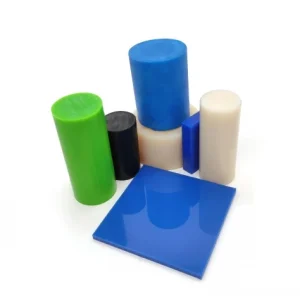
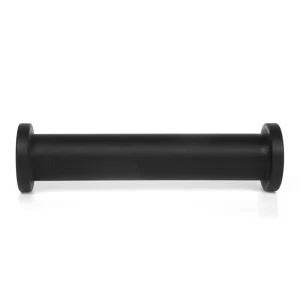
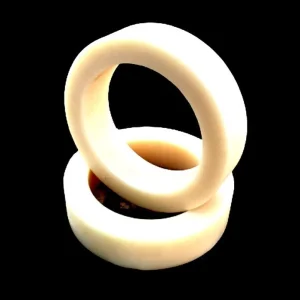
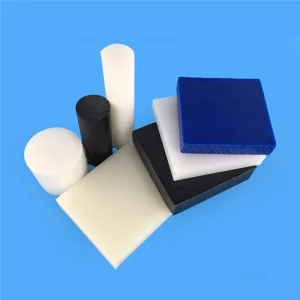
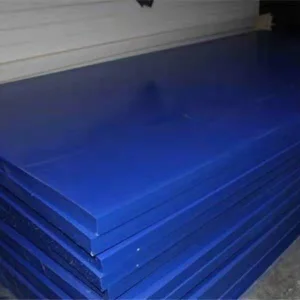
Explore our complete range of high-hardness engineering plastics, crane outrigger blocks, hollow tubes, and custom CNC billets ready for swift international dispatch.

Technical FAQ
Engineering & Procurement Frequently Asked Questions
Precise technical guidance regarding polymer selection, machining feeds, dimensional stabilization, and international shipping.
What is the structural difference between POM-C (Copolymer) and POM-H (Homopolymer/Delrin)?
POM-H (Homopolymer) offers approximately 10-15% higher tensile strength, rigidity, and hardness due to higher crystallinity, but suffers from centerline porosity in larger diameters and low resistance to strong bases. POM-C (Copolymer) provides zero centerline voids, superior resistance to hydrolysis, superior resistance to alkaline environments, and improved thermal stability over long operational lifespans.
How do Famous POM Rod Factories prevent internal voids and thermal stress?
Preventing internal voids requires precision screw profiling, high-pressure melt consolidation in downstream calibrators, and controlled, multi-stage cooling. Furthermore, high-integrity manufacturers run extensive dry-air or oil-bath annealing regimens at 140°C to 150°C for up to 48 hours to release frozen crystallization stresses before machining.
What tooling and feed speeds are recommended for CNC turning of POM rods?
Use positive-rake uncoated carbide or diamond-tipped (PCD) tools with ground razor edges to prevent material smearing. Maintain cutting speeds between 250 and 450 m/min, with feeds ranging from 0.15 to 0.35 mm/rev. Compressed air vortex cooling is preferred over water-soluble emulsions to eliminate post-machining cleaning requirements.
Can extruded POM round bars hold DIN ISO 2768-mK tolerances without post-curing?
Yes. Provided the raw bar has undergone complete factory stress-relief annealing, POM absorbs negligible ambient moisture (<0.22%), meaning components turned to final tolerance will retain exact dimensions during storage and operation, unlike Polyamide (PA6/PA66), which swells under humidity.
Are SHUNDA POM rods safe for continuous food contact machinery?
Our natural white and jet-black polyacetal semi-finished stock is produced from 100% virgin polymer resin conforming to FDA 21 CFR 177.2470 and European Framework Regulation (EC) No 1935/2004. Batch migration testing documentation is available with each container dispatch.
What is the standard production lead time and minimum order quantity (MOQ)?
Standard diameter rods (Ø10 mm to Ø150 mm in natural white and black) are maintained in high stock levels for immediate dispatch within 48 to 72 hours. Custom formulated colors, tight h8 centerless ground rods, or modified grades have an MOQ of 500 kg with an average production window of 10 to 14 days.