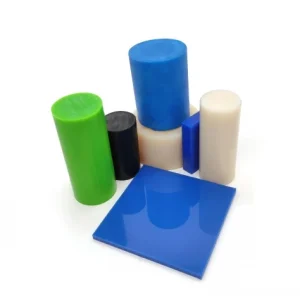
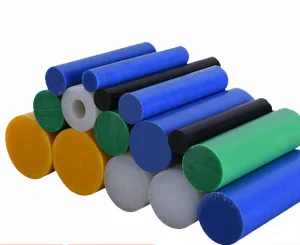
Primary Engineering Stock: Sheets, Rods & Industrial Plates
Explore qualified factory runs manufactured under ISO 9001:2015 strict melt controls and computer-calibrated thermal stabilization protocols.
1. The Global Landscape of Engineering Plastic Bar Manufacturing
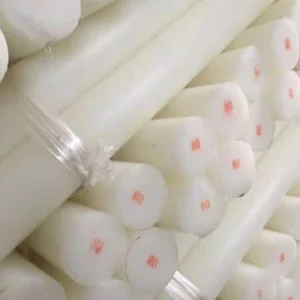
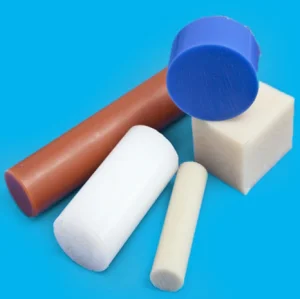
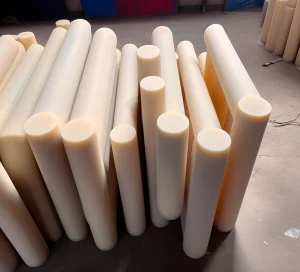
The international supply chain for solid and hollow engineering plastic bars (round bars, hexagonal rods, profiled square stocks) has evolved beyond basic polymer conversion into an exact science of polymer metallurgy.
Global semi-finished engineering shapes market valuation by 2028, expanding at 6.8% CAGR.
Weight reduction index achieved across mining & transport equipment replacing bronze and cast iron.
Density advantage of cast nylon (PA6G) versus commercial carbon steel, saving drive energy.
Precision grinding tolerances achievable on stress-relieved extruded POM and nylon rod profiles.
Across advanced OEM production bases in North America, Western Europe, and the Asia-Pacific region, heavy industries are orchestrating systemic transitions from non-ferrous metals (such as phosphor bronze, babbitt alloys, stainless steel 304/316, and ductile iron) toward high-crystallinity engineering plastic bars. The primary catalyst is not merely raw material acquisition costs, but rather Total Lifecycle Friction Economics. Operating rotating machinery without fluid lubricant dependencies eliminates environmental contamination while delivering superior galvanic isolation and vibration dampening.
Continuous Extrusion vs. Monomer Casting
While continuous extrusion dominates standard diameter runs (10mm to 200mm) of POM, ABS, HDPE, and PP, Monomer Casting (MC Nylon / PA6 Cast) utilizes liquid lactam polymerization inside precision heated molds. This pressureless anionic reaction accommodates colossal cross-sections up to 1,000mm in diameter, completely free of internal centerline porosity.
Annealing & Molecular Stress Relief
Premier export factories implement secondary liquid-oil or circulating air thermal annealing cycles spanning 24 to 72 hours. Controlled thermal soaking at 150°C to 170°C relieves freeze-in extrusion stresses, preventing catastrophic bar warping, center-line cracking, or diametrical distortion during high-speed CNC turning and milling.
Global Export Compliance Architecture
Reliable exporters maintain comprehensive traceability back to base monomers. Every certified consignment adheres to strict international directives: REACH (EC 1907/2006), RoHS 3 (EU 2015/863), FDA 21 CFR 177.1500 food-contact grades, and ASTM D5989 standard specifications for extruded and cast polymer shapes.
2. Engineering Plastic Bar Material Comparison & Physical Properties
Selecting the correct stock requires comparing tensile modulus, thermal deflections, friction coefficients, and chemical resistances under dynamic mechanical stress.
| Polymer Family | Common Name / Type | Density (g/cm³) | Tensile Strength (MPa) | Dynamic Coeff. of Friction (μ) | Continuous Max Temp (°C) | Key Machinability & Application Trait |
|---|---|---|---|---|---|---|
| PA6 / PA6G | Cast / Extruded Nylon | 1.14 - 1.16 | 75 - 88 | 0.25 - 0.35 (Dry) | 105°C | Supreme impact damping, ideal for large crane sheaves, gears, wear plates. |
| POM-C | Polyacetal / Delrin | 1.41 | 65 - 72 | 0.20 - 0.28 | 100°C | Zero moisture swell, razor-sharp edge retention for precision CNC valves. |
| UHMWPE | Ultra-High Mol. Wt. PE | 0.94 | 28 - 35 | 0.10 - 0.15 | 80°C | Unsurpassed sliding abrasion resistance; non-stick chutes and marine fendering. |
| PTFE | Teflon / Fluoropolymer | 2.16 - 2.20 | 22 - 32 | 0.04 - 0.08 | 260°C | Universal chemical inertia, cryogenic to extreme heat resistance, lowest friction. |
| ABS | Terpolymer | 1.05 | 40 - 50 | 0.35 - 0.45 | 75°C | Excellent thermoforming stability, surface plating receptivity, electronic enclosures. |
| HDPE / PP | Polyolefins | 0.91 - 0.96 | 25 - 38 | 0.22 - 0.30 | 80 - 100°C | Acid and alkali resistance, lightweight, cost-effective fluid tank manifolds. |
3. Sector-Specific Application Scenarios & Heavy-Industry Deployments
Where precision bars are deployed globally: from offshore energy rigs and bulk handling conveyors to high-speed pharmaceutical packaging systems.
Heavy Lifting: Crane Wire Rope Sheaves
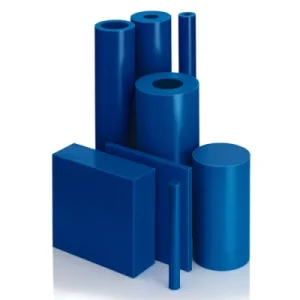
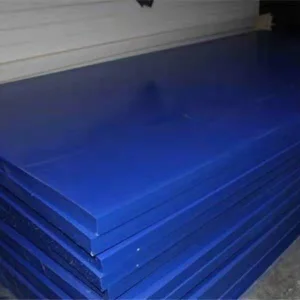
Steel wire ropes flex constantly over pulleys in port mobile cranes and offshore hoists. Substituting forged steel sheaves with Oil-Filled Cast MC Blue Nylon Bars reduces rope wear by up to 300%. The elastic modulus of cast polyamide cushions individual outer steel wire strands, preventing fatigue-induced micro-spalling while cutting rotating inertia.
Food & Beverage: High-Velocity Bottling Stars
Modern filling lines cycle through 80,000 glass or PET bottles per hour. Components must withstand aggressive caustic washdowns (pH 1 to 13) and steam sterilization. Polyacetal (POM-C) Solid Bars are CNC machined into star-wheels, guide rails, and timing screws, maintaining sub-millimeter tolerances without swelling from moisture absorption.
Mining & Dredging: Slurry Bushings & Liners
In quartz, copper, and iron ore extraction, aggregate slurries destroy ordinary bronze bushings within hundreds of operating hours. UHMWPE and Cast PA6G Bars with solid lubricant additions (MoS₂ - Molybdenum Disulfide) withstand severe abrasive gouging, embedding fine particulate matter into the resilient polymer skin to protect expensive drive shafts.
Chemical Plants: Hydrocarbon & Acid Valves
Petrochemical refineries and semiconductor wafer-fabrication plants demand zero chemical degradation. Pure Virgin PTFE & Reinforced PP/PVDF Rods serve as valve seats, stem packings, and distributor nozzles, completely eliminating stress-corrosion cracking across concentrated nitric, hydrochloric, and sulfuric acid streams.
Cold-Climate Marine Fenders & Port Quays
Harbor installations in sub-zero Arctic environments face brittle steel fractures. UHMWPE Solid Facing Bars exhibit exceptional Izod notched impact toughness down to -200°C without undergoing brittle phase transitions, smoothly sliding against mega-container vessels under dynamic tide swings.
Electronics & Semi-Conductor Fixturing
Automated test fixtures require static dissipative polymers to protect micro-circuits. Specially formulated ESD Acetal (POM-ESD) and Conductive PA Bars safely bleed off static charges (surface resistivity of 10⁶ to 10⁹ Ω/sq) while retaining rigid dimensional control for high-density probe arrays.
4. Technology Roadmap: Advanced Extrusion & Casting Frontiers
How modern engineering plastic bar manufacturers are transforming raw polymer capabilities through nano-compounding, closed-loop thermal analytics, and automated non-destructive testing.
Infusing polyamide and polyacetal matrices with carbon nanotubes (CNT), ceramic microspheres, and graphene nanoplatelets to elevate heat deflection limits (HDT) by up to 45°C.
Infrared melt cameras and algorithmic chill-block controllers continuously modulate the anionic polymerization rate inside MC nylon molds, eliminating shrinkage voids.
100% volumetric immersion ultrasonic testing (UT) across all heavy diameter bars (>150mm), detecting sub-surface inclusions, air entrapment, and density gradients before shipment.
Commercializing mass-balanced bio-polyamides derived from sustainable castor bean feedstocks (PA410/PA610), reducing embedded cradle-to-gate carbon footprints by 55%.
5. Macro-Industrial Solutions: The Strategic Buyer’s Quality Audit
A step-by-step risk mitigation guide for international engineering procurement teams auditing plastic bar manufacturing hubs.
Audit 1: Virgin Resin vs. Regrind Ratios
Low-tier extruders frequently incorporate post-industrial scrap into center cores. While cutting upfront costs, regrind material reduces tensile yield and increases the risk of brittle mechanical failure. Certified tier-1 manufacturers commit to 100% virgin grade resins with complete Mill Test Certificates (MTC) referencing raw batch lot numbers.
Audit 2: Dimensional Creep & Centerline Porosity
Extruding thick polyacetal (POM) rods without calibrated multi-stage liquid cooling generates thermal suction voids along the central axis (centerline porosity). Verify that suppliers use horizontal extrusion with pressurized fluid calibrators or post-solidification hydrostatic pressure testing to guarantee 100% core solidity.
Audit 3: Moisture Conditioning Protocols
Polyamides (Nylon PA6 and PA66) are naturally hygroscopic, absorbing up to 3.0% atmospheric moisture in ambient air and up to 8.5% at full water saturation. Experienced exporters control packaging moisture barriers (heat-sealed foil poly-bags) to ensure parts arrive at predictable dimensional tolerances for immediate CNC turning.
Optimize Your Polymer Sourcing Blueprint
Consult our engineering application laboratory for finite element tribology models, custom mold fabrications, and customized polymer formulations designed for your operational conditions.
6. Frequently Asked Questions by Machining Specialists & Procurement Directors
Clear, engineering-level answers addressing tolerances, machining feed speeds, moisture compensation, and plastic bar selection.
Why does Cast MC Nylon outperform Extruded Nylon PA66 in large rod diameters?
Monomer Casting (MC) involves the direct gravity or centrifugal casting of liquid caprolactam monomer directly into molds at atmospheric pressure. The absence of high-pressure mechanical screws eliminates shear-induced molecular fragmentation. As a result, MC Nylon develops a higher molecular weight (up to 300,000 g/mol vs. 40,000 g/mol in extruded forms) and greater crystalline density. This structure translates into 15% higher compressive yield strength, superior wear endurance, and minimal residual stress across cross-sections exceeding 100mm to 1000mm.
How should CNC machine shops handle heat dissipation when turning POM and Nylon bars?
Engineering plastics have thermal conductivities approximately 1/200th to 1/400th that of copper and steel. Frictional heat generated at the cutting tip does not dissipate into the bulk bar stock; it concentrates at the tool-workpiece interface. Machinists should utilize razor-sharp positive rake tooling (high rake angles of 15° to 30°), ground polished carbide or PCD inserts, high feed rates (to transfer heat into the cut chip), and clean water-soluble pressurized mist or air blasts to prevent material smearing and thermal expansion.
When should an engineer specify Acetal POM-H (Homopolymer) instead of POM-C (Copolymer)?
POM-H (commonly known as Delrin) delivers higher surface hardness, slightly superior tensile strength, and higher fatigue endurance. It is preferred for miniature high-load gears and structural snap-fit clips. Conversely, POM-C (Copolymer) provides superior chemical resistance against hot alkaline environments, greater resistance to thermal oxidation, and virtually zero centerline porosity in thick rod extrusions, making it the more reliable standard for general hydraulic valves, fluid bushings, and export machining billets.
What are the key export packaging practices to prevent bar warping during oceanic transit?
Marine containers encounter temperature swings from -10°C to +65°C and relative humidity exceeding 90%. Long polymer bars must be continuously supported along their full length inside reinforced wooden batten crates or heavy-gauge cardboard tubes to prevent gravitational sagging. Nylon products are heat-sealed within barrier-foil vacuum films with silica gel desiccant packs to prevent moisture absorption and subsequent dimensional swelling during trans-equatorial journeys.
Can engineering plastic bars be effectively joined through structural welding or bonding?
Polyolefins (HDPE, PP) and PVC/ABS are easily welded using hot-gas nitrogen torches or ultrasonic extrusion welding rods of matched molecular melt indexes. In contrast, non-polar polymers like PTFE, POM, and UHMWPE possess naturally slick, low-surface-energy surfaces that resist conventional adhesives. To bond them, surfaces must undergo chemical sodium-naphthalene etching (for PTFE) or corona/plasma surface activation prior to the application of two-component toughened structural epoxies or cyanoacrylates.
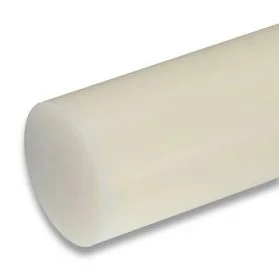
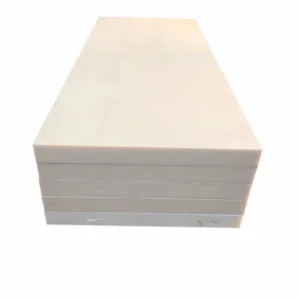
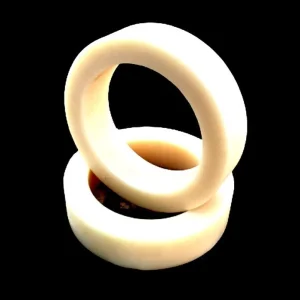
Featured Engineering Plastic Bars, Tubes & Machined Stock
Explore our complete export assortment of round bars, tubes, rings, and machined components ready for international logistics dispatch.