
Precision Extruded & Cast Engineering Polymer Stock
Direct supply of precision PA66 plates, MC nylon tubes, acetal bars, and high-performance polyolefin profiles engineered for demanding mechanical installations.
The Engineering Landscape of Polyamide 66 (PA66) Stock Shapes
A rigorous examination of molecular morphology, mechanical crystallization, and procurement parameters for heavy industrial components.
Macromolecular Density & High Heat Deflection Dynamics
Polyamide 66 (polyhexamethylene adipamide) stands apart within the engineering thermoplastics hierarchy due to its symmetrical aliphatic macromolecular structure. Synthesized via the polycondensation of hexamethylenediamine and adipic acid, the polymer forms compact, tightly packed crystalline domains supported by dense intermolecular hydrogen bonding. This distinct morphology grants PA66 sheets an elevated melting point of 260°C (500°F)—approximately 40°C higher than conventional extruded Polyamide 6 (PA6).
When evaluated against alternative aliphatic polymers, PA66 plates exhibit superior surface hardness, elevated flexural modulus, and enhanced creep resistance under continuous mechanical stress. In precision CNC routing and heavy turning operations, the structural rigidity of annealed PA66 minimizes tool deflection and reduces burr formation, allowing machining centers to achieve tighter dimensional tolerances across high-volume production runs.
Addressing Inherent Hygroscopicity in Mechanical Assemblies
While PA66 offers superior stiffness and load capacity, its amide linkages (-NH-CO-) naturally absorb atmospheric humidity. At full saturation, standard unfilled PA66 can absorb up to 8.0% moisture by weight, yielding an equilibrium saturation of 2.0% to 2.8% at standard atmospheric conditions (23°C, 50% RH). Moisture uptake serves as an internal plasticizer, simultaneously improving impact resistance and fracture toughness while reducing tensile strength and introducing dimensional growth (approximately 0.2% to 0.3% dimensional expansion per 1% absorbed water).
For design engineers specifying sliding bearings, precision sprockets, and close-tolerance valve seats, compensating for hygroscopic expansion is essential. World-class PA66 sheet manufacturers resolve this through precision thermal stabilization, specialized secondary annealing cycles, and customized hydrophobic compounding (incorporating solid lubricants, MoS2, or PTFE fluoropolymers).
| Polymer Classification | Tensile Strength (Yield, MPa) | Flexural Modulus (GPa) | Heat Deflection Temp (HDT @ 1.8 MPa) | Water Absorption (24hr Immersion, %) | Dynamic Coefficient of Friction (vs Steel) |
|---|---|---|---|---|---|
| Virgin Extruded PA66 Sheet | 85 - 92 | 3.2 - 3.5 | 95°C - 105°C | 1.2 - 1.5% | 0.28 - 0.35 |
| PA66-GF30 (30% Glass Filled) | 140 - 175 | 7.5 - 9.0 | 230°C - 250°C | 0.7 - 0.9% | 0.38 - 0.45 |
| Extruded PA6 (Polyamide 6) | 70 - 80 | 2.6 - 2.9 | 70°C - 80°C | 1.8 - 2.2% | 0.32 - 0.40 |
| POM-C (Polyacetal Copolymer) | 65 - 70 | 2.8 - 3.1 | 100°C - 110°C | 0.2 - 0.25% | 0.25 - 0.32 |
| UHMWPE (Ultra High Mol. Weight) | 22 - 28 | 0.7 - 0.9 | 45°C - 50°C | < 0.01% | 0.12 - 0.18 |
Global PA66 Sheet Manufacturers & Supply Ecosystem
Evaluating primary European, North American, and East Asian production epicenters across technical capabilities, lead times, and cost structures.
Western Multinational Converters
Established brand conglomerates such as Ensinger, Röchling Industrial, and Mitsubishi Chemical Advanced Materials (MCAM) represent the traditional benchmark for high-reliability medical, aerospace, and nuclear grades. Their strengths lie in established brand recognition, specialized pre-testing protocols, and regional warehouse networks.
However, these Western brands carry high structural overhead, extended lead times for non-catalog sizes (frequently 12–18 weeks), and significant brand markups that strain large-scale industrial equipment programs.
Integrated Chinese Production Hubs
Direct manufacturing powerhouses such as SHUNDA Polymer (Hebei, China) combine 20+ years of vertical extrusion, monomer polymerization, and precision in-house CNC machining. Backed by proximity to domestic upstream adiponitrile and nylon-66 resin refining plants, Chinese Tier-1 suppliers deliver significant economic advantages.
With modern horizontal extrusion lines, automated temperature-controlled annealing baths, and flexible custom molding, these facilities supply world-class PA66 stock shapes at 30% to 45% lower procurement costs, with short turnaround times and full material certification.
Regional Converters & Stockists
Regional stockists across the European Union, the United States, and Southeast Asia typically serve low-volume, emergency maintenance (MRO) requirements. While valuable for single-sheet orders or next-day deliveries, their business model involves substantial warehousing and distribution markups.
Strategic procurement teams managing OEM schedules or recurring serial parts are increasingly transitioning to direct manufacturer contracts with vetted Chinese primary producers like SHUNDA to secure reliable stock supply lines.
The Integrated Supply Chain Advantage of Chinese Manufacturing
How state-of-the-art polymer engineering, raw material access, and automated annealing produce world-class PA66 plate stock.
Automated Stress-Relieving Annealing Infrastructure
The critical defect encountered in substandard PA66 sheets is unreleased residual stress generated during rapid extrusion or uncontrolled mold chilling. When machinists open the skin of such plates during milling or routing, internal tension releases unevenly, inducing dramatic warping, twisting, or centerline cracking.
Modern Chinese producers, including SHUNDA, utilize computer-controlled, multi-stage hot-air and mineral-oil annealing chambers. Sheets undergo extended heating cycles above 180°C followed by micro-increment cooling over 48 to 72 hours. This process aligns polymer chains, achieves uniform crystallinity, and relieves internal stresses—yielding dimensionally stable stock that remains flat through aggressive 5-axis CNC machining.
Direct Upstream Resin Integration & Compounding Flexibility
China's rapid expansion in domestic petrochemical and adiponitrile production provides manufacturers with uninterrupted access to prime-grade virgin PA66 pellets. Unlike independent converters vulnerable to raw material shortages, integrated facilities maintain raw resin silos with automated desiccant drying.
Furthermore, in-house compounding twin-screw extruders allow custom formulation of specialty PA66 grades. Whether a customer requires 30% glass fiber reinforcement (PA66-GF30), molybdenum disulfide dry-lubricant dosing (PA66+MoS2), carbon-fiber anti-static enhancement, or custom RAL color matching, production can be customized directly at the melt stage.
International Compliance & Rigorous Quality Assurance
Complete compliance frameworks, non-destructive testing, and documentation packages for cross-border engineering integration.
REACH, RoHS & Environmental Safety
All virgin PA66 semi-finished sheets supplied for export comply fully with EU Regulation (EC) No 1907/2006 (REACH) concerning Substances of Very High Concern (SVHC). Products are certified free from halogenated flame retardants, polybrominated biphenyls (PBB/PBDE), lead, cadmium, and phthalate plasticizers under EU RoHS Directive 2011/65/EU and 2015/863 amendments.
FDA & EU Food Contact Migration
For food packaging equipment, beverage bottling stars, and agricultural processing scrapers, specific natural-grade virgin PA66 stock complies with FDA 21 CFR § 177.1500 standards for safe indirect food contact. Material lots undergo third-party global migration testing verifying conformity with European Commission Regulation (EU) No 10/2011.
Ultrasonic Inspection & CoAs
Internal structural integrity is guaranteed through calibrated ultrasonic immersion testing that scans for internal microporosity, pinhole voids, and density shifts in thick-gauge plates (from 10mm up to 150mm+). Every shipment is accompanied by lot-specific Certificates of Analysis (EN 10204 3.1 Inspection Certificates) covering tensile, impact, density, and hardness values.
Mission-Critical Applications of Machined PA66 Plates
From electric vehicle battery infrastructure to heavy port bulk logistics—how engineering polyamide replaces metals.
Automotive & EV Mobility
Used extensively for high-voltage dielectric isolation blocks, thermal barrier partitions, busbar retainers, and under-hood kinematic links. PA66 withstands long-term exposure to motor oils, glycol coolants, and brake fluids up to 120°C continuous service.
Heavy Material Handling
Replaces cast bronze and manganese bronze in mobile crane telescoping boom slide pads, outrigger landing plates, conveyor wear strips, and overhead wire rope sheaves—slashing weight while eliminating metal-on-metal galling.
Power Transmission & Gears
CNC-milled silent helical gears, chain sprockets, and splined drive couplings. PA66 provides natural acoustic dampening, reducing mechanical noise by 10 to 15 decibels compared to structural steel gearing assemblies.
Mining & Aggregates
Chute liners, impact scrapers, vibratory screening mounts, and shaker table wear shoes. High tensile rebound toughness prevents shattering under continuous rock drop shock loads where ceramic plates frequently fracture.
Emerging Polymer Developments & Market Trajectories
Technological innovations reshaping the production, modification, and global trade of high-performance polyamides.
Nano-Carbon & Graphene Reinforcement
The next generation of high-spec PA66 sheets incorporates exfoliated graphene nanoplatelets and multi-walled carbon nanotubes (CNTs). This creates conductive ESD plates (surface resistivity 104 to 109 Ω/sq) that maintain flame resistance without compromising high-speed tensile elongation.
Circular Economy & Bio-Polyamides
Responding to automotive corporate sustainability mandates, development of bio-based Polyamide 56 (PA56) and chemically depolymerized PA66 feedstock is accelerating. These eco-grades reduce cradle-to-gate carbon footprints by up to 40% while preserving the characteristic high HDT and mechanical stiffness of traditional virgin polyamides.
Subtractive CNC to Hybrid Additive
While heavy plates remain the standard for machining thick geometric parts, hybrid manufacturing utilizing large-format additive manufacturing (LFAM) for near-net preforms combined with precision CNC finishing of stock PA66 slabs is reducing waste in complex, low-volume aerospace assemblies.
Frequently Asked Questions: PA66 Sheet Procurement & Machining
Practical engineering answers addressing material selection, dimensional drift, stress-relieving, and import protocols.
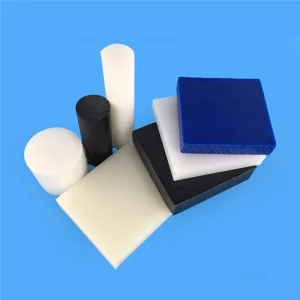
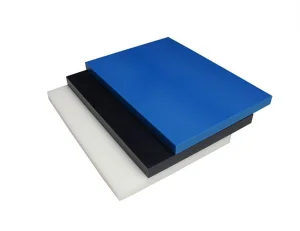
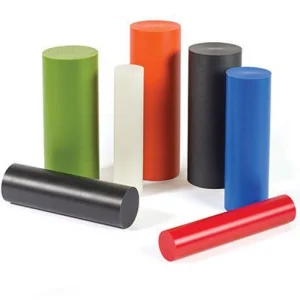
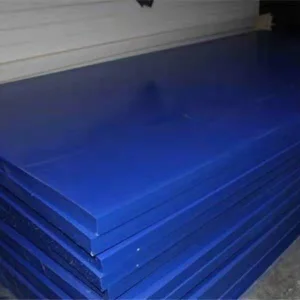
High-Impact Bushings, Wear Boards & Specialty Cast Stock
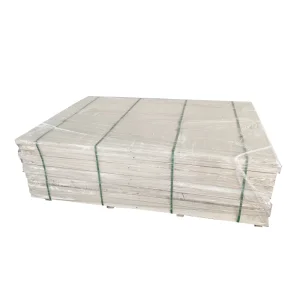
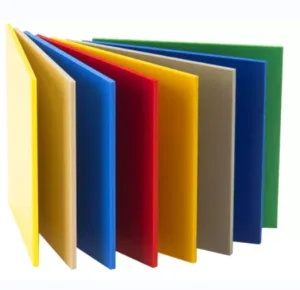
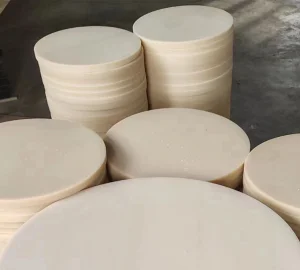
Explore heavy-duty impact nylon cushions, UHMWPE wear plates, cast polyamide sheets, and engineering blanks built for severe-duty service.
Partner with a Premier Chinese PA66 Sheet Manufacturer
Send your dimensional bills of materials, target tolerances, or 2D/3D CAD drawings (STEP, DWG, PDF). Our plastics application engineers review material compatibility, recommend optimal extrusion formulations, and provide transparent factory-direct pricing within 12 hours.