
Primary Engineering Stock & Semi-Finished Portfolio
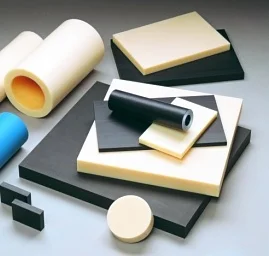
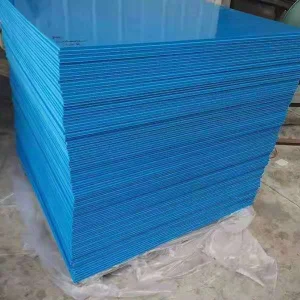
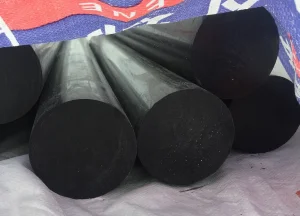
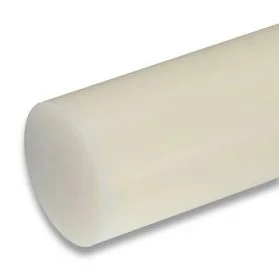
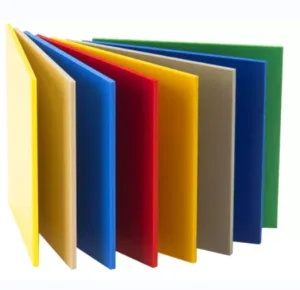
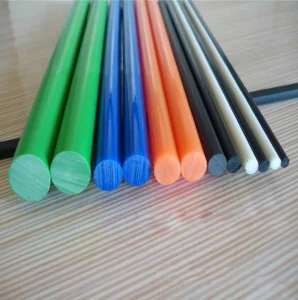
Explore initial catalog lines across our certified nylon cast billets, heavy-duty dampening cushions, and multi-polymer stock rods engineered for zero-defect ring and bushing manufacturing.
Material Science of Engineering Polyamide Rings
Analyzing molecular weight distribution, crystallinity ratios, and tribological mechanics that govern high-wear industrial nylon rings across hydraulic, mechanical transmission, and fluid isolation duties.
In modern industrial kinematic trains and fluid sealing architectures, the selection of polymer rings—ranging from guide rings, support rings, back-up rings, to precision rotary bushings—demands an uncompromising analysis of mechanical properties under cyclic shear, thermal excursions, and abrasive contact. Polyamides (PA), commonly referred to under commercial designations such as Nylon 6 (PA6), Extruded Nylon 66 (PA66), and Monomer Cast Nylon (MC Nylon / PA6G), dominate the high-load thermoplastic segment due to their exceptional energy absorption, low specific gravity (1.14–1.16 g/cm³), self-lubricating surface matrix, and extreme resistance to mechanical fatigue.
Unlike standard injection-molded components, precision engineering nylon rings machined from continuous cast or vertically cast stock benefit from substantially higher molecular weights and superior crystalline boundary structures. In anionic cast polyamides (MC Nylon), caprolactam monomer undergoes liquid polymerization directly within controlled thermal molds, generating molecular weights exceeding 200,000 to 300,000 g/mol—nearly double that of conventional extruded nylon 6. This chemical architecture translates directly into superior compressive modulus, enhanced hardness (Shore D 80–86), diminished creeping under high radial loads, and outstanding resistance to cavitation and galling against mating metallic shafts.
Cast Polyamide (MC PA6G)
Synthesized via anionic polymerization. Unsurpassed resistance to high continuous contact pressures (up to 85 MPa static), minimal internal residual stress, and outstanding machineability for massive outer-diameter wear rings and thrust washers.
Yield Strength: 85-95 MPaMoS₂ & Oil-Filled Formulations
Blended with liquid lubricating esters or molybdenum disulfide micro-particulates. Yields an ultra-low dynamic friction coefficient (µ = 0.12–0.18), mitigating stick-slip oscillations in hydraulic piston guides without supplementary grease systems.
PV Limit: 3.2 MPa·m/sReinforced Polyamide (PA66-GF30)
Compounded with 30% silane-treated chopped glass fibers. Drastically shifts the heat deflection temperature (HDT) upwards from 95°C to 240°C under 1.8 MPa load, serving critical aerospace and high-temperature industrial compressor support rings.
Modulus: 8,500 MPa| Polymer Variant | Tensile Strength (MPa) | Tensile Modulus (GPa) | Shore D Hardness | Dry Friction Coeff (µ) | Water Absorption (24h/Sat %) | Primary Industrial Ring Role |
|---|---|---|---|---|---|---|
| Natural Extruded PA6 | 78 – 82 | 3.1 | 80D | 0.28 – 0.35 | 1.8% / 8.5% | Low-speed spacers, electrical insulating rings |
| Cast Nylon (MC901 Blue) | 88 – 95 | 3.4 | 84D | 0.22 – 0.28 | 0.8% / 6.2% | Heavy excavator slew rings, crane sheaves, pivot collars |
| Oil-Impregnated Cast Nylon | 75 – 82 | 2.9 | 78D | 0.12 – 0.16 | 0.6% / 5.5% | Continuous high-speed dry sliding rings, packaging guide rings |
| PA66 + 30% Glass Fiber | 165 – 180 | 8.6 | 88D | 0.34 – 0.40 | 1.2% / 5.8% | High-temperature backup rings, thermal break structural rings |
| MoS2 Filled Cast Nylon (Grey) | 86 – 92 | 3.5 | 85D | 0.18 – 0.24 | 0.7% / 6.0% | Mining equipment thrust washers, heavy pile hammer rings |
China Factory 4.0: Supply Chain Resilience & Vertical Precision
How state-of-the-art Chinese polymer engineering hubs leverage automated casting cells, direct monomer bulk synthesis, and smart micro-machining to outpace global procurement bottlenecks.
In the competitive realm of high-performance polymer procurement, Tier-1 manufacturing enterprises and OEM design engineers face the classic trilemma: dimensional precision, material purity, and landed unit cost. Shunda and allied Chinese manufacturing plants located in specialized engineering polymer manufacturing corridors (such as Hebei, Jiangsu, and Zhejiang) have transformed conventional extrusion operations into fully automated Industry 4.0 production environments.
Vertical integration begins at the monomer level. Direct pipeline feed and bulk storage of caprolactam feedstock allow real-time blending of thermal stabilizers, color concentrates, and tribological enhancers before high-pressure vacuum evacuation. This eliminates internal voids, micro-porosity, and air entrainment—common structural flaws that lead to catastrophic ring blowout under pulsed hydraulic backpressures. Subsequent casting takes place in automated, computer-monitored centrifugal and static casting carousels, governed by PID-controlled temperature profiles designed to achieve optimal spherulite growth and crystal packing density.
Precision Annealing
Every cast hollow bar undergoes a 48-to-72-hour controlled oil or hot-air annealing cycle. This releases crystallization stress, eliminating ovalization and bore shrinkage during machining.
5-Axis High-Speed CNC
Equipped with customized diamond-tipped PCD tooling and chilled air vortex cooling, achieving ISO 2768-mK tolerances down to ±0.02 mm without inducing surface localized melting.
In-Line Optical CMM
Laser triangulation and automated high-resolution vision systems verify ring concentricity, wall thickness parallelism, and chamfer angles at dynamic speeds before protective packaging.
Supply Chain Redundancy
Backed by extensive stockpiles of raw resins and semi-finished mother tubes, guaranteeing predictable lead times (7–14 days) insulated from global sea-freight and raw-material surges.
Macro Industry Solutions & Application Engineering
From deep-sea subsea umbilicals and heavy piling equipment to battery-electric vehicle drive units, examine how custom nylon rings displace traditional bronzes and fluoropolymers.
Heavy Construction & Piling
In large impact hammers and telescopic crane booms, cast nylon cushioning rings absorb peak kinetic shock loads exceeding 120 kJ without brittle fracture, sparing structural hydraulic cylinder glands from brinelling and micro-cracking.
Hydraulics, Pumps & Valving
Serving as high-clearance guide bands and split back-up rings in 350-bar fluid systems. Polyamide rings eliminate metal-to-metal contact with honed barrel walls, trapping abrasive debris inside the polymer skin safely without scoring.
E-Mobility & Automotive Transmissions
Replacing machined phosphor bronze in planet gear carriers and electric motor bearing isolators. Offers high electrical breakdown voltages (>25 kV/mm) to prevent parasitic bearing fluting caused by inverter high-frequency PWM currents.
Wind Power & Offshore Turbines
Installed in yaw and pitch drive planetary stages and slew track isolators. The marine-grade, salt-mist immune matrix resists galvanic corrosion while functioning flawlessly in sub-zero ambient regimes down to -40°C.
Food Processing & Bottling Automation
FDA/EU compliant natural and blue polyamide rings resist high-pressure washdown chemicals (surfactants, mild acid cleaners) and operate fully unlubricated, preventing product contamination on beverage filling lines.
Mining Separation & Slurry Flotation
Where abrasive quartz dust rapidly grinds metallic rings to failure, cast nylon wear rings deform elastically under solid particle impingement, exhibiting up to 4.5x the working lifespan of bronze SAE 660 counterparts.
Global Procurement Strategy: TCO vs. Purchase Price
Strategic purchasing criteria for category managers, strategic sourcing leads, and mechanical designers seeking to optimize total cost of ownership (TCO) across complex polymer components.
Procuring nylon rings involves far more than simply comparing FOB quotes on raw billet weights. Senior procurement directors must navigate the complex interaction between hygroscopic expansion allowances, machining waste, batch consistency, and warranty failure liabilities. A low-cost nylon ring that swells by 1.2% in a humid marine environment can seize a hydraulic control spool, resulting in tens of thousands of dollars in downtime for a mining rig or maritime crane.
Direct TCO Reduction
By switching from solid round bars to custom near-net-shape centrifugally cast nylon hollow tubes, buyers eliminate up to 60% of material swarf waste and reduce lathe cycle times by 45% during final ID/OD finishing.
Drawing & Tolerance Audits
Our engineering division evaluates 2D/3D models (STEP, DWG) for thermal expansion compensation. Because nylon's thermal expansion coefficient is approximately 8x that of steel, clearances are mathematically recalibrated before production.
Defect Zero-Risk Assurance
Full batch serialization with DIN EN 10204 Type 3.1 chemical inspection certificates, guaranteeing zero air-void cavities, uniform density across wall cross-sections, and verified Shore D hardness compliance.
Localized Support, Traceability & Global Compliance
Ensuring frictionless importation, continuous regulatory adherence, and responsive international technical service across Europe, the Americas, and the Asia-Pacific region.
RoHS & REACH SVHC
Fully compliant with EU Directive 2011/65/EU and REACH (EC) No 1907/2006. Formulations are completely free of hazardous phthalates, heavy metals, halogenated flame retardants, and SVHC compounds.
FDA & EU Food Contact
Unpigmented virgin cast nylon and food-grade lubricated grades meet FDA 21 CFR 177.1500 standards and Regulation (EU) No 10/2011 for direct, non-acidic contact with foodstuffs and potable liquid.
DDP Incoterms & Logistics
End-to-end door-to-door delivery with customs pre-clearance, ISPM-15 heat-treated palletization, and vacuum moisture-barrier aluminum foil wrapping to prevent ambient humidity absorption during ocean freight.
24/7 Application Engineering
Bilingual sales and mechanical engineering support teams guaranteeing an actionable response with complete moldability assessments, tolerance suggestions, and quotations within 12 hours.
Technology Roadmap: Nano-Polymers & Circular Polyamides
Next-generation advancements shaping the future of engineering thermoplastics: graphene additives, circular depolymerization, and hybrid additive-subtractive manufacturing.
Carbon Nanotube (CNT) & Graphene Infusion
Research programs are integrating functionalized CNTs into molten caprolactam before casting. This creates an interconnected conductive network that safely dissipates electrostatic charges in explosive ATEX zones while increasing tensile yield strength by 28%.
Closed-Loop Chemical Depolymerization
Addressing ESG imperatives, our advanced research partners deploy catalytic pyrolysis that cracks post-machining nylon shavings and end-of-life rings back into virgin-purity monomeric caprolactam, slashing scope-3 carbon footprints by up to 65%.
Smart Hybrid Near-Net Preforms
Combining large-format robotic additive manufacturing (LFAM) of near-net polymer rings with 5-axis CNC high-speed finishing. This hybrid route slashes mold lead times from weeks to hours for massive non-standard rings exceeding 2,500 mm in diameter.
Engineering & Procurement FAQ
In-depth technical answers to critical questions faced by design authorities, manufacturing engineers, and procurement teams when specifying industrial nylon rings.
How do you compensate for moisture absorption and dimensional growth in nylon rings?
Polyamides are hygroscopic materials. In submerged or high-humidity environments, PA6 absorbs up to 6–8% moisture by weight at complete saturation, inducing volumetric dimensional expansion between 0.8% and 2.0%. In our manufacturing workflow, we review the target operating medium (subsea, hydraulic oil, dry atmosphere). If water contact is continuous, our CNC department increases initial running clearances, recommends oil-filled low-hygroscopy MC grades, or suggests non-hygroscopic alternates such as POM (polyacetal) or UHMWPE.
When should an engineer specify Cast MC Nylon instead of Extruded PA66 for wear rings?
Cast MC Nylon (PA6G) should always be selected when outer diameters exceed 100 mm, when wall cross-sections are thick (>20 mm), or when the component experiences intense cyclical shock loads. Extruded PA66 carries higher internal residual extrusion stresses, rendering thick-walled hollow billets susceptible to cracking or ovalization during internal bore turning. Cast nylon boasts nearly twice the molecular weight of extruded stock, offering superior creep resistance and better machineability.
What cutting speeds, feeds, and tooling geometry are recommended for turning nylon rings?
Because nylon possesses a low thermal conductivity and low softening point, heat dissipation must occur through the swarf chip rather than the workpiece. We recommend polished carbide or PCD tooling with generous positive rake angles (15° to 25°) and relief angles (8° to 12°). Surface cutting speeds range from 250 to 500 m/min with a feed rate of 0.15 to 0.40 mm/rev. Compressed vortex-tube air jets should be employed instead of water-soluble flood emulsions if post-machining moisture uptake must be prevented.
How does an oil-filled or MoS2-filled nylon ring compare to traditional sintered bronze bushings?
Oil-filled cast nylon rings weigh approximately 85% less than bronze, provide equivalent or superior resistance to abrasive slurries, and do not gall or score steel counter-shafts if lubrication is momentarily interrupted. Sintered bronze relies on porous capillary oil retention, which dries out or clogs under heavy dust contamination. Oil-filled nylon continually migrates microscopic ester lubricants to the sliding interface throughout the component’s operational life, preventing stick-slip chatter.
Can you provide custom split nylon wear rings for retrofitting existing plant machinery?
Yes. For large industrial journal shafts, marine rudder stocks, or excavator slew systems where shaft disassembly is financially prohibitive, we manufacture precision split guide rings. Rings are machined completely as a solid circular unit, pre-stressed, cut with an angled (45° scarf or step-cut) precision slot, and match-marked. This guarantees zero misalignment upon clamp installation and preserves uninterrupted hydrodynamic fluid film distribution.
What documentation and test certificates accompany overseas wholesale shipments?
Every export batch is shipped alongside certified EN 10204 Type 3.1 inspection documents detailing melt flow index (MFI), actual density test values, Shore hardness verification, tensile yield tests, and RoHS/REACH compliance confirmation. For aerospace or critical pressure-vessel backup rings, we also provide optical CMM multi-point dimensional inspection reports and full traceability back to the raw monomer batch.
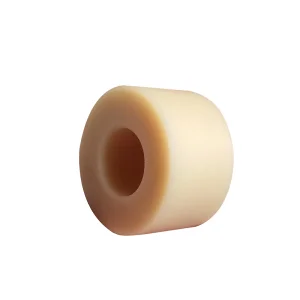
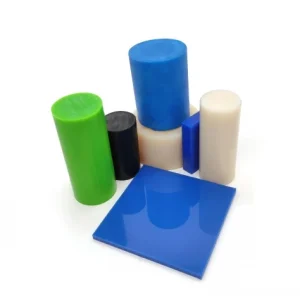
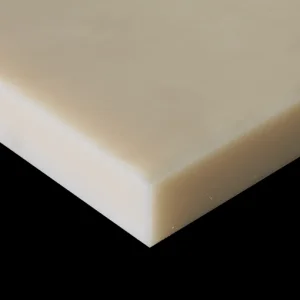
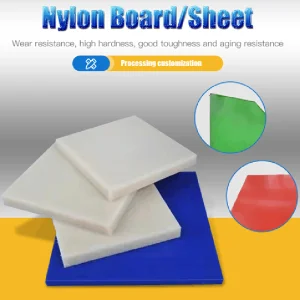
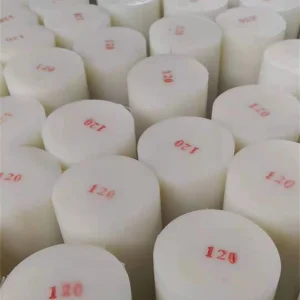
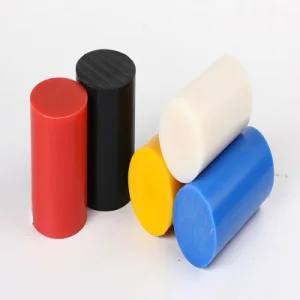
Industrial Tube, Rod & Machined Ring Stock Matrix
Complementary precision-grade semi-finished cylinders, modified engineering rods, and composite wear plates engineered for direct OEM fabrication and global distributor inventories.


Accelerate Your Custom Nylon Ring Sourcing Cycle
Submit your mechanical drawings (STEP, DWG, DXF, or PDF), operating parameters (pressure, velocity, fluid media), and volume requirements. Our senior application engineers respond within 12 hours with material grade proposals and clear factory pricing.