
Factory Stock Semi-Finished Profiles
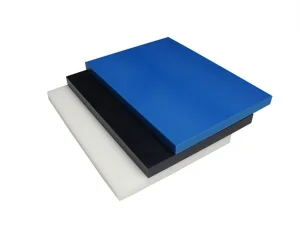
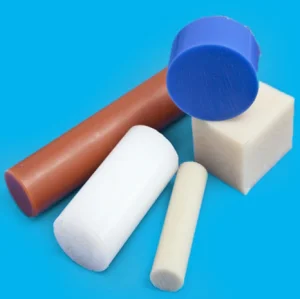
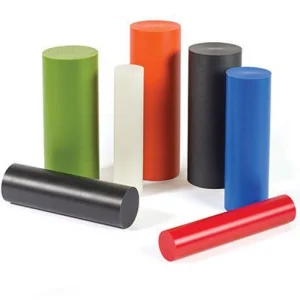
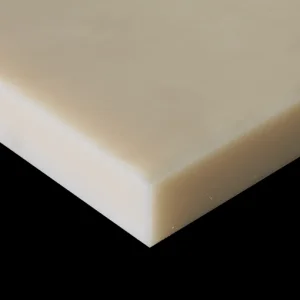
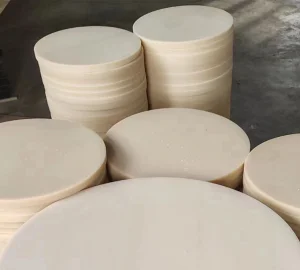
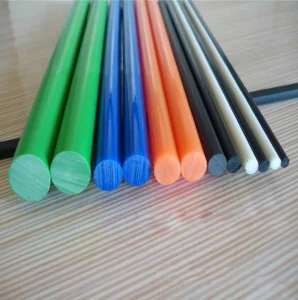
Factory-direct delivery across continuous extrusion and monomer-cast configurations, engineered to provide isotropic mechanical integrity across high-load operations.

Engineering Transition: The PA66 Paradigm Shift
Accelerating trends in lightweighting and metal replacement are reshaping how design teams evaluate Polyamide 66 across automotive, rail transit, and heavy processing machinery.
Metal-to-Plastic Conversion
Replacing traditional bronze, zinc, and cast-iron gears with modified Nylon PA66 cuts assembly weight by up to 70%, dampens acoustic vibration, and eliminates reliance on external grease in continuous duty cycles.
Thermal Stability in E-Mobility
EV busbars, powertrain connectors, and high-voltage bracketry demand materials with continuous operating temperatures up to 180°C. Optimized glass-fiber-reinforced PA66 provides high dielectric strength and dimensional retention.
Additive Nucleation & Fast Cycling
Next-generation nucleating additives refine polymer crystalline structures, increasing tensile yield strength while reducing cycle times by 15-20% for both thick-section extrusions and injection molded geometries.
Enterprise Sourcing & Quality Assessment Framework
Tier-1 procurement mandates verify more than baseline per-kilo pricing. Long-term batch consistency relies on quantifiable metrics from virgin polymer selection to mechanical stress relief.
Lot-to-Lot Viscosity Control
Consistent relative viscosity (RV 2.7 to 3.2) guarantees uniform melt flow and mechanical behavior across successive extrusion campaigns, preventing anisotropic grain lines or subsurface void pockets.
Controlled Annealing
Internal stress accumulation during rapid cooling can cause rod distortion or cracking during CNC milling. Automated oil-bath or infrared annealing regimes remove residual internal stresses before dispatch.
Toleranced Stock Geometries
Strict outer diameter (OD) and thickness tolerances within ±0.05mm streamline automatic bar-feeder operations, reducing spindle chatter and finishing passes on high-speed CNC turning lines.
Full Traceability (EN 10204 3.1)
Every shipment is supported by complete raw material batch tracking, thermal profiling data, and certified tensile/flexural test sheets, delivering clear transparency for global audit trails.
Polyamide 66 Comparative Technical Profile
Comparing engineering polymers across key performance indicators helps application teams identify the right balance of thermal endurance, stiffness, and chemical resistance.
| Property Matrix | Extruded PA66 (Natural) | Cast MC PA6 | POM (Acetal) | PTFE (Virgin) |
|---|---|---|---|---|
| Tensile Strength (MPa) | 85 - 90 | 75 - 82 | 65 - 70 | 22 - 35 |
| Flexural Modulus (GPa) | 3.2 - 3.5 | 3.0 - 3.2 | 2.8 - 3.0 | 0.5 - 0.7 |
| Heat Deflection Temp (0.45 MPa, °C) | 200 - 220 | 160 - 180 | 160 | 120 |
| Melting Point (°C) | 255 - 260 | 215 - 220 | 165 - 175 | 327 |
| Moisture Absorption (Equilibrium, %) | 2.5 - 2.8 | 3.0 - 3.2 | 0.2 - 0.25 | < 0.01 |
| Dynamic Coeff. of Friction (vs Steel) | 0.25 - 0.35 | 0.30 - 0.40 | 0.20 - 0.25 | 0.04 - 0.10 |
| Dielectric Strength (kV/mm) | 25 - 30 | 20 - 25 | 20 | 40 - 60 |
Engineered Material Solutions for Industrial Demands
Tailoring compound recipes to the field environment lets you optimize both component longevity and machine availability.
Automotive Thermal Management
Our 30% to 50% glass-fiber-reinforced PA66 profiles remain stable under aggressive hot glycol/water mixtures, making them ideal for thermostat housings, radiator end-tanks, and coolant valves.
Heavy Duty Materials Handling
Molybdenum disulfide (MoS2) and solid lubricant modifications lower surface friction while boosting impact retention for crane sheaves, elevator slide shoes, and track rail pads operating under heavy compressive stress.
Oil & Gas Fluid Handling
Chemically modified Polyamide grades deliver reliable resistance to hydrocarbons, sour crude condensates, and line flush chemicals, making them a dependable choice for downhole backup rings and support seals.
Factory Scale & Global Compliance
Decades of dedicated polymer processing provide the manufacturing capacity, documentation rigor, and quality assurance demanded by international industrial supply chains.
International Regulatory Compliance
Our materials comply with EU RoHS Directive 2011/65/EU and REACH (EC 1907/2006) candidate SVHC registers, simplifying supply chain audits and customs clearance.
Protective Ocean Export Packaging
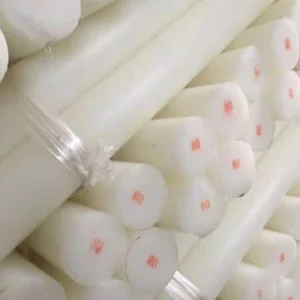
Every batch of rods, sheets, and tubes is sealed in moisture-barrier film and packed into ISPM-15 heat-treated wooden crates to prevent moisture pickup or surface abrasion during transit.
In-House Analytical Verification
Our on-site QA team uses differential scanning calorimetry (DSC), thermogravimetric analysis (TGA), and precision coordinate measuring machines (CMM) to verify physical tolerances before warehouse release.
Material Innovation & Polymer Roadmap
Continuous R&D investments are expanding our functional polyamide systems, addressing demand for bio-circular feedstocks, higher thermal thresholds, and improved conductivity.
Bio-Based & Mass-Balanced Polyadipamides
Developing PA66 stock shapes using sebacic acid and adipic acid derived from certified bio-feedstocks. These formulations reduce product carbon footprints (PCF) without compromising ultimate tensile strength.
Carbon-Nanotube Dissipative Formulations
Compounding high-purity multi-walled carbon nanotubes (MWCNT) directly into the nylon matrix yields balanced surface resistivity (10^6 to 10^9 ohms/sq) for ATEX explosion-proof environments without shedding particulate dust.
High-Temperature Polyphenylene Blends
Developing functional PA66/PPA hybrids designed for continuous exposure above 220°C in high-pressure oil transmission lines and adjacent under-hood exhaust systems.
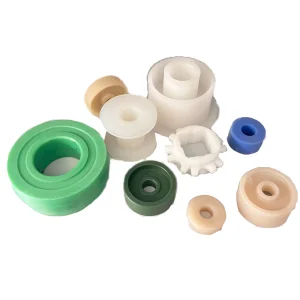
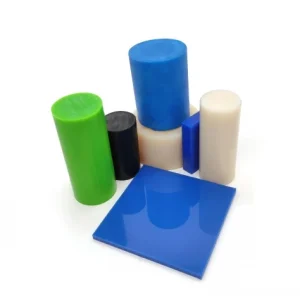
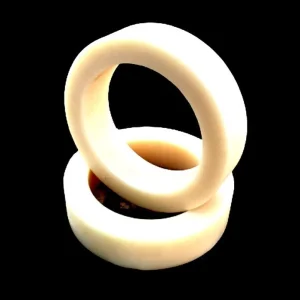
Specialty Engineering Plastics & Finished Components
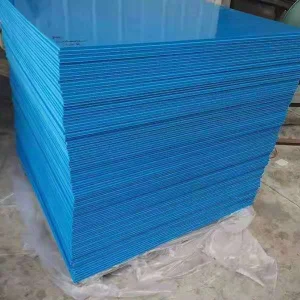
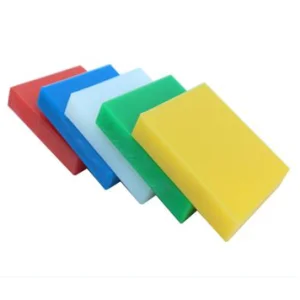
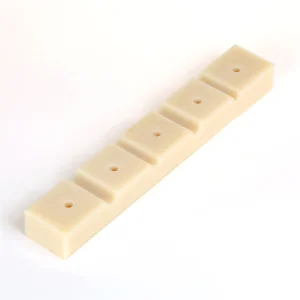
From solid billet blocks to multi-axis CNC machined parts, each piece is shaped from stabilized raw materials to ensure tight dimensional stability across challenging working conditions.

Frequently Asked Questions: Nylon PA66
Detailed technical answers to common queries regarding polymer characteristics, machining practices, and long-term operating limits.
What are the key mechanical differences between Polyamide 6 (PA6) and Polyamide 66 (PA66)?
While both are linear aliphatic polyamides, PA66 is synthesized via hexamethylenediamine and adipic acid, creating a highly symmetrical, dense crystalline matrix. Consequently, PA66 exhibits higher tensile strength (85-90 MPa vs. 75-80 MPa), increased flexural modulus, and a substantially higher melting threshold (255-260°C compared to PA6’s 215-220°C). PA66 also displays superior creep resistance and lower hygroscopic saturation rates under high temperatures, making it preferable for precision dynamic components.
How does ambient humidity affect the dimensional stability of finished PA66 components?
Polyamides are hygroscopic: atmospheric moisture penetrates amorphous regions, acting as a plasticizer that slightly lowers tensile modulus while significantly improving impact toughness. In standard environments (23°C, 50% RH), PA66 absorbs roughly 2.5% moisture at equilibrium, resulting in an isotropic volumetric expansion of approximately 0.5% to 0.7%. For precision applications, we recommend pre-conditioning components or utilizing our mineral/glass-filled configurations to minimize swell.
What machining practices are recommended to prevent distortion during high-speed CNC operations?
PA66 has relatively low thermal conductivity compared to metals. Tooling must feature sharp cutting angles (rake angles 5-15°, relief angles 10-20°) with polished flutes to promote efficient chip clearance. Moderate spindle speeds paired with high feed rates help transfer heat into chips rather than the workpiece. Applying water-soluble or air-blast coolants prevents localized thermal buildup and tool binding, maintaining tight dimensional control.
Can modified Polyamide 66 stock shapes replace bronze and brass in marine environments?
Yes. Custom formulations modified with solid lubricants and liquid oil provide outstanding resistance to saltwater pitting, cavitation, and marine fouling. They operate without supplementary oil lubrication, protecting sensitive water systems while eliminating galvanic corrosion when paired with stainless steel shafts.
What documentation and quality certifications accompany overseas PA66 shipments?
Every industrial export package is shipped with a comprehensive quality package, including an EN 10204 Type 3.1 Inspection Certificate, raw material lot identification, mechanical test results, RoHS and REACH compliance letters, and an ISPM-15 phytosanitary treatment certificate for wooden skids and crates.