Featured Industrial Stock & Semi-Finished Polymer Rods
Explore high-performance Nylon 66 round stock, acetal tubes, modified polymers, and advanced abrasion-resistant extruded rods engineered for extreme mechanical environments.
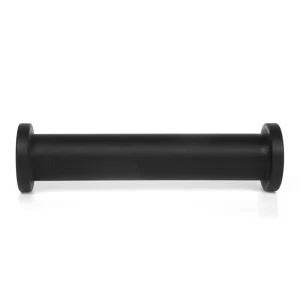
Famous Nylon ABS PP PTFE Plastic Rod Tube Bar Roller Exporters, Products
View Specifications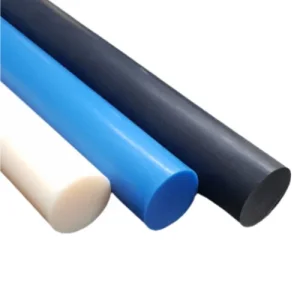
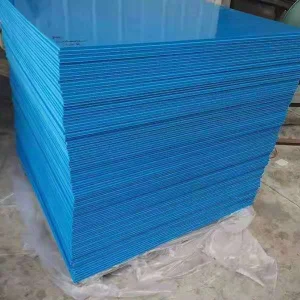
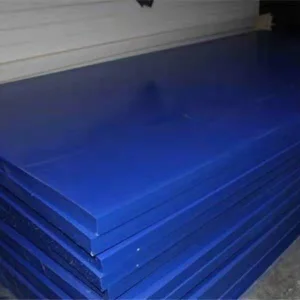
Cheap 2012 Latest Design China Factory Direct Sales Mc Nylon PA6 Sheet/ Polyamide Nylon Sheet Factories, Companies
View Specifications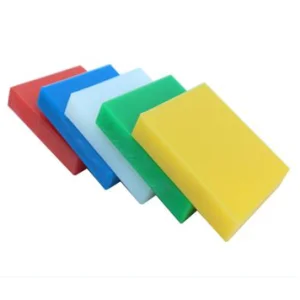
Buy China Engineering Plastic Polyamide PA6 PA66 Nylon PP UHMWPE PTFE HDPE ABS Plastic Sheet Rod Bar Suppliers, Product
View Specifications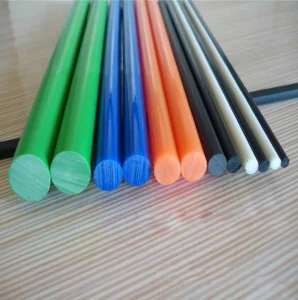
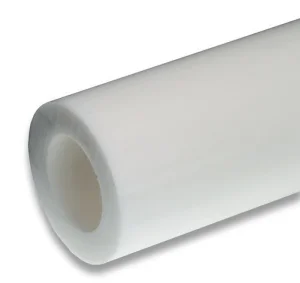
Cheap POM Tube White POM Tube, Black POM Tube, POM Pipe, POM Plastic Tube Pipe Factories, Exporter
View Specifications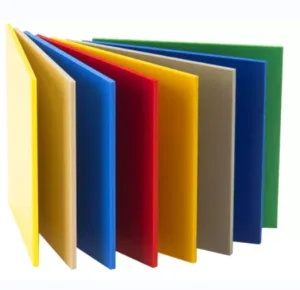
Engineering Superiority & The Chinese Manufacturing Paradigm
An exhaustive technical evaluation of why global Fortune 500 procurement teams, defense contractors, and precision machining houses partner directly with verified Chinese Nylon 66 rod production facilities.
Vertically Integrated Chemical Precursor Supply
China's domestic adipic acid and hexamethylenediamine (HMD) synthesis facilities ensure unthrottled access to ultra-pure PA66 virgin raw polymer chips. Unlike Western converters that suffer from feed-stock allocations, our foundries run continuous automated compounding with closed-loop viscometry regulation.
Thermodynamic Multi-Zone Annealing Technology
Raw extruded PA66 round bars typically hold massive internal tensile stresses that cause catastrophic warping, elliptical bore deviation, and crack propagation during CNC milling. Chinese leading facilities deploy 72-hour controlled liquid nitrogen and slow-cycle hot-oil tempering chambers to equalize crystalline orientation.
Unprecedented Cost-to-Performance Ratio
By collocating twin-screw extrusion lines, custom die-sinking, and automated centerless grinding under one roof in Hebei, our production yields reduce scrap rates by over 18%. OEMs receive European standard mechanical specifications at factory-gate pricing that cuts landed bill of materials (BOM) by 35% to 50%.
Global Industry Trends: The Evolution of Modified PA66
Standard unreinforced Nylon 66 rods are rapidly transforming. Driven by extreme service limits in electrified drivetrains, robotics, and aerospace bushings, modern Chinese manufacturers lead innovations in specialized polymer compounding.
PA66-GF30 & Carbon-Fiber Reinforcement
Incorporating 30% to 50% chemically coupled, silane-treated chopped glass fibers increases tensile yield strength from 85 MPa to beyond 175 MPa. Heat deflection temperature (HDT) at 1.8 MPa leaps from 80°C to an astounding 250°C, providing structural stiffness that rivals die-cast aluminum alloys while cutting overall weight in half.
Internal Solid Lubrication (PA66+MoS₂ & PTFE)
Dry-sliding environments demand materials that do not depend on external greasing. By infusing sub-micron molybdenum disulfide (MoS₂) particles and microscopic PTFE fluoropolymer matrices directly into the polyamide melt, friction coefficients drop by 45%, preventing stick-slip phenomena in high-load, low-speed bearings.
Bio-Based Polyamides & Low-Carbon Synthesis
To comply with upcoming European CBAM carbon tariffs and strict corporate ESG targets, Chinese chemical reactors are scaling bio-monomers synthesized from sebacic acid derivatives. These next-generation polyamides exhibit up to 38% lower cradle-to-gate carbon footprints while retaining superior hydrolytic stability.
Engineering Spec Comparison: PA66 vs Alternative Polymers
Selecting the precise semi-finished stock requires empirical data. Review this objective laboratory comparison compiled by our chief polymer mechanical test engineers.
| Property Benchmark | Nylon 66 (PA66 Extruded) | Cast Nylon 6 (MC PA6) | POM-C (Polyacetal) | PEEK (Virgin Grade) |
|---|---|---|---|---|
| Tensile Strength at Yield (23°C) | 85 - 95 MPa | 75 - 85 MPa | 65 - 70 MPa | 100 - 110 MPa |
| Modulus of Elasticity in Tension | 3,200 - 3,500 MPa | 3,000 - 3,200 MPa | 2,800 - 3,000 MPa | 4,000 - 4,200 MPa |
| Heat Deflection Temp (HDT 1.8 MPa) | 85°C (Reinforced: 250°C) | 75°C (Reinforced: 200°C) | 100°C | 160°C (Reinforced: 300°C) |
| Coefficient of Dynamic Friction (Dry) | 0.28 - 0.35 | 0.30 - 0.38 | 0.22 - 0.28 | 0.30 - 0.35 |
| Moisture Absorption (Equilibrium 50% RH) | 2.4% - 2.8% | 2.2% - 2.6% | 0.2% | 0.1% |
| Primary Mechanical Characteristic | Peak shear stiffness & wear | Massive component castability | Extreme dimensional stability | Ultra-high thermal & chemical |
| Relative Cost Multiplier | 1.0x (Baseline) | 0.95x | 1.15x | 12.0x - 15.0x |
Localized Application Scenarios & Heavy Industry Solutions
Nylon 66 rods are deployed where mechanical stresses cause softer commodity plastics to yield, and where metal-on-metal friction causes severe acoustic noise, galling, or lubrication maintenance hazards.
Automotive & EV Powertrains
Machined transmission shift forks, silent timing belt sprockets, thermal throttle valve bodies, and electric axle gear teeth resisting constant synthetic lubricant bathing up to 130°C.
Industrial Automation & Robotics
Low-inertia end-of-arm tooling grippers, linear cam followers, backlash-free planetary pinion clusters, and wear-resistant cable guide carriers subject to millions of cyclic reversals.
Heavy Machinery & Mobile Cranes
Hydraulic cylinder piston guide rings, outrigger slider pads, telescopic boom slide blocks, and wire rope sheaves preventing costly steel-on-steel spalling in construction equipment.
Fluid Dynamics & Valve Trims
High-pressure ball valve seats, slurry pump wear plates, chemical fluid metering pistons, and wastewater treatment aerator bearings surviving harsh abrasive particulates.
Global Procurement Checklist: Auditing Nylon 66 Rod Factories
To safeguard international supply chains against unexpected manufacturing variances, enterprise supply managers must inspect key chemical, dimensional, and metallurgical metrics before volume sign-off.
Crystallinity & Density Verification
Standard PA66 density should firmly calibrate at 1.14 - 1.15 g/cm³. Ultrasonic flaw detection must confirm zero micro-voids, bubbles, or center-line shrink porosity throughout the rod core.
Centerless Ground Caliber Tolerance
Demanding Swiss-type automatic screw lathes necessitate outer diameter tolerance to ISO h9 or h10 standard. Diametrical runout must not exceed 0.15mm per linear meter of extruded bar.
Environmental & Food Regulatory
Factory lots must possess valid third-party chemical laboratory certifications verifying compliance with EU RoHS Directive 2011/65/EU, REACH SVHC candidate lists, and FDA 21 CFR 177.1500.
Export Packaging Integrity
Hydrophilic polyamides absorb atmospheric moisture rapidly. Premium suppliers package rods in vacuum-sealed moisture barrier polyethylene foil within fumigated wooden export crates.
Procurement & Engineering Inquiry Clarifications
Answers to critical questions regarding machining parameters, moisture compensation, batch testing, and minimum order requirements for global buyers.
What is the practical mechanical difference between Nylon 6 and Nylon 66 rods?
Extruded PA66 exhibits higher crystalline density, delivering approximately 15% higher tensile modulus, a significantly higher melting point (260°C vs 220°C), and improved creep resistance under continuous mechanical loads. Nylon 6 offers marginally higher impact toughness at sub-zero temperatures and is simpler to cast into gigantic monolithic cross-sections exceeding 500mm.
How should CNC machinists accommodate the hygroscopic swelling of PA66 parts?
When designing close-tolerance components (such as tight running clearance bushings), machinists must compensate for a predictable 0.2% to 0.3% dimensional expansion per 1% moisture absorption. For critical sub-millimeter tolerances, pre-conditioning the machined stock in controlled humidity or specifying Polyacetal (POM-C) is strongly advised.
What tooling geometries and cooling methods yield optimum surface finishes?
Use polished, razor-sharp tungsten carbide or polycrystalline diamond (PCD) inserts with generous positive rake angles (15° to 25°) and wide relief clearances to avoid heat buildup. Flood cooling with non-aqueous water-soluble synthetic emulsions or high-volume vortex cold-air guns prevents localized surface melting and re-welding of chips.
What is the standard production lead time and Minimum Order Quantity (MOQ)?
For standard off-the-shelf diameters ranging from 10mm to 200mm in natural white or black, inventory is available for immediate palletization within 48 hours. Custom formulations (e.g., 30% Glass-Filled, MoS₂-enhanced, heat-stabilized, or customized pantone colors) require an MOQ of 500 kg with an average production cycle of 10 to 14 business days.
Extended Polymer Catalog & Heavy Industry Impact Cushions
Explore heavy-duty piling cushions, extruded PP/ABS bars, cast polyamide boards, and precision machined components manufactured to exact OEM customer specifications.
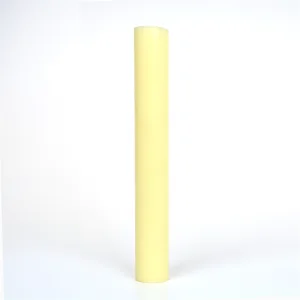
Buy PP Rod ,ABS Rod,Nylon Rod Bar, PTFE Rod,Plastic Rod, All Kinds Of Plastic Products Factories, Exporter
View Specifications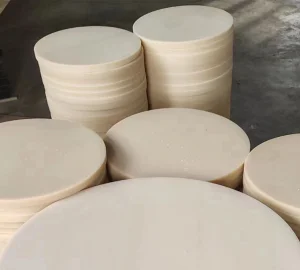
Discount Impact Cushion Use For Impact Hammer For Piling Machine Suppliers, Exporters
View Specifications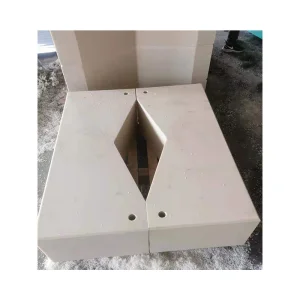
Cheap High-Quality MC Casting Nylon Sheet PA6 Engineering Plastics Nylon Hard Board Sheet Supplier, Exporters
View Specifications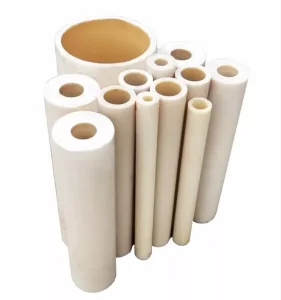
China Engineering Plastic Cast Board PA6 Polyamide Nylon ABS PP Plastic Tube Rod And Bar Customized Color With Size Factories, Products
View Specifications
OEM China Engineering Plastic Polyamide PA6 PA66 Nylon PP UHMWPE PTFE HDPE ABS Plastic Sheet Rod And Bar Customized Color Manufacturer, Suppliers
View Specifications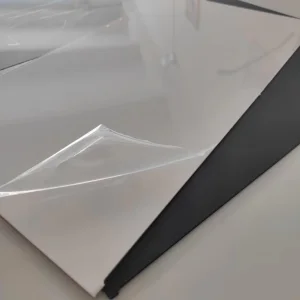
Wholesale China Engineering Plastic OEM Smooth ABS Plastic Sheet Factory Customized Color With Size For Refrigerator Door Company, Product
View Specifications
Wholesale Ordinary Discount China Pure Nylon Rod for Sale High-Quality Nylon Rods for Industrial Applications Factories, Products
View Specifications