Engineered Stock Shapes & Heavy-Load Polymeric Solutions
Direct supply-chain distribution: factory-calibrated cast rods, custom profiles, and heavy duty cushions engineered for high impact and friction resistance.
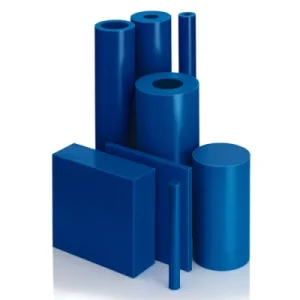
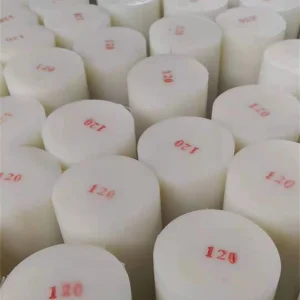
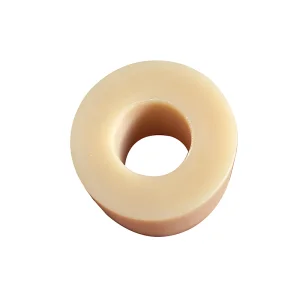
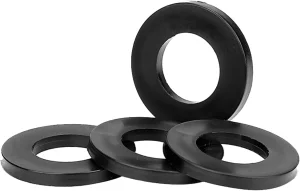

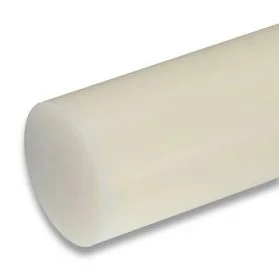
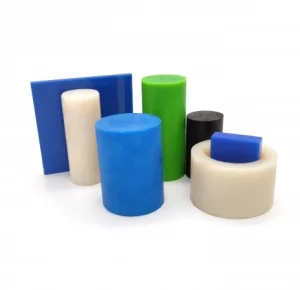
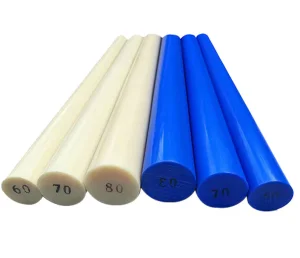
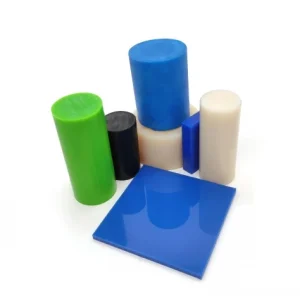
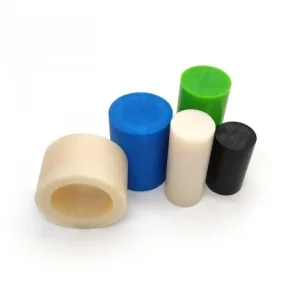
Anionic Polymerization: The Structural Superiority of MC Nylon Blue
Understanding why Monomer Cast (MC) Nylon PA6G exhibits higher molecular weight, superior crystallinity, and exceptional mechanical endurance compared to traditional extruded polyamides.
Atmospheric Polymerization
Unlike extruded PA6/PA66, MC Nylon is manufactured via direct anionic ring-opening polymerization of caprolactam within molds under atmospheric pressure. This allows unlimited thick-walled casting free of thermal degrade and voiding.
Ultra-High Molecular Crystallinity
Achieving a molecular weight exceeding 200,000–350,000 g/mol, MC Blue presents a 45–50% crystalline structural matrix. This delivers enhanced tensile modulus, surface hardness, and superior creep resistance under cyclical fatigue.
Tribological Friction Modification
The distinctive blue coloration in enterprise grade MC Nylon serves not merely as aesthetic distinction, but signifies advanced internal plasticizers and heat stabilizers that lower kinetic friction down to μ=0.15–0.22 under dry sliding loads.
| Physical / Mechanical Property | Testing Standard | Extruded PA6 Natural | Cast MC Nylon (PA6G) Blue | Performance Delta |
|---|---|---|---|---|
| Tensile Strength at Yield (MPa) | ISO 527 / ASTM D638 | 72 - 78 MPa | 85 - 95 MPa | +21.7% Yield Strength |
| Tensile Modulus of Elasticity (MPa) | ISO 527 / ASTM D638 | 2,800 MPa | 3,400 - 3,600 MPa | +28.5% Flexural Rigidity |
| Charpy Notched Impact Resistance (kJ/m²) | ISO 179 / ASTM D256 | 4.5 kJ/m² | 6.0 - 8.5 kJ/m² | +44.4% Energy Absorption |
| Rockwell Hardness (M-Scale) | ISO 2039-2 / ASTM D785 | M 75 - 82 | M 88 - 94 | Superior Scratch/Indentation Resistance |
| Heat Deflection Temperature (HDT @ 1.8 MPa) | ISO 75 / ASTM D648 | 65 °C | 95 - 105 °C | +46.1% Thermal Threshold |
| Coefficient of Dynamic Friction (Dry against Steel) | DIN 50324 | 0.35 - 0.42 | 0.18 - 0.24 | -42.8% Frictional Heat Build-up |
Global Industrial Demand & Macro Cross-Industry Solutions
How Tier-1 engineering firms, maritime operators, and heavy mechanical OEMs deploy MC Nylon Blue to displace bronze, brass, cast iron, and aluminum alloys.
Heavy Lift & Offshore Cranes
Mobile and gantry crane wire rope sheaves fabricated from MC Nylon Blue extend steel cable service life by up to 300%. The self-elastic recovery reduces hoop stress and prevents micro-spalling inherent in hardened steel sheaves.
Hydraulic Telescopic Booms
Wear pads machined from MC Nylon Blue handle surface bearing pressures up to 35 MPa. Self-lubricating characteristics eliminate external grease dependency in construction telehandlers, boom lifts, and earthmoving apparatus.
High-Torque Power Transmission
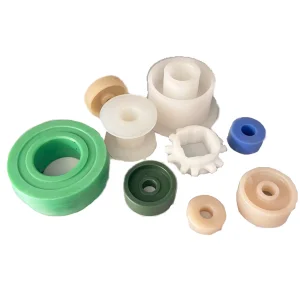
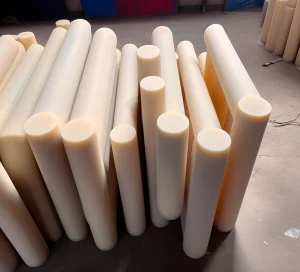
Spur gears, helical gears, and sprockets turned from solid cast blue rods provide silent gear engagement, absorbing torsional shocks and eliminating galling risks without requiring continuous pressurized hydrodynamic oil bathes.
Deep Foundation & Impact Hammering
Our piling cushions and specialized impact rings absorb cyclic g-force shocks during hydraulic diesel hammer blows, buffering pile driving rigs while preserving structural shape integrity across millions of rapid cycles.
Material Engineering Roadmap: 2025–2030 Evolution
Pioneering composite chemistries, nano-additives, and digital CNC processing to resolve next-generation manufacturing challenges.
Phase 1: Nano-Graphene & MoS2 Hybrid Fillers
Integration of surface-treated molybdenum disulfide (MoS2) and dispersed graphene within monomer liquids to advance extreme-pressure sliding limits while maintaining exceptional surface fatigue thresholds under non-lubricated conditions.
Phase 2: Hydrolysis Stabilization & Moisture Control
Chemical modification of amide bond polar ends to reduce equilibrium water saturation down from 6–7% to below 2.5%, achieving unprecedented dimensional predictability in continuous submersible subsea and marine applications.
Phase 3: Digital Twin Precision Machining
Algorithmic toolpath simulation tailored specifically to the thermal dissipation dynamics of cast polyamides, mitigating residual stress relaxation and keeping CNC finished components within DIN ISO 2768-mK tolerances.
Global Compliance Standards & In-House Metrology
Rigorous multi-stage verification ensuring full batch traceability, raw material purity, and compliance across strict international jurisdictions.
REACH & RoHS Compliance
Fully compliant with EU Regulation (EC) No 1907/2006 (REACH) and Directive 2011/65/EU (RoHS). Free of SVHC (Substances of Very High Concern), heavy metals, deca-BDE, and hazardous halogenated flame retardants.
Ultrasonic Non-Destructive Testing
Every solid rod exceeding 80mm in diameter undergoes longitudinal ultrasonic pulse scanning to detect internal micro-voids, porosity, or center-core shrinkage, providing 100% monolithic structural integrity.
EN 10204 Type 3.1 Certification
Full factory test certificates accompany all commercial shipments, validating actual melt temperature tests, mechanical tensile batch test results, density verifications, and complete raw monomer lot traceability.
Frequently Asked Questions by Industrial Engineers
Authoritative insights addressing machining, environmental handling, and critical wear thresholds of Cast MC Nylon Blue.
How does MC Blue Cast Nylon fundamentally differ from extruded natural nylon?
MC Nylon is formed via liquid monomer gravity casting at low pressures, resulting in a substantially higher molecular weight (up to 350,000 g/mol vs. ~40,000 g/mol for extruded PA6). This delivers superior mechanical tensile strength, higher dimensional stability under thermal stress, improved machinability with fewer burrs, and significantly lower internal residual stress in oversized stock shapes.
How does moisture absorption affect MC Nylon Blue dimensional stability?
Polyamides are hygroscopic. Cast nylon will absorb ambient moisture up to ~6.5% at total saturation, leading to linear dimensional expansion of approximately 0.2% per 1% of absorbed water. When calculating final CNC machining tolerances for precision bushings or sliding components operating in water, our design engineering team compensates by calculating clearance expansion allowances.
What cutting parameters are recommended when machining MC Nylon Blue?
Utilize high-speed steel (HSS) or sharp polished carbide tooling with wide chip flutes to prevent chip packing. Maintain cutting speeds between 250–500 m/min for turning, accompanied by positive rake angles (15° to 30°) and generous feed rates (0.15 to 0.40 mm/rev) to efficiently strip heat away from the workpiece via continuous chip evacuation.
When should an engineer specify POM (Acetal) instead of MC Nylon Blue?
Specify POM (polyoxymethylene) when tight tolerances must be maintained in wet environments or where minimal moisture absorption is required (<0.25%). For heavy impact absorption, high surface contact loads, or structural parts exceeding 150mm in cross section, MC Nylon Blue remains the superior, cost-effective engineering choice.
Precision Fabricated Components & Industrial Plates
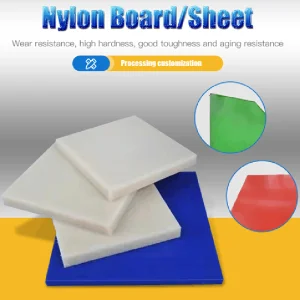
Extended inventory selection: custom CNC machined wear components, semi-finished cast billets, and high-performance polyolefin sheeting.