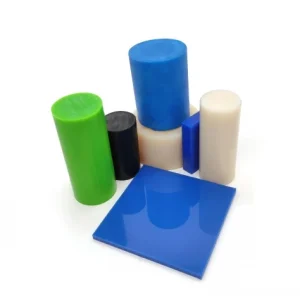
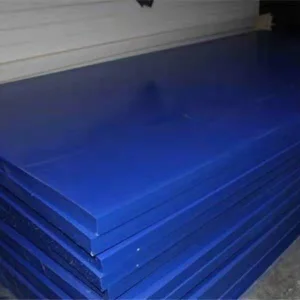
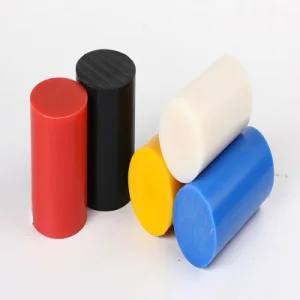
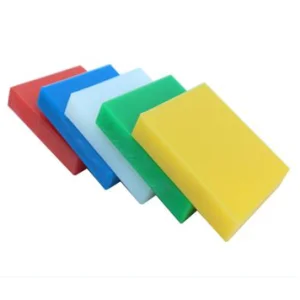
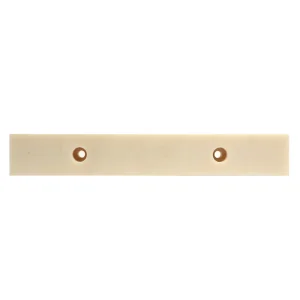
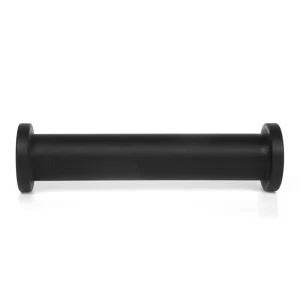
Engineering Plastics Stock Shapes & Industrial Rod Inventory
Premium grade polyolefin, polyamide, and fluoropolymer solid bars extruded and cast under strict DIN ISO 9001:2015 quality surveillance.
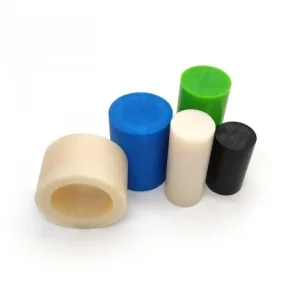
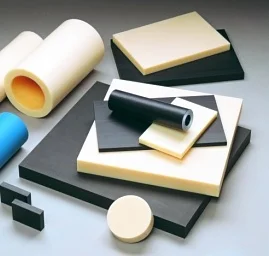
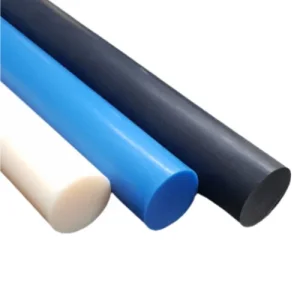
LDPE Rod Polymer Architecture: Morphology, Viscoelasticity & Extrusion Dynamics
A rigorous examination of low-density polyethylene resin behavior under continuous single-screw and twin-screw extrusion parameters.
Macromolecular Branch Topology
Low-Density Polyethylene (LDPE) is synthesized through high-pressure free-radical polymerization (1,000–3,000 bar at 80–300°C). Unlike high-density polyethylene (HDPE), the radical transfer mechanism creates an extensive constellation of both short-chain (ethyl and butyl) and long-chain branching. This molecular architecture prevents tight crystallite packing, resulting in a density profile of 0.910–0.935 g/cm³.
For industrial round bars (LDPE Rods), this branch network confers exceptional impact attenuation, low flexural modulus, and ductile resilience even at temperatures dipping down to -50°C. Machine tool operators benefit from zero micro-cracking during rapid lathe processing.
Rheology & Void-Free Annealing
Extruding large-diameter solid LDPE rods (diameters from 15mm up to 350mm) introduces severe engineering challenges regarding volumetric shrinkage and centerline vacuum porosity. Because polyethylene contracts up to 2.5–3.5% during transition from molten state to semi-crystalline solidus, famous LDPE rod factories employ deep-flighted, barrier-flight screws with length-to-diameter (L/D) ratios exceeding 30:1.
Downstream crystallization is managed via pressurized calibrators with recirculating, multi-stage temperature-controlled water jackets, followed by 24-hour thermal annealing in circulating hot-oil or inert gas ovens to relieve residual hoop stress.
Dielectric & Chemical Passivity
From an electrochemical perspective, LDPE contains non-polar, saturated hydrocarbon backbones without hydrolyzable functional groups. This makes LDPE rods completely immune to moisture absorption (water uptake <0.01% per ASTM D570), aqueous salt solutions, strong alkalis (such as 50% Sodium Hydroxide), and oxidizing acids at ambient operating ranges.
Furthermore, its non-polar nature yields superior dielectric strength (>20 kV/mm) and a dielectric constant of ~2.28 that remains invariant over high frequencies, establishing it as the premier stock material for RF insulators and high-voltage transmission spacers.
| Polymer Parameter | Extruded LDPE Rod | Extruded HDPE Rod (PE-300) | UHMWPE Rod (PE-1000) | Cast MC Nylon (PA6C) | Polyoxymethylene (POM-C) |
|---|---|---|---|---|---|
| Specific Density (g/cm³) | 0.915 – 0.928 | 0.950 – 0.962 | 0.930 – 0.940 | 1.15 – 1.16 | 1.41 – 1.42 |
| Tensile Yield Strength (MPa) | 10 – 16 | 24 – 32 | 21 – 28 | 75 – 88 | 65 – 72 |
| Elongation at Break (%) | > 350% | > 150% | > 250% | 25 – 45% | 30 – 40% |
| Flexural Modulus (GPa) | 0.20 – 0.35 | 1.00 – 1.40 | 0.65 – 0.80 | 3.00 – 3.40 | 2.70 – 3.10 |
| Izod Impact Strength (kJ/m²) | No Break | 12 – 18 | > 100 (Dual Notched) | 5 – 8 | 6 – 9 |
| Shore Hardness (Scale D) | 44 – 52 | 63 – 68 | 60 – 65 | 82 – 86 | 80 – 84 |
| Continuous Service Temp (°C) | -50 to +75 | -50 to +80 | -150 to +80 | -40 to +110 | -40 to +100 |
Tier-1 Global Manufacturers & LDPE Extrusion Plants: Selection Criteria
Evaluating vendor capabilities, extrusion infrastructure, ultrasonic centerline integrity testing, and chemical batch traceabilities.
Virgin Resin Feedstock Discipline
Leading enterprises never blend non-homogenized post-industrial scrap into virgin LDPE rod formulations. Premier extrusion mills enforce strict resin sourcing from world-scale petrochemical conglomerates like PetroChina, Sinopec, ExxonMobil, and SABIC, with melt flow index tolerance kept within ±0.05 g/10 min.
Multi-Zone Gravimetric Dosing
Modern extrusion production lines employ continuous loss-in-weight gravimetric feeders that deliver constant pressure melt profiles. This prevents periodic density gradients along the extruded round bar, ensuring that precision CNC turned components maintain radial roundness without out-of-round deformation.
Non-Destructive Sonar Defect Scanning
Centerline piping, blowholes, and density anomalies are invisible to the naked eye on thick billets. Tier-1 producers integrate inline or immersion ultrasonic transducer scanning (per ASTM E114 standards) across all extruded bars exceeding 50mm in outer diameter to guarantee absolute physical uniformity.
Traceable Batch Documentation
Full factory inspection sheets (EN 10204 Type 3.1) accompany each manufacturing batch. Overseas procurement groups obtain verifiable test reports indicating real specific gravity, Melt Mass-Flow Rate, Charpy impact toughness, and raw monofilament melt temperatures.
Worldwide Localized Application Scenarios: Where LDPE Rods Excel
From high-purity chemical reagent delivery systems in North America to cryogenic insulation barriers in Scandinavia, see how custom machinists utilize LDPE rod stock.
Chemical Processing & Corrosive Plating
In industrial regions such as the Rhine-Ruhr industrial belt in Germany and the Texas Gulf Coast in the United States, LDPE round bars are turned into chemical plugs, float valves, acid manifold manifolds, and dip-pipe spacers. Because LDPE resists aggressive chromic, nitric, and hydrofluoric acid vapors, it outperforms nylon and brass in pickling baths, chrome electroplating facilities, and wastewater neutralization basins.
Orthotics, Prosthetics & Medical Fixtures
Medical equipment fabricators in Western Europe and Japan rely on natural-grade LDPE solid rods to mill custom joint bushings, flexible prosthetic cores, and cushioning bumpers. Its physiological neutrality, absence of plasticizers, low shore durometer, and compliance with USP Class VI biological reactivity assessments make it a biocompatible, hypoallergenic choice for prolonged skin-contact assemblies.
Subsea Instrumentation & Buoyancy Seals
Offshore oil platforms and autonomous underwater vehicles (AUVs) operating in the North Sea, Gulf of Mexico, and South China Sea utilize machined LDPE rods for underwater connector encapsulation, deep-sea sensor protectors, and neutrally buoyant guide rings. Its specific gravity of 0.920 ensures it stays lightweight in marine water, resisting bio-fouling and long-term seawater absorption.
Semiconductor Cleanroom Wet Benches
Wafer fabrication clusters across Taiwan, South Korea, and the US Silicon corridor employ high-purity virgin LDPE rods for turning wet-station pins, chemical spray nozzles, and wafer basket retaining clips. The complete absence of halogenated additives, plasticizer plastic outgassing, and ionic metal contaminants ensures sub-ppb ultra-pure water (UPW) cleanliness.
Food & Beverage Bottling Line Deflectors
Continuous conveyor networks for commercial dairy, breweries, and packaging plants throughout Australia and Europe integrate custom-turned LDPE rollers, guide bars, and star-wheel diverters. LDPE’s elasticity cushions delicate glass containers against shock impact, lowering fracture incidence while meeting FDA 21 CFR 177.1520 food-contact safety codes.
High-Voltage RF Transmission Insulators
Electrical utilities in North America and Latin America implement machined LDPE round bars for stand-off insulators in high-frequency radio transmitters, dielectric barriers in switchgear, and capacitive pulse forming components. Its volume resistivity (>10¹⁶ Ω·cm) eliminates electrical tracking and breakdown issues even in tropical condensation environments.
Chinese Manufacturing Ecosystem: Supply Chain Resilience, Throughput & Cost Efficiency
Analyzing the macro-logistics, integrated resin synthesis complexes, automated continuous casting, and lean tooling turnaround that make Chinese engineering plastic plants competitive.
Integrated Upstream Petrochemical Feedstocks
China's Hebei and Bohai-Rim industrial corridors boast direct pipeline links to major domestic refining crackers. This physical proximity shields downstream extruders from international shipping container delays and volatile feedstock surcharges, ensuring uninterrupted virgin polymer resin deliveries even during major macro supply-chain shifts.
Bulk railcar resin unloading into dry storage silos prevents atmospheric moisture ingress, eliminating the hydrolyzed splay flaws common in fragmented production networks.
Ultra-Rapid Tooling & Custom Diameter Dies
While European and American stock shape extruders frequently demand 8 to 12 weeks of tooling lead time for non-standard diameter calibrators, Chinese factories utilize in-house wire-EDM die cutting and rapid CNC boring. Custom extrusion dies (e.g., 112mm, 185mm, or 290mm outside diameter) are engineered, tested, and put into production within 7 to 10 working days.
This agility slashes raw material turning waste for international machine shops, as bars are delivered near-net size for immediate turning.
Continuous Multi-Cavity Extrusion Lines
Capital investment in advanced multi-strand extrusion equipment allows simultaneous pulling of multiple LDPE rods on a single automated haul-off traction system. Electronic melt pressure transducers and laser diameter gauges continuously feedback to variable frequency drives, maintaining a tight outer diameter tolerance (±0.2mm to ±0.8mm across 3-meter bars).
The resulting scale economics deliver up to a 25–40% cost efficiency advantage compared to Western regional converters without sacrificing physical properties.
Virgin Pellet Desiccation
Polymer granules undergo desiccant hopper dehumidification to guarantee sub-0.01% moisture entering the extruder throat.
Barrier Screw Plasticization
Continuous melt blending at 180–220°C across 5 independent PID heating zones prevents thermal polymer degradation.
Vacuum Sizing & Quenching
Melt passes through stainless vacuum sizing sleeves with multi-stage cooling to eliminate outer skin ovality.
Deep Thermal Annealing
Rods rest inside convection relief chambers for 18–36 hours to relieve internal tensile stresses and prevent machining warping.
Sonar QC & Precision Sawing
Ultrasonic detection identifies voiding flaws, followed by square-end carbide sawing and protective poly-sleeving.
Technology Roadmap & Sustainable Evolution: The Next Decade in LDPE Rod Production
Emerging developments in bio-based monomers, nano-composite reinforcement, molecular mass enhancement, and circular economy compliance.
Bio-Based & Mass-Balanced LDPE
Pioneering manufacturers are transitioning to drop-in renewable bio-ethylene sourced from hydrotreated vegetable oils and sugarcane waste. These bio-attributed LDPE rods yield an identical chemical fingerprint, crystalline structure, and machining performance while reducing cradle-to-gate carbon footprints by up to 70%.
Nano-Clay & Graphene Infusion
By blending exfoliated graphene nanoplatelets or organo-modified montmorillonite clays at 0.5–2.0 wt%, R&D engineers can boost LDPE flexural stiffness without sacrificing low-temperature ductility. This bridges the mechanical gap between LDPE and HDPE while maintaining LDPE's low processing resistance.
Fluorinated Surface Passivation
Continuous inline oxy-fluorination treatment delivers thin, chemically bonded fluorocarbon skins to extruded rods. This surface barrier enhances solvent permeation resistance against hydrocarbons, aromatic compounds, and fuel blends, opening new applications in petrochemical vapor handling.
Chemical Pyrolysis Monomer Loops
Advanced factories partner with feedstock depolymerization hubs to incorporate virgin-equivalent monomer inputs derived from chemical pyrolysis. This closed-loop approach bypasses mechanical downcycling and produces LDPE bars that maintain direct compliance with European EU 10/2011 food migration mandates.
International Regulatory Compliance & Local Technical Support
Ensuring export products comply with international legal frameworks, food-contact standards, environmental criteria, and overseas logistics protocols.
FDA 21 CFR 177.1520 & EU 10/2011
Exported natural-white and virgin LDPE rods meet FDA Title 21 CFR 177.1520 (olefin polymers) for direct contact with fatty, acidic, and aqueous food items. Overseas importers receive certified European Union Commission Regulation (EU) No 10/2011 overall migration limit (OML) and specific migration limit (SML) compliance documentation tested by accredited third-party labs like SGS and TÜV Rheinland.
RoHS 3 & REACH SVHC Compliance
Every LDPE rod formulation is screened to ensure zero hazardous substances under RoHS Directive 2011/65/EU and its amendment (EU) 2015/863. Products contain no lead, mercury, cadmium, hexavalent chromium, PBBs, PBDEs, or toxic phthalates (DEHP, BBP, DBP, DIBP). Regular analyses cross-reference the European Chemicals Agency (ECHA) candidate list for Substances of Very High Concern (SVHC).
Export Packaging & Ocean Logistics
Long round bars are prone to bending, warping, or surface scuffing if stacked improperly during intermodal container shipping. Reputable exporters wrap bars in protective moisture-barrier polyethylene wrap, bundle them with strapping bands, and pack them within IPPC ISPM-15 heat-treated fumigated timber crates with anti-desiccant silica gel packets.
Engineering Plastics & LDPE Rod Procurement: Expert Q&A
In-depth technical answers addressing polymer machinability, shrinkage ratios, internal stress relief, and overseas ordering workflows.
How does LDPE rod differ fundamentally from HDPE (High-Density Polyethylene) rod in CNC machining?
The primary distinction lies in molecular branch density and crystallinity. LDPE features a higher degree of short- and long-chain branching, resulting in lower crystallinity (45–55%) compared to HDPE (70–80%). During CNC lathe turning and milling:
- Flexibility & Deflection: LDPE has a significantly lower flexural modulus (0.25 GPa vs. 1.2 GPa for HDPE). Thin LDPE rods deflect easily under cutter tool pressure, requiring live center supports and high rake-angle cutting tools to prevent chatter.
- Chip Formation: LDPE produces continuous, ductile ribbon chips that tend to wrap around spinning spindles, requiring positive-rake chip breakers and air-blast cooling. HDPE produces crisper, segmented chips.
- Surface Finish & Burr Behavior: LDPE is softer (Shore D 45–52 vs Shore D 65 for HDPE), meaning it forms flexible exit burrs. Carbide cutters ground specifically for aluminum and non-ferrous plastics with polished rake faces provide clean cuts without material tearing.
What causes internal vacuum voiding in thick LDPE rods, and how do tier-1 factories prevent it?
Polyethylene contracts significantly (up to 3.5% volumetric change) as it transitions from a 200°C melt to room temperature. When extruding thick bars (>50mm OD), the exterior skin solidifies inside the water-cooled calibrator while the core remains molten. As the core gradually cools and contracts, it pulls outward against the rigid exterior skin, creating vacuum voids along the rod's centerline.
Famous LDPE rod factories eliminate this defect through four engineered countermeasures: (1) specialized barrier screws that deliver low-temperature homogeneous melt; (2) slow, pressurized haul-off rates that extend cooling duration; (3) multi-stage temperature-stepped water baths (e.g., 60°C → 40°C → 20°C); and (4) secondary convection annealing ovens that relieve internal tension before final center-point shrinkage can tear the core.
Can extruded LDPE rods be bonded or glued with structural adhesives?
Due to its non-polar chemical backbone and low critical surface energy (≈ 31 dynes/cm), untreated LDPE cannot be effectively bonded using conventional cyanoacrylates, epoxies, or polyurethane adhesives. The adhesive simply peels away without wetting the polymer surface.
To achieve high structural bond strength, the surface must first be activated using corona discharge, atmospheric plasma, flame treatment, or chemical oxidizing primers (such as specialized silane/polyolefin adhesion promoters). Alternatively, hot-gas welding using LDPE welding rod or ultrasonic friction welding produces clean, high-strength joints that fuse the polymer chains together without chemical adhesives.
What dimensional tolerances are standard for continuous extruded LDPE rods?
Standard factory tolerances follow ISO 2768-m (or DIN 16980 for semi-finished extruded plastic rods). Because LDPE is soft and flexible, diameter tolerances typically range from +0.2mm / +0.8mm on rods between 20mm and 50mm, and up to +0.5mm / +2.0mm on large rods between 100mm and 250mm. Standard factory lengths are extruded slightly oversized (e.g., 1000mm ± 5mm or 2000mm ± 10mm) to allow clean square-end facing by the machinist.
How does LDPE perform in low-temperature cryogenic versus elevated thermal environments?
LDPE exhibits a very low glass transition temperature (Tg ≈ -110°C to -125°C). Consequently, it remains remarkably flexible and ductile at temperatures as low as -50°C to -60°C, showing no brittle shattering under dynamic impact where materials like POM, PA6, or PVC might crack.
Conversely, its upper continuous service temperature limit is constrained to approximately +70°C to +80°C. Above this range, its mechanical modulus drops rapidly as it approaches its crystalline melting point (Tm ≈ 108°C – 115°C). For applications requiring polyolefin chemical resistance above 90°C, Polypropylene (PP) or High-Density Polyethylene (HDPE) are generally recommended.
Are LDPE rods UV-stabilized for permanent outdoor exposure?
Standard natural (translucent-white) virgin LDPE rods contain only basic thermal processing stabilizers and will degrade under prolonged ultraviolet radiation exposure, causing surface yellowing, micro-cracking, and loss of tensile elongation within 12–24 months of direct sunlight exposure.
For outdoor marine, agricultural, or utility applications, top manufacturers compound the resin with 2.0% to 2.5% finely dispersed carbon black (furnace black per ASTM D1603) or hindered amine light stabilizers (HALS). Black UV-stabilized LDPE rods provide 10 to 15+ years of outdoor service life without significant property loss.
What is the standard lead time and Minimum Order Quantity (MOQ) for custom-diameter LDPE rods from China?
For standard stocked diameters (15mm to 100mm in natural white or black), typical dispatch times are 3 to 5 business days. For customized dimensions, specialized masterbatch colors (blue, green, red, yellow), or custom formulations, production batches generally carry an MOQ of 300 kg to 500 kg per size, with production turnarounds completed in 10 to 14 days plus ocean or air transit.
Engineered Semi-Finished Stock & Custom Machined Components
Explore our broader line of polyamide sheets, nylon rings, UHMWPE pads, and multi-polymer stock rods manufactured to your project drawings.