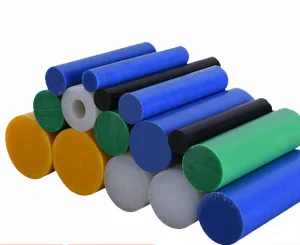
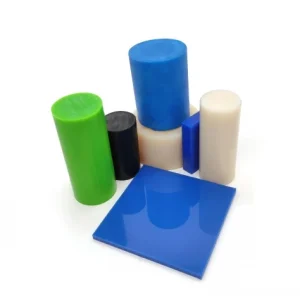
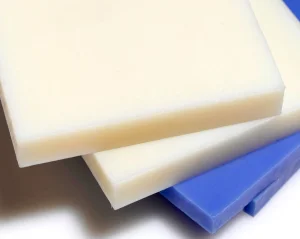
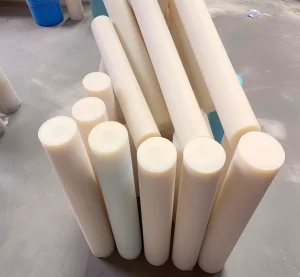
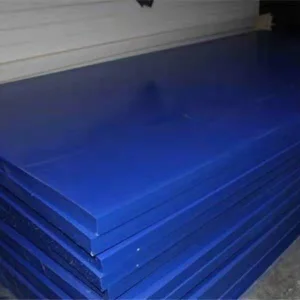
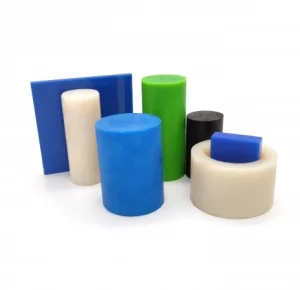
Premier Engineering Plastics Selection: Part I
Precision-manufactured semi-finished polymers formulated for tight mechanical tolerances, zero void ratios, and structural endurance in severe industrial environments.
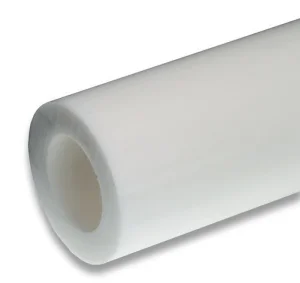
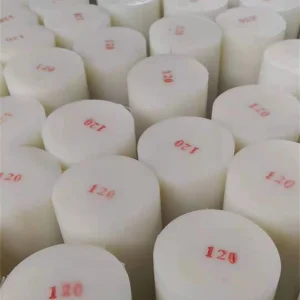
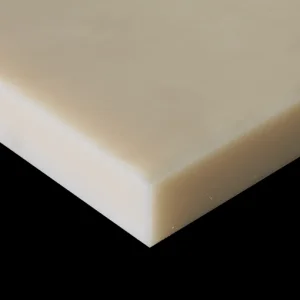
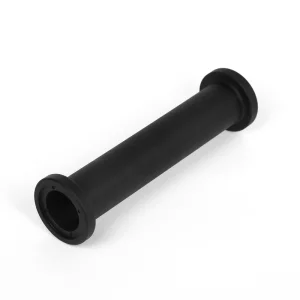
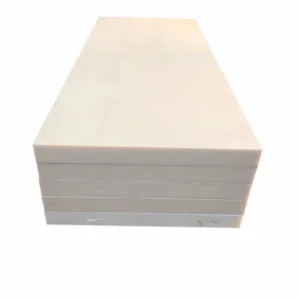
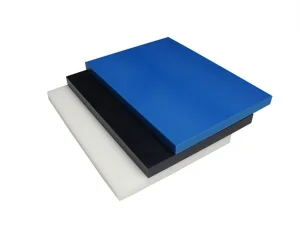
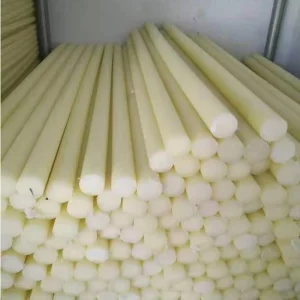
HDPE Board Industry Trends & Polymer Evolution
Global infrastructure, chemical processing, and sustainable packaging initiatives are accelerating technical demands for High-Density Polyethylene (HDPE) sheets. Modern polymer science focuses on molecular uniformity and high environmental stress-crack resistance (ESCR).
High-MW & Bimodal Resins
The shift toward bimodal resin compounding integrates exceptional stiffness with superior environmental stress-crack resistance (ESCR). Industrial heavy boards resist ductile-to-brittle transition even when handling caustic substances under permanent mechanical tension.
Continuous Extrusion & Annealing
Internal stress in thick polymer sheets has historically generated warping during high-speed CNC milling. Advanced multi-stage thermal annealing ovens remove residual crystallization stresses, achieving plane-parallel tolerance down to ±0.2mm across 3000mm profiles.
Stabilized Additive Systems
Formulations containing Hindered Amine Light Stabilizers (HALS) and specialty anti-static carbon masters expand HDPE application bounds. From offshore cryogenic terminal fenders to hazardous dust transport chutes, modified boards protect capital facilities from degradation.
Material Performance & Selection Criteria
International EPC contractors and parts manufacturers balance mechanical yield strength against chemical compatibility and thermal friction. Review the empirical property metrics across our core engineering thermoplastic portfolio.
| Polymer Classification | Specific Density (g/cm³) | Tensile Strength (MPa) | Coefficient of Friction (Dynamic) | Continuous Operating Temp (°C) | Core Application Paradigm |
|---|---|---|---|---|---|
| HDPE Board (PE-300) | 0.95 - 0.96 | 23 - 32 | 0.20 - 0.28 | -50 to +80 | Chemical tanks, food cutting boards, marine bumpers, scrubbers |
| UHMWPE Board (PE-1000) | 0.93 - 0.94 | 20 - 28 | 0.10 - 0.15 | -150 to +80 | Mining chutes, hopper liners, harbor fenders, sliding wear strips |
| Cast Nylon PA6 / MC | 1.15 - 1.16 | 75 - 85 | 0.35 - 0.42 | -40 to +105 | Heavy-duty crane sheaves, conveyor gears, support bushings |
| POM-C (Polyacetal) | 1.41 - 1.42 | 65 - 72 | 0.25 - 0.32 | -50 to +100 | High-precision gears, submerged valve rings, dimensional fixtures |
| PP Sheet (Polypropylene) | 0.91 - 0.92 | 30 - 38 | 0.30 - 0.35 | 0 to +100 | Electroplating tanks, etching ventilation systems, laboratory boxes |
Enterprise Solutions Powered by High-Density Polyethylene
Proven engineering outcomes engineered to mitigate wear, prevent electrolytic corrosion, eliminate fluid retention, and significantly reduce operational downtime.
Hydraulic & Marine Infrastructure
HDPE boards resist saline decay, marine borers, and UV radiation. Deployed as dock bumpers, lock-wall rub strips, and pontoon wear plates without oil leeching or waterlogging.
Chemical Wet Processing
Exceptional inertness to concentrated inorganic acids, caustics, and bleaching agents. Suitable for acid tank fabrication, galvanic dipping barrels, and wastewater flumes.
Hygienic Food Packaging Lines
Physiologically neutral grades meeting strict global migration guidelines. Non-porous surfaces prevent bacterial colonisation while preserving knife edges in meat-packing hubs.
Bulk Conveying & Logistics
Low non-stick surface energy facilitates continuous flow of aggregates, grain, and parcel systems. Used for guide rails, star wheels, dead plates, and chute side-wall liners.
Compliance, QA Protocols & Export Verification
International industrial trade requires documented compliance. SHUNDA implements end-to-end traceability, rigorous metallurgical lab testing, and overseas port logistics handling.
Material Test Reports (EN 10204 3.1)
Every production batch includes certified melt flow index (MFI), density verification (ISO 1183), flexural modulus, and charpy impact energy data. Buyers obtain documented material continuity from resin feed to destination.
FDA & REACH/RoHS Certification
Our food-grade natural HDPE sheets satisfy US FDA 21 CFR 177.1520 regulations and European Commission Regulation (EU) No 10/2011. Heavy metal content and volatile SVHC chemicals remain below detection thresholds.
Containerized Protection Packaging
Thick HDPE boards are packed on fumigated solid timber or composite pallets with waterproof PE stretch wrapping and rigid corner edge protectors. Sheets arrive flat, clean, and free of transport-induced scratch defects.
Polymer Processing Roadmap & Sustainable Production
Bridging chemical efficiency, advanced automation, and circular polymer resource management to support next-generation industrial manufacturing.
Automated Ultrasonic Gauging
Integrating multi-channel ultrasound thickness scanners directly onto extrusion calibration lines guarantees nominal thickness tolerance across the entire sheet width, removing manual sampling variance.
Circular Mechanical Upcycling
Closed-loop clean trimming reclamation feeds back into non-critical utility plate lines. Clean regrind cycles reduce production emissions while maintaining precise melt flow index parameters.
Nanocomposite Functional Fillers
Active research into ceramic and boron-nitride microfillers aims to raise thermal conductivity and flame retardancy (UL94 V-0) in polyethylene matrices without compromising elongation at break.
Frequently Addressed Technical Inquiries
Straight answers regarding polymer specifications, machining clearances, export logistics, and OEM fabrication tolerances directly from our engineering team.
What distinguishes commercial HDPE Board from UHMWPE sheets in abrasive applications?
How do you resolve dimensional warping during high-speed CNC routing of HDPE boards?
Can SHUNDA supply custom-colored or UV-stabilized dual-color HDPE core sheets?
What are the minimum order quantities (MOQ) and production lead times for export contracts?
How does your factory ensure surface flatness and thickness tolerances on 50mm+ heavy boards?
Premier Engineering Plastics Selection: Part II
Precision cast nylon bars, multi-polymer wear plates, and heavy machinery industrial accessories ready for consolidated container dispatch.