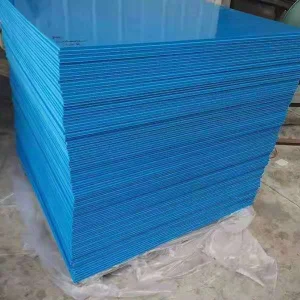
Featured Polymer Inventory & Stock Profiles
Direct supply from Hebei production base: high-impact wear materials, virgin casting formulations, and precision-engineered structural blanks.
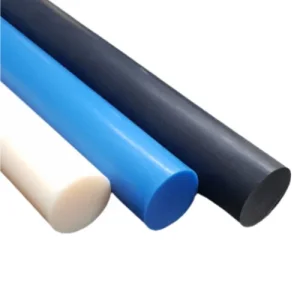
OEM Cast MC Nylon Rod
Explore Specs & RFQ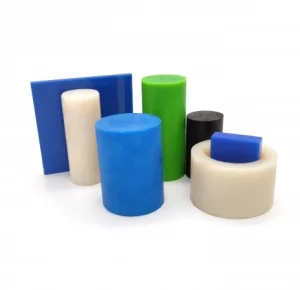
Engineering Polyamide PA66 / UHMWPE Rod
Explore Specs & RFQ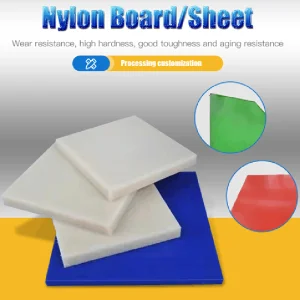
SBR Nitrile Cloth Nylon Rubber Sheet
Explore Specs & RFQ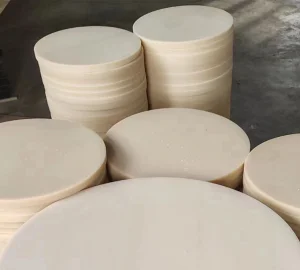
High-Impact Cushion for Piling Hammer
Explore Specs & RFQ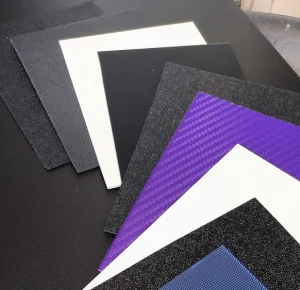
Smooth Texture Rigid ABS Polymer Sheet
Explore Specs & RFQ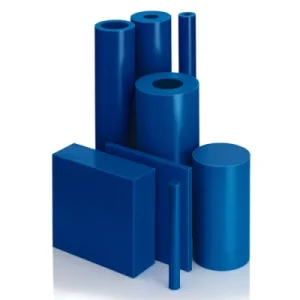
UHMWPE Heavy Duty Crane Outrigger Pads
Explore Specs & RFQ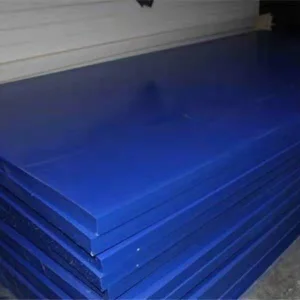
Factory Direct Cast MC Nylon PA6 Sheet
Explore Specs & RFQ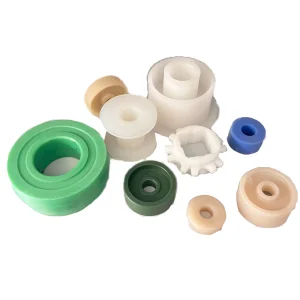
Precision Multi-Axis CNC Machined Parts
Explore Specs & RFQTechnical White Paper: Rubber PA6 Global Engineering Landscape
A deep architectural evaluation of reactive compatibilization, cold-temperature impact mechanics, and economic advantages of elastomer-modified polyamide.
Global Market Dynamics
The convergence of automotive lightweighting, automated material handling, and extreme-environment infrastructure has accelerated demand for modified Polyamide 6. Unmodified PA6 exhibits high tensile modulus, yet its semi-crystalline matrix displays inherent notch sensitivity at temperatures below 0°C. Synthesizing Rubber-Modified PA6 bridges the continuum between rigid engineering thermoplastics and resilient vulcanizates.
Reactive Compounding Chemistry
Achieving stable phase separation without delamination requires advanced reactive extrusion. Maleic Anhydride grafted Polyolefin Elastomers (POE-g-MAH) or EPDM-g-MAH act as functionalized bridges. The maleic anhydride groups undergo high-shear covalent bonding with terminal amine groups (-NH2) along the PA6 polymer backbone, creating sub-micron core-shell rubber domains that absorb crack initiation energy.
Discount Sourcing & Yield Mastery
Providing genuine discount terms as an export manufacturer does not denote structural compromise. Through integrated backward polymerization, proprietary casting mold recycling, and localized energy generation in Xingtai, SHUNDA optimizes production yield to >98.7%. This eliminates waste margins and enables tier-1 OEM pricing structures directly to global procurement divisions.
| Property Matrix (ASTM / ISO) | Virgin PA6 (Neat) | Rubber-Modified PA6 (Super-Tough) | Engineering Benefit |
|---|---|---|---|
| Notched Izod Impact @ 23°C (kJ/m²) | 4.5 – 6.0 | 55.0 – 85.0 | 12x increase in dynamic shatter resistance under sudden mechanical loads. |
| Notched Izod Impact @ -40°C (kJ/m²) | 2.0 – 2.8 | 18.0 – 26.0 | Prevents catastrophic cold-climate shattering in subsea/mining applications. |
| Tensile Modulus (MPa) | 2,800 – 3,200 | 1,750 – 2,100 | Controlled compliance prevents surface micro-fracturing in repetitive bearing slides. |
| Dynamic Friction Coefficient (dry vs steel) | 0.38 – 0.45 | 0.22 – 0.28 | Elastomeric inclusions serve as built-in sliding amortizers, damping NVH profiles. |
| Elongation at Break (%) | 30 – 60% | > 180% | Exceptional plastic deformation before fracture; eliminates stress crack propagation. |
Macro-Industry Solutions & Application Vectors
Engineered to solve the fundamental failure points of unyielding polymers under repetitive shock, dynamic vibration, and corrosive thermal cycling.
Heavy Construction & Piling Equipment
Hydraulic piling rigs and heavy drop hammers destroy ordinary polyurethane or virgin nylon cushions within hours. Rubber-toughened PA6 composite impact pads absorb repetitive multi-ton kinetic impacts without permanent plastic yielding, safeguarding anvil assemblies and suppressing sound emissions.
Mining Logistics & Transfer Chutes
In high-abrasion transfer points, the elastomeric domains embedded in the PA6 matrix produce a micro-rebound effect. When ore particles impact the liner, rubber PA6 deflects elastically rather than eroding, extending service life by 350% over conventional ultra-high-molecular polyethylene (UHMWPE) or bronze.
Sub-Zero Port & Marine Operations
Arctic freeze environments embrittle standard thermoplastic components. SHUNDA rubber PA6 maintains crack arrest stability at temperatures down to -45°C. Deployed globally in ship loader slide shoes, mooring cable sheaves, and dry-dock crane outrigger stabilization systems.
Technical Roadmap: Next-Generation Elastomer Polyamides
Our ongoing R&D trajectory establishes sustainable performance baselines, combining circular macromolecular recovery with ultra-high performance nano-graphene compounding.
Reactive In-Situ Grafting
Consolidation of automated underwater strand pelletization and in-line dual-screw compounding. Guarantees narrow rubber phase dispersion (particle diameters strictly maintained between 0.2 and 0.5 microns) for optimal shear band deformation without stiffness degradation.
Elastomer-Graphene Composites
Introducing functionalized graphene nanoplatelets directly into the rubber-PA6 interphase. This breakthrough elevates flexural modulus back above 3,000 MPa while retaining >60 kJ/m² notch impact toughness, preventing creep deformation in high-load continuous gearing.
Enzymatic Polymer Depolymerization
Developing low-enthalpy chemical recycling protocols capable of cleanly separating crosslinked rubber modifiers from virgin caprolactam monomer rings, closing the industrial lifecycle loop with net-zero carbon footprints for international compliance.
Procurement & Technical Engineering Clarifications
Direct answers regarding material specifications, machining practices, export documentation, and custom compounding options.
What distinguishes Rubber PA6 from standard Cast PA6 (MC Nylon)?
Cast MC Nylon (Monomer Cast) utilizes anionic polymerization of caprolactam to achieve exceptional hardness and crystalline density, making it ideal for rigid bushings. However, MC Nylon can crack under severe shock impacts. Rubber PA6 is alloyed with functionalized elastomeric phases, yielding notched impact strength up to 15 times higher, dramatically dampening vibration and eliminating notch failure.
How does moisture absorption affect rubber-modified Polyamides?
Standard PA6 exhibits an equilibrium moisture absorption of ~2.5% to 3.0% by weight, altering dimensional tolerances. Rubber-modified PA6 compounds integrate hydrophobic polyolefin elastomers (EPDM/POE), reducing volumetric moisture equilibrium down to 1.6%–2.1%, thereby substantially enhancing environmental dimensional stability.
Can Rubber PA6 stock shapes be machined with regular CNC equipment?
Yes. Rubber PA6 features high elasticity, which necessitates sharp tooling geometries (positive rake angles of 10°–15°) and polished flute channels to avoid elastic deformation during cutter engagement. High feed rates with moderate surface speeds prevent frictional overheating, ensuring clean chip ejection and dimensional tolerances within ±0.02 mm.
What quality assurances and export documentation accompany orders?
Every shipment is audited under ISO 9001 protocols and supplied with EN 10204 3.1 Material Test Reports (MTR) detailing density, tensile yield, Charpy impact, and shore hardness. Full compliance with RoHS, REACH, and custom sea-freight phytosanitary wooden crating standards is guaranteed.
Industrial Shapes, Rods & Machined Product Portfolio
Complete product range available with factory-direct volume discounts, bespoke pigments, and rapid global door-to-port container logistics.
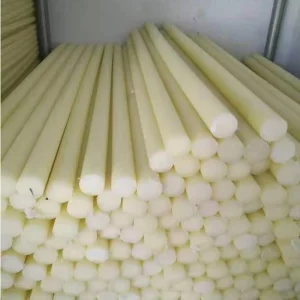
Cast PA6 Polyamide / PTFE Rod
Explore Specs & RFQ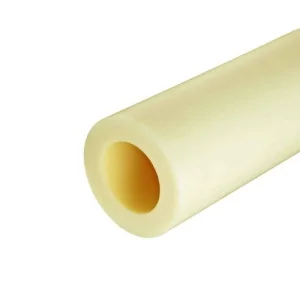
Industrial Nylon & Polymer Tubes
Explore Specs & RFQ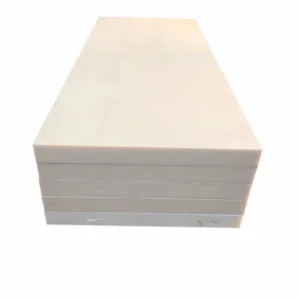
Natural Virgin MC Nylon Plate
Explore Specs & RFQ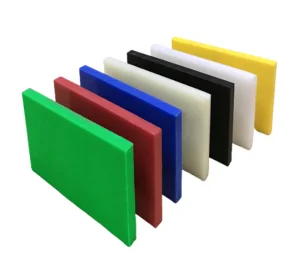
PA6 / PA66 / HDPE Plastic Sheet
Explore Specs & RFQ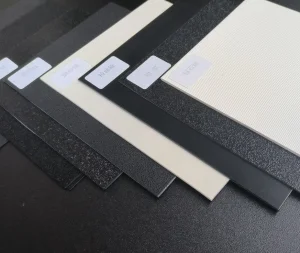
Extruded Smooth ABS Thermoforming Sheet
Explore Specs & RFQ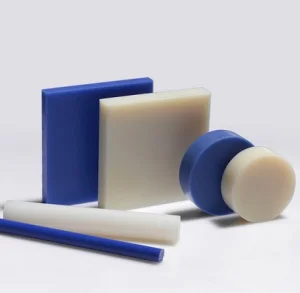
PA6 / PA66 High-Grade Round Bar
Explore Specs & RFQ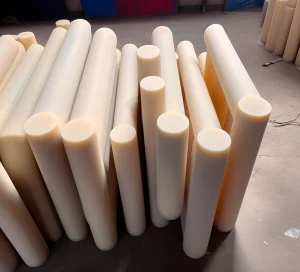
High-Grade Cast MC Nylon Solid Rod
Explore Specs & RFQ