
Factory-Direct Heavy-Duty Elastomer & Engineering Plastic Series
Mill-certified, discount-tiered semi-finished engineering polymers and impact boards produced for marine, civil construction, mining, and machine-building enterprises worldwide.
Navigating Modern Rubber Board & Polymer Sheet Procurement
Addressing dynamic wear parameters, compound formulation standards, and supply resilience across international supply lines.
Mechanical Dampening & Elastomer Science
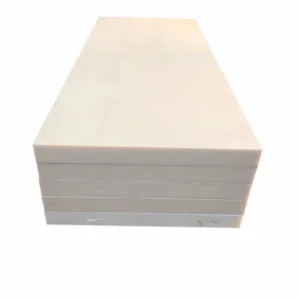
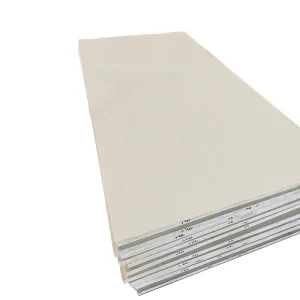
Industrial rubber boards, dense SBR nitrile matrices, and vulcanized insertion cloth laminates form the foundation of heavy kinetic dissipation. In crushing plants, marine docks, and foundation pile driving, these slabs exhibit distinct viscoelastic dissipation characteristics, absorbing high impact force without brittle propagation.
Structural Tribology & Polymer Synergy
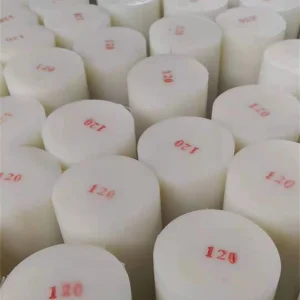
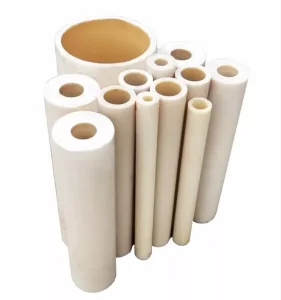
Modern material architectures frequently pair durable rubber backings with high-slip cast polyamide (MC PA6), UHMWPE, or POM contact faces. This synergistic hybrid composite mitigates structural sound, resists chronic shearing stress, and provides superior surface lubricity against continuous abrasive aggregate movement.
Volume Economics & Tiered Export Pricing
As an established discount rubber board exporter and dedicated manufacturing plant in Hebei, China, SHUNDA eliminates third-party markups. We deliver wholesale economies of scale, customized compound compounding, and stable container load scheduling directly to international OEM distributors and MRO organizations.
China Factory Supply Chain Strengths for Global Buyers
From raw monomer integration to high-tonnage hydraulic curing presses, explore the operational efficiencies behind our export manufacturing infrastructure.
Upstream Monomer Integration
Direct chemical procurement contracts for caprolactam, virgin synthetic elastomers, and stabilizers buffer our supply against global market volatility, guaranteeing competitive pricing across raw batch runs.
Continuous Hydraulic Vulcanization
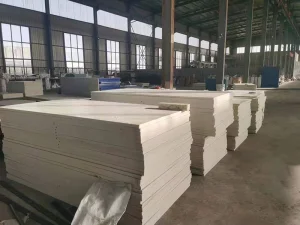
Our facility utilizes automated multi-daylight hydraulic vulcanizing lines alongside monomer casting ovens, producing dense, bubble-free rubber boards and plates with uniform Shore hardness tolerances.
In-House CNC Fabrication Hub
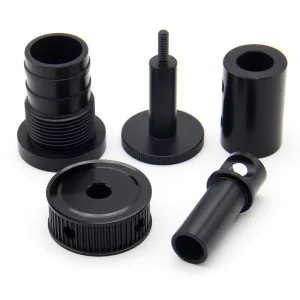
Stock boards are rapidly cut, waterjet-shaped, turned, and slotted in our internal machine center. We convert rough slabs into drop-in ready structural wear cushions, seals, and guide blocks to precise client prints.
Turnkey Freight & Port Access
Situated in Hebei, close to the Tianjin maritime hub, SHUNDA provides swift container packing, compliant ISPM 15 fumigation, full customs clearance declarations, and optimized ocean routing to cut transit lead times.
Global Procurement Demands: Solving Real-World Wear & Impact Issues
How multi-national procurement teams evaluate rubber boards, MC nylon wear plates, and insertion sheet integrity prior to approving enterprise contracts.
Thermal Degradation & Hysteresis Management
Under cyclic, high-load dynamic compression—such as deep foundation pile hammer driving—inferior rubber boards accumulate internal friction heat, inducing vulcanization breakdown and early core fracture. Engineers require specific resilience indices (DIN 53512) and thermal stabilization to guarantee reliable service lifetimes.
Chemical Immersion & Environmental Resistance
Mining wash plants, offshore quays, and pulp handling operations expose rubber boards and wear liners to mineral acids, aromatic hydrocarbons, and UV radiation. Procurement officers require strict chemical compatibility mapping—specifying Nitrile (NBR) for fuel contact, SBR for mechanical impact, and PP/UHMWPE for harsh acids.
Fabric Reinforcement & Tensile Tear Strength
To resist lateral mechanical elongation under sliding friction, rubber boards are often fortified with fabric plies (nylon, polyester, or cotton scrim). Verifying ply adhesion ratings according to ASTM D413 ensures the composite material will not delaminate under heavy hydraulic shearing pressures.
Industrial Polymer & Rubber Board Property Matrix
Comparative empirical data to support engineering design choices between rubber boards and structural thermoplastic wear plates.
| Material Classification | Hardness Range | Tensile Strength (MPa) | Operating Temp (°C) | Key Mechanical Differentiator | Core Industrial Use Case |
|---|---|---|---|---|---|
| Industrial SBR Rubber Board | 65 ± 5 Shore A | 4.5 – 8.0 | -25 to +70 | High rebound resilience, economical kinetic shock mitigation | Vibration damping pads, aggregate hopper liners |
| Nitrile (NBR) Insertion Cloth Board | 70 ± 5 Shore A | 6.0 – 12.0 | -30 to +110 | Hydrocarbon resistance, fabric ply anti-stretch stability | Oil-resistant gaskets, industrial workshop flooring, skirts |
| MC Cast Polyamide (PA6) Board | 80 – 85 Shore D | 75 – 88 | -40 to +105 | High load bearing, zero permanent set under static tonnage | Piling hammer cushion rings, crane sheaves, slide guides |
| UHMWPE Ultra-Wear Plate | 64 – 68 Shore D | 22 – 35 | -150 to +80 | Extremely low coefficient of friction (0.12), zero moisture pickup | Bulk material chutes, truck bed liners, marine fender faces |
| POM-C Acetal Copolymer Slab | 82 – 86 Shore D | 65 – 70 | -40 to +100 | Precision dimensional stability, minimal thermal creep | CNC machined gears, fluid manifolds, metering valves |
Application Scenarios Across Heavy Industry Verticals
Engineered rubber boards, nylon buffers, and wear assemblies deployed in extreme industrial environments worldwide.
Civil Foundation & Impact Hammer Piling
Piling machines exert destructive dynamic shock loads on hammer driving heads. Our custom-fabricated MC nylon ring cushions and laminated high-durometer rubber boards absorb secondary shock peaks, safeguarding hydraulic cylinders while transmitting necessary striking energy to the steel pile casing.
Mining, Quarrying & Bulk Ore Transfer
Transfer chutes in coal, iron ore, and aggregate facilities suffer intense gouging wear. Installing composite rubber-backed UHMWPE or thick cast nylon liners mitigates structural steel wall fatigue, suppresses high decibel noise pollution, and prevents sticky material bridging in wet hopper bins.
Marine Port Docks & Coastal Fender Units
Harbor berthing terminals require durable shock dispersion against ship hull impacts. Low-friction UHMWPE marine face plates mounted directly over heavy elastomeric rubber blocks safely absorb vessel docking momentum while resisting saline degradation, oil slicks, and marine bio-fouling.
Localized Support, ASTM/ISO Standards & Regulatory Compliance
Rigorous physical batch audits, documented certifications, and complete customs traceability ensure cross-border regulatory compliance for all exported goods.
ISO 9001:2015 Manufacturing
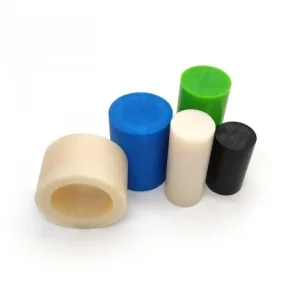
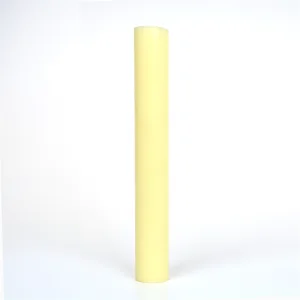
Every batch of rubber boards, nylon tubes, and POM rods undergoes automated density tests, Shore durometer verification, and tensile elongation tracking to guarantee uniform structural properties.
RoHS & REACH Traceability
Compliant with European Directive 2011/65/EU and Regulation (EC) No 1907/2006. Our rubber and plastic compounds are free of restricted phthalates, heavy metals, and hazardous aromatic compounds.
Export Packaging Security
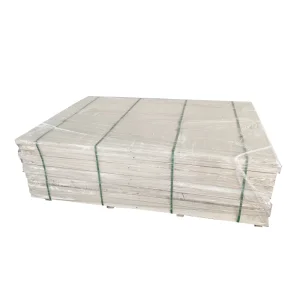
Reinforced seaworthy fumigated wooden crates, vapor-barrier inner foil covers, and heavy corner reinforcements protect semi-finished sheets from moisture exposure and edge deformation in transit.
Dedicated English Engineering Desk
Direct communication with senior materials engineers. We analyze your CAD blueprints (DWG, DXF, STEP) within 12 hours, advising on polymer grades, thermal expansion margins, and bolt-hole spacing.
Technological Trajectories in Engineering Polymers & Rubber Composites
How advances in self-lubricating composites, eco-friendly compounding, and digital toolpath fabrication are transforming industrial wear applications.
Internally Lubricated Cast Polyamides
The transition from standard PA6 to specialized oil-filled and solid-lubricant-infused cast nylon rods and boards reduces interfacial friction by up to 50%, removing the need for external grease maintenance in food handling, paper processing, and overhead crane applications.
Low-Volatile Synthetic Elastomer Formulations
Stricter workplace health guidelines are driving demand for odorless, low-VOC SBR, EPDM, and Nitrile boards. Refined sulfur curing systems and de-aromatized process oils ensure our rubber mats and flooring sheets satisfy rigorous international indoor environmental criteria.
High-Speed 5-Axis Polymer CNC Machining
Moving past manual saw-cutting, high-speed multi-axis router milling now enables complex chamfers, counterbores, and interlock channels directly on engineering plastic boards. This reduces downstream cycle times and accelerates installation for global machine builders.
Heavy-Impact Rubber Boards, Wear Cushion Rings & Specialty Stock
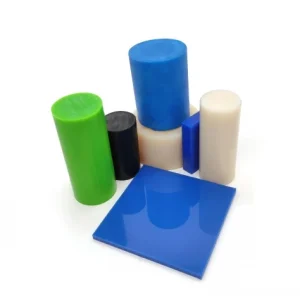
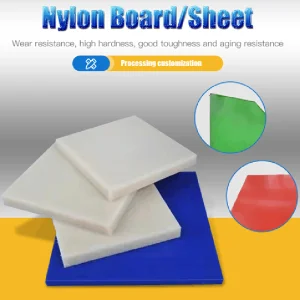
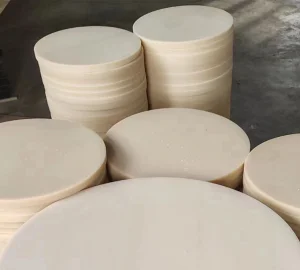
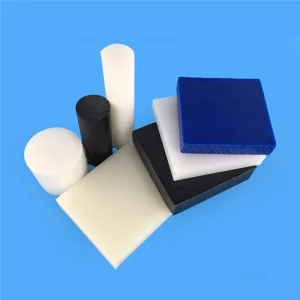
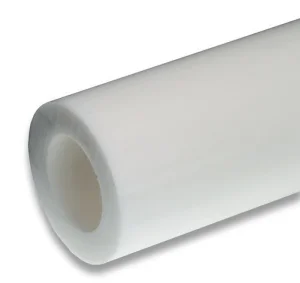
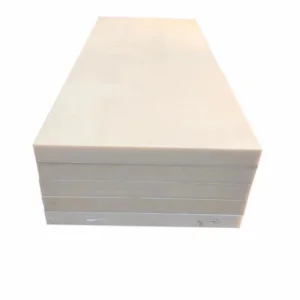
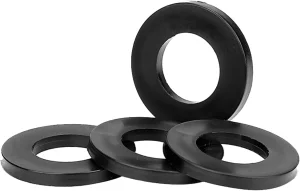
Complete our catalog review with high-impact pile cushions, reinforced insertion cloth rubber mats, large-dimension HDPE boards, and custom-bored POM hollow bars.
Frequently Asked Questions by Global Importers
Clear, direct answers regarding custom compounding, minimum order quantities, quality control reports, and production delivery terms.