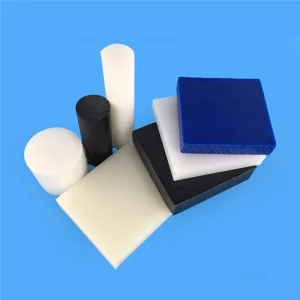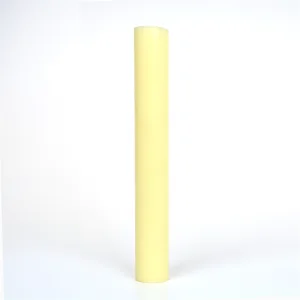
Primary Engineering Stock & Semi-Finished Catalog
Factory-direct mill stock inventory featuring cast and extruded polyamide bars, shock cushions, and advanced thermoplastics configured for rapid CNC turn-key delivery.
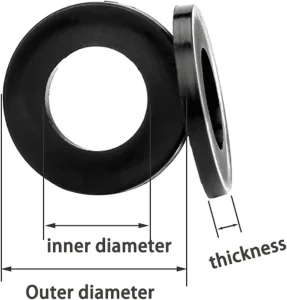
Black Polyamide Ring Cushion for Piling Machine Dampening
Source Material Stock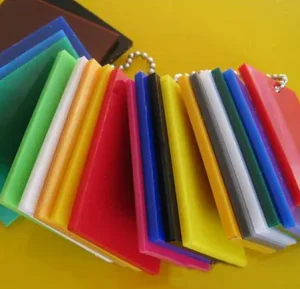
Heavy-Duty Bigfoot HDPE & Cast Pad Solid Blocks
Source Material Stock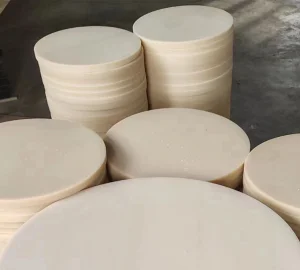
Kinetic Energy Absorption Nylon Hammer Impact Cushions
Source Material Stock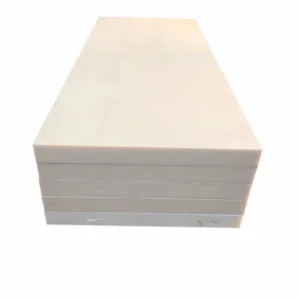
Rigid High-Density Polyethylene Sheet & Wear Liner Plates
Source Material Stock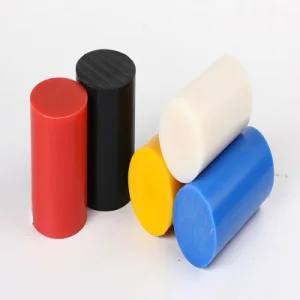
Monomer Cast MC Polyamide Round Stock & Billet Bars
Source Material Stock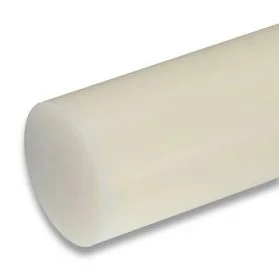
Natural Virgin Cast PA6 Round Bars & Billets
Source Material Stock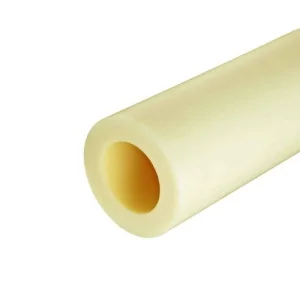
Hollow Core Polyamide Bushing Tubes & Extruded Rods
Source Material StockIndustry Evolution: The Polyamide Engineering Revolution
Analyzing global demand shifts toward lightweight self-lubricating structural polymers across high-stress industrial applications.
Metal-to-Plastic Conversion
Global original equipment manufacturers are actively replacing phosphor bronze, cast iron, and aluminum alloys with cast MC nylon rods. Nylon delivers a 7:1 weight advantage, exceptional vibration damping, and eliminates the necessity of constant external oil lubrication in rotary assemblies.
Discount Sourcing Economics
Navigating discount procurement architectures requires understanding factory-level yield management. Direct supply channels bypass distribution margins, utilizing high-output horizontal continuous casting that reduces porosity and post-machining shrinkage while maintaining volume price advantages.
Modified Additive Formulations
Modern nylon rods incorporate solid lubricants including Molybdenum Disulfide (MoS2), graphite, and oil additives. These specialized modifications reduce the coefficient of friction down to 0.12 while expanding PV load thresholds in dry-running linear guides and heavy-duty conveyor systems.
Closed-Loop Circularity
Industrial sustainability standards drive the demand for clean, mono-material engineering plastics. Fully characterized PA6 billets allow 100% recycling of turnings and milling swarf back into engineering compounds, enabling lower carbon footprints without compromising physical tensile metrics.
115 MPa
Tensile Yield Strength (Cast PA6)
1.15 g/cm³
Density (1/7th of Steel)
3,500 MPa
Flexural Modulus of Elasticity
180 °C
Short-Term Heat Deflection
Global Enterprise Procurement: Mitigating Material Risks
How international tier-one distributors, heavy equipment manufacturers, and machine builders mitigate risk through systematic engineering verification.
Void-Free Integrity Screening
Bulk nylon billets manufactured without uniform cooling exhibit center-line shrinkage voids. SHUNDA implements computerized ultrasonic non-destructive testing (NDT) across thick-wall stock up to 500mm in diameter, guaranteeing solid internal structures before precision CNC boring.
Stress Annealing Cycles
Extruded and cast semi-finished plastics retain internal molecular stress. All discount nylon rods undergo an oil-bath thermal annealing profile extending up to 48 hours. This process neutralizes internal tension, ensuring parts hold dimensional precision without warping during turning operations.
Global Logistics Engineering
Overseas maritime freight exposes hydroscopic polyamides to atmospheric fluctuations. All export shipments are vacuum-sealed with desiccant packaging within reinforced crating, preventing environmental moisture absorption and dimensional growth before end-user machining begins.
Technical Matrix: Comparative Thermoplastic Mechanics
Direct mechanical baseline comparison to validate polymer selection criteria across diverse operational and thermal profiles.
| Polymer Metric | Cast MC Nylon (PA6) | POM (Acetal Copolymer) | UHMWPE Solid Stock | Virgin PTFE Rod |
|---|---|---|---|---|
| Tensile Strength (MPa) | 85 – 110 | 65 – 75 | 22 – 35 | 20 – 30 |
| Elongation at Break (%) | 25% | 35% | 350% | 300% |
| Rockwell Hardness | M88 – M95 | M85 | Shore D 64 | Shore D 55 |
| Coefficient of Friction (Dynamic) | 0.15 – 0.25 | 0.20 – 0.28 | 0.10 – 0.15 | 0.04 – 0.08 |
| Continuous Operating Temp (°C) | -40 to +110 | -50 to +100 | -150 to +80 | -200 to +260 |
| Water Saturation Equilibrium (%) | 6.0% – 7.0% | 0.8% | < 0.01% | < 0.01% |
| Primary Mechanical Role | Heavy Impact, Sheaves, Gears | Precision Tight-Tolerance Pins | Chute Liners, Sliding Guides | Chemical Corrosive Gaskets |
Macro Industry Solutions: Polyamides in Core Sectors
Engineered applications demonstrating high endurance, reduced downtime, and structural longevity across demanding operational environments.
Heavy Piling & Foundation Systems
Nylon ring cushions installed on impact piling hammers absorb severe peak kinetic forces without brittle fracturing. Their elasticity spreads hydraulic hammer energy evenly, protecting expensive metal striker plates and significantly reducing acoustic reverberation on job sites.
Mobile Cranes & Lifting Hardware
Wire rope sheaves machined from blue cast nylon rods exhibit light rotational inertia and gentle contact mechanics. They extend steel cable service life by up to 300% compared to traditional cast steel sheaves, completely mitigating rope groove abrasive scarring.
Conveyor & Bottling Automation
In high-speed beverage packaging, machined nylon spur gears and wear-strips resist corrosive clean-in-place (CIP) washdowns. Polyamide components operate smoothly without oil lubricants, ensuring sterile environments and zero line contamination.
International Compliance, Quality Control & Traceability
Ensuring end-to-end metallurgical and chemical purity validation for components deployed in global supply chains.
RoHS & REACH Compliance
All stock nylon rods are manufactured strictly free of heavy metals, polybrominated biphenyls (PBB), phthalates, and substances of very high concern (SVHC). Material compositions fully align with EU 2015/863 and REACH Regulation (EC) No 1907/2006 directives.
Full Heat-Lot Traceability
Every extruded bar and cast billet is laser-etched with batch identification numbers linking back to raw caprolactam feedstock inspection sheets, polymerization cycle logs, and ultrasonic test certificates, ensuring complete supply chain transparency.
ISO 9001 Production Controls
Operating under certified ISO 9001:2015 quality management procedures, calibrated digital micrometers and CMM inspection routines guarantee that external diameters adhere strictly to ISO h9/h10 tolerance standards.
FDA / Food Contact Certification
Virgin, unpigmented natural PA6 and specialized food-contact polyamides conform to FDA 21 CFR 177.1500 standards, validating their safety for contact with food products in processing and packaging lines.
Technical Roadmap: The Next Generation of Polyamides
Continuous investment in advanced polymer architectures to expand operating capabilities in demanding operating environments.
Nanocomposite Graphene Reinforcement
Integrating graphene nanoplatelets into casting formulas improves thermal dissipation by 40% and raises flexural strength, creating high-performance rods designed to replace expensive PEEK components in mid-temperature applications.
Bio-Based Polyamides (PA56 & PA410)
Synthesizing monomer matrices from renewable bio-feedstocks allows SHUNDA to lower product carbon intensity by 45% while preserving the characteristic wear, impact, and chemical resistance expected of industrial polyamides.
Smart Anti-Static & ATEX Formulations
Engineered carbon-black masterbatch additives lower surface resistivity down to 10⁶ ohms. These specialty rods prevent electrostatic discharge in hazardous, volatile environments like underground coal mining and fuel refining facilities.
Procurement & Engineering FAQ
Addressing core technical, production, and logistical inquiries from global procurement teams and manufacturing engineers.
What distinguishes extruded PA6 from monomer cast MC nylon rods?
Extruded PA6 is produced via continuous screw melt extrusion, making it cost-effective for smaller diameters (typically 5mm to 100mm). Monomer cast (MC) nylon relies on direct liquid polymerization within molds, yielding higher molecular weights, increased crystalline structure, greater dimensional stability, and minimal internal stress. MC casting also enables the production of thick-wall solid rods and tubes up to 500mm or larger without void formation.
How does moisture absorption impact the dimensional accuracy of nylon rods?
Polyamides are hygroscopic materials that absorb atmospheric moisture up to an equilibrium of 2.5% to 3.0% under standard humidity, with maximum water immersion saturation reaching approximately 6% to 7%. This moisture absorption increases toughness but can result in up to a 0.2% to 0.3% dimensional increase per 1% of absorbed moisture. When tight tolerances are required for components operating in wet conditions, our engineers typically recommend POM (acetal) or design additional clearance into the machining drawings.
Why are volume wholesale discounts viable for custom cut-to-length orders?
Wholesale manufacturing discounts rely on optimizing production run length and reducing material cycle waste. By matching batch production cycles with client cut-to-length specifications, we eliminate drop-off scrap, minimize secondary cutting steps, and pack billets directly into container-level shipments. This streamlines overhead, keeps raw caprolactam conversion rates high, and lowers unit costs.
What specific tooling and feeds are recommended for CNC machining nylon?
Nylon should be machined using sharp, highly polished carbide or diamond-tipped tools featuring high positive rake angles (15° to 30°) and ample chip clearance to prevent heat buildup. High cutting speeds paired with moderate feed rates (0.25 to 0.5 mm/rev) help avoid localized melting. Because nylon has a higher thermal expansion coefficient and lower modulus than metal, gentle clamping is essential to prevent part distortion.
Which factory documentation accompanies international consignments?
Every export shipment includes EN 10204 3.1 Material Test Reports (MTRs) documenting physical density, tensile properties, and hardness ratings, alongside RoHS/REACH compliance letters, heat-lot batch tracking, and commercial customs clearance documentation.
Engineered Thermoplastic Billets, Tubes & Custom Shapes
Comprehensive range of high-performance polyoxymethylene, reinforced cast sheet, and multi-polymer profiles ready for industrial machining.

Virgin White & Black POM Acetal Round Bars
Source Material Stock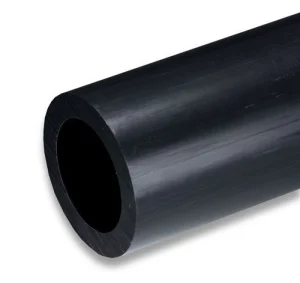
Precision POM Hollow Bars & Bushing Tubing
Source Material Stock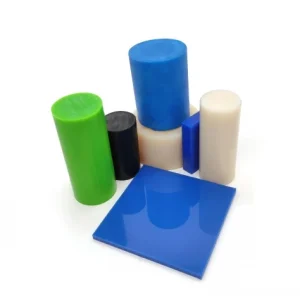
Custom Dimensional Polyamide PA6 & PA66 Stock Billets
Source Material Stock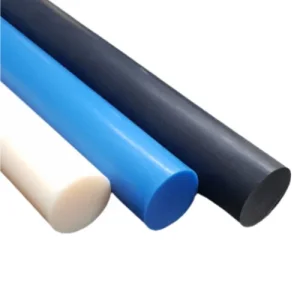
Polymer Extrusion Stock PA6, POM, PP & UHMWPE
Source Material Stock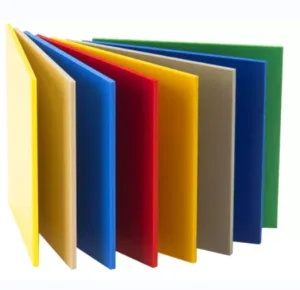
Tailored Color PA6, PTFE & Wear Resistant Bar Formats
Source Material Stock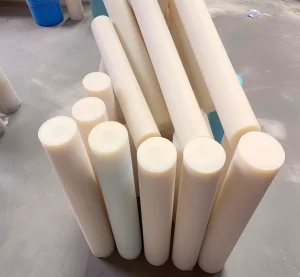
Virgin Natural MC Cast Polyamide Round Stock
Source Material Stock
Oil-Filled Self-Lubricating Green Cast Polyamide Sheets
Source Material Stock