

Primary Product Portfolio
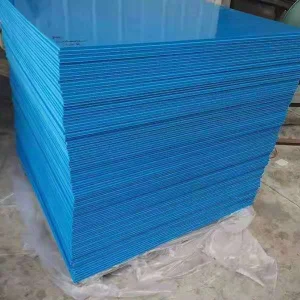
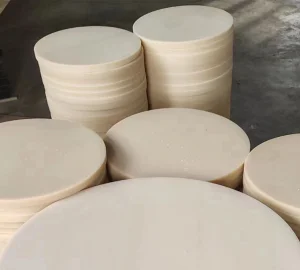
High-Performance PA6 Stock Shapes & Impact Cushion Series
Direct supply of monofilament and cast polyamide formulations configured for extreme wear, load distribution, and dimensional reliability across heavy industrial environments.
Material Science Engineering
Engineering Superiority: Polyamide 6 (PA6) vs Cast Nylon (MC)
Understanding the fundamental crystalline morphology, thermal endurance, and yield metrics for optimized polymer substitution in mechanical engineering assemblies.
78-85 MPa
Tensile Strength (Dry)
High modulus under severe cyclic mechanical shear stress
220 °C
Melting Peak Point
Continuous thermal performance envelope up to 105°C
1.15 g/cm³
Optimized Density
1/7th the weight of bronze for rapid dynamic components
120 HRR
Rockwell Hardness
Excellent damping with minimal mating component wear
Monomer Casting (MC) Crystallinity
Unlike conventional extrusion lines, anionic polymerization casting allows PA6 molecules to align into a higher crystalline state (up to 50% crystallinity). This structural perfection delivers up to 15% greater tensile yield, increased hardness, and superior creep resistance under static compressive tonnage.
Self-Lubrication & Wear Mechanics
PA6 features an exceptionally low coefficient of dry friction (0.25 - 0.35 dynamic). In unlubricated assemblies such as overhead crane sheaves or high-impact piling cushions, MC Nylon prevents galling on steel mating shafts while absorbing vibration harmonics to decrease plant operational noise.
Annealing Stress Relieving
Residual thermal stresses induce fatal machining deformation. Our China manufacturing facility mandates a strict thermal oil liquid annealing cycle lasting 24 to 72 hours per billet, guaranteeing tight geometric tolerances down to ±0.05mm across complex 5-axis CNC routing steps.
| Physical / Mechanical Property | Test Standard | Extruded Nylon PA6 | Cast MC Nylon (PA6G) | MoS₂-Filled Oil Cast PA6 |
|---|---|---|---|---|
| Density (g/cm³) | ISO 1183 | 1.14 | 1.15 | 1.16 |
| Yield Tensile Strength (MPa) | ISO 527 | 75 | 85 | 82 |
| Flexural Modulus (GPa) | ISO 178 | 2.8 | 3.4 | 3.5 |
| Charpy Notched Impact (kJ/m²) | ISO 179 | 5.5 | 4.0 | 4.8 |
| Heat Deflection Temp (0.45 MPa, °C) | ISO 75 | 170 | 190 | 185 |
| Dynamic Coefficient of Friction (Dry) | ASTM D1894 | 0.38 | 0.32 | 0.18 |
Macro Industry Solutions
High-Volume Engineered Application Environments
Custom OEM component profiles, outrigger safety platforms, and transmission elements engineered to withstand aggressive friction, shock loading, and harsh chemicals.
Heavy Construction & Piling Operations
Engineered impact hammer cushions and heavy machinery outrigger support blocks dissipate explosive kinetic shocks during hydraulic hammer strikes. PA6 prevents crack propagation, extending the longevity of steel pile heads while protecting equipment frames from catastrophic fatigue failure.
Bulk Material Conveyance & Mining
From primary aggregate transport to mining transfer chutes, self-lubricating nylon guide rollers, conveyor stars, and slider beds provide exceptional wear index life against gritty particles, dramatically lowering drive motor power consumption and operational wear.
Industrial Drive Pulleys & Sheaves
Used to replace bronze or cast iron pulleys, custom CNC turned PA6 sheaves mitigate wire rope stress through elastic deformation at contact points, delivering an exponential increase in steel wire rope operating lifespan while eliminating lubricating grease wash-out risks.
Factory 4.0 Infrastructure
China Supply Chain Resiliency & Direct Exporter Cost Alpha
Combining primary resin backward integration with high-speed automated extrusion, continuous casting lines, and digital quality monitoring to unlock massive scale economies.
Direct Feedstock Upstream Synergies
By securing direct liquid caprolactam monomer feeds from domestic petrochemical complexes in Hebei, SHUNDA eliminates intermediate distribution costs, providing a baseline 20% to 35% cost advantage over Western resin compounders on high-volume standard sheet and bar deliveries.
Continuous In-Line Automated Ultrasonic Testing
Internal voids, micro-cavities, and shrink holes are the primary failure mode of cheap cast nylons. Every batch of SHUNDA thick-gauge bar stock (up to 500mm diameter) passes automated ultrasonic bath transducers to guarantee structural solid density before export packaging.
Supply Chain Redundancy & Inventory Hub
Our expansive 20,000 m² warehousing facility houses over 2,500 metric tons of pre-annealed stock shapes, buffering international purchasing teams from raw polymer volatility and ensuring short delivery times of standard sizes within 48 to 72 hours from PO verification.
Compliance & Export Infrastructure
Comprehensive Compliance & Moisture-Proof Seafreight Packaging
Stringent compliance with global non-hazardous substances directives coupled with multi-barrier maritime preservation ensures parts arrive factory-fresh.
RoHS, REACH & FDA Certification
Every lot exported undergoes certified spectrometer scanning. Our unmodified and additive-enhanced PA6 ranges strictly conform to EU REACH Regulation (EC) No 1907/2006, SVHC compliance checks, and RoHS heavy metal bans for zero regulatory friction in destination markets.
Moisture Hermetic Sealing System
Due to the hygroscopic nature of Polyamide, trans-equatorial maritime shipping risks ambient humidity absorption leading to dimensional swelling. SHUNDA implements automated vacuum-seal heat shrink polymer wrapping with silica desiccant cores prior to crating in ISPM-15 fumigated timber frames.
Comprehensive Mill Documentation Package
Every overseas consignment is accompanied by fully auditable documentation: EN 10204 Type 3.1 Mill Test Certificates, batch dimensional CMM inspection reports, and verified packing lists to accelerate customs clearance through ports in Europe, North America, and ASEAN.
R&D Evolution Roadmap
Next-Generation Polymer Formulations & Future Roadmap
Developing advanced engineering plastics through internal polymer compounding, high-performance solid state lubrication, and closed-loop lifecycle circularity.
Nano-Carbon Infused PA6 (ESD Safe)
Our chemical engineers are scaling monodisperse carbon nanotube (CNT) doping inside the monomer casting vessel to produce static-dissipative nylon with surface resistivity tuned between 10⁶ to 10⁹ Ω/sq, targeted at modern semiconductor production fixtures and hazardous explosive handling environments.
Circular Economy: Post-Industrial Recycling
We are actively implementing closed-loop chemical depolymerization lines capable of depolymerizing internal CNC swarf and turning offcuts back into pure caprolactam monomer, ensuring high-virgin equivalent grades with a drastically lower carbon intensity footprint.
Ultra-High Temperature Hydrolysis Resistance
Modifying PA6 with functionalized elastomeric phases and polyphenylene ether blends to counteract water-induced plasticity, creating hybrid shapes that maintain high modulus in saturated high-humidity steam environments up to 90°C.
Factory-Direct Stock Range
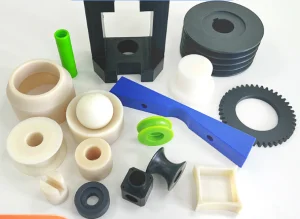
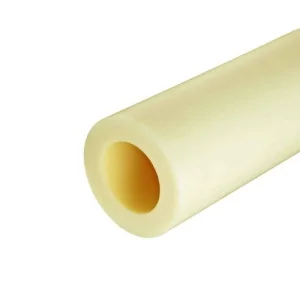
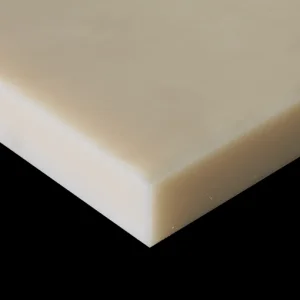
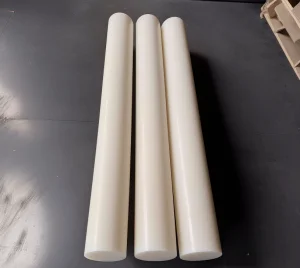
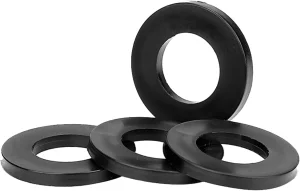
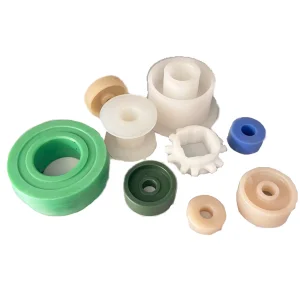
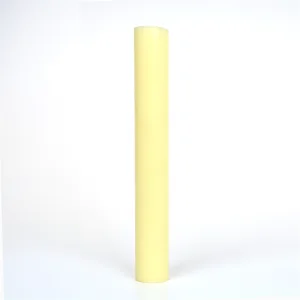
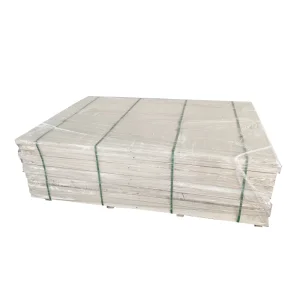
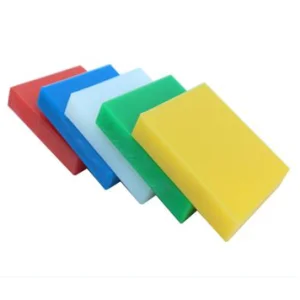
Precision PA6 Stock Shapes, Polyolefin Rods & Machined Bushings
Fully certified engineering plastic bars, custom CNC finished gears, and impact rings available with factory wholesale pricing for international industrial distribution.
Procurement & Technical Support
Frequently Asked Questions: Global Nylon PA6 Sourcing
Expert answers addressing material formulation, machining guidelines, moisture equilibrium management, and international freight processes.
What distinguishes Cast PA6 (MC) from Extruded PA6 in structural applications?
Cast PA6 (Monomer Casting) is produced through pressureless chemical polymerization inside a mold, yielding higher molecular weight and superior crystallinity. This yields superior tensile strength, modulus, and wear life alongside significantly lower residual internal stress compared to extruded nylon, making MC Nylon the ideal choice for large-diameter rods, thick sheets, and heavy-duty sheaves.
How does SHUNDA overcome moisture-induced dimensional expansion in PA6 parts?
Polyamide 6 naturally absorbs ambient water up to a saturated equilibrium of approximately 6–8% in water bath environments, resulting in predictable dimensional expansion of ~2%. Our engineering team factors operational moisture content into the machining drawings and provides custom conditioning (water saturation pre-treatment) when parts are specified for submerged or high-humidity operational roles.
Why choose custom-formulated MC Nylon over Bronze or Polyurethane for impact hammer cushions?
Cast PA6 possesses high compressive strength combined with unique viscoelastic damping properties. In piling hammer systems, it transfers hydraulic energy into the pile shaft without brittle cracking, preventing destruction of steel striking faces. Unlike bronze, it creates no mating metal galling; unlike polyurethane, it will not deform plastically or overheat under continuous repetitive high-energy cycles.
What are the standard tolerances maintained for CNC turned and routed parts?
For high-precision turning and milling components, our climate-controlled machine shop holds tolerances to ISO 2768-m (or ±0.05 mm on critical bearing press fits). Because plastics exhibit higher thermal expansion coefficients than steel, inspections are carried out in a temperature-stabilized environment at 20°C using precision Zeiss CMM and optical coordinate measuring instruments.
How are export shipments protected from damage and moisture during ocean transit?
Consignments are hermetically wrapped in multi-layer water-barrier polymer films infused with active silica gel desiccant bags. Semi-finished sheets and bars are strapped onto heavy-duty, heat-treated fumigated wooden pallets with edge-protecting corrugated shields, preventing flexural warping or marine ambient salt spray exposure throughout seafreight transport.
What is the typical lead time and MOQ for custom-colored or additive-modified shapes?
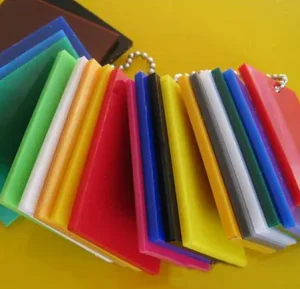
For natural white, engineered blue, and standard black stocks, there is zero MOQ requirement with dispatch within 3 business days. For specialized additives such as MoS₂ (oil cast), self-lubricating green waxes, glass fiber reinforcements, or custom masterbatch RAL/Pantone colors, the typical MOQ is 500 kg with an industrial production lead time of 7–12 working days.