
High-Performance Engineering Nylon & Polymer Components
Explore our core industrial polymers, custom-cast structural billets, precision gear stock, and machined mechanical friction components.
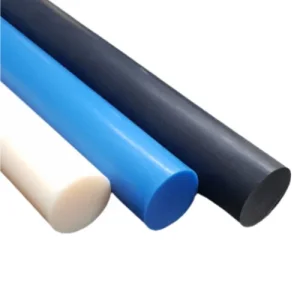
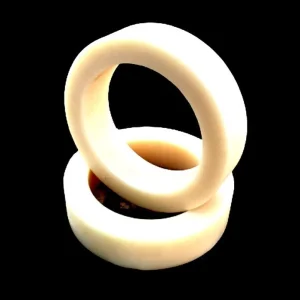
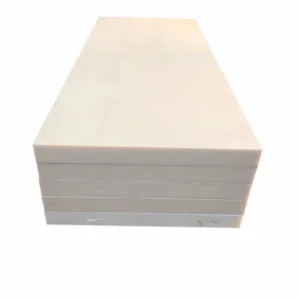
Precision Nylon Gears: Tribological Performance, Chemistry, and Industrial Metal Replacement
In contemporary mechanical power transmission and kinematic drive design, industrial polyamides (nylons) have evolved from supplementary low-duty bushings into critical structural components capable of outperforming cast iron, bronze, and carbon steel gear pairs. As industrial machinery demands increasingly rigorous vibration dampening, noise abatement (NVH reduction), chemical inertness, and oil-free dry operation, custom-engineered nylon gears serve as the foundational solution for next-generation automated assembly lines, robotics, automotive drivetrains, and agricultural processing systems.
The molecular morphology of semicrystalline polyamides—most notably Polyamide 6 (PA6), Polyamide 66 (PA66), and Monomer Cast Polyamide (MC Cast Nylon / PA6G)—endows these non-metallic materials with a distinctive viscoelastic response. When gear tooth flanks engage under dynamic Hertzian contact stresses, nylon exhibits continuous elastic tooth deflection. This deflection dynamically increases the operational contact ratio, redistributing tooth-bending loads across multiple teeth simultaneously. Unlike metallic gears that experience localized surface spalling, pit erosion, and catastrophic brittle fracture under instantaneous tooth misalignment, precision nylon gears absorb mechanical shock pulses, dissipate acoustic resonance, and yield extended service intervals without requiring continuous secondary grease lubrication.
Molecular Weight & Crystallinity
Monomer Cast (MC) Nylon utilizes activated anionic polymerization directly inside pre-heated molds, yielding polymer chains with molecular weights exceeding 200,000 to 350,000 g/mol—nearly double that of extruded PA66. This elevated molecular weight significantly amplifies ultimate tensile strength, creep resistance, and impact toughness.
Self-Lubrication & Low Wear Factor
The chemical presence of repeating amide groups (-CO-NH-) enables low surface free energy and minimal interfacial friction against hardened mating steel pinions. Additives such as Molybdenum Disulfide (MoS2) and micro-dispersed synthetic lubricating oils minimize the specific wear factor (k < 1.2 × 10⁻⁶ mm³/Nm).
High Acoustic Damping (NVH Suppression)
Internal mechanical loss tangent (tan δ) values in cast polyamides allow polymer gears to absorb up to 10 to 15 dB more acoustic vibrational energy than equivalent spur gears fabricated from hardened carbon steel or forged brass, enabling near-silent operation in cleanroom machinery.
Why Sourcing from a Direct China Nylon Gears Manufacturer Unlocks Unbeatable Value
Combining vertically integrated polymer synthesis, large-envelope casting lines, high-speed multi-axis CNC hobbing, and direct factory pricing.
The international procurement landscape has permanently transformed. Modern engineering teams no longer evaluate Chinese plastic component manufacturers solely on rudimentary labor cost metrics; rather, they leverage China's comprehensive chemical industrial clusters, upstream monomer availability, and sophisticated CNC automation. When sourcing custom nylon gears, spur gear sets, helical drives, internal ring gears, or worm drive wheels from an established enterprise like SHUNDA, global enterprises capture concrete supply chain efficiencies:
Direct Upstream Caprolactam Access
Direct domestic sourcing of liquid caprolactam monomer and engineering plastic resins ensures baseline raw material costs remain immune to international trading broker markups, translating directly into competitive unit pricing for high-volume contract orders.
Advanced CNC Gear Hobbing & Milling
Our machine centers utilize synchronized 4-axis and 5-axis CNC machining, high-accuracy gear shapers, and custom carbide tooling specifically ground for plastics, consistently achieving DIN 3962 Class 7 to 9 and AGMA 10 pitch line runout tolerances.
Integrated Dual Production Pathways
We provide seamless scalability from low-volume prototypes (precision CNC turning and hobbing directly from solid, void-free extruded and cast nylon blanks) to high-volume multi-cavity injection molding utilizing hardened H13 tool steel dies.
Rigorous QA & Thermal Stress Relief
Every semi-finished cast billet undergoes multi-stage thermal annealing in hot mineral oil baths at 150°C to relieve internal molding stresses, completely eliminating warping, cracking, or dimensional creep during subsequent tooth cutting or end-use operation.
Engineering Plastics Gear Material Selection Matrix
Compare mechanical properties, tribological thresholds, and thermal envelopes across standard gear grades to optimize your mechanical design specifications.
| Polymer Grade | Tensile Strength (MPa) | Flexural Modulus (GPa) | Limiting PV (MPa·m/s) | Dynamic Friction Coeff. (μ) | Water Absorption (24h Sat. %) | Max Continuous Temp (°C) |
|---|---|---|---|---|---|---|
| Extruded Polyamide 6 (PA6 Natural) | 78 - 85 | 2.8 - 3.2 | 0.08 - 0.12 | 0.28 - 0.35 | 1.8% - 2.5% | 90°C |
| Polyamide 66 (PA66 Extruded) | 85 - 92 | 3.0 - 3.4 | 0.10 - 0.15 | 0.25 - 0.32 | 1.2% - 1.8% | 105°C |
| MC Cast Nylon (PA6G Natural/Blue) | 90 - 105 | 3.4 - 3.8 | 0.15 - 0.22 | 0.22 - 0.28 | 0.8% - 1.2% | 115°C |
| Oil-Impregnated Cast Nylon (MC901 Lube) | 82 - 95 | 3.2 - 3.5 | 0.28 - 0.45 | 0.12 - 0.18 | 0.7% - 1.0% | 110°C |
| MoS2-Filled Cast Nylon (Black PA6+MoS2) | 88 - 98 | 3.5 - 3.9 | 0.20 - 0.30 | 0.18 - 0.24 | 0.8% - 1.1% | 120°C |
| POM-C (Polyacetal Copolymer) | 65 - 72 | 2.7 - 3.0 | 0.12 - 0.18 | 0.20 - 0.26 | 0.2% - 0.3% | 95°C |
Engineering Selection Protocol: MC Cast Nylon vs. Extruded Polyamide vs. POM
When engineering tooth flank geometry and gear ratios, design engineers must account for operating ambient conditions, peripheral pitch velocity, and moisture exposure. MC Cast Nylon is the premier material for large gear modules (Module 2.0 to Module 25+) such as internal ring gears, heavy crane sheaves, and industrial conveyor sprockets. Its superior crystallinity affords elevated surface hardness (Rockwell M88 to M95), minimizing tooth-bending fatigue and abrasive gouging when running against unpolished steel pinions.
Conversely, for miniature precision gearboxes, electronic actuators, and aquatic pump mechanisms where dimensional hygrostability is paramount, POM-C (Acetal) or customized PA66 modified with 30% glass fiber (PA66-GF30) is recommended. While unfilled nylon absorbs ambient moisture (resulting in minor dimensional swelling of 0.2% to 0.5% in humid environments), our engineering team compensates for this behavior through calibrated tooth-thinning during hobbing, precisely expanding tooth root clearance and backlash allowances to preserve optimal meshing clearances.
Macro-Level Engineering Solutions Across Global Key Industries
From automotive electrification actuators to harsh mining bulk handling, discover how nylon gears solve systemic operational bottlenecks.
Automotive Actuators & E-Mobility
Automotive designers utilize custom PA66 and POM gears within electronic parking brakes (EPB), electronic power steering (EPS), sunroof actuators, and HVAC blend doors. Nylon's innate damping eliminates cabin rattle and high-frequency whine, achieving strict acoustic noise targets below 38 dB(A) across 300,000 full engagement cycles.
Robotics & AGV Material Handling
Within Automated Guided Vehicles (AGVs) and collaborative robotics (Cobots), lightweight MC nylon planetary gear reducers minimize rotational inertia (ΔJ). This permits faster motor acceleration, lowers battery drain by 14%, and protects servo shafts from severe torsional recoil during emergency dynamic braking stops.
Food Processing & Pharmaceutical Packaging
In high-speed beverage bottling, carton sorting, and pharmaceutical conveyor drives, metallic lubricants represent an impermissible contamination hazard. Blue MC Nylon gears operate completely dry, exhibit zero chemical degradation under caustic CIP (Clean-In-Place) washdown sprays, and resist bacterial accumulation.
Mining, Piling & Heavy Construction
Harsh quarrying environments subject machinery to intense silica grit, sand infiltration, and repetitive high-energy impact shocks. Resilient nylon gear teeth and ring cushions absorb embedded abrasive particles below the pitch surface without galling the mating counter-face, vastly prolonging drive life in vibratory pilers and excavators.
Textile Machinery & Spinning Looms
Continuous-duty textile spindles run at elevated RPMs (up to 12,000 RPM) where metallic gears generate excessive thermal expansion, necessitating costly centralized oil pumps. Self-lubricating, MoS2-compounded nylon helical gears operate smoothly at elevated speeds with zero oil splatter, protecting delicate yarns from oil staining.
Marine Winches & Offshore Cranes
Marine environments rapidly oxidize cast iron and corrode bronze alloy gears through galvanic corrosion. Saltwater-submerged marine winches and boat hoist mechanisms utilizing MC Cast Nylon gears achieve perpetual resistance to electrolytic corrosion, eliminating periodic rust scraping and gear repainting.
Precision Gear Tooth Geometry: Engineering Design & Backlash Compensation
How SHUNDA's technical staff collaborates with OEM engineering divisions to optimize gear tooth profiles, minimize root stresses, and eliminate operating thermal binding.
Tooth Root Bending Stress & Lewis Equation Adjustments
Standard metallic gear design relies heavily on the classic Lewis gear equation and AGMA stress formulas. However, directly applying metallic formulas to polymer gears leads to massive over-dimensioning or unexpected overheating failure. Because nylon's flexural modulus is approximately 1/60th that of structural steel, the loaded gear tooth deflects elastically. This continuous tip deflection permits the lagging tooth pair to engage prematurely, sharing the tangential load ($F_t$). Our manufacturing engineers utilize finite element tooth analysis (FEA) to calculate the precise operational stress:
σF = [ Ft / (b · mn) ] · YF · YS · Yβ · Kv
Where b is face width, mn is normal module, YF is form factor, YS is stress correction factor, and Kv is dynamic load factor. Unlike steel gears where Kv spikes at elevated velocities due to kinematic shock, nylon gears demonstrate a decreasing Kv factor at moderate-to-high speeds as tooth elasticity absorbs rapid tooth-to-tooth indexing errors.
Thermal Dissipation & Backlash Engineering
Polymer materials possess low thermal conductivity (λ ≈ 0.23 to 0.28 W/m·K) compared to carbon steel (λ ≈ 50 W/m·K). Consequently, frictional heat generated at the meshing interface cannot readily conduct away through the gear hub and shaft; it must radiate into surrounding air or be carried off by mating fluid. Additionally, the linear coefficient of thermal expansion (CLTE) of nylon is approximately 8 × 10⁻⁵ /K—nearly six times greater than metal.
To prevent gear tooth binding and catastrophic pitch-line seizure as operating temperatures rise toward steady-state (60°C to 80°C), our gear hobbing processes intentionally cut custom backlash profiles. By increasing center distance or generating negative profile shifts (-x·m), we engineer tooth backlash allowances according to the formula:
jt,min = 2 · a · [ αplastic · (ΔTgear) - αhousing · (ΔThousing) ] · tan(αn)
This systematic engineering calculation ensures that gears meshed inside aluminum, cast iron, or composite housings maintain ideal lubrication wedges and backlash throughout 24/7 industrial production cycles.
Zeiss CMM Gear Metrology
Equipped with dedicated gear inspection algorithms, our Zeiss 3D coordinate measuring machines verify involute tooth profile error (fα), lead pitch variation (fp), and radial runout (Fr) against international standards DIN 3962 and ISO 1328.
Controlled Moisture Conditioning
To guarantee ready-to-mount dimensional accuracy upon delivery to global OEM assembly lines, machined gears undergo post-machining water immersion baths at 70°C, balancing equilibrium moisture content (2.0% - 2.5%) before hermetic vacuum packaging.
Full Batch Chemical Traceability
Every casting run is assigned an encrypted batch lot code. Raw polymer material certificates, spectrometer melt flow index reports, and Rockwell hardness verification sheets accompany all export shipments, meeting strict global aerospace and automotive standards.
Frequently Asked Questions: Industrial Nylon Gears Procurement & Engineering
Authoritative technical answers to assist procurement officers, gear designers, and maintenance superintendents.
What are the primary performance trade-offs between MC Cast Nylon and Extruded Nylon gears?
How does SHUNDA compensate for moisture absorption and dimensional swelling in nylon gears?
Why is running a nylon gear against a hardened metal pinion often superior to running plastic-on-plastic?
What manufacturing methods are utilized for high-volume discount pricing versus prototype orders?
Can nylon gears run without lubrication in food processing or cleanroom applications?
What tooth failure modes are most common in polymer gears, and how does your factory mitigate them?
What drawing file formats and engineering specifications are required to receive an OEM quote?
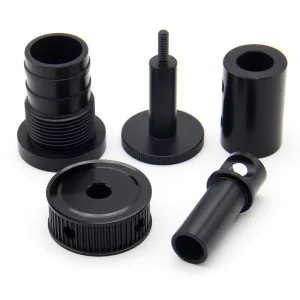
Precision Machined Parts, Polymer Stock & Semi-Finished Shapes
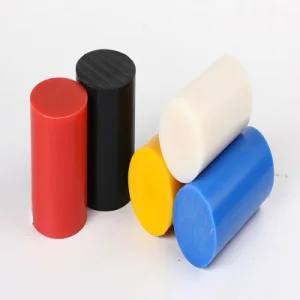
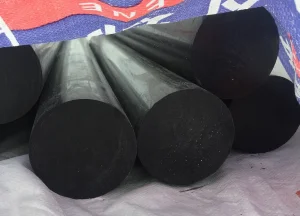
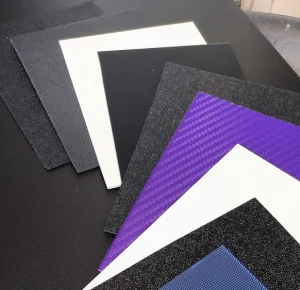
Explore our extensive inventory of precision CNC machined components, engineering plastic rods, wear plates, and industrial polymers ready for global container dispatch.
Request an Engineering Consultation & OEM Quotation
Upload your 2D/3D component drawings, application parameters, or polymer stock specifications. Our senior plastics engineers deliver comprehensive DFM (Design for Manufacturability) analysis and factory-direct volume pricing within 12 hours.