
High-Performance Fixings & Engineering Polymers
Explore our direct-from-factory catalog of structural sheets, rods, impact cushions, and precision nylon fixing components engineered for civil and mechanical installations.
-
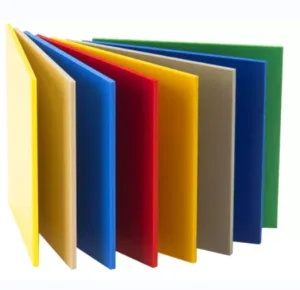 HDPE Sheet StockCheap HDPE Sheet Exporters, Company
Chemical-resistant polyethylene panel for thermal barriers & isolation shims.
-
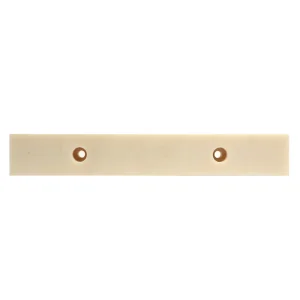 Perforated Fixing PadsOEM Nylon,ABS,HDPE ,UHMWPE Plastic Sheet Pad With Hole Supplier, Company
Custom CNC-drilled PA/UHMWPE anchoring pads for vibration damping.
-
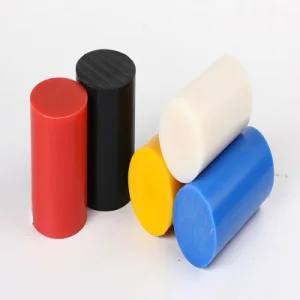 Virgin Polyamide 6 RodsCheap White Nylon Rod Manufacturers, Product
High-density cylindrical raw bars for custom anchor sleeves & dowel pins.
-
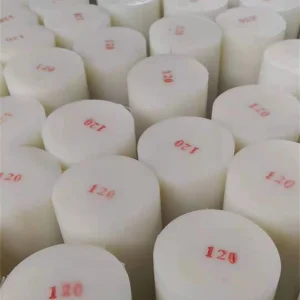 PA6 Modified Bar StockDiscount ODM OEM Engineering Plastic Cast PA6 Polyamide Nylon Oil Filled Nylon Rod Glass Filled Nylon Rod Plastic Tube Rod And Bar Customized Color With Size Manufacturers, Company
Oil-filled and glass-filled PA6 rods engineered for heavy torque anchoring.
-
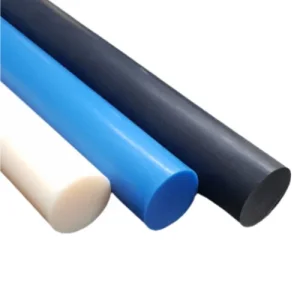 Fluoropolymer Bar StockCheap TEFLON Rod Manufacturers, Exporter
Zero-friction chemical-inert PTFE rods for cryogenic anchoring fixtures.
-
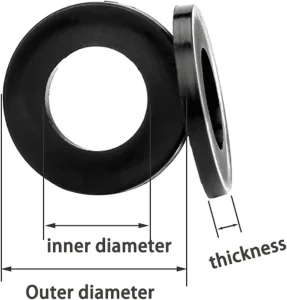 Polyamide Bushings & RingsOEM Plastics Polyamide Natural MC Nylon Ring Cast Nylon Tube PA6 POM Rod Round Ring Engineering Plastic Black Polyamide PA66 Nylon PP UHMWPE PTFE HDPE ABS Tube Plastic Ring Bar Exporter, Product
Turned MC nylon rings and tubes for mechanical anchor spacer sleeves.
-
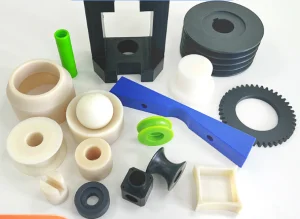 MC Cast Nylon Structural PadsDiscount MC Nylon Pad Product, Products
Machined heavy-duty base plates for civil foundation anchor isolation.
-
 Impact-Resistant Piling CushionsWholesale Impact Black Color Nylon Cushion Use For Impact Hammer For Piling Machine Manufacturer, Product
High-energy shock absorption cushions designed for piling hammer anchoring.
Engineering Integrity: Sourcing Discount Nylon Fixings at Scale
Why procurement teams must look past nominal unit pricing to analyze tensile modulus, equilibrium moisture content, and polymer crystallinity in structural polyamide anchors.
In the contemporary construction, industrial automation, and energy sectors, the term "discount nylon fixings" often triggers conflicting assumptions among procurement professionals. While cost reduction is a universal mandate across commercial engineering projects, the mechanical reliability of structural fastening cannot tolerate compromise. As an authoritative exporter and Tier-1 manufacturer with over two decades of polymer expertise, SHUNDA bridges the gap between competitive volume economics and aerospace-grade polymer science.
High-performance nylon fixings—encompassing expansion anchors, universal wall plugs, long-shaft frame anchors, insulation facade fixings, and perforated injection chemical sleeves—derive their primary mechanical performance from polyamide’s unique molecular morphology. Unlike conventional polyethylene (PE) or polypropylene (PP) anchors, which exhibit premature creep under sustained shear, high-grade Polyamide 6 (PA6) and Polyamide 66 (PA66) possess rigid aliphatic amide linkages (-CO-NH-) that generate robust intermolecular hydrogen bonds. This crystalline structure delivers unmatched notch toughness, extreme pull-out friction against mineral substrates (concrete, aerated masonry, solid brick), and high rotational resistance during drive-screw insertion.
True cost reduction ("discounting") in an export-grade supply chain is achieved through automated twin-screw extrusion, high-cavity hot-runner tooling, localized monomer synthesis in Hebei, and rigorous in-line quality assurance—not through the dangerous adulteration of virgin resin with post-industrial scrap. When procuring industrial fasteners, engineering teams must evaluate the total lifecycle cost, factoring in zero jobsite splitting, broad operating temperature envelopes (-40°C to +85°C), and complete compliance with European Technical Assessments (ETA).
Macro Industry Trends & Polyamide Fastener Substitution
How the global pivot away from metallic galvanic corrosion and thermal thermal bridging is driving massive adoption of engineered nylon fixing assemblies.
Corrosion Elimination in Marine & Infrastructure
Traditional zinc-plated steel anchors suffer accelerated oxidation in coastal atmospheres, deicing salts, and chemical plants. Engineered polyamide fixings eliminate galvanic couples between dissimilar metals (e.g., aluminum solar rails to galvanized purlins), guaranteeing maintenance-free anchor longevity over a 50-year building lifecycle.
Thermal Bridge Mitigation (ETICS / EIFS)
Modern building energy codes, such as the EU Energy Performance of Buildings Directive (EPBD) and ASHRAE 90.1, penalize thermal puncturing in exterior envelopes. Polyamide facade fixings offer an exceptionally low thermal conductivity (λ ≈ 0.28 W/m·K compared to carbon steel's 50 W/m·K), preventing heat leaks and wall mold formation.
Dynamic Damping & Seismic Resonance Reduction
Metallic anchors rigidly transmit seismic vibration frequencies directly into masonry, often inducing sudden shear cone breakouts. High-toughness nylon expansion sleeves absorb peak acceleration forces, dampening structural resonance during micro-tremors and heavy manufacturing machinery operations.
Comparative Polymer Matrix for Anchoring Systems
A rigorous empirical comparison of virgin polyamide resins versus common commodity polymers used in sub-standard fixing production.
| Property Criterion | PA6 (Polyamide 6) | PA66 (30% Glass-Filled) | Polypropylene (PP) | Standard Polyethylene (HDPE) |
|---|---|---|---|---|
| Tensile Strength at Yield (ISO 527) | 75 – 85 MPa | 140 – 175 MPa | 28 – 35 MPa | 22 – 30 MPa |
| Modulus of Elasticity (ISO 527) | 2,800 MPa | 8,500 MPa | 1,300 MPa | 1,000 MPa |
| Charpy Notched Impact (23°C, ISO 179) | 5.5 kJ/m² (Dry) / 20 (Moist) | 11.0 kJ/m² | 3.0 kJ/m² (Brittle split) | 8.0 kJ/m² |
| Melting Point / Thermal Deflection | 220°C (Tm) / 75°C (HDT) | 260°C (Tm) / 235°C (HDT) | 160°C (Tm) / 52°C (HDT) | 130°C (Tm) / 45°C (HDT) |
| Resistance to Sustained Creep Under Load | Excellent (Aliphatic network) | Outstanding (Structural grade) | Poor (High slip under tension) | Very Poor (Flows under shear) |
| Recommended Structural Applications | Universal Plugs, Heavy Sleeves | High-Load Façade & Window Anchors | Lightweight Packaging Plugs Only | Pipe Clamps & Sanitary Bushings |
Localized Engineering Substrates & Fixings Performance
Engineered expansion geometry tailored for specific geological substrates, structural masonry configurations, and industrial installations.
Solid Concrete (C20/25 – C50/60)
In high-density cracked and uncracked concrete, our four-way expansion nylon plugs deploy symmetric radial force. As the zinc-coated screw draws forward, the polyamide expansion fins bite into the borehole walls without spinning, transferring high pull-out loads via uniform hoop stress distribution.
Hollow Core Masonry & Perforated Brick
Standard metal anchors fail in hollow clay bricks due to lack of solid perimeter friction. SHUNDA’s multi-axis long-shaft nylon frame anchors knot and bunch behind the internal ceramic webbing, transforming pure friction into mechanical positive locking that resists axial withdrawal.
Aerated Autoclaved Concrete (AAC / Hebel)
AAC blocks feature high porosity and low compressive modulus. Specialized spiral-ribbed nylon gas concrete plugs displace porous cellular matrix gently during tap-in installation, establishing deep undercut surface contact without pulverizing the surrounding mineral structure.
Strict Global Compliance & Rigorous Quality Control
Ensuring export compliance across North American, European, Middle Eastern, and Australasian engineering procurement jurisdictions.
EAD 330196 & ETAG 014 Verification
Our plastic anchor designs are subjected to cyclic load testing, shear displacements, and simulated temperature aging in accordance with European Assessment Documents. Every batch guarantees predictable characteristic pull-out values ($N_{Rk}$) for professional structural calculation.
RoHS 3 & REACH Annex XVII Audited
SHUNDA engineering plastics are fully certified halogen-free and free of heavy metals (lead, cadmium, mercury) and restricted phthalates. Safe for food processing plant wall fixtures, cleanroom curtain-wall mounts, and closed HVAC air handling system supports.
UL94 Flammability & Halogen-Free Safety
Standard grades fulfill UL94 V-2 self-extinguishing criteria, with custom phosphorous-free flame retardant grades achieving UL94 V-0 ratings for electrical cable tie fixings, junction box mounts, and utility tunnel installations without producing toxic halogen gas clouds in fire scenarios.
Technological Roadmap & Next-Gen Fastening Systems
How SHUNDA is leading polymer formulation and smart manufacturing forward to deliver next-generation anchoring technology.
Bio-Derived & Recycled PA
Pioneering castor-oil-based Polyamide 610/1010 formulations that lower Scope 3 embodied carbon footprints by 42% while matching standard virgin PA6 tensile yield ratings.
Graphene & Nano-Clay Hybrids
Incorporating nano-platelet additives to reduce resin water absorption by half, creating fixings that maintain extreme stiffness even in submerged marine piers and humid subways.
RFID-Embedded Fasteners
Co-molding micro-RFID and passive NFC sensor transponders directly inside nylon anchor sleeves for automated maintenance scanning and civil health telemetry tracking.
Laser Sintered Micro-Fixings
Direct SLS 3D printing of bespoke complex anchoring geometry for rapid architectural prototypes and custom restoration retrofits without tooling lead times.
Frequently Answered Engineering & Procurement Questions
Comprehensive, no-nonsense answers regarding polyamide polymer selection, moisture absorption, pull-out calculations, and export customs handling.
What makes discount nylon fixings from SHUNDA structurally equivalent to premium brand European anchors?
Our cost competitiveness stems strictly from macro-scale manufacturing efficiencies, in-house monomer compounding, high-speed automated multi-cavity injection molding, and direct factory-to-port export logistics from Hebei. We formulate solely with high-grade virgin PA6 and PA66 resins, avoiding the unregulated ground regrind plastics that plague low-cost trading intermediaries. Our products meet or exceed the tensile yield, knotting shear strength, and pull-out resistance specified by international ETAG/EAD criteria, backed by verifiable material test reports (MTR) for each production lot.
How does ambient humidity and water absorption affect the performance of polyamide fixings on jobsites?
Polyamide is inherently hygroscopic. In its bone-dry, as-molded state, PA6 can exhibit brittleness under high-velocity impact (such as direct hammer-in installation in sub-freezing winter weather). At SHUNDA, all manufactured anchors undergo automated thermal moisture conditioning before packaging, ensuring an equilibrium water content of 2.5% to 3.0%. This moisture acts as an internal plasticizer that boosts Izod impact toughness and elongation at break, preventing plug splitting while maintaining robust compressive modulus for expansion friction.
Why should engineers specify nylon plugs over cheaper polypropylene (PP) or polyethylene (PE) alternatives?
Polypropylene and polyethylene possess significantly lower melting points (130°C–160°C) and suffer from severe viscoelastic polymer creep. When subjected to continuous mechanical stress—such as a facade bracket holding heavy windward cladding—PP and PE sleeves permanently deform and lose hoop friction, causing anchor pull-out failure. Furthermore, PP becomes exceptionally brittle below 0°C. Polyamide 6/66 maintains mechanical stability up to 85°C continuous service and resists sub-zero fracture down to -40°C.
Can you supply customized colors, specific dimensions, and OEM branding for regional distributor packaging?
Yes. We offer turnkey ODM/OEM manufacturing services. We can compound UV-resistant carbon-black formulations, RAL-matched color masterbatches (e.g., facade-matching grey, high-visibility terracotta, industrial blue), and adjust shaft lengths or collar geometries to match proprietary regional masonry dimensions. We also provide customized blister-pack, polybag, or bulk master-carton packaging complete with your company logo, barcodes, and localized multi-language installation diagrams.
What parameters are needed for an accurate load engineering review and pricing quotation?
To provide an authoritative engineering quotation, please provide: (1) Target base material (e.g., C20/25 Concrete, hollow clay brick, lightweight aerated block, drywall); (2) Required tensile pull-out ($N_{Sk}$) and shear ($V_{Sk}$) design loads; (3) Environmental exposure conditions (indoor dry, coastal marine, chemical exposure, exterior thermal insulation); and (4) Estimated order quantity or annual purchasing volume. 2D/3D CAD drawings (STEP, DWG, PDF) are welcomed for custom-machined or custom-molded parts.
How are export freight shipments packed to prevent transit deformation and humidity degradation?
Finished fixings are hermetically sealed in heavy-gauge polyethylene inner liners to maintain calibrated moisture equilibrium throughout prolonged ocean transit. The bags are packed in reinforced five-ply corrugated export cartons, palletized on heat-treated ISPM-15 compliant wooden or plastic pallets, and shrink-wrapped with waterproof edge-protectors to ensure clean, ready-to-sell stock on arrival at your warehouse.
Engineering Sheets, Billets & Precision Fixing Components
Complete your procurement requirements with our certified engineering plates, round bars, customized cast nylon profiles, and industrial water tank panels.
-
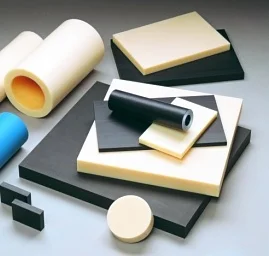 Composite Backing BoardsOEM Engineering Plastic Backing Casting Board Nylon PP ABS PTFE UHMWPE Board Sheet Rod Tube Waterproof Customized Color Made In China Manufacturer, Factories
Heavy-duty waterproof backing panels for structural industrial installations.
-
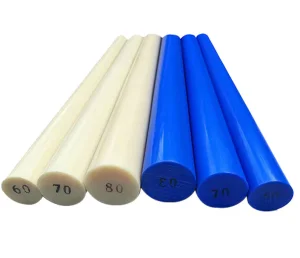 MC Blue Cast Nylon RodsCheap China MC Blue Cast Nylon Rod Plastic Round Rod And Bar Manufacturers, Factories
High molecular weight round bars for heavy sheaves and structural pin fixings.
-
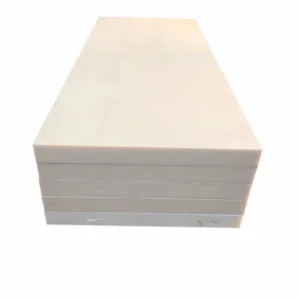 Industrial HDPE Flat PanelsBuy Factory Free sample HDPE Sheet Panel Board Plate Manufacturer High Density Polyethylene Plastic Sheet Factory, Exporters
High density moisture-proof plates for anchor shims and marine fender backing.
-
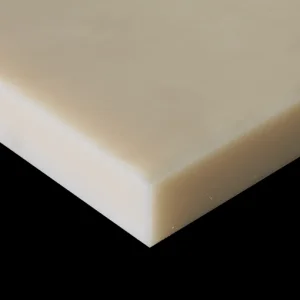 Natural MC Cast Nylon PlatesCheap Natural MC Nylon Sheet Factories, Exporters
Stress-relieved solid sheets for precision CNC milling of structural fixing plates.
-
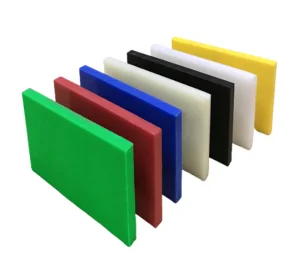 Broad Polymer Sheet RangeCheap China Engineering Plastic polyamide PA6 PA66 Nylon PP UHMWPE PTFE HDPE ABS plastic Sheet Companies, Products
PA6, PA66, UHMWPE, PTFE, ABS, and PP engineering stock from primary factory lines.
-
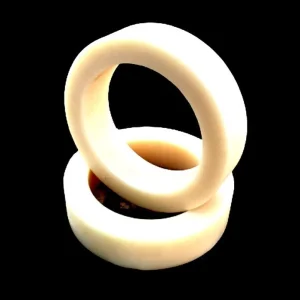 Turned Polymer Rings & SleevesBuy Plastics Polyamide Natural MC Nylon Ring Cast Nylon Tube PA6 POM Rod Round Bar Engineering Plastic Black Polyamide PA66 Nylon PP UHMWPE PTFE HDPE ABS Plastic Ring Bar Factory, Companies
Custom concentric ring bars for heavy machinery vibration isolation collars.
-
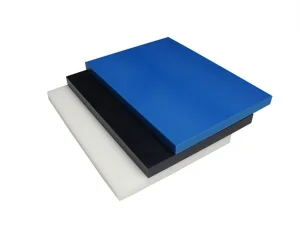 Virgin PTFE Chemical SheetsCheap PTFE Sheet Supplier, Products
Skived and molded fluoropolymer sheets for ultra-low friction expansion slide pads.
-
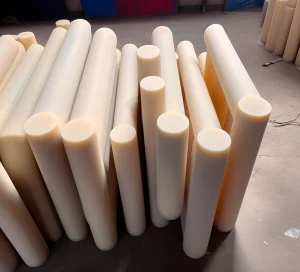 High-Grade MC Cast Nylon BarHigh-Quality MC Nylon Rod Manufacturer, Exporter
Cast round stock engineered with high tensile yield for high-torque dowels.
Request Technical Data Sheets & Volume Wholesale Pricing
Whether you require standard polyamide wall plugs, custom glass-reinforced frame fixing sleeves, or container-load engineering polymer stock, our team provides fast technical quotes and custom tooling reviews.