
High-Performance Engineering Stock & Semi-Finished Shapes
Procure verified cast and extruded stock direct from production lines, engineered to minimize tool wear and optimize cycle times.

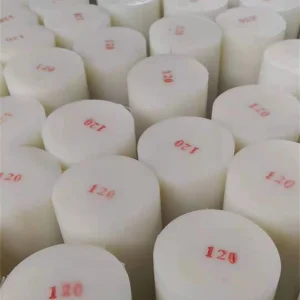
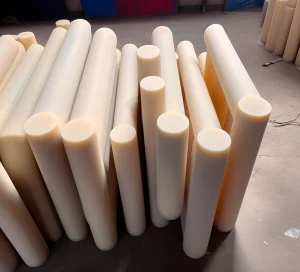
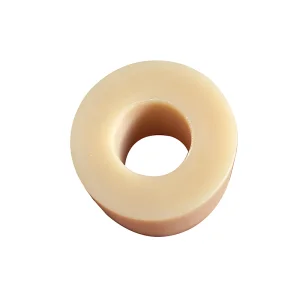
Engineering Evolution: Redefining the Economics of Nylon 6 Sheet Procurement
The term "discount" in modern precision engineering does not denote degraded chemical integrity or recycled fillers. In global contract manufacturing, discount nylon 6 sheet procurement represents capital efficiency unlocked by direct monomer casting technology, scale continuous extrusion, optimized yield ratios, and internal stress annealing cycles that eliminate machining failure rates.
Eliminating Middleman Markup
Traditional western supply chains run through multiple tiers of regional stockists and distributor networks, adding up to 45% in cumulative logistics margins. Direct factory partnerships with SHUNDA give mechanical fabricators direct-from-mill container pricing with zero third-party freight inflation.
- Bulk mill volume tiers
- Zero mark-up consignment staging
Low-Stress Thermal Annealing
Discounted pricing fails if an internal stress gradient causes sheet warping during high-speed CNC milling. Our sheets undergo secondary oil-bath or infrared annealing chambers, neutralizing crystallite orientation and preventing dimensional distortion on your production line.
- Warpage-free pocket milling
- Uniform isotropic toughness
Near-Net Custom Sizing
Machining scrap accounts for an estimated 28% of total raw material expense in heavy engineering plastics. As an agile factory, we customize cast plate thicknesses from 5mm up to 200mm and saw cut to rectangular blanks, passing raw material weight savings directly to you.
- Minimized swarf & chip loss
- Bespoke plate dimensions
Cast PA6 (MC) vs. Extruded PA6: Engineering Comparison
Understanding polymer molecular weight distribution, crystallization dynamics, and chemical resistance ensures structural integrity across severe industrial duty cycles.
Cast Polyamide 6 (MC Nylon - Monomer Casting)
Monomer Casting initiates direct anionic polymerisation of caprolactam within atmospheric molds. This yields substantially higher molecular weight (Mw > 100,000 g/mol) and elevated crystallinity (up to 48%) compared to extrusion. MC Nylon 6 sheets deliver superior wear resistance, higher surface hardness (Shore D 82–85), elevated heat deflection temperatures under mechanical load, and minimal internal stress.
Ideal for: Heavy-duty gears, massive crane outrigger pads, harbor wear plates, cable sheaves, and large-format structural slide guides where mechanical stiffness is vital.
Extruded Polyamide 6 (Extruded PA6 / Nylon 6)
Extruded PA6 is formed through continuous melt extrusion of pre-polymerized nylon pellets. While its molecular chain length is slightly lower than cast stock, extruded sheets offer exceptional impact damping, higher elongation at break, and exceptional shock absorption in intermittent strike conditions. It is engineered for rapid high-speed routing, automated stamping, and precise profile shaping.
Ideal for: Conveyor chain guides, dynamic scraping blades, electrical busbar insulators, consumer goods housings, and precision washers requiring flexibility without brittle failure.
| Property Parameter | Test Standard (ASTM/ISO) | Extruded Nylon 6 (Natural) | Cast MC Nylon 6 (PA6 G) | MoS2 / Oil-Filled Cast Nylon |
|---|---|---|---|---|
| Specific Density | ISO 1183 / ASTM D792 | 1.13 – 1.14 g/cm³ | 1.15 – 1.16 g/cm³ | 1.14 – 1.15 g/cm³ |
| Tensile Strength at Yield (23°C) | ISO 527 / ASTM D638 | 75 – 80 MPa | 82 – 88 MPa | 72 – 78 MPa |
| Modulus of Elasticity in Tension | ISO 527 / ASTM D638 | 2,900 – 3,200 MPa | 3,400 – 3,600 MPa | 3,100 – 3,300 MPa |
| Charpy Notched Impact Resistance | ISO 179 / ASTM D256 | 5.5 – 6.5 kJ/m² | 4.5 – 5.5 kJ/m² | 4.0 – 5.0 kJ/m² |
| Coefficient of Dynamic Friction (Dry) | ASTM D1894 | 0.35 – 0.42 | 0.30 – 0.35 | 0.12 – 0.18 |
| Heat Deflection Temp (HDT 1.8 MPa) | ISO 75 / ASTM D648 | 65 – 70 °C | 85 – 95 °C | 80 – 90 °C |
| Saturation Water Absorption (23°C) | ISO 62 / ASTM D570 | 8.5 – 9.0 % | 6.0 – 7.0 % | 5.5 – 6.5 % |
Solving Mission-Critical Industrial Wear & Load Challenges
Polyamide 6 sheets replace bronze, brass, cast iron, and aluminum alloys across severe service environments, cutting deadweight by 85% while delivering self-lubricating wear resistance.
Heavy Machinery & Mobile Cranes
Telescopic boom extension pads machined from high-molecular MC nylon plate eliminate grease reliance while supporting multi-ton contact forces. Their viscoelastic damping attenuates hydraulic vibrations and preserves structural boom sections against galling wear.
- Eliminates stick-slip chattering
- High compressive yield threshold
Bulk Materials & Mining Chutes
Lining mineral chutes and hoppers with thick Nylon 6 plates prevents cementitious clumping, crushed gravel binding, and abrasive scouring. The continuous impact resistance absorbs kinetic aggregate energy without fracturing or localized work hardening.
- 4x higher abrasion life than mild steel
- Significantly dampened acoustic noise
Automated Packaging & Bottling
High-speed bottling and carton lines demand high surface velocity wear guides that run 24/7 without liquid lubrication. Modified oil-filled or natural PA6 sheets provide silent running, low coefficient of friction, and high resistance to automated line sanitization cycles.
- Self-lubricating dry running
- Clean contact without black residue
Strict Dimensional Tolerances & Global Regulatory Assurances
Purchasing discounted engineering polymer sheets must never compromise metallurgical or dimensional verification. Our plant enforces strict traceability and test protocols from raw monomer to packaged export crating.
ISO 9001:2015 Process Control
Every casting run and extrusion cycle is monitored with closed-loop SCADA systems regulating polymerization temperature gradients, reducing void risks.
DIN EN ISO 15860 Tolerances
Thickness, planarity, and squareness adhere to strict European semi-finished thermoplastic standards, ensuring predictable chucking on high-speed CNC beds.
RoHS & REACH Compliance
Free from hazardous heavy metals, regulated phthalates, and SVHC chemical additives. Certified for distribution within European and North American markets.
Ultrasonic Flaw Detection
Large gauge plates (>40mm thickness) are non-destructively inspected using ultrasonic scanning to eliminate sub-surface cavities, porosity, or centerline shrinkage.
Technology Roadmap: Next-Gen Polyamide Composites & Sustainability
Continuous polymer research drives improved performance in extreme environmental regimes, lowering lifecycle costs for global OEMs.
Nanoscale Graphene & Carbon Reinforcement
By compounding exfoliated graphene nanoplatelets directly into liquid caprolactam before monomer casting, our research line improves sheet flexural modulus by 42% while dissipating static electric charges in explosive grain handling and chemical environments.
- Antistatic surface resistivity (10⁶ – 10⁹ Ω)
- Elevated fatigue threshold in dynamic loads
Hydrophobic Matrix Stabilizers
Nylon 6 naturally absorbs moisture from ambient air (up to 8.5% at saturation), which reduces tensile yield and causes dimensional expansion. New specialized modified additives disrupt polar amide-water hydrogen bonding, reducing hygroscopic swelling by over 50% for humid marine environments.
- Retains machined precision under wet conditions
- Extended bearing life in outdoor equipment
Circular Economy Depolymerization
Transitioning toward closed-loop chemical recycling: Industrial clean PA6 machining scrap from certified CNC customers is collected and re-depolymerized back into high-purity caprolactam monomer, ensuring 100% virgin-grade mechanical performance with an 80% reduced carbon footprint.
- Verified Scope 3 carbon reduction
- Zero property degradation vs. virgin resin
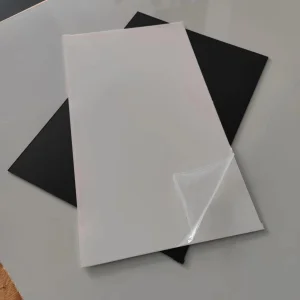
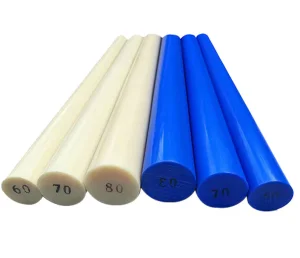
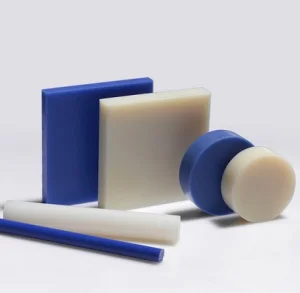
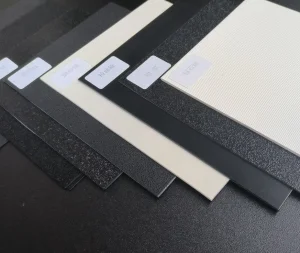
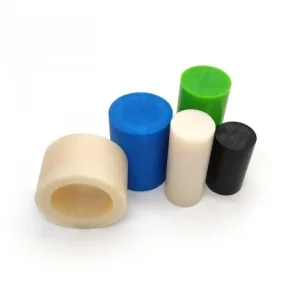
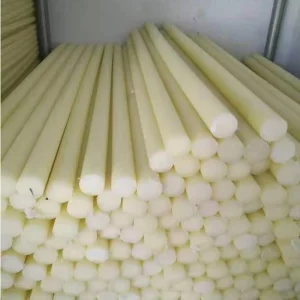
Precision Cast & Extruded Plastic Stock for Custom Part Production
Browse our core inventory of solid polymer stock, formulated for low friction, high dimensional stability, and dependable machinability.

Precision Milling & Turning Protocols for Nylon 6 Sheets
Because Nylon 6 possesses a thermal expansion coefficient roughly ten times higher than carbon steel and exhibits lower thermal conductivity, adhering to correct tool geometry and feed parameters prevents heat buildup and localized melting.
Tooling Geometry & Edge Relief
Always utilize razor-sharp single-flute or two-flute carbide router bits and polished carbide turning inserts. High rake angles (15° to 30°) and ample relief clearances (10° to 15°) ensure that chips exit smoothly without rubbing against the freshly cut polymer surface.
- Positive rake angle (+15° to +25°)
- Polished flutes prevent chip welding
Cooling Strategies & Chip Evacuation
Compressed vortex cold-air guns are ideal for dry CNC profiling. When heavy volume deep-pocket milling is mandatory, flood cooling using soluble synthetic emulsions prevents thermal dimensional growth while washing chips away from the tool contact path.
- Cold-air blast for clean dry parts
- Flood coolant for thick deep pockets
Workholding & Clamping Forces
Because virgin polyamide 6 yields under concentrated mechanical pressure, avoid localized hard-jaw vise clamping. Employ vacuum chuck tables, double-sided adhesive film, or wide soft-jaw fixtures to prevent mechanical stress deformation during cutting passes.
- Vacuum table distribution for sheet goods
- Prevents clamp indentations & bow flex
Frequently Asked Questions: Technical Sourcing & Procurement
Direct answers for purchasing heads, project engineers, and supply chain managers sourcing bulk engineering plastics.
How does direct factory discount pricing compare with local regional distributors?
Purchasing full crate or container volumes directly from our Hebei production base eliminates domestic distributor warehouse markups, freight re-handling charges, and third-party margins. On average, our overseas OEM and machining partners save 25% to 40% on landed raw material costs while receiving continuous batch quality and direct mill test certifications.
What is the standard tolerance range on extruded versus cast Nylon 6 sheets?
For standard extruded sheets (thickness 5mm to 50mm), thickness tolerance is held within +0.2mm to +0.8mm according to ISO 15860. For large cast MC nylon plates (thickness 20mm to 200mm+), raw cast stock is supplied with a safety grinding allowance of +0.5mm to +2.0mm. Precision dual-side fly-cut or planed plates can be ordered to tighter tolerances (+/-0.1mm) upon request.
How do you handle internal stress relief to prevent warpage during CNC routing?
Unrelieved internal stress is the primary reason large plastic plates curl or twist during deep slotting or pocket milling. At SHUNDA, all semi-finished cast and extruded nylon shapes undergo computer-controlled annealing cycles. Plates are slowly brought to 150°C in thermal circulation ovens and held for hours depending on thickness, then cooled gradually to room temperature.
Can you provide custom formulations such as MoS2, Oil-filled, or Glass-reinforced?
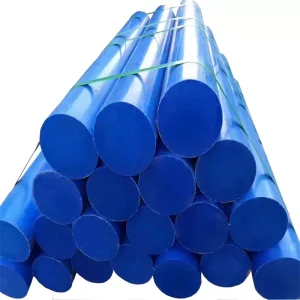
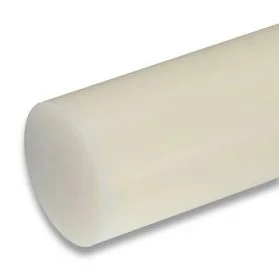
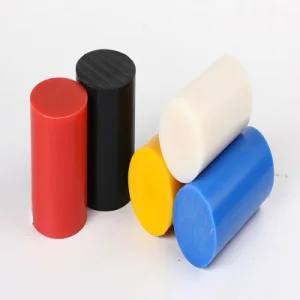
Yes. Beyond standard Natural (White/Ivory) and Cast Blue (MC901), our formulation lines produce Molybdenum Disulfide (MoS2) filled nylon (dark gray/black) for higher surface lubricity and UV resistance, internal oil-impregnated cast grades (Green/Yellow) for unlubricated high-PV sliding applications, and 30% short glass fiber reinforced grades for high stiffness requirements.
What is your typical export lead time, sample policy, and shipping packaging?
Sample swatches (100mm x 100mm or cut rod discs) for hardness and chemical evaluation are dispatched via air express within 48 hours. Standard stock plate orders ship in 5 to 10 working days; bespoke casting dimensions require 15 to 20 days. All export pallets are wrapped in moisture-barrier PE shrink film and secured inside ISPM-15 heat-treated fumigated plywood crates.
How does Nylon 6 differ from POM (Acetal) for high-moisture operating settings?
Nylon 6 provides superior toughness, higher elongation before yield, and higher abrasive wear resistance when sliding against unpolished steel. However, Polyamide 6 absorbs atmospheric moisture (up to 2.5% equilibrium in humid air), leading to measurable volumetric expansion. If your finished component operates submerged or requires sub-0.02mm dimensional precision in wet settings, POM (Polyacetal) or UHMWPE is generally recommended.