
Verified Industrial Inventory
Primary Engineering Stock & Semi-Finished Shapes
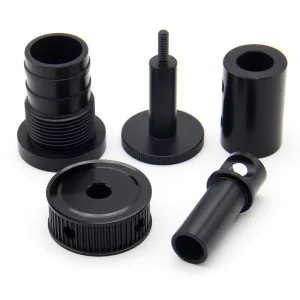
Source mill-direct cast nylon stock shapes, customized billet plates, and CNC turned precision hardware at discount export pricing with certified molecular consistency.

Thermoplastic Stock
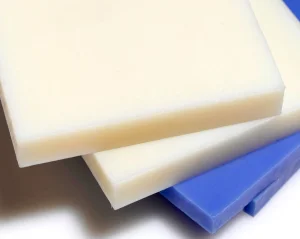
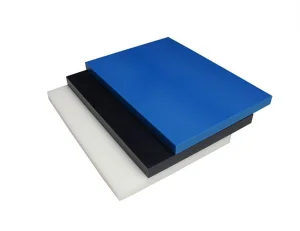
OEM China Engineering Plastic Polyamide PA6 PA66 Nylon Sheet & Bar
View Product Details
Hollow Bar Stock
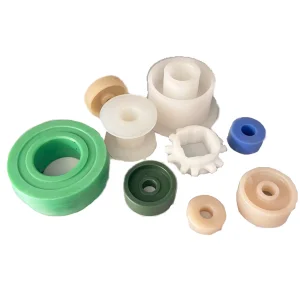
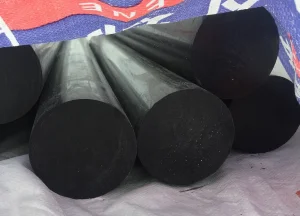
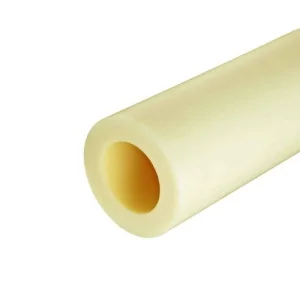
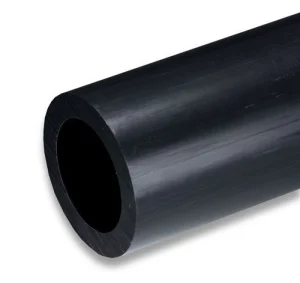
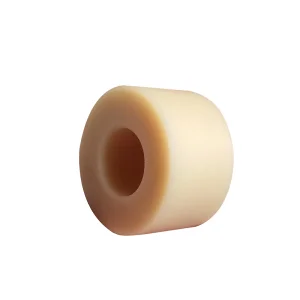
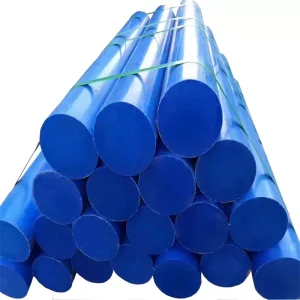
High-Quality Cast Nylon Rod, Nylon Tube, & Engineering Sleeves
View Product Details
Strategic Industrial Analysis
Global Commercial Landscape: Monomer Cast (MC) Polyamide Supply Chain Dynamics
The global shift toward high-performance engineering plastics over bronze, phosphor bronze, cast iron, and aluminum has elevated Monomer Cast Polyamide (MC Sheet & Plate) to a critical structural asset. Manufactured via an anionic polymerization of caprolactam directly within precision molds under atmospheric pressure, MC Nylon yields an ultra-high molecular weight (approx. 70,000 to 100,000 g/mol) that is roughly double that of conventional extruded nylon 6 (PA6). This superior degree of crystallinity directly translates to higher tensile strength, enhanced dimensional stability, reduced internal void probability, and exceptional dynamic fatigue resistance.
For international supply chain managers, finding reliable, discount MC sheet factories and exporters is not simply about chasing the lowest bid—it requires identifying primary manufacturing foundries that integrate caprolactam polymerization, automated annealing cycles, and high-speed multi-axis CNC profiling under strict quality management systems (ISO 9001:2015). By bypassing multiple layers of Western stockists and distribution intermediaries, tier-1 OEMs in heavy equipment, conveyor manufacturing, aerospace ground equipment, and port cargo handling reduce raw material expenditure by 25% to 42% while securing material certificates traceable to the monomer feedstock.
Core Commercial Value Multipliers
- 7:1 Weight Reduction Advantage: Density of 1.15 g/cm³ versus 8.8 g/cm³ for bronze drastically lowers payload inertia and mechanical driving energy.
- Direct Mill Foundry Economics: Factory-direct volume discounts yield substantial savings on thick plate stock up to 200mm thickness.
- Complete Billet Stress Relieving: Secondary cycle oil-bath and hot-air annealing prevents warp and dimensional distortion during intense milling.
20+
Years Foundry Experience
100k
Molecular Weight (g/mol)
1/7
Weight Ratio to Bronze
3500+
Tons Annual Export Capacity
Empirical Engineering Benchmark
Material Selection Matrix: MC Sheet Grades vs Competitive Polymers
Comparative analysis of physical, thermal, and tribological properties across standard monomer cast nylon, lubricant-filled formulations, and industrial polyacetal.
| Property Parameter (ASTM/ISO) | Natural MC Nylon (PA6) | MC901 Blue Nylon | Oil-Filled MC Nylon (Green) | MoS2 Lubricated MC (Black) | POM-C (Acetal Copolymer) |
|---|---|---|---|---|---|
| Primary Color & Appearance | Ivory / Cream White | Deep Ocean Blue | Kelly Green | Anthracite Black | Opaque White / Jet Black |
| Density (g/cm³, ISO 1183) | 1.15 - 1.16 | 1.15 - 1.16 | 1.14 - 1.15 | 1.16 - 1.18 | 1.41 - 1.42 |
| Tensile Strength at Yield (MPa) | 82 - 88 | 85 - 90 | 70 - 75 | 85 - 92 | 65 - 72 |
| Flexural Modulus (GPa, ISO 178) | 3.2 - 3.4 | 3.3 - 3.5 | 2.8 - 3.0 | 3.4 - 3.7 | 2.8 - 3.0 |
| Coefficient of Dynamic Friction (Dry vs Steel) | 0.30 - 0.38 | 0.28 - 0.35 | 0.14 - 0.18 | 0.22 - 0.28 | 0.25 - 0.32 |
| Rockwell Hardness (M Scale) | M85 - M90 | M88 - M92 | M78 - M82 | M88 - M94 | M84 - M88 |
| Heat Deflection Temp (0.45 MPa, °C) | 175 - 185 | 180 - 190 | 160 - 170 | 185 - 195 | 155 - 165 |
| Continuous Service Temperature (°C) | -40 to +110 | -40 to +115 | -40 to +105 | -40 to +120 | -50 to +100 |
| Equilibrium Water Absorption (23°C, 50% RH) | 2.2% - 2.5% | 2.1% - 2.4% | 1.8% - 2.1% | 2.0% - 2.3% | 0.2% - 0.3% |
| Typical Industrial Usages | Wear strips, guides, roll sleeves | Heavy crane sheaves, pulleys, gear blanks | High PV slide bearings, unlubricated ways | Outdoor high-shock pads, excavator shims | Precision dimension gears, valve bodies |
*Testing metrics established under standard conditioned laboratory parameters (23°C, 50% relative humidity) in compliance with DIN EN ISO 527-2 and ASTM D638 specifications.
Engineered Deployments
Cross-Industry Solutions Engineered with Monomer Cast Sheets
How global heavy equipment manufacturers, logistics systems developers, and marine installations leverage MC sheet structural components to cut operational maintenance.
Heavy Cranes, Rigging & Marine Ports
Cast MC nylon wire rope sheaves machined from 50mm - 120mm thick plates prolong steel cable lifespan by up to 300%. The controlled elasticity absorbs shock vibrations while preventing groove spalling and rope fretting corrosion under offshore salt-spray conditions.
Bulk Materials & Mining Chute Liners
Lining raw ore transfer hoppers and vibratory feeders with low-friction MC nylon sheets eliminates bulk carryback and bridging. Impact-modified formulations resist constant impingement of quarry aggregate and coal slurry without catastrophic brittle fracture.
Hydraulic Mobile Cranes & Aerial Booms
Telescopic boom extension pads machined from high-load oil-impregnated MC nylon sheets provide silky, stick-slip-free translation under extreme lateral clamping forces, eradicating greasy contamination and eliminating recurring hydraulic pad servicing.
Pulp, Paper & Packaging Processing
Suction box covers, forming boards, and doctor blades machined from low-water-absorption modified MC nylon demonstrate superior chemical inertia against alkaline bleaching agents and provide predictable friction values against rapid wire screens.
Foundation Piling & Construction Impact Cushions
Massive monolithic blue nylon cushion discs withstand explosive repeated kinetic impacts from diesel pile-driving hammers, transferring downward energy cleanly to steel and pre-stressed concrete pilings without shattering like wood or composite blocks.
Proprietary Foundry Metallurgy
Vacuum Anionic Polymerization & Stress Elimination Protocol
The performance differential between premium export-grade MC sheets and cut-rate, brittle alternatives lies strictly inside the foundry autoclave. Our factory enforces a multi-tier manufacturing paradigm that ensures total chemical conversion and dimensional stability:
- Atmospheric Monomer De-Gassing: Liquid caprolactam monomer undergoes thermal vacuum de-aeration at 135°C, eliminating microscopic air bubbles and hydrogen nucleation sites before the initiator catalyst is introduced.
- Isothermal Tooling Solidification: Heavy cast iron precision plate molds are preheated within ±1.5°C tolerances across the entire 2000×1000mm bed, ensuring an even spherulitic crystallization pattern from core to perimeter.
- Submerged Thermal Annealing Cycle: Raw demolded billets spend up to 72 hours submerged in temperature-ramped thermal mineral oil baths, relieving frozen cooling stresses and eradicating the risk of bowing during aggressive CNC pocket milling.
Ultrasonic Quality Verification
Every thick MC plate produced for international export undergoes pulse-echo ultrasonic flaw detection conforming to EN 10228-3. Our in-house metallurgical testing laboratory validates zero core voids, micro-fissures, or density variances prior to final dimension planing.
Molecular Conversion Degree
99.4%
Planar Thickness Uniformity (±0.2mm)
99.8%
Next-Generation Engineering
Technology Roadmap: Monomer Casting Polymer Science 2025–2030
Anticipating demanding operational criteria: How ongoing advancements in nanostructured fillers, closed-loop monomer distillation, and reactive robotics redefine industrial cast polyamides.
Nano-Graphene & Carbon Fiber Doped MC
By blending exfoliated multi-layer graphene nanoplatelets directly into reactive liquid caprolactam monomer, our research team is commercializing electrically dissipative (ESD safe) MC nylon with surface resistivities of 10⁶ to 10⁹ Ω/sq, alongside a 40% hike in heat transfer rates.
Chemical De-Polymerization & Circular Monomer
Closing the sustainability loop: Clean CNC machining swarf, off-cuts, and post-service scrap sheets are redirected to our catalytic thermal cleaving reactor to harvest pristine, distilled caprolactam monomer, reducing raw product carbon footprint by 62% without degrading tensile yield.
Robotic Near-Net-Shape Reactive Pouring
To curb waste on ultra-thick gear and ring geometries, automated 6-axis pouring cells meter caprolactam and activator mixes at dynamic flow rates straight into contoured cavity molds, driving machining cycle durations down by 55% for overseas OEMs.
Enterprise Risk Governance
Global Regulatory Compliance & Moisture-Barrier Export Packaging
Standardized quality assurance ensuring smooth border transit, customs clearance, and zero transit oxidation across North America, Europe, Australia, and Asia-Pacific.
International Statutory Compliance
All virgin natural and additive-enhanced MC sheets conform strictly to EU RoHS Directive 2011/65/EU and REACH (EC) No 1907/2006 SVHC limits. Natural white unpigmented nylon grades also satisfy FDA 21 CFR §177.1500 for direct food processing contact.
Hermetic Anti-Moisture Marine Crating
Unprotected nylon readily absorbs ambient humidity across weeks of sea freight, causing swelling and dimension creep. We seal every sheet stack inside multi-ply aluminized vapor-barrier film with clay desiccants, locked securely into ISPM-15 heat-treated export crates.
Full Heat-Number Traceability & EN 10204 3.1
Procurement teams receive full chemical lot analysis, melt peak DSC thermograms, and Charpy impact inspection sheets with every order. Batch identification numbers are stamped along each plate edge to maintain unambiguous traceability.
Technical Knowledge Base
Frequently Asked Questions on MC Sheet Sourcing & Machining
Direct, highly-detailed engineering answers compiled by our chief polymer metallurgists and international export team.
What distinguishes Monomer Cast (MC) Nylon from standard Extruded Polyamide (PA6 / PA66)?
Extruded nylon relies on pushing pre-polymerized pellet resins through heated extruder dies under extreme shear stress, limiting maximum cross-sectional thickness (rarely exceeding 50mm without internal voids) and introducing high frozen internal shear stress. In sharp contrast, Monomer Casting (MC) involves pouring liquid caprolactam monomer directly into molds where polymerization and crystallization take place simultaneously under atmospheric pressure. This delivers an ultra-high molecular weight (approx. 70,000–100,000 g/mol vs. 30,000–40,000 g/mol for extruded PA6), higher crystalline density, exceptional dimensional stability, and enables the casting of massive plates up to 200mm in thickness without core porous porosity.
Why is MC901 Blue the industry standard for overhead crane sheaves and boom slider pads?
MC901 Blue features a heat-stabilizing organic chromophore system combined with proprietary nucleating agents that increase crystallinity and thermal stability by approximately 10–15°C over virgin natural white nylon. The iconic blue tint serves as an unambiguous visual indicator across industrial plants, signifying high-load dynamic rating. Its flexural fatigue resistance under alternating rope pressure prevents premature groove spalling, while its self-healing elastic modulus protects costly multi-strand steel hoist ropes from premature surface work-hardening.
How do our factories mitigate machining distortion and bowing on large MC plates?
Machining warp in semi-finished thermoplastics occurs when asymmetrical material removal releases asymmetric internal cooling stresses. Our factory eliminates this through a strict secondary thermal annealing process: raw demolded billets undergo a 48 to 72-hour submerged cycle in temperature-controlled mineral oil tanks, gradually ramping up to 150°C before undergoing slow isothermal cooling at 3°C/hr. For customers machining intricate, one-sided pockets or wide thin plates, we recommend equal roughing on both faces followed by an intermediate 24-hour settling period prior to final finishing passes.
How does moisture absorption affect MC nylon tolerances, and what are best design practices?
Polyamides are hygroscopic materials that absorb atmospheric moisture through hydrogen bonding until reaching equilibrium with relative humidity (approx. 2.0% to 2.5% absorption at 50% RH, 23°C; reaching up to 6%–7% under complete water immersion). Each 1% of absorbed water causes an approximate 0.2% to 0.3% dimensional expansion. In submerged or humid marine operations, mechanical designers should apply an intentional bore running clearance calculation: Δd = 0.003 × d (plus nominal thermal expansion clearance). Alternatively, for zero-clearance humid bushings, our oil-filled MC nylon or POM-C acetal grades should be chosen to limit hygroscopic growth.
What tooling geometry and speeds are recommended for CNC routing and milling MC sheets?
Because MC Nylon possesses low thermal conductivity, high machining friction will melt chips onto the tool tip. Recommended tooling includes polished single-flute or double-flute solid carbide up-spiral end mills with a high rake angle (15° to 25°) and clearance angle (12° to 18°). Maintain cutting speeds between 250 and 450 m/min, with aggressive feed rates (0.15 to 0.40 mm/tooth) to generate heavy chips that carry the heat away from the workpiece. Utilize vortex compressed-air cooling or water-soluble flood emulsions to prevent thermal localized expansion.
How can procurement managers verify that the supplied sheet is 100% virgin MC rather than regrind?
Due to the chemistry of the liquid monomer casting process, liquid caprolactam cannot incorporate thermoplastic extruded regrind chips without immediately interrupting anionic polymerization, yielding visible black carbonizing streaks, foaming, or complete non-solidification. True cast nylon exhibits a characteristic silky luster on fresh cut surfaces and produces continuous curly swarf during turning, rather than brittle fractured crumbly chips. Moreover, we provide Differential Scanning Calorimetry (DSC) melt profile reports demonstrating a sharp melting peak at 218°C–222°C and zero anomalous secondary transitions.
Complete Engineering Stock
Complementary Semi-Finished Polymers & Precision Tubes
Consolidate cross-material shipments: Source UHMWPE, HDPE, POM, ABS, and PTFE stock shapes alongside primary cast nylon billets from our integrated factory warehouses.
PA6 / PA66 Board
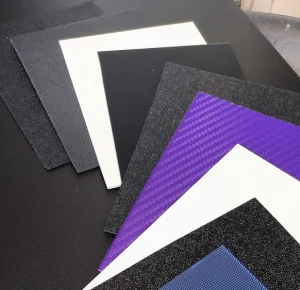
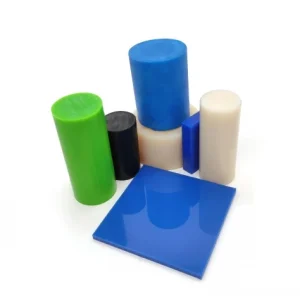
Special Wholesale Plastic Board PA6 / PA66 Durable Nylon Stock
View Product Details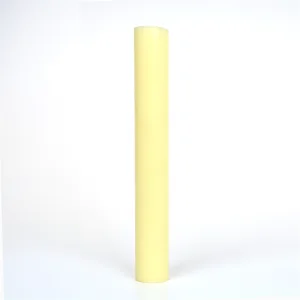
Streamlined Commercial Procurement
Request Direct Foundry Quotation & Technical Consultation
Submit your bill of materials, plate dimension schedules, or 2D/3D component drawings. Our polymer engineering department calculates volumetric weight, optimal nesting layout, and applies volume discount pricing within 12 hours.