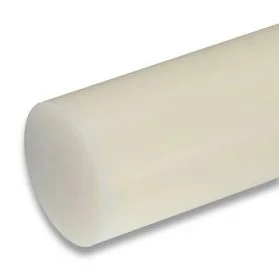
Direct Sourcing Catalog
High-Performance Engineering Semi-Finished Inventory
Explore factory-certified Monomer Cast (MC) Nylon, Polyoxymethylene (POM), Polypropylene (PP), and reinforced structural polymers.
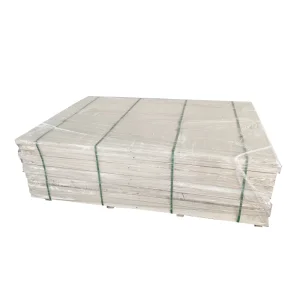
High-Quality China Engineering Plastic Polyamide PA6 PA66 Nylon Sheet Tube Rod Bar
View Specifications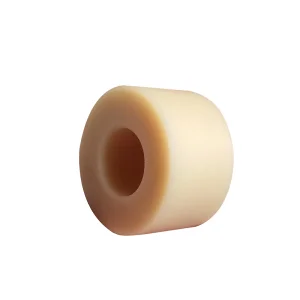
Industrial Engineering ABS, Nylon PP Plastic Tube, POM Rod & PTFE Extruded Bar
View Specifications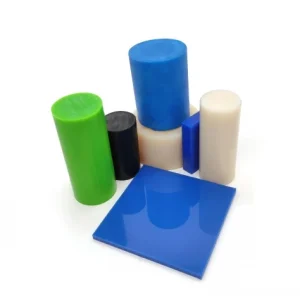
Wholesale Engineering Polyamide PA6 PA66 Solid Nylon Rod, PTFE Rod & ABS Round Bar
View Specifications
Industrial Grade Pure Virgin PA6 Nylon Rod Stock for High Stress Applications
View Specifications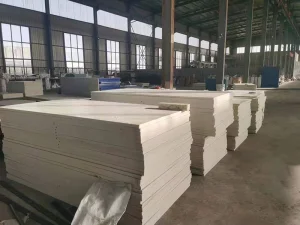
OEM Custom Dimensioned Polyamide PA66, UHMWPE, PTFE & ABS Wear Sheets
View Specifications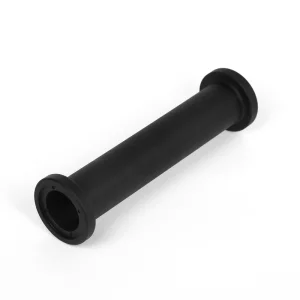
Precision Heavy-Duty MC Nylon Guide Rollers and Conveyor Sheaves
View Specifications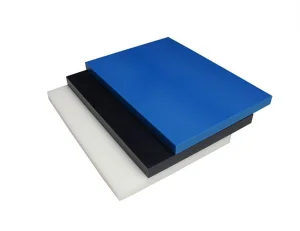
Full Dimension Extruded PA6, HDPE & Polypropylene Heavy Machinery Plate Stock
View Specifications20+
Years Continuous Production
1:7
Weight Ratio to Steel / Bronze
12h
SLA Technical Feedback
100%
Stress-Relieved Casting
Engineering Whitepaper
Global Commercial & Industrial Status of "Rubber MC" Polymorphic Systems
Analyzing the Convergence of Cast Polyamide (MC Nylon) and Elastomeric Rubber Hybrids in Tribological Wear and Shock Mitigation Applications.
Global Market Dynamics
The global transition from bronze and manganese steel to lightweight, corrosion-proof polymers has propelled Monomer Casting (MC) Nylon and industrial rubber composites into high critical standing. Modern industrial processing demands materials capable of withstanding unlubricated rotary movement, high dynamic point-pressures, and aggressive slurry conditions without surface galling or catastrophic brittle failure.
The "Rubber MC" Synergism
In heavy mechanical engineering, Rubber MC commonly designates hybrid assemblies: high-tensile cast nylon substrates operating alongside or chemically bonded to high-damping elastomeric matrices (such as SBR, Nitrile, or Polyurethane). This combination harnesses the elastic energy dissipation of vulcanized elastomeric rubber combined with the ultra-low friction and high compressive modulus of cast polyamide PA6.
China's Manufacturing Evolution
China's Monomer Casting sector has matured from rudimentary atmospheric casting to closed-loop, vacuum-assisted anionic polymerization. State-of-the-art Chinese manufacturers leverage precision automated temperature gradients during the caprolactam monomer conversion, eliminating internal micro-voids and residual stresses that historically caused premature warping during high-speed CNC routing.
Engineering Performance Metrics
Comparative Tribological & Mechanical Performance
Quantitative benchmarks of MC Nylon composites against conventional industrial materials under extreme operating conditions.
| Material Designation | Tensile Strength (MPa) | Impact Strength (kJ/m²) | Friction Coeff. (Dry vs Steel) | Max Operating Temp (°C) | Primary Industrial Use-Case |
|---|---|---|---|---|---|
| Cast MC Blue Nylon (PA6C) | 80 - 95 | > 6.5 | 0.15 - 0.22 | 110 (Continuous) | Crane Sheaves, Large Gears, Sprockets |
| Rubber-Cushioned Nylon Matrix | 65 - 80 | > 25.0 | 0.20 - 0.28 | 90 (Peak 120) | Piling Hammer Pads, Impact Ring Dampers |
| Extruded POM-C (Polyacetal) | 65 - 72 | 6.0 | 0.25 - 0.32 | 100 | Precision Dimensional Fluid Bushings |
| UHMWPE Ultra-High MW | 22 - 35 | No Break | 0.10 - 0.15 | 80 | Mining Chute Liners, Sliding Guides |
| Phosphor Bronze (CuSn8) | 450 | 40 | 0.35 (Requires Grease) | 250 | High Heat Extreme Load Bearings |
Mission-Critical Implementations
Localized Heavy-Industry Application Scenarios
How tailored polymers and resilient MC elastomeric products resolve mechanical fatigue, noise, and friction across key industrial verticals.
Deep Foundation & Piling Engineering
Hydraulic piling hammers exert monumental dynamic shocks. Conventional metal-on-metal striking interfaces produce fatal microfractures in equipment driving heads. High-density shock-absorbing Nylon Ring Cushions with rubber internal inserts absorb destructive secondary harmonic waves while sustaining thousands of metric-ton strike loads without cracking.
Port Machinery & Offshore Cranes
Wire rope sheaves engineered from cast MC nylon extend steel wire rope service lifespan by up to 300%. The self-lubricating characteristics minimize abrasive rope scoring, while the inherent weight reduction directly drops structural boom moments of inertia, allowing crane operators to handle greater loads with improved wind resistance margins.
Continuous Mining & Bulk Handling
Transfer chutes and vibratory conveyors suffer continuous degradation from mineral particulates. Hybrid lining systems matching vulcanized high-rebound rubber backing with a slick, impact-resistant MC Nylon or UHMWPE contact face isolate transfer impacts, lower operating decibel levels below 75dB, and completely inhibit bulk cake accumulation.
Chemical & Electroplating Metallurgy
Processing baths require non-conductive, acid-impervious material structures. Pure Polypropylene (PP) and specialized Fluoropolymer assemblies resist intense acid/alkali exposures up to 100°C, delivering total mechanical containment without the heavy lining separation problems typical in lead or rubber-lined steel tanks.
Automated Food Conveyor Systems
Modern hygiene mandates eliminate wet fluid greases near production streams. Self-lubricating POM (Polyacetal) and Blue Oil-Filled MC Cast Nylon components run bone-dry without particle emission, delivering silent, maintenance-free rotation inside automated filling, capping, and carton packaging systems.
Heavy Structural Outrigger Pads
Mobile cranes and aerial access equipment necessitate distributed point-load stabilization on unstable ground. Cast nylon outrigger pads deflect elastically without permanent set deformation or structural memory fracture, guaranteeing ground safety factors unmatched by brittle timber blocks or hollow welded steel boxes.
Innovation Trajectory
Technology Roadmap & Next-Generation Polymers
The engineering trajectory shaping cast polyamides, elastomer hybrids, and precision machining capabilities over the next decade.
Nanocomposite Matrix Reinforcement
The introduction of functionalized multi-walled carbon nanotubes (MWCNTs) and graphene platelets into molten caprolactam before polymerization. This delivers a 40% enhancement in wear resistance, dissipation of electrostatic charges (anti-static properties for explosive ATEX zones), and uniform heat conduction throughout thick-walled cast billets.
Solid Lubricant Infusion Systems
Moving beyond basic liquid oil additives toward micro-encapsulated solid lubricants (MoS2, PTFE particles, and synthetic wax compounds) chemically suspended in the MC nylon lattice. These polymers achieve exceptional dry PV values, allowing high-speed sliding blocks to operate continuously in deep water or dusty quarries without additional greasing.
Closed-Loop Chemical Depolymerization
Transitioning virgin casting scraps, CNC swarf, and decommissioned nylon rollers back into caprolactam monomer through thermal catalyzation. This circular engineering process decreases embodied carbon emissions by over 60% compared to traditional petrochemical manufacturing pathways, complying directly with international carbon border regulations.
Industrial Procurement Solution
Comprehensive Macro-Engineering Sourcing Solutions
Overcoming supply chain latency, dimensional drift, and thermal stress defects through vertically integrated manufacturing.
Post-Polymerization Thermal Annealing
Internal stress is the primary cause of dimensional warping when machining large nylon bars. Our production facility applies computer-monitored, multi-stage hot-oil thermal annealing to every semi-finished casting. This process normalizes residual crystallization zones, ensuring that precision CNC turned parts maintain strict design tolerances (down to ±0.05mm) during final customer assembly.
Direct CAD/CAM Integration Services
Our sales engineering office eliminates intermediaries by directly loading your native CAD engineering drawings (STEP, DWG, DXF, IGES) into high-speed multi-axis CNC machining centers. Experienced manufacturing engineers review material shrinkage coefficients, tool clearance speeds, and clamping pressures, guaranteeing precision parts arrive ready for immediate installation.
Export-Certified Protective Logistics
Engineering plastics are susceptible to environmental moisture absorption and physical impact damage during transoceanic shipping. All rods, tubes, sheets, and machined profiles are vacuum-sealed with desiccant packaging, wrapped in moisture-resistant vapor film, and secured inside heavy reinforced fumigated wooden crates tailored for global ocean and air transit.
Procurement & Engineering FAQ
Frequently Asked Questions on Engineering Plastics
Authoritative technical answers to common queries raised by mechanical designers and procurement professionals.
What is the core distinction between MC Cast Nylon and Extruded Nylon (PA6/PA66)?
Monomer Casting (MC) Nylon is synthesized through anionic polymerization directly within liquid molds under atmospheric pressure, yielding a significantly higher molecular weight, superior crystallinity, higher surface hardness (Rockwell R115-120), and lower internal stress than extruded PA6/PA66. This process also enables virtually limitless sizing capabilities, allowing the casting of large rods, thick slabs, and complex massive tubular billets impossible to manufacture via standard plastic extrusion.
How do Nylon Ring Cushions mitigate heavy shock loads in construction piling hammers?
High-performance nylon hammer cushions combine extreme compressive yield resistance with engineered viscoelastic deformation. When the hydraulic or diesel hammer strikes, the molecular chain structure of the polymer shifts slightly, absorbing the sharpest mechanical shock pulse and dispersing destructive harmonic feedback away from the expensive hammer housing. This balance protects steel piles from mushrooming while transferring optimal kinetic energy into the ground.
When should design engineers specify POM (Acetal) instead of Cast Nylon?
POM (Polyoxymethylene) should be chosen over MC Nylon in operating conditions where tight dimensional stability in high-humidity or submerged aqueous environments is mandatory. Nylon naturally absorbs water (up to 6-8% at saturation equilibrium), causing slight dimensional expansion and a reduction in mechanical stiffness. POM maintains water absorption below 0.2%, ensuring high dimensional tolerances for precision fluid gears, instrumentation parts, and close-tolerance valve spools.
Can custom formulations with oil, graphite, or glass fibers be produced?
Yes. Our manufacturing facilities regularly cast specialized custom grades: Oil-Filled Blue MC Nylon (incorporating homogeneous liquid lubricity for high PV rotary bushes), MoS2 Molybdenum Disulfide Black Cast Nylon (for enhanced mechanical rigidity and UV radiation stability), and Glass Fiber-reinforced composites to elevate continuous temperature thresholds and stiffness.
What quality assurance documentation accompanies export orders?
Every export consignment leaves our facilities complete with rigorous documentation, including Mill Test Certificates (MTC) verifying mechanical parameters, Raw Material Virgin Resin Affidavits, Dimensional Inspection Sheets (CMM data for precision CNC components), and RoHS/REACH compliance certifications for European and American border clearance.
Heavy Machining & Specialized Profiles
Precision Finished Components & Specialized Rubber Stock
Finished cast components, impact hammer cushions, cloth-inserted rubber sheeting, and acetal round bars ready for international dispatch.
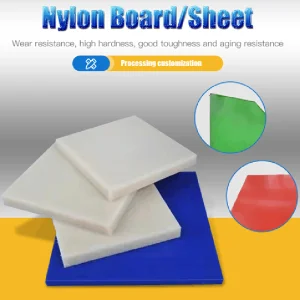
Famous SBR Nitrile Insertion Cloth Nylon Reinforced Rubber Mat Flooring Sheet
View Specifications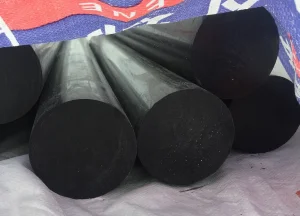
Wholesale High-Rigidity Black and Natural White POM Acetal Solid Bar Stock
View Specifications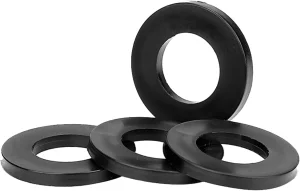
High Shock Blue/White Impact Nylon Ring Cushion for Hydraulic Piling Hammers
View Specifications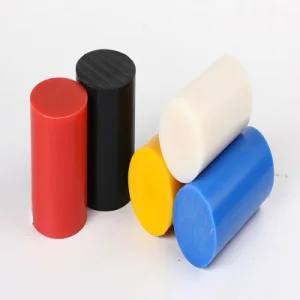
Heavy-Diameter Anionic Cast Monomer (MC) Polyamide Nylon Round Solid Rods
View Specifications
Discount Engineering Polyamide PA6 PA66 Solid Stock Plates & Machining Bars
View Specifications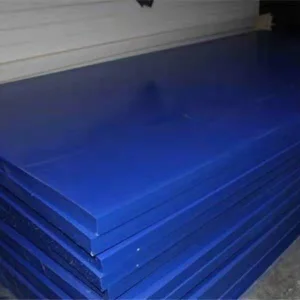
Factory Direct Calibrated MC Nylon PA6 Heavy Slabs & Slideway Wear Plates
View Specifications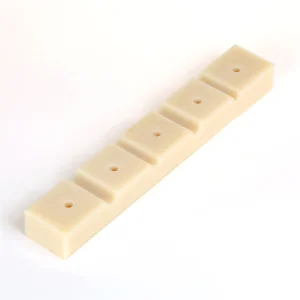
Cast Nylon Heavy Drag Chains, Conveyor Tracks & Outrigger Base Pads
View Specifications