
High-Performance Engineering Round Bars & Cast Components
Direct from our Hebei polymerization and automated extrusion facilities: Solid semi-finished billets engineered for tight tolerance CNC turning and dynamic load-bearing integrity.

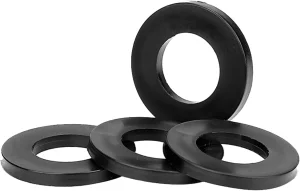
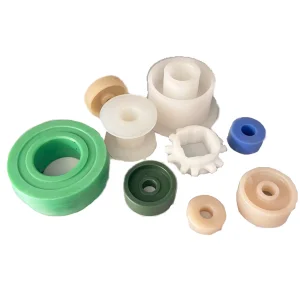

Macro Industrial Dynamics & The Evolution of Synthetic Round Bars
From metallurgical substitution to extreme wear environments: Examining the global engineering shift toward polymer-based structural stock.
Metallurgical Weight Reduction
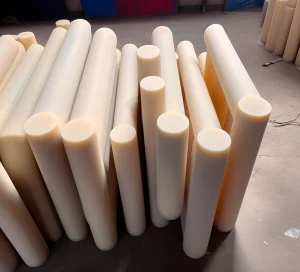
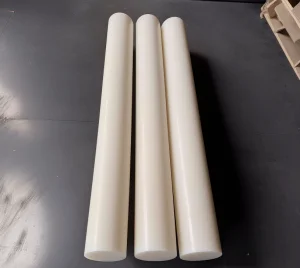
Modern kinetic machinery designs increasingly substitute phosphor bronze, cast iron, and stainless round bars with monomer-cast (MC) nylon and POM round bars. Delivering a 7:1 weight advantage, engineering polymer bars sharply reduce rotary inertia, motor sizing thresholds, and parasitic wear on bearing races without forfeiting mechanical rigidity.
- Density comparison: 1.15–1.41 g/cm³ vs. 7.85 g/cm³ (Steel)
- Significant power draw reductions in continuous drives
- Elimination of catastrophic galvanic corrosion
Self-Lubricating Tribology
Unplanned maintenance cycles in heavy bulk handling or subsea installations often stem from boundary lubricant breakdown. High-density semi-crystalline round bars incorporate internal solid lubricants—such as molybdenum disulfide (MoS₂), oil-impregnation, or graphite—permitting dry run-ins and unlubricated operation in abrasive environments.
- Dynamic friction coefficients as low as 0.08–0.15
- Non-scoring behavior on mating metal journals
- Zero chemical wash-off during CIP sanitize washdowns
High Impact Attenuation
Piling hammers, quarrying crushers, and naval winches expose mechanical links to catastrophic shock loads that shatter brittle alloys. Cast nylon polymers exhibit high viscoelastic yield behaviors, absorbing kinetic spikes and redistributing point forces across the molecular matrix to preserve structural drive shafts and impact cushions.
- Compressive strength thresholds up to 110 MPa
- Energy dampening protects downstream gear trains
- Acoustic deadening up to 15 dB in open gear assemblies
Comparative Performance Specs of Industrial Round Bar Stock
Validate your procurement criteria against physical, thermal, and chemical metrics measured across our standard round bar production matrix.
| Polymer Class | Tensile Strength | Continuous Temp | Coeff. of Friction | Machinability Index | Primary Industrial Use Case |
|---|---|---|---|---|---|
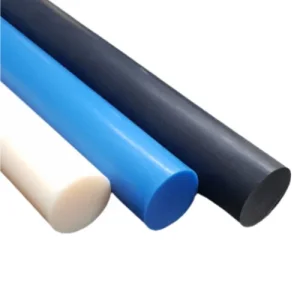
| MC Cast Nylon (PA6G) Natural / Blue / MoS₂ Filled | 78 - 85 MPa | -40°C to +105°C | 0.15 - 0.25 | Excellent (High Feeds) | Heavy rope sheaves, cable pulleys, pile driver cushions, high-tonnage bushings. |
| POM Acetal (Polyacetal / Delrin) White / Black Copolymer | 65 - 72 MPa | -50°C to +100°C | 0.20 - 0.28 | Superior (Chipped Swarf) | Precision metric gears, metering valves, fuel delivery discs, sanitary fixtures. |
| UHMWPE (Molecular Wt. >5M) Virgin White / Reprocessed | 28 - 35 MPa | -150°C to +80°C | 0.10 - 0.12 | Good (Sharp Cutters) | Bottling line star wheels, chain wear tracks, hopper guide rods, chemical sliders. |
| PTFE (Virgin Fluoropolymer) Virgin / Glass / Carbon | 22 - 32 MPa | -200°C to +260°C | 0.04 - 0.08 | Moderate (Creep Sensitive) | Cryogenic seals, aggressive acid valve cores, electrical high-frequency standoffs. |
| PEEK (Polyetheretherketone) Virgin / Carbon Fiber Reinforced | 100 - 130 MPa | -60°C to +250°C | 0.22 - 0.35 | High Rigidity Turning | Aerospace back-up rings, downhole oil drilling tools, medical sterilizable shafts. |
| HDPE & PP Polyolefins Extruded Solid Stock | 24 - 38 MPa | -30°C to +90°C | 0.18 - 0.25 | High Speed Routing | Corrosive fluid handling, galvanic tank supports, marine bumper fender rods. |
Localized Support Framework & International Compliance Assurance
Minimizing overseas procurement friction through rigorous material certification, supply chain tracing, and standardized customs-cleared documentation.
Full Regulatory Conformity
Every extrusion and cast lot is accompanied by standard EN 10204 Type 3.1 inspection certificates. Our formulations are certified against RoHS 3 (EU 2015/863), REACH (SVHC declaration), and FDA Title 21 CFR 177 standards for food contact machinery parts.
Export Seaworthy Packaging
Moisture control is paramount for PA6 and MC nylon. We ship bars hermetically bound in desiccated barrier films, fitted into ISPM 15 heat-treated export crates. Bars are end-capped and segmented to prevent flex cracking during rough intermodal handling.
Localized Buffer Inventory
We work in tandem with regional stockist partners in North America, Western Europe, and Southeast Asia to provide consignment warehousing, shortened container lead times, and rapid cut-to-length logistics for industrial plants requiring JIT delivery.
Mission-Critical Applications of Engineering Plastic Round Bars
How global system integrators deploy our round stock to solve friction, corrosion, and extreme mechanical stresses.
Heavy Piling Cushion Pads
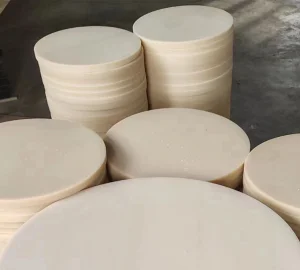
Cast MC nylon cushions, turned from large-diameter round stock, endure continuous impact hammering in marine harbor foundations, dampening ultrasonic shock without catastrophic splitting.
Silent Power Transmission
White & Black POM round bars are precision turned into helical gears, timing pinions, and racks. They provide near-zero backlash, low moisture swell, and quiet engagement in high-speed printing presses.
Mining Material Handling
UHMWPE round bars turned into conveyor rollers and idler guides resist diamond dust, coal particulates, and quartz slurry abrasion, preventing conveyor line freeze-ups.
Aggressive Fluid Control
PTFE and PEEK round billets transformed into valve seats, stem seals, and manifold rotors ensure bubble-tight shut-off across nitric, hydrochloric, and offshore saltwater environments.
Technical Roadmap: Next-Generation Polymer Engineering
Aligning future production processes with circular economy goals, nano-composite matrices, and automated continuous cast controls.
Continuous Annealing Optimization
Implementation of computer-controlled thermal ramping ovens ensuring uniform crystal structure from center core to outer diameter, eliminating centerline cracking during aggressive deep-hole boring operations.
Graphene & Carbon Nano-Reinforcements
Commercialization of lightweight PA6 and POM round bars with nano-carbon enhancements to achieve antistatic surface resistivity (10⁶–10⁹ Ω/sq) and 40% higher heat deflection temperatures under load.
Closed-Loop Circular Feedstock
Introducing traceable recycled engineering plastic series without structural degradation, lowering carbon footprint per metric ton and complying with European Union Corporate Sustainability Directives.
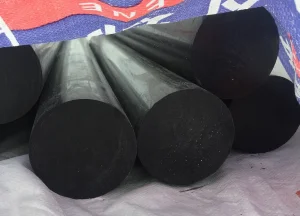
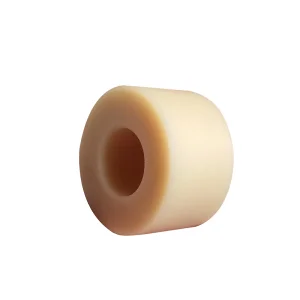
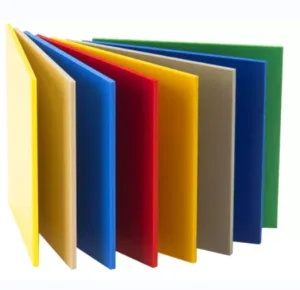
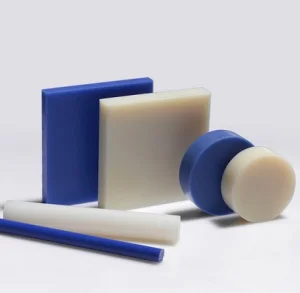
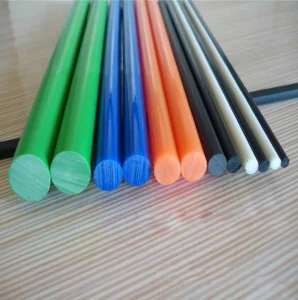
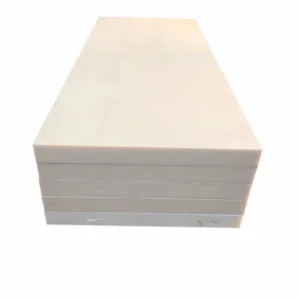
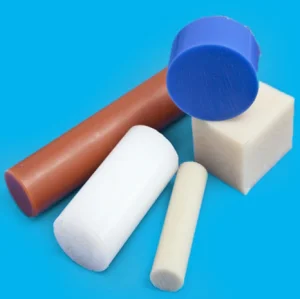
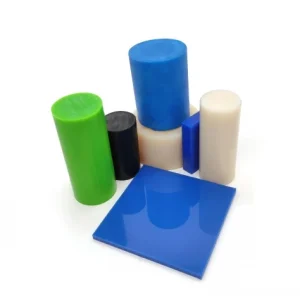
Complementary Semi-Finished Rods, Tubes & Machining Billets
Explore our wide-ranging standard catalogue items. Custom diameters, tailored lengths, and custom color masterbatches supplied directly on request.
Frequently Asked Technical & Commercial Questions
Objective advice direct from our technical team on tolerancing, machining behaviors, resin integrity, and international logistics.
What measures are taken to prevent centerline porosity and warping in heavy nylon round bars?
Centerline porosity in thick-gauge nylon bars commonly occurs when outer surfaces solidify faster than the molten core during casting. We address this using pressurized vertical casting cells combined with computer-regulated annealing schedules spanning 24 to 72 hours depending on billet diameter. This post-polymerization thermal cycle relieves internal cast stresses, ensures uniform crystalline density (1.15–1.16 g/cm³), and prevents inner cavitation when boring or drilling through the center.
When should an engineer specify POM (Acetal) round bar over Cast Nylon (PA6)?
Specify POM when working in wet, submerged, or high-humidity conditions where moisture absorption causes nylon to expand out of tolerance (nylon can absorb up to 6–8% moisture at saturation, causing up to 2–3% dimensional drift). POM absorbs negligible moisture (less than 0.2% at equilibrium), maintains tight machining tolerances (down to ±0.02 mm), and offers cleaner chip ejection during automatic lathe turning. Conversely, choose MC Nylon for large diameters (>200 mm), extreme shock impact, or heavy abrasive contact where toughness overrides tight moisture drift limits.
Can SHUNDA manufacture customized sizes, tight tolerances, and non-standard colors?
Yes. We offer fully bespoke cast bar diameters from 10 mm up to 800 mm, along with precision centerless-ground round bars produced to h9, h8, and h7 tolerances. Custom formulations include color-matched masterbatches (safety blue, high-visibility yellow, jet black, natural ivory), along with performance additives such as oil impregnation, solid molybdenum disulfide (MoS₂), glass fiber reinforcements, and antistatic carbon nanotubes.
What are the key tooling parameters recommended for CNC turning of polymer round bars?
Engineering plastics have low thermal conductivity compared to metals. Heat built up during machining remains in the cutting tool and part, leading to thermal expansion and localized melting. We recommend using polished carbide or PCD tooling with positive rake angles (15° to 25°), sharp clearance angles, and high feed rates (0.2–0.5 mm/rev) with generous chip clearance. Use clean compressed air or water-soluble, mineral-free coolants to quickly evacuate continuous stringy swarf.
What export shipping terms, lead times, and documentation are standard?
We routinely export under Incoterms including FOB Tianjin/Qingdao, CIF worldwide, and DDP to designated industrial facilities. Standard stocked sizes ship within 3–7 business days, while custom casting or large-scale metric billet production typically completes in 15–20 days. Every container is supplied with commercial invoices, certified packing lists, bills of lading, Mill Test Reports (MTRs) according to EN 10204 3.1, certificates of origin, and certified fumigation certificates for crated wood packaging.