High-Performance Polymer Washers & Engineering Stocks
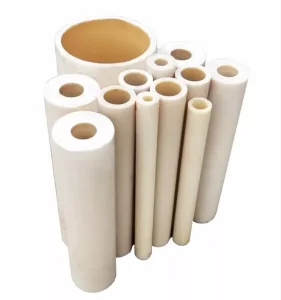
Direct factory supply of tight-tolerance thermoplastic round stock, extruded profiles, and CNC machined parts built to DIN 125, DIN 9021, and bespoke OEM dimensional specifications.
The Structural Evolution of PVC Washers & Non-Metallic Fasteners
Why modern global equipment engineers systematically replace traditional metallic washers with engineered Polyvinyl Chloride (PVC) and specialty thermoplastics across aggressive fluid, high-voltage, and corrosive environments.
Elimination of Galvanic Corrosion
In structural metal jointing (such as connecting aluminum brackets to stainless steel or galvanized purlins in solar photovoltaic setups), metallic washers act as electrolytic conduits that accelerate galvanic corrosion. Rigid PVC and plastic washers provide an absolute, non-conductive dielectric isolation barrier, completely neutralizing ionic transfer and preventing localized joint oxidation.
Vibration Damping & Load Distribution
Unlike steel or spring lock washers that bite directly into delicate substrates, unplasticized PVC (uPVC) and plasticized polymer compounds possess an optimal viscoelastic modulus. Under bolt pre-load, a PVC washer yields elastically to conform to macroscopic surface irregularities, dispersing torque loads uniformly while attenuating harmonic high-frequency mechanical vibration.
Chemical & Acid Neutrality
Polyvinyl Chloride displays phenomenal chemical resistance against mineral acids, alkalis, salts, alcohols, and aliphatic hydrocarbons. In chemical scrubbers, battery storage systems, municipal wastewater treatment infrastructure, and marine desalination manifolds, PVC washers maintain dimensional stability without swelling, softening, or cracking.
Global Sourcing Demands: Why Tier-1 EPCs and OEMs Partner With Chinese Direct Manufacturers
Evaluating procurement criteria: total cost of ownership (TCO), resin traceability, micro-stamping die precision, and the transition from intermediary traders to integrated production factories.
Direct Resin Compounding & Batch Consistency
Tier-1 procurement teams cannot tolerate durometer hardness variations between batches. As an established China manufacturing factory, SHUNDA controls polymer compound formulation directly at the compounding stage, adjusting thermal stabilizers, lubricants, and impact modifiers to ensure exact Shore D 75 to 85 ratings across multi-million piece purchase orders.
High-Speed Punch Stamping vs. Precision CNC Turning
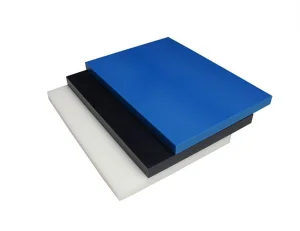
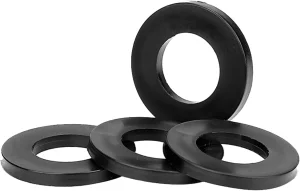
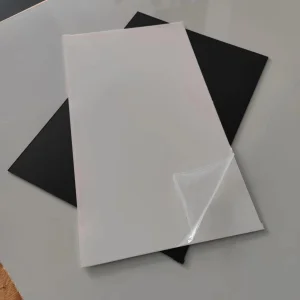
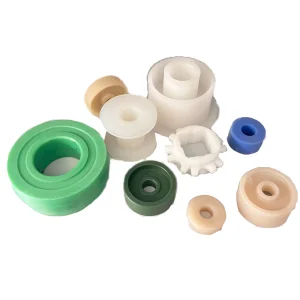
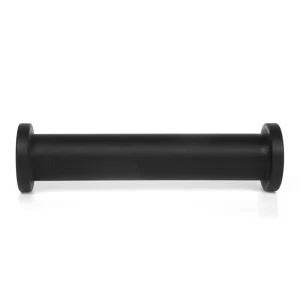
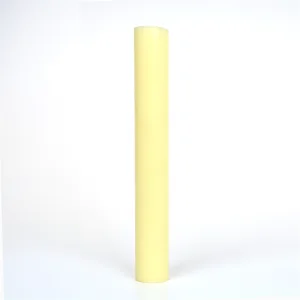
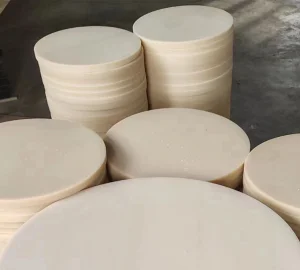
Standard DIN 125, DIN 9021, and SAE flat washer profiles require continuous high-speed precision die-punching from calibrated calendered PVC sheets to minimize unit cost. Conversely, specialized flanged shoulder washers, step washers, and heavy-wall valve spacer rings are machined via our multi-axis CNC lathes directly from extruded hollow bars and rods, guaranteeing razor-sharp edge geometry and zero burrs.
Optimized Export Packing & Traceability Logistics
Defective inner diameter (ID) burrs or static cling can halt automated robotic assembly lines in North American and European automotive facilities. We implement automated optical sorting (AOI), anti-static surface treatments, barrier-sealed polybagging, and desiccated seaworthy cartons labeled with unique batch heat numbers for transparent supply chain genealogy.
Engineering Polymer Comparison: Selecting the Right Washer Substrate
Comprehensive metallurgical and physical performance metrics comparing Rigid PVC against alternative polymer stocks for mechanical, thermal, and dielectric isolation duties.
| Polymer Substrate | Tensile Strength (MPa) | Dielectric Strength (kV/mm) | Continuous Max Temp (°C) | Chemical Resistance Scope | Primary Industrial Application Niche |
|---|---|---|---|---|---|
| Rigid PVC (Polyvinyl Chloride) | 50 – 65 | 20 – 40 | +60°C (+140°F) | Exceptional (Acids, Alkalis, Salts, Sea Water) | Solar PV mounting, architectural glazing, plumbing seals, galvanic isolation washers. |
| Nylon (PA6 / PA66 / Cast Nylon) | 70 – 85 | 18 – 25 | +95°C (+203°F) | Moderate (Resistant to fuels, greases; sensitive to acids) | Heavy mechanical bearings, high-torque wear pads, pile hammer impact cushions. |
| POM (Polyoxymethylene / Acetal) | 65 – 75 | 20 – 30 | +100°C (+212°F) | Broad (Solvents, neutral organics; weak against strong acids) | Precision dimension gears, low-friction valve seats, fuel delivery components. |
| PTFE (Polytetrafluoroethylene) | 20 – 35 | 40 – 80 | +260°C (+500°F) | Universal (Near total inertness to all known chemicals) | Cryogenic equipment gaskets, extreme semiconductor flanges, ultra-low friction thrust discs. |
| UHMWPE (Ultra-High Mol. Wt. PE) | 40 – 50 | 35 – 50 | +80°C (+176°F) | High (No environmental stress cracking, zero water uptake) | Chute wear liners, heavy sliding tracks, impact absorbing conveyor rings. |
| HDPE (High-Density Polyethylene) | 25 – 35 | 22 – 32 | +70°C (+158°F) | High (Moisture, mild acids, salt brine solutions) | Marine bumper spacers, agricultural irrigation gaskets, low-cost tank bolt seals. |
Engineered Sealing Architecture Across Global Infrastructure
How our custom manufactured PVC washers, nylon cushions, and polymer profiles resolve critical operational vulnerabilities across vital international supply sectors.
Photovoltaic Solar & Clean Energy Fields
Utility-scale solar arrays installed in desert, coastal, or agricultural environments face extreme thermal expansion differential between steel structural tracker piles and extruded aluminum module rails. Our UV-stabilized dark grey PVC washers act as critical thermodynamic buffers, permitting micro-movement during daily thermal cycling without loosening hardware or cracking tempered PV solar glass.
High-Voltage Switchgear & Power Transformers
Modern electrical distribution substations require fastening mechanisms that completely eliminate eddy currents and electromagnetic coupling around high-amperage busbars. Our specialized dielectric PVC flat and shoulder washers offer dielectric breakdown ratings exceeding 30 kV/mm, safeguarding sensitive cabinet assemblies from arc-flash flashovers and catastrophic ground loops.
Municipal Chemical Treatment & Desalination
Seawater reverse osmosis (SWRO) facilities and sodium hypochlorite dosing skids rapidly degrade standard 304 and 316 stainless steel washers due to pitting chloride attack. By standardizing on virgin unplasticized PVC washers across all low-to-medium pressure flanged connections, plant engineers prolong scheduled maintenance intervals from 6 months to over 5 years.
Strict Global Regulatory Compliance & Factory Quality Assurance
Ensuring cross-border shipments conform seamlessly to European Union, American, and international environmental, material safety, and mechanical tolerance frameworks.
RoHS 3 (EU 2015/863) & REACH Annex XVII
Industrial PVC often faces scrutiny regarding heavy metal stabilizers like lead (Pb) and cadmium (Cd), as well as orthophthalate plasticizers. SHUNDA certifies that all exported PVC washers utilize environmentally benign calcium-zinc (Ca-Zn) thermal stabilization systems. Our compounds are fully compliant with RoHS 3 and registered under the EU REACH SVHC candidate list, containing zero restricted phthalates.
UL 94 Flammability Ratings
Rigid PVC is inherently self-extinguishing due to its 57% chlorine molecular content by weight, which acts as a built-in free-radical scavenger during combustion. Our standard PVC washers meet UL 94 V-0 flame-retardant standards at thicknesses down to 0.8mm, satisfying the strict passive fire protection codes enforced in railway rolling stock, aerospace cabin enclosures, and building curtain walls.
Full CMM Metrology & Lot Inspection (AQL 0.4)
Every shipment is verified against strict dimensional tolerances using digital coordinate measuring machines (CMM) and video measuring systems. We inspect inner diameter (ID), outer diameter (OD), total thickness (T), and face parallelism. Standard export batches conform to ISO 2859-1 sampling plans (General Inspection Level II, AQL 0.4 for major dimensional defects), accompanied by 3.1 Material Test Reports (MTR).
Technical Roadmap & Future Outlook: The Next Decade in Polymer Fasteners
Exploring next-generation bio-circular polymers, nano-composite additives, and advanced manufacturing technologies driving the decarbonization of non-metallic hardware.
Circular Bio-Attributed PVC Formulations
Aligned with global net-zero emissions mandates, SHUNDA’s engineering laboratory is testing bio-attributed PVC formulations derived from tall oil (a forest-industry byproduct) rather than fossil-fuel ethylene. This breakthrough enables Tier-1 clients to lower their Scope 3 embodied carbon footprint by up to 60% without sacrificing mechanical yield strength or dielectric breakdown voltages.
Graphene-Enhanced Thermal Dissipation Washers
To overcome the moderate thermal limits of standard vinyl polymers (+60°C continuous), our developmental roadmap features nano-graphene and ceramic particulate compounding. Preliminary field tests show a 40% enhancement in compressive creep resistance under 40 bar clamp forces at elevated operating temperatures reaching +85°C (+185°F).
Ultra-High-Speed Micro-Punch Tooling
SHUNDA continues capital investment in servo-driven Swiss stamping tooling and multi-cavity progressive dies capable of sustaining 800 strokes per minute. This manufacturing throughput allows us to compress production lead times for standard metric and imperial washer dimensions (M2 through M36) down to 7 business days for full containerload export consignments.
Frequently Asked Questions by Industrial Sourcing Teams
Comprehensive technical and commercial clarifications covering material selection, manufacturing limits, minimum orders, and global logistics.
Rigid PVC (unplasticized or uPVC) contains zero plasticizers, offering high tensile stiffness (50–65 MPa), high compressive strength, and high dielectric insulation (Shore D 80–85). It is used for structural load distribution, electrical standoff spacing, and galvanic isolation. Flexible PVC incorporates 20–40% plasticizers (typically DOTP or polymeric plasticizers for non-phthalate compliance), resulting in an elastomer-like product (Shore A 60–85) ideal for low-pressure fluid, dust, and acoustic vibration damping seals.
Yes. While we maintain ready tooling for DIN 125, DIN 9021, DIN 433, and ASME/ANSI B18.22.1 standards, over 45% of our production volume is custom-engineered. We manufacture stepped washers, flanged shoulder washers, wave washers, and oblong sealing gaskets from 2D/3D technical drawings (DWG, DXF, STEP, or PDF). Custom stamping tooling is developed in-house within 5 to 7 working days.
Unprotected standard clear or white PVC will experience photo-oxidative degradation under intense ultraviolet (UV) radiation over time, leading to surface yellowing and micro-crazing. For outdoor infrastructure, solar tracking fields, and marine applications, SHUNDA incorporates rutile titanium dioxide (TiO2) and hindered amine light stabilizers (HALS), or carbon black pigments. This compound formulation ensures UV-stable operation without mechanical degradation across a 15-to-25-year service lifecycle.
Because PVC has a significantly lower compressive yield point than carbon steel or brass, bolts must never be tightened to standard steel fastener torque levels. Tightening beyond the plastic’s compressive limit will cause cold flow creep and washer extrusion. We recommend utilizing a torque wrench and setting torque values to achieve joint clamp pressures between 15 and 30 MPa. For high-torque structural applications, we recommend pairing the PVC washer with a larger diameter steel backup washer to distribute clamping loads evenly.
Engineers should select Nylon PA66 or POM when the operating temperature continuously exceeds +60°C (+140°F) or when dynamic rotational friction is present. Nylon offers superior tensile toughness and impact energy absorption, but it absorbs ambient moisture (up to 3.0% by weight), causing dimensional swelling. POM (Acetal) is preferred when precision tolerances, low moisture uptake (less than 0.2%), and extreme creep resistance are required at temperatures up to +100°C.
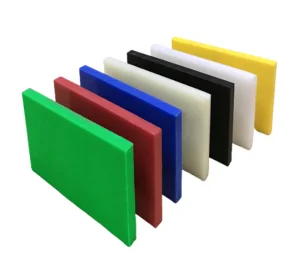
For standard catalog sizes (M3 to M24 in standard thicknesses like 0.5mm, 1.0mm, 1.5mm, 2.0mm, and 3.0mm), our factory maintains raw sheet inventory with an MOQ of 5,000 to 10,000 pieces per size. For custom extruded formulations or custom colors (RAL matched), the typical batch MOQ is 50,000 pieces. Standard lead times range from 7 to 14 days, with urgent air-freight sampling dispatched within 72 hours.
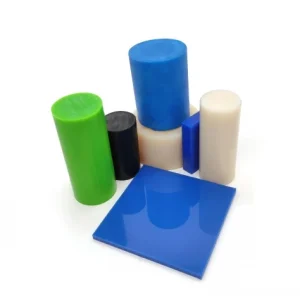
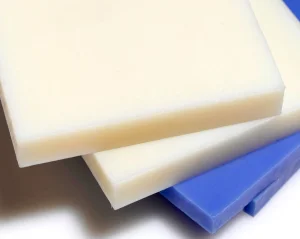
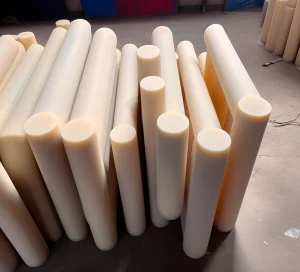
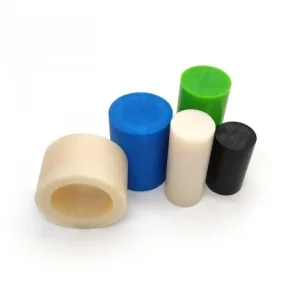
Heavy Engineering Plastics, Machined Castings & Stock Shapes
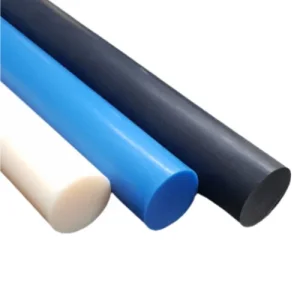
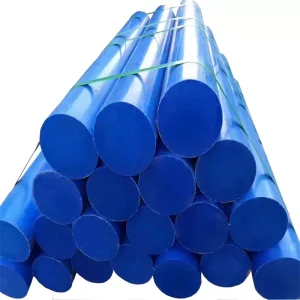
Complementary semi-finished industrial plastics: MC cast nylon billets, POM bars, PP industrial rods, and heavy impact hammer cushion rings direct from our Chinese production facilities.