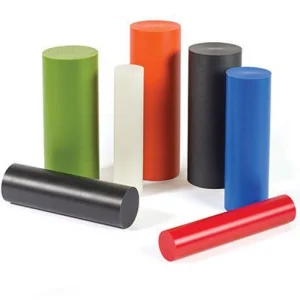
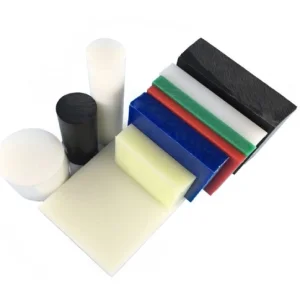
High-Performance Engineering Semi-Finished & Custom Stock
Direct supply line from our Xinhe County manufacturing facility, maintaining strict molecular stability, consistent wall tolerances, and zero internal voiding.

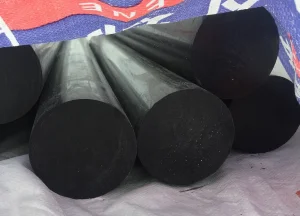
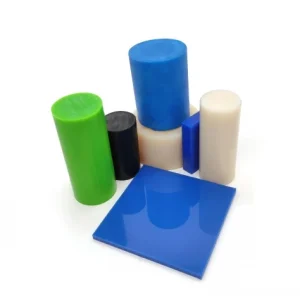
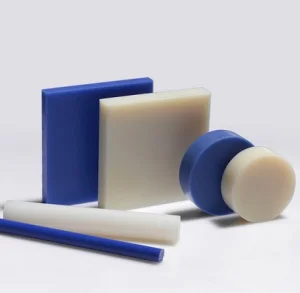
Global Industrial Procurement Realities for Polyacetal Piping
Comprehensive analysis of thermal-mechanical performance metrics, friction engineering, and the systemic transition from legacy bronze/fluoropolymers to POM-C extrusion stock.
Cost-to-Weight Optimization
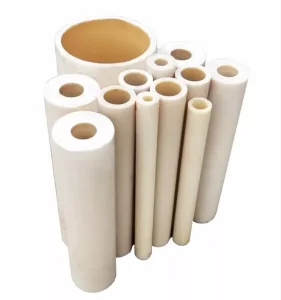
Polyoxymethylene (Acetal / POM) provides an optimal density-to-rigidity ratio (1.41 g/cm³) compared to traditional metals like bronze, phosphor bronze, or stainless steels. OEMs integrate POM tube and pipe assemblies to shave rotational weight up to 80% while retaining structural durability.
Stress Cracking Resilience
In high-pressure pneumatic transfer and cyclic hydraulic environments, POM pipes show superior fatigue resistance compared to standard PE or PVC. Acetal copolymer profiles inhibit creep formation under continuous stress conditions up to 80°C continuous working temperatures.
Zero Stick-Slip Bushing Performance
Utilized as hollow bar stock for precision turning, POM tubes yield ready-to-mount bearings and spacers without lubricant starvation. Acetal provides continuous self-lubrication, preventing galling against steel mating shafts in abrasive particulate environments.
Comparative Evaluation: POM Pipe vs Alternative Polymers
Direct laboratory-verified physical and operational tolerances across core industrial engineering thermoplastics.
| Performance Parameter | POM-C (Polyacetal Copolymer) | Nylon PA6 / Cast Nylon | UHMWPE | PTFE (Polytetrafluoroethylene) |
|---|---|---|---|---|
| Moisture Absorption (24h immersion) | 0.20% (High dimensional retention) | 1.8% - 3.5% (High swelling risk) | < 0.01% (Hydrophobic) | < 0.01% (Hydrophobic) |
| Tensile Modulus (MPa at 23°C) | 2,800 - 3,100 | 2,400 - 3,200 (Drops when wet) | 700 - 1,000 (Flexible) | 400 - 750 (Very soft) |
| CNC Machining Tolerance Capability | ±0.02 mm (Superior chip breaking) | ±0.08 mm (Thermal sensitivity) | ±0.15 mm (Elastic deflection) | ±0.12 mm (Creeps under tool) |
| Continuous Temperature Range | -40°C to +105°C | -40°C to +90°C | -150°C to +80°C | -200°C to +260°C |
| Solvent & Hydrocarbon Resistance | Exceptional (Fuels, oils, solvents) | Moderate (Sensitive to strong acids) | High (Chemically inert) | Universal Chemical Inertness |
Precision Extrusion, Annealing & Tooling Roadmap
Eliminating internal porosity and residual manufacturing tension through multi-stage thermodynamic normalization.
Virgin Resin Ingestion
We process only select prime-grade copolymer POM beads without secondary filler adulteration. Polymer granules undergo continuous desiccated dehumidification to ensure nominal polymer chain integrity.
Controlled Wall Extrusion
Utilizing high-torque single-screw extruders with vacuum-assisted calibration tanks. Concentricity and internal wall integrity are maintained through closed-loop ultrasonic dimensional scanning in real time.
Extended Thermal Annealing
All extruded POM pipe profiles undergo a 24- to 48-hour air-oil thermal relaxation cycle. This phase redistributes crystal orientation, drastically reducing internal core stress and preventing twist during CNC turning.
Strict Quality Gateways
Every batch is validated via Shore D hardness evaluation, density checks (1.41 g/cm³ standard), and pin-gauge runout verification across 1000mm length spans to meet ISO 9001 factory-direct benchmarks.
Macro-Industry Deployments & Localized Regulatory Assurance
Serving precision engineering, mining, fluidics, automotive, and automation systems across 60+ export destinations.
Fluid Automation & Chemical Valves
POM pipes perform cleanly as flow conduits, piston valves, and internal rotor liners. Their resilience to petroleum derivatives, alcohols, and glycols makes them an industrial choice across automotive fuel supply testing and pneumatic manifolds.
Food Processing & Conveyor Components
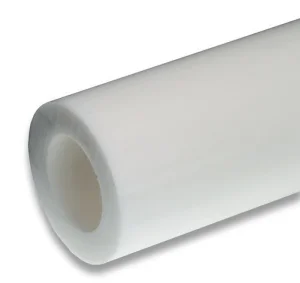
Engineered white acetal pipe complies with direct contact regulations including FDA, EU 10/2011, and RoHS criteria. Extensively converted into washdown-ready conveyor guide rollers, drive collars, and fluid filling nozzles.
Full Regulatory Paperwork Packages
SHUNDA issues Mill Test Certificates (MTC), 3.1 chemical analysis sheets, RoHS, and REACH dossiers alongside every bill of lading. Custom wooden crates, end caps, and shrink-wrapped moisture preservation prevent oceanic shipping degradation.
Frequently Asked Questions on POM Pipe Sourcing
In-depth responses curated by SHUNDA polymer chemical process engineers and export compliance specialists.
What is the key difference between POM-H and POM-C pipe extrusions?
POM-H (Homopolymer, typically Delrin) offers marginally higher tensile strength and stiffness at elevated temperatures, but suffers from core center-line porosity in thick cross-sections. POM-C (Copolymer), which SHUNDA standardizes for extruded pipes and hollow bars, features no centerline porosity, greater resistance to hot water hydrolysis, superior chemical resistance against strong alkalis, and improved thermal stability for machining.
Why should I choose POM pipe hollow stock instead of boring solid POM rods?
Boring a large-diameter solid POM rod generates excessive machining waste, increases tool cycle times, and risks warping the part due to sudden core-stress relief. Sourcing pre-extruded POM pipes (hollow bars) saves raw material weight, drastically cuts CNC lathe cycle times, preserves tool life, and yields more predictable roundness after finish machining.
How does POM pipe withstand environmental moisture compared to PA6 nylon?
Polyamide (PA6 Nylon) absorbs atmospheric moisture up to 3.5% (and up to 8-9% in direct submersion), leading to thermal swelling, loss of tensile modulus, and tolerance drift. POM pipe possesses a negligible absorption ceiling of ~0.2%, maintaining precision tolerances within micrometers regardless of ambient factory humidity or coolant exposure.
Can you provide custom inner (ID) and outer (OD) diameters for POM tubes?
Yes. In addition to our standardized extrusion calibers (from 20mm up to 300mm outer diameter), SHUNDA maintains an in-house tooling workshop. We manufacture customized extrusion nozzles and internal calibration mandrels according to customer dimensional drawings, with minimum order quantities tailored to project requirements.
What guidelines should CNC machinists follow when turning POM pipe profiles?
Use sharp carbide or diamond-tipped tools with high positive rake angles (15° to 30°). Maintain high feed rates to ensure continuous chip formation and prevent localized frictional melting. Although POM can be machined dry, continuous air blast or emulsion coolant helps maintain heat dissipation for tolerances tighter than ±0.03mm.
What is the typical FOB/CIF lead time for sea container orders from Hebei, China?
Standard profile sizes from our inventory ship within 3–5 working days. Tailored custom calibers or large-volume production runs (20-foot to 40-foot HQ containers) take 10 to 18 days. We ship via Tianjin Port (Xingang), situated roughly 300 km from our plant, providing rapid logistics turnaround for global sea freight.
Verified Industrial Semi-Finished Products & CNC Components
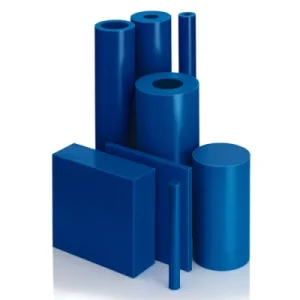
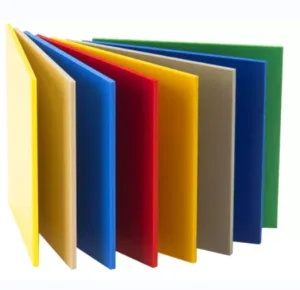
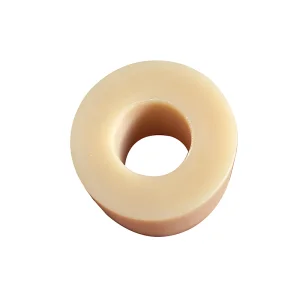
Explore our complete production line covering acetal, cast MC nylon, high-molecular polyethylene, and precision fluoroplastic profiles.