Precision Extruded & Cast Engineering Polymer Solutions
Explore our export-certified semi-finished polymer blanks, engineered to close mechanical tolerances and vacuum-annealed for high-stress operational stability.
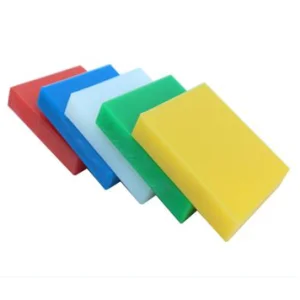
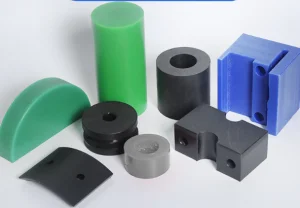
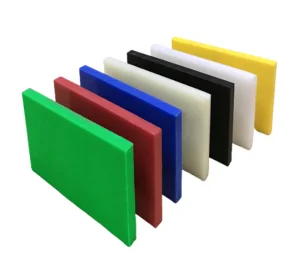

High-Performance Polyamide 66: Crystallinity, Strength, and Microstructure
A deep engineering dive into molecular architecture, thermal resistance differentials, and why pristine PA66 extruded plates outperform conventional polyamides under critical mechanical loads.
Polyhexamethylene Adipamide Matrix
PA66 synthesizes via polycondensation of hexamethylenediamine and adipic acid. The dense, symmetrical alignment of dual 6-carbon segments produces an intensely crystalline lattice structure, granting a continuous heat deflection threshold up to 180°C under intermittent loads.
Controlled Vacuum Annealing
As-extruded raw stock suffers from immense locked-in shear stresses. SHUNDA applies a proprietary 48-hour liquid-medium thermal tempering protocol that relieves internal molecular stress, ensuring zero bow, warp, or internal delamination during high-speed CNC turning and milling passes.
Tribological & Dynamic Damping
Polyamide 66 boards feature self-healing boundary layer lubrication. When interfacing with hardened mating steel, the coefficient of dry friction remains strictly within 0.22 - 0.28, actively attenuating vibration and lowering airborne noise emissions in heavy gearboxes.
| Physical / Mechanical Property | Standard Test Method | SHUNDA Virgin PA66 Board | Standard Cast PA6 (MC Nylon) | Acetal POM-C Benchmark |
|---|---|---|---|---|
| Tensile Strength at Yield (23°C) | ISO 527 / ASTM D638 | 85 - 92 MPa | 75 - 80 MPa | 65 - 70 MPa |
| Modulus of Elasticity in Tension | ISO 527 | 3,400 MPa | 3,000 MPa | 2,800 MPa |
| Melting Point (DSC Peak) | ISO 11357 | 260°C (500°F) | 220°C (428°F) | 165°C (329°F) |
| Rockwell Hardness (M-Scale) | ISO 2039-2 | M 88 | M 82 | M 84 |
| Dielectric Strength (Short-Term 2mm) | IEC 60243 | 27 kV/mm | 25 kV/mm | 20 kV/mm |
| Moisture Equilibrium (23°C, 50% RH) | ISO 62 | 2.4% | 2.8% | 0.2% |
*All values represent empirical baseline metrics achieved in pristine virgin resin runs. Modifiers (MoS2, Glass Fiber 30%, Graphite) alter parameters significantly.
Global Enterprise Sourcing Architecture
How Tier-1 OEM integrators, heavy equipment manufacturers, and overseas plastic stockists mitigate operational risk and optimize landed costs through Chinese direct manufacturing.
Direct-to-Melt Origin Traceability
By enforcing 100% prime virgin caprolactam and hexamethylenediamine batches without uncontrolled regrind dilution, we safeguard structural tensile consistency across every export container.
Total Dimensional Calibration
Equipped with computerized gauge heads, every PA66 board produced conforms to precise thickness tolerances (+0.2mm/-0.0mm), saving machining teams hundreds of preliminary skinning hours.
Supply Chain Resiliency
Dual-redundant extruders and raw silo containment assure bulk procurement contracts of predictable FOB/CIF lead times, shielding global distributors from localized chemical spot shortages.
Customized Reinforcement Alloys
Tailor your plates on demand: PA66+GF30 (Glass Filled) for elevated creep resistance, PA66+MoS2 for self-lubricating wear slides, or antistatic (ESD) modified compositions for semiconductor handling.
Engineered Turnkey Solutions for Demanding Environments
Across the automotive, mineral handling, renewable energy, and heavy crane sectors, our PA66 boards displace steel, bronze, and lower-tier polymers.
Automotive & EV Battery Underbody Trays
Thermal insulation brackets, structural battery cell spacers, and high-load transmission wear pads machined from non-conductive, fire-retardant polyamide sheet stock.
Bulk Material Conveyance & Mining Chutes
Replacing heavy alloy liners with low-friction PA66 impact boards drastically reduces hopper clinker build-up, lowers deadweight by 85%, and eliminates abrasive metal-on-metal galling.
Hydraulic Telescopic Crane Boom Pads
Telescopic boom sliding shoes demand extreme compressive yield thresholds and low stick-slip properties. Our annealed PA66 plates deliver flawless extension under high cantilevered tonnages.
Technological Roadmap & Sustainable Manufacturing
Continuously evolving to integrate high-speed CNC multi-axis routing, ultrasonic interior void detection, and closed-loop carbon-neutral resin cycles.
Continuous Profile Extrusion lines
High-torque twin-screw degassing extruders yield consistent melt pressure, eliminating microscopic pinholes and gaseous micro-cavities across plates up to 100mm thick.
Digital Laser Caliper Profiling
Real-time automated thickness monitors actively adjust cooling calendar roll nips across both longitudinal and transverse axes for unmatched flat-plane uniformity.
Clean Eco-Formulation
Full compliance with REACH (EC 1907/2006) and RoHS standards, incorporating energy-saving infra-red curing tunnels to drop production carbon intensity by 22%.
Rigorous Quality Assurance & Export Verification
Every consignee shipment is supported by comprehensive lab documentation, batch traceability, and ocean-ready packaging systems engineered for extreme transits.
Full EN 10204 3.1 Certification
Mill test certificates accompany every production batch, validating mechanical yield, izod impact, melting points, and melt flow indices (MFI) verified through in-house rheological tests.
Multilingual Technical Support
Direct communication with veteran plastics engineers. We provide detailed advice on proper cutter geometries, feeds, speeds, and coolant selection to streamline your shop-floor output.
Moisture-Barrier Seaworthy Crating
Because virgin polyamide is hygroscopic, all plates are wrapped in vapor-barrier poly sheeting and packed in ISPM-15 fumigated solid wood crates to eliminate ambient moisture uptake in sea transit.
Frequently Asked Technical & Sourcing Questions
Straightforward answers regarding material grades, machining considerations, MOQ, and international logistics.
What is the structural difference between PA6 and PA66 boards?
PA66 possesses a tighter, more symmetrical polymer chain, giving it higher tensile yield strength (85+ MPa vs 75 MPa), higher Rockwell hardness, and a significantly elevated melting point (260°C vs 220°C). It offers superior creep resistance in high-temperature applications.
How do you mitigate warping during deep CNC pocket milling?
Warping is typically caused by unreleased extrusion stresses. All SHUNDA PA66 boards undergo an extensive 48-hour liquid annealing cycle to ensure internal stress equilibrium. We also provide recommended tool rake angles (5-15°) and feed rates to avoid frictional overheating.
Can you provide custom modifications such as Glass Fiber or MoS2?
Yes. We regularly extrude custom-tailored polymer compounds including 30% Glass-Filled (PA66-GF30) for rigid housings, Molybdenum Disulfide filled (PA66+MoS2) for self-lubricating wear slides, and specialty antistatic ESD formulations.
What standard thicknesses and sheet dimensions are available?
We produce standard gauges from 5mm up to 100mm. Common stock formats include 600×1200mm, 1000×1000mm, 1000×2000mm, and 1220×2440mm. In-house panel sizing saws can cut any custom billet or strip size on demand prior to export packing.
How does PA66 handle humid or wet operating environments?
Like all polyamides, PA66 absorbs ambient moisture (up to ~2.4% at equilibrium in 50% RH). While moisture increases impact toughness and flexibility, it expands component dimensions slightly. For submerged or tight-tolerance wet operations, we evaluate whether POM-C or PET-P may be preferable.
What are your typical lead times and sample delivery policies?
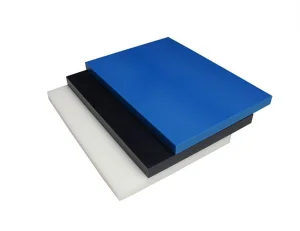
Standard catalog thicknesses in natural (cream white) and black ship within 5-7 business days. Custom compounded colors or dimensions typically require 12-15 days. Standard test specimens (A4-sized machining blanks) are provided for qualified industrial testing upon request.
Precision Finished Parts & Specialized Stock Shapes
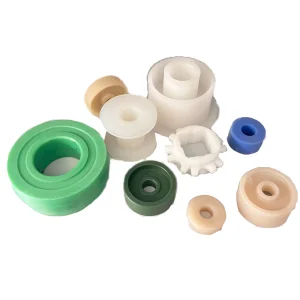
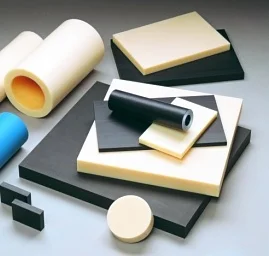
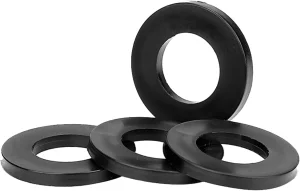
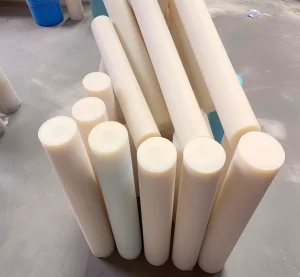
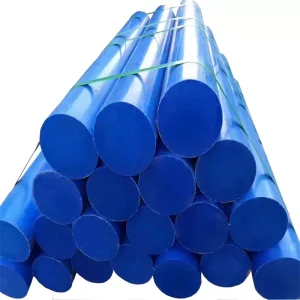
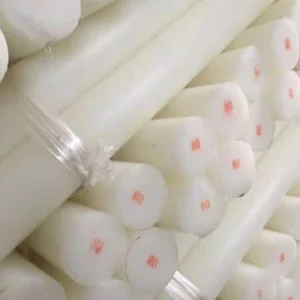
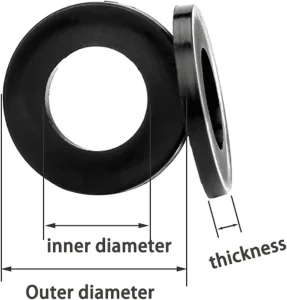
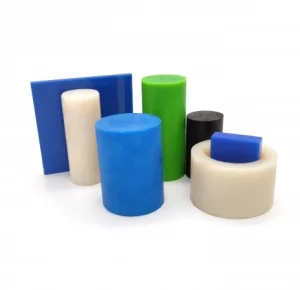
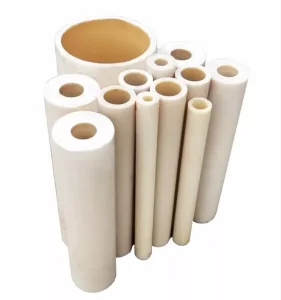
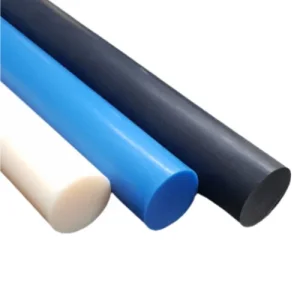
Explore our secondary series of custom CNC milled items, cast thick plates, and polyolefin rod profiles exported across global heavy industries.