Precision Solid Stock & Structural Components
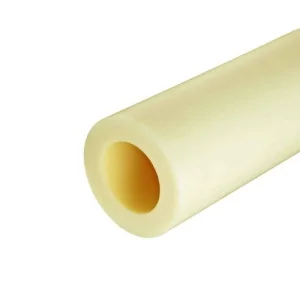
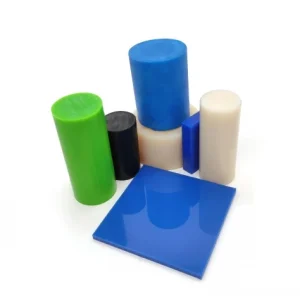
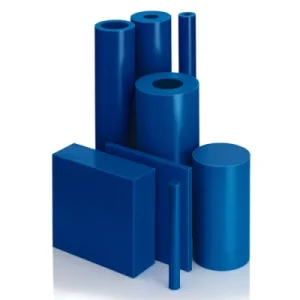
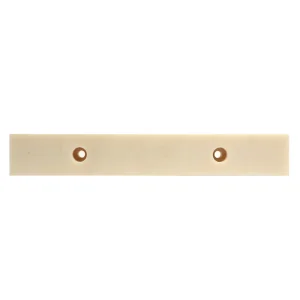
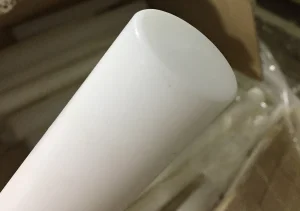
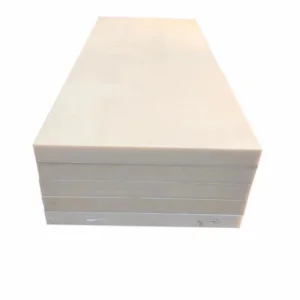
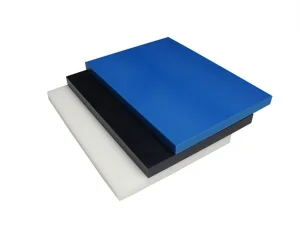
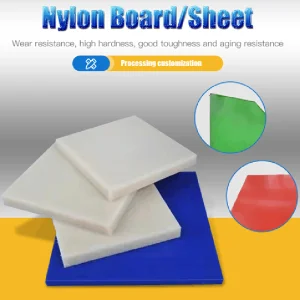
Browse certified round bars, engineered wear rings, and composite polymer sheets extruded directly at our Xingtai, Hebei production center.
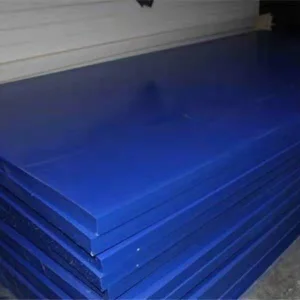

Engineering Architecture: Polyamide 6.6 vs. Polyamide 6 Formulations
Understanding the macromolecular differentiation between PA6 and PA66 is critical for precision procurement. Polyhexamethylene adipamide (PA66) is synthesized through the polycondensation of hexamethylenediamine and adipic acid, yielding a symmetrical backbone with dense, recurring hydrogen-bonded networks that endow the polymer with superior mechanical stiffness, creep resistance, and higher glass transition thresholds.
Thermal Stability & Heat Deflection
With a heat deflection temperature under load (HDT at 1.8 MPa) reaching 90°C to 105°C (unreinforced) and up to 250°C (30% glass-fiber reinforced), PA66 bars perform consistently across high continuous-service thresholds where conventional PA6 rods soften, slip, or exhibit structural thermal deflection under continuous rotational stress.
Stress Relief via Deep Oil-Bath Annealing
Extrusion-induced crystalline residual stress remains the primary cause of center-line cracking during deep CNC boring. SHUNDA applies an automated 18-hour continuous temperature-staged annealing process in nitrogen-purged thermal tanks, eliminating internal shear gradients and ensuring absolute geometric stability when machining high-aspect-ratio shafts.
Wear Tribology & Friction Mitigation
PA66 bars feature a dry sliding dynamic coefficient of friction against smooth steel ranging from 0.25 to 0.38. For severe industrial duty, we engineer custom formulations compounded with internal lubricants such as molybdenum disulfide (MoS2), PTFE micropowders, and silicone oils, yielding self-lubricating stock shapes that prevent stick-slip chatter in non-lubricated guide bushes.
| Physical / Mechanical Property | Test Standard (ISO/ASTM) | Unfilled PA66 Bar | PA66-GF30 (30% Glass Filled) | Standard Extruded PA6 |
|---|---|---|---|---|
| Density (g/cm³) | ISO 1183 | 1.14 - 1.15 | 1.35 - 1.38 | 1.13 - 1.14 |
| Tensile Strength at Yield (MPa) | ISO 527 (Dry) | 85 - 90 MPa | 160 - 185 MPa | 70 - 78 MPa |
| Tensile Modulus of Elasticity (MPa) | ISO 527 | 3,200 - 3,500 MPa | 8,500 - 9,800 MPa | 2,700 - 3,000 MPa |
| Melting Point Peak (Tm) | ISO 11357 (DSC) | 260°C | 260°C | 220°C |
| Heat Deflection Temp (HDT 1.8 MPa) | ISO 75-2 | 85°C - 95°C | 240°C - 250°C | 65°C - 75°C |
| Rockwell Hardness | ISO 2039-2 | M88 / R120 | M100 / R125 | M80 / R115 |
| Moisture Absorption Equilibrium (23°C, 50% RH) | ISO 62 | 2.4% - 2.8% | 1.4% - 1.7% | 2.8% - 3.2% |
China Supply Chain Resilience & Extrusion Scale
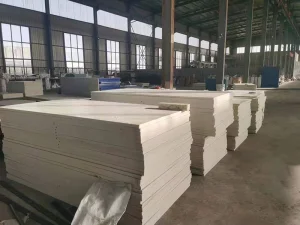
Global industrial buyers face mounting pressure from regional petrochemical feedstock disruptions and extended lead times. Operating out of Xinhe County, Xingtai City, SHUNDA integrates domestic adiponitrile-to-nylon polymer supply chains, continuous compounding reactors, and modern twin-screw extrusion arrays to deliver price certainty and immediate production scaling.
Upstream Chemical Integration
China’s domestic commercialization of butadiene-based adiponitrile (ADN) and hexamethylenediamine (HMD) synthesis has insulated our resin sourcing from Western upstream supply shocks. By partnering with leading domestic chemical giants, our raw polymer inventory is backed by 5,000+ tons of reserve capacity, maintaining guaranteed price indexes even during global petrochemical squeezes.
Advanced Continuous Extrusion & Calibrating
Our extrusion lines utilize variable-frequency micro-feeders, dual-vacuum degassing screws, and liquid temperature-controlled brass calibration sleeves. This continuous melt-extrusion engineering prevents entrapment of volatile moisture gases, guaranteeing that solid bars ranging from Ø6 mm up to Ø320 mm exhibit zero centerline porosities, gas blisters, or circumferential density variations.
Export Logistics & In-House CNC Prototyping
Consolidating raw shape manufacturing with on-site multi-axis CNC milling, turning, and broaching eliminates intermediary margins and handling transit damages. We export containerized consignments via Tianjin Port, providing full technical documentation including Mill Test Reports (MTR), certificate of conformity, and non-destructive ultrasonic void testing data sheets.
Mission-Critical Industrial Scenarios for Extruded PA66 Bar Stock
From German automotive powertrain components to Southeast Asian deep-foundation piling machinery, our high-density PA66 bars replace brass, phosphor bronze, cast iron, and weaker polyolefins to mitigate wear, diminish structural weight, and dampen operating acoustic noise.
Automotive E-Mobility & Thermal Management
Modern electric vehicles demand lightweight coolant manifolds, glycol valve plugs, and electronic throttle helical gears capable of sustaining continuous exposure to aggressive aqueous glycol lubricants at 120°C. Machined PA66 bars maintain mechanical stiffness, resist cavitation fatigue, and exhibit near-zero swelling in engine compartment fluid environments.
Heavy Construction & Piling Foundations
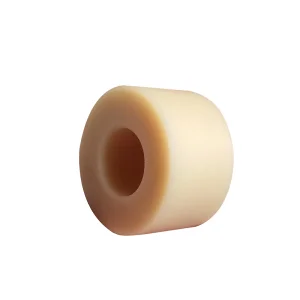
Hydraulic impact hammers and pile driving rigs produce extreme shock loads. Engineered nylon rings and cushion blocks turned from SHUNDA black PA66 round stock absorb multi-ton kinetic impacts without shattering, protecting expensive forged steel hammer rams while providing an elastic modulus buffer that dampens ground transmission frequencies.
Robotics & Precision Automation Guides
In automated pick-and-place gantry equipment, high-speed cable carrier rollers, timing belt sprockets, and articulated robot joint sleeves require low moment of inertia and noise suppression. PA66 bars machine with clean burr-free chamfers, providing silent running tolerances, reduced vibration resonance, and lifetime dry-sliding characteristics.
High-Voltage Switchgear & Power Distribution
PA66 possesses exceptional dielectric breakdown strength (up to 27 kV/mm) and arc-tracking resistance (CTI 600V under special compounding). Turn-milled isolator tie-rods, circuit breaker actuating rods, and transformer support blocks machined from our PA66 rounds prevent electrical puncture while sustaining dynamic electromechanical bending loads.
Food & Pharmaceutical Bottling Systems
High-speed packaging conveyors demand star-wheels, guide curves, and change-parts that withstand repeated caustic clean-in-place (CIP) washdowns. Unfilled virgin natural white PA66 bars comply with sanitary process contact norms, offering chemical resilience against alkaline detergents and dramatically lower surface friction compared to stainless steel counterparts.
Marine Port Infrastructure & Winch Sheaves
Saltwater corrosion rapidly destroys bronze bushings and greased steel wire rope sheaves. MoS2-filled and oil-impregnated PA66 bars turned into crane sheaves extend wire rope operational life by 300% through smooth elastic contact, resisting salt crust abrasion, UV degradation, and electrolytic galvanic coupling in marine terminals.
Global Commercial Dynamics: Western Inflation vs. Direct Factory Sourcing
Procurement leaders navigating engineering polymer allocations must reconcile skyrocketing production costs in Western Europe and North America with stringent quality demands. As energy tariffs in European extrusion mills escalate, sourcing directly from verified Chinese manufacturers provides a decisive structural advantage.
| Evaluation Factor | Western European / US Domestic Mills | SHUNDA China Precision Extrusion Base | Commercial Impact for Importers |
|---|---|---|---|
| Raw Polymer Price Basis | Exposed to regional energy surcharges and ADN feedstock imports | Direct pipeline feed from domestic mega-refineries (Sinopec, Tianchen Qixiang) | 22% - 35% Lower Base Cost |
| Billet Dimensional Range | Standardized diameters, premium fees for custom cut lengths & diameters >150mm | Continuous tooling from Ø6mm up to Ø320mm; custom length cutting to drawing | Reduces machining waste and raw stock scrap by up to 18% |
| Production Lead Times | 8 to 14 weeks due to constrained factory capacity and backlog | 10 to 18 days factory turnaround; 200+ tons pre-calibrated stock in warehouse | Rapid JIT Delivery Cycles |
| Finished Component Integration | Stock distributor rarely has large-scale in-house precision CNC machining | Integrated casting, extrusion, 5-axis CNC milling, turning, and ultrasonic testing | Single-source accountability from polymer resin to crated component |
The traditional risk associated with overseas polymer procurement—dimensional warping and variable crystallinity—is mitigated by SHUNDA’s computerized vacuum-sizing and thermal batch documentation. Global buyers realize double-digit margin enhancements while exceeding the rigorous material specifications mandated by DIN 7728 and ASTM D4066 classifications.
Technical Roadmap: Next-Generation Polyamide Composite Formulations
To satisfy expanding thermal and mechanical requirements in next-generation aerospace drones, hydrogen fuel-cell compressors, and renewable energy gear trains, our material laboratories are engineering proprietary PA66 compounds designed to transcend current thermal and mechanical ceilings.
Carbon-Fiber Reinforced Hybrid Rounds (PA66-CF40)
By compounding continuous pitch-based short carbon fibers (up to 40% loading) into the PA66 matrix, we produce bars with a tensile modulus surpassing 15,000 MPa and surface resistivity tailored for electrostatic discharge (ESD) safety in hydrogen and cleanroom handling fixtures.
Nano-Graphene & Ceramic Thermal Dissipation
Standard unfilled polyamides act as thermal insulators. Our development of graphene-intercalated PA66 rounds elevates thermal conductivity from 0.23 W/m·K to over 1.8 W/m·K, allowing high-speed dry-running bushings to evacuate frictional interface heat directly into surrounding metal housings, eliminating thermal seizure.
Bio-Based & Chemically Recycled Monomers
In line with global ESG directives, SHUNDA is scaling pilot production of bio-derived PA66 synthesized from castor oil-derived sebacic acid analogs and 100% closed-loop post-industrial scrap depolymerization, offering tier-1 European automotive partners a verified 42% lower Product Carbon Footprint (PCF) without compromising ISO tensile thresholds.
Localized Support, Regulatory Frameworks & Quality Assurances
Entering regulated Western and Asia-Pacific markets requires strict adherence to international environmental, workplace safety, and chemical trace restrictions. Our manufacturing facilities enforce comprehensive quality controls, verified by third-party testing institutions.
Full RoHS 3 & REACH SVHC Compliance
Every extrusion batch undergoes testing under EU Directive 2015/863 (RoHS 3) ensuring non-detectable limits for lead, mercury, cadmium, hexavalent chromium, and phthalates. Continuous screening against the 240+ substances on the ECHA Candidate List of Substances of Very High Concern (REACH SVHC) guarantees unobstructed customs clearance into European union ports.
UL94 Flame Retardancy Certifications
While standard unfilled PA66 bars naturally achieve a UL94 V-2 rating, our halogen-free phosphorus-nitrogen flame retardant modified grades achieve certified UL94 V-0 at 1.6 mm thickness, releasing non-corrosive, low-toxicity smoke during combustion for rail transit (EN 45545-2) and interior aviation switchgear applications.
ISO 9001:2015 & Metrology Auditing
Production workflows adhere to audited ISO 9001:2015 and IATF 16949 quality principles. Our physical laboratory is equipped with Mitutoyo coordinate measuring machines (CMM), laser micrometer scanning arrays for bar runout roundness verification, and differential scanning calorimetry (DSC) for batch crystallinity tracking.
Frequently Asked Questions: PA66 Bar Engineering & Procurement
Answers to technical, operational, and commercial questions frequently raised by mechanical designers and overseas purchasing directors.
What are the key functional differences between PA6 and PA66 bars during high-speed CNC turning?
How does SHUNDA prevent centerline porous voids in large diameter (100mm+) PA66 solid rods?
What dimensional allowances should be planned for PA66 ambient moisture absorption?
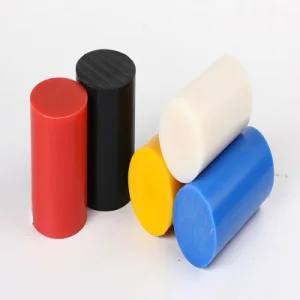
Can SHUNDA produce customized diameters, lengths, and custom colors (Black, Natural, Blue, Red)?
What documentation and Mill Test Certificates accompany international export containers?
When should an engineer specify Cast MC Nylon (PA6G) instead of Extruded PA66 Bar?
Request Certified Engineering Polymer Data Sheets
Need detailed technical specifications, resin lot certificates, or a competitive factory quote for containerized solid PA66 bars, hollow tubes, or finished CNC components? Connect with our sales engineering office for a complete evaluation within 12 hours.
Specialty Engineering Stock Shapes & Wear Boards
Combine your PA66 bar shipments with high-grade UHMWPE plates, POM-C acetal bars, and precision machined wear components to consolidate freight and reduce international landed costs.