
High-Performance Semi-Finished Stock & Custom Shapes
Direct factory supply of virgin polymer billets, extruded bars, cast nylon cylinders, heavy-duty outrigger plates, and customized profiles engineered for mechanical integrity and tight machining tolerances.
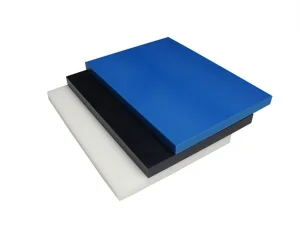
Cheap PTFE Sheet Supplier, Products
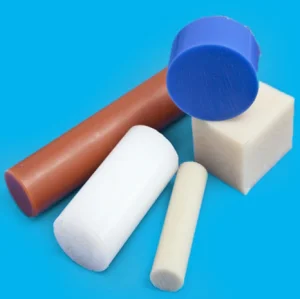
Engineering Plastic PA6 PA66 Nylon PP UHMWPE PTFE HDPE ABS Rod & Bar
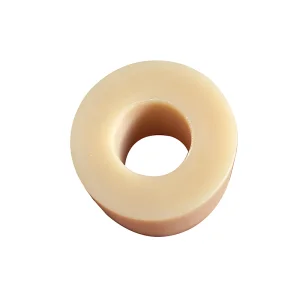
High-Quality PA6 Nylon POM PTFE HDPE PVC Tube, Rod & Bar
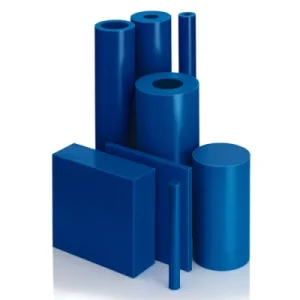
UHMWPE Heavy Duty Jacking Pads & Crane Stabilizer Support Plates
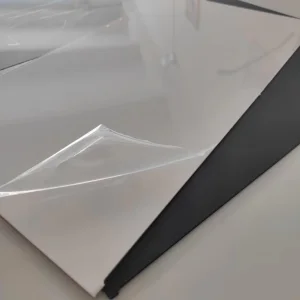
Wholesale Smooth ABS Sheet Customized Color For Refrigerator Doors
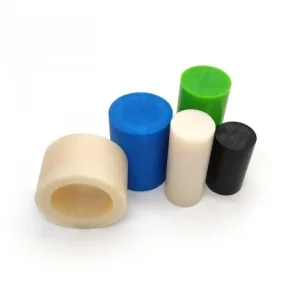
Cast Board PA6 Polyamide Nylon ABS PP PTFE Tube, Rod & Bar
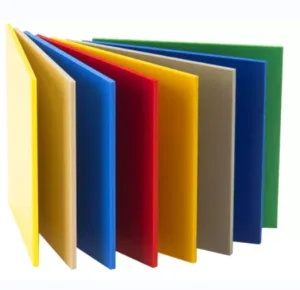
Cheap HDPE Sheet Exporters & High-Density Polyethylene Plates
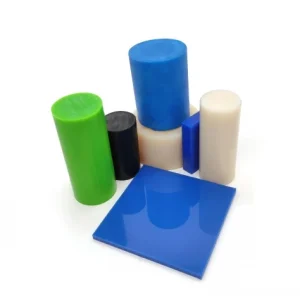
Wholesale PA6 / PA66 Board & Durable Nylon Rods for Industrial Uses
China Nylon & POM Manufacturing Advantages: Scale, Monomer Integration & Thermal Control
Understanding why tier-one global OEMs consolidate engineering thermoplastic procurement in China: vertical integration from raw caprolactam monomer to automated stress-relieved extrusion lines.
Vertical Feedstock Integration (Caprolactam & Trioxane)
China operates the world's most resilient chemical petrochemical supply chain. Raw Caprolactam (CPL) for Polyamide 6 and formaldehyde-derived Trioxane for Polyoxymethylene (POM) copolymer are produced in mega-refineries with uninterrupted pipeline feeding.
- Elimination of intermediate logistics overhead and price volatility.
- Guaranteed high molecular weight purity with zero cross-contamination.
- Direct batch traceability conforming to ISO 9001:2015 chemical standards.
Continuous Pressure Annealing & Stress Elimination
Internal residual stress is the primary reason machined POM and Nylon warp during CNC operations. Modern Chinese extrusion facilities utilize computer-monitored, multi-stage thermal oil baths and air circulation ovens for prolonged stress annealing.
- Continuous annealing cycles lasting up to 72 hours for heavy wall sections.
- Elimination of centerline porosity in POM-C rods up to 300 mm diameter.
- Predictable dimensional stability with zero bowing during heavy facing cuts.
Monomer Casting (MC) Large-Scale Part Capability
Unlike standard extrusion limited by die back-pressure, Chinese monomer casting technology allows the polymerisation of molten caprolactam directly within open atmospheric molds, forming massive monolithic components.
- Cast nylon tubular gears, sheaves, and rings reaching 3,000 mm diameter.
- Higher molecular weight and crystallinity compared to extruded PA6/PA66.
- Substantially enhanced impact absorption and superior tensile modulus.
Metallurgical Insight: Porosity Mitigation in Acetal Resins
A frequent challenge faced by precision machine shops using low-cost imported POM-H (homopolymer) is axial centerline vacuum cavitation caused by volumetric shrinkage during solidification. Tier-1 Chinese manufacturers utilize advanced POM-C (copolymer) chemistry coupled with continuous hydraulic back-pressure calibrated extruders, ensuring that center-cut shafts remain void-free and pressure-tight up to 40 bar hydraulic ratings.
Engineering Polymer Mechanics: Nylon (PA) vs. Acetal (POM) Selection Matrix
When specifying critical wear parts, engineers face the dilemma of Nylon’s superior shock resilience versus POM’s minimal moisture absorption. Below is the quantitative engineering baseline derived from factory laboratory tests (ASTM / ISO standards).
| Physical / Mechanical Property | Extruded PA6 Nylon | Cast MC Nylon (PA6G) | POM-C (Acetal Copolymer) | POM-H (Delrin Homopolymer) |
|---|---|---|---|---|
| Tensile Strength at Yield (MPa) | 75 - 82 | 80 - 90 | 65 - 72 | 75 - 85 |
| Flexural Modulus (GPa) | 2.8 | 3.3 | 2.9 | 3.4 |
| Water Absorption @ Saturation (%) | 8.5 - 9.5 (High) | 6.0 - 7.0 (Moderate) | 0.8 (Extremely Low) | 0.9 (Extremely Low) |
| Coefficient of Dynamic Friction (μ) | 0.30 - 0.40 | 0.25 - 0.35 | 0.25 - 0.30 | 0.20 - 0.25 |
| Continuous Heat Deflection Temp (0.45 MPa, °C) | 160 | 170 | 155 | 165 |
| Izod Notched Impact Strength (kJ/m²) | > 5.0 (High toughness) | > 6.5 (Exceptional) | > 6.0 (Tough) | > 7.0 (High impact) |
| Centerline Porosity Risk in Heavy Rods | Negligible | Virtually Zero | Controlled (<0.02%) | Moderate (Demands Annealing) |
| Recommended Applications | Impact cushions, guides | Heavy crane sheaves, gears | Precision fuel valves, bushings | High-stiffness thin-wall clips |
Moisture Swell Factor
Nylon absorbs up to 9% atmospheric water, causing 2-3% linear dimensional expansion. In submerged or humid operations, POM-C is mandatory for sub-millimeter tolerances.
Dynamic Impact & Shock
Cast MC Nylon absorbs mechanical vibrations and cyclic damping 400% better than structural steel and 80% better than POM, saving heavy equipment pins from micro-fretting.
Chemical Resistance
POM exhibits exceptional resistance to aliphatic hydrocarbons, glycols, and neutral cleaning solvents, whereas Polyamides exhibit superior chemical resistance against aromatic esters and strong alkalis.
PV-Limit & Friction Wear
For high-speed rotary bushings without external oil pumps, Oil-Filled MC Nylon or POM + PTFE alloy upgrades the permissible PV limit to over 1.8 MPa·m/s under steady friction.
Future Trends: Modified Grades, Carbon Fiber Composites & Decarbonization
Global industry demands higher PV limits, lighter electric vehicle (EV) weights, and strict environmental compliance. Chinese engineering plastic compounding has transitioned into high-tech additive formulation.
Self-Lubricating Internal Additives (MoS2 & Oil-Filled)
By compounding Molybdenum Disulfide (MoS2) or micro-encapsulated liquid lubricants into cast PA6 matrices, internal friction drops by 45%. This enables unlubricated operation in dusty quarries, agricultural combines, and food packaging lines where grease drops are forbidden.
Carbon-Fiber & Glass-Fiber Reinforcement
Compounding 30% short or continuous carbon fibers (CF-PA66 / CF-POM) increases the flexural modulus beyond 8.5 GPa, matching magnesium die-castings in rigidity while slashing structural mass by 60% for robotic arm end-effectors and drone motor brackets.
Zero-Lead Metal Replacement & RoHS/FDA Compliance
With stringent global restrictions on leaded brass and toxic bronze alloys in potable water fittings, POM copolymer and PA66 are the premier eco-friendly alternatives. Chinese producers deliver fully documented FDA, NSF-61, and EU 10/2011 food-contact verified stock.
Engineered Field Applications: Heavy Lifting, Mining, Automotive & Marine
From freezing Arctic offshore rigs to scorching desert conveyor belt idlers, how Nylon and POM semi-finished rods, tubes, and finished CNC components perform under punishing mechanical loads.
Crane Sheaves & Pulleys
Wire rope lifespan increases up to 300% when steel sheaves are replaced with Cast MC Blue Nylon sheaves. The polymer deflects elastically under strand contact, lowering hoop stress.
Automotive Fuel & E-Drive Bushings
POM-C remains the default choice for automotive fuel sender units, wiper transmission linkages, and EV battery tray isolating standoffs due to low fuel permeation and galvanic isolation.
Marine Stern Tube Bearings
Oil-filled green cast nylon and UHMWPE stabilizer pads resist sea-water swelling, galvanic salt battery corrosion, and biofouling colonization on dredging vessels and offshore jack-up rigs.
Food Conveyor Wear Strips
POM and UHMWPE guide tracks on high-speed bottling lines operate without lubricant at 1,200 cans per minute, dampening acoustic noise pollution while resisting caustic CIP washdowns.
Global Procurement Checklist: How International Buyers Audit Chinese Suppliers
Avoid common import pitfalls. Here is how enterprise buyers from Europe, North America, and Australia verify raw resin origin, internal void integrity, and thermal annealing completeness.
1. Virgin vs. Recycled Granule Verification
Unscrupulous trading brokers mix post-industrial regrind, reducing elongation-at-break by 50%. A reputable manufacturer provides raw material melt-flow index (MFI) and differential scanning calorimetry (DSC) crystallization curves showing clean single-peak glass transition temperatures.
2. Non-Destructive Ultrasonic Void Testing
For solid rods >80 mm in diameter, internal vacuum cavitation can ruin finished precision CNC machining. Leading factories employ multi-channel ultrasonic pulse-echo immersion testing to detect internal voids larger than 0.5 mm before the product leaves the facility floor.
3. Stress Relief Heat Chamber Documentation
Demand documented oven log files. True stress annealing cycles for thick Nylon and Acetal stock require ramp-up rates of ≤10°C/hour, soak periods proportional to thickness (1 hour per 10 mm), and slow furnace cooling to eliminate frozen radial shear planes.
Semi-Finished Tubes, Precision Rollers & Engineered Impact Components
Explore our full manufacturing range including MC nylon rings, POM round bars, impact hammer cushions, and high-performance polyolefin hollow stock directly from our factory.
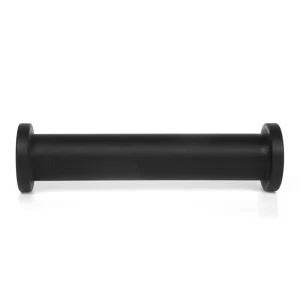
Nylon ABS PP PTFE Rod, Tube, Bar & Precision Industrial Rollers
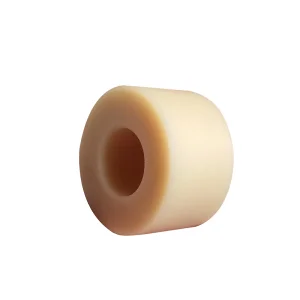
Factory Engineering ABS, Nylon, POM Rod, PTFE Rod & PP Tubes
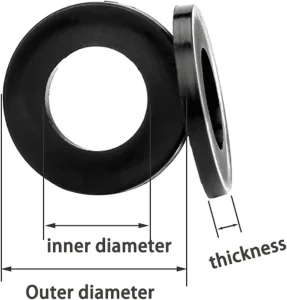
OEM Polyamide MC Nylon Ring, Cast Tube, PA6 & POM Rods
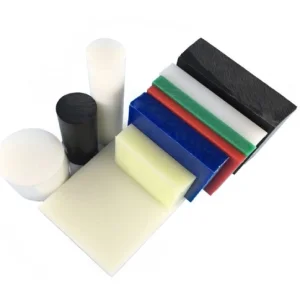
High-Quality PA66 Nylon PP UHMWPE PTFE Sheet, Rod & Bar
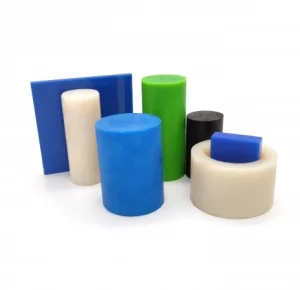
Gold Supplier PA66 Nylon PP UHMWPE Custom Color Sheet & Rod
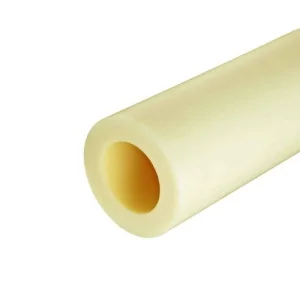
High-Quality Nylon Rod, Nylon Tube, PP Tube, ABS Tube Factory
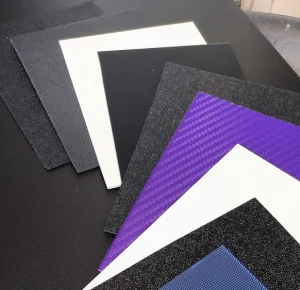
OEM Smooth Texture ABS Plastic Sheet Factory Custom Color & Size
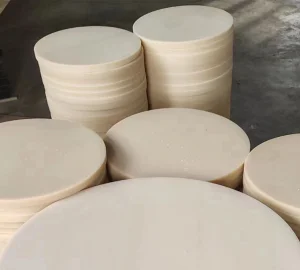
Impact Nylon Cushion for Foundation Piling Machine Hammers
CNC Turning, Milling & Drilling: Guidelines for Nylon and POM Acetal
Polymers expand ten times more than steel with heat. Preventing thermal deflection, edge chipping, and tool gumming during high-feed CNC cycles requires specific cutting geometry.
Tooling Geometry & Rake Angles
Always employ highly polished, uncoated tungsten carbide tools with large positive rake angles (15° to 30°) and generous clearance angles (10° to 15°). Dull metal-cutting tools cause compressive tearing and excessive friction heat, triggering local polymer melting.
Coolant Strategy & Chip Evacuation
Flood water-soluble synthetic coolants or dual-vortex pressurized cold air guns directly onto the tool-workpiece interface. Never allow continuous curly ribbons of Nylon or POM swarf to wrap around the spindle; use aggressive chip-breaker geometry.
Deep-Hole Drilling Caution
Polymers dissipate heat poorly. When drilling POM or cast nylon rods axially with diameters >25 mm, use parabolic flute drills with continuous pecking cycles (retracting every 3-5 mm) to clear hot chips and prevent the drill bit from wedging and cracking the stock core.
Frequently Asked Technical & Sourcing Questions
Engineered answers addressing material performance, chemical compatibility, international shipping certifications, and CNC machining parameters.
POM-C (Copolymer) exhibits superior thermal stability, higher chemical and alkaline resistance, and is significantly less prone to centerline porosity during extrusion. POM-H (Homopolymer, commonly known as Delrin) has slightly higher room-temperature tensile strength and stiffness (roughly 10-15%), but exhibits lower resistance to hot water and strong bases, and requires rigorous annealing to eliminate center voiding in large-diameter bars.
Extruded PA6 absorbs up to 3% moisture by weight under ambient 50% relative humidity, expanding roughly 0.2% to 0.3% dimensionally. At full water saturation (up to 9%), growth can exceed 1.5% to 2.0%. While this moisture dramatically increases toughness and impact resistance, parts in humid or submerged environments requiring tolerances <0.05 mm must be designed with POM-C, UHMWPE, or specialized oil-filled PA grades with moisture barriers.
Monomer Cast (MC) Nylon is polymerized directly in an open mold without high extrusion shear stress. This produces a polymer with higher molecular weight, higher percentage crystallinity (approx. 45-50% vs 35%), higher yield strength, and substantially higher wear life. Furthermore, casting allows the production of single parts weighing over 500 kg (such as 2-meter diameter crane sheaves) that cannot be extruded.
Yes. Virgin POM-C and natural PA6/PA66 resins produced without heavy metal thermal stabilizers comply with FDA 21 CFR 177.2470 and European Union Regulation (EU) No 10/2011 for repetitive food contact. Our factory provides full material certification dossiers, migration test reports, and RoHS/REACH compliance documentation for every export batch.
Sheets are first fully annealed to balance top and bottom crystalline skin stress. For global container shipment, sheets are interlaid with protective polyethylene films, stacked completely flat upon reinforced solid fumigated wooden pallets, and edge-banded under compression with steel straps and water-resistant shrink hoods to prevent environmental humidity gradients during tropical sea voyages.
We accept standard 3D CAD files (STEP, IGES, Parasolid .x_t) together with 2D drawings (PDF, DWG, DXF) specifying critical tolerances, surface finish (Ra), and threaded hole callouts. Our sales engineering team reviews tool access, feeds, and thermal clearances, delivering comprehensive DFM (Design for Manufacturability) feedback within 12 hours.
Request Factory-Direct Mill Test Reports & Wholesale Pricing
Direct communication with our Hebei production engineers. Receive comprehensive technical data sheets (TDS), safety data sheets (MSDS), non-destructive testing reports, and volume price breaks for standard or custom profiles within 12 hours.