
ISO 9001:2015 Engineered Polymer Supply Chain
China Nylon Plast Factories & Exporters
Industrial-grade Polyamide (PA6 / PA66 / MC Nylon) engineering stock and precision CNC custom machining from China’s verified industrial manufacturing baseline.
Primary Engineered Plastics Portfolio
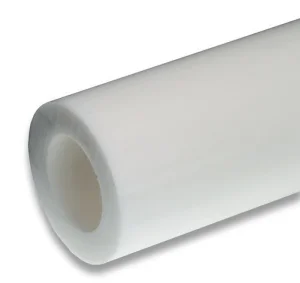
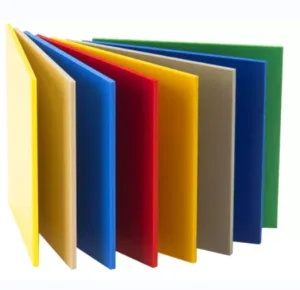
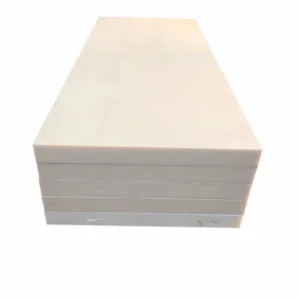
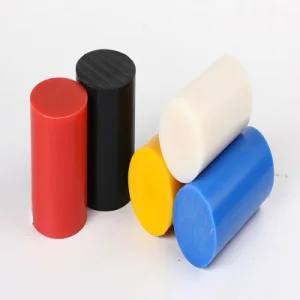
Factory-Direct Nylon Stock & Semi-Finished Shapes
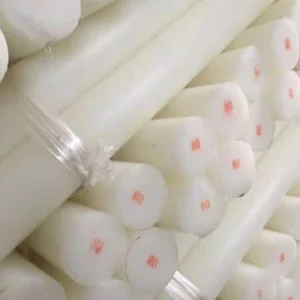
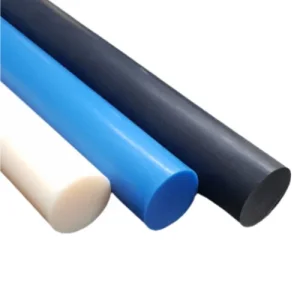
Directly sourced from our integrated polymerization and molding facilities in Xinhe County, Hebei. Full batch dimensional tracking and mill certifications accompany every batch.

Technical Baseline
Nylon Plast (Polyamide) Industrial Landscape & Global Market Shifts
Addressing the transition from bronze and soft steels to high-performance polyamides across critical mechanical drive systems and wear components.
Weight Reduction & Inertia
Nylon plast provides a specific gravity roughly one-seventh that of bronze (1.15 g/cm³ vs 8.8 g/cm³). Replacing metallic sheaves, crane rollers, and spur gears dramatically curtails rotational inertia and system torque loads, cutting power draw by up to 25% across modern automation lines.
- Substantial parasitic load suppression
- Extended drive motor service cycles
Tribological Self-Lubrication
Monomer Casting (MC) Nylon and extruded PA6 feature natural crystallinity that delivers friction coefficients between 0.15 and 0.25 under dry sliding conditions. Unlubricated installations mitigate environmental contamination and simplify maintenance in offshore or remote mining sectors.
- Zero external lubricant contamination
- Elimination of galvanic corrosion
Acoustic Damping Performance
Unlike resonance-prone metals, polyamides feature internal mechanical loss factors that actively absorb vibration harmonics. Industrial sorting decks and steel cable sheaves engineered with cast nylon display sound attenuation between 10 dB(A) and 15 dB(A), protecting operational environments.
- Significant high-frequency noise drops
- Absorbs high-shock dynamic strikes
Engineering Progress
Technological Roadmap: Advanced Monomer Casting & Polymer Blends
Tracking how our research and development programs solve traditional polyamide limitations through precision compounding, internal annealing, and thermal stabilization.
Phase 01 // Baseline PA6
Cast Polyamide 6 (Standard)
Atmospheric pressure polymerization using caprolactam monomer and alkaline catalysis. Yields elevated molecular weight and high yield strengths for structural components.
Phase 02 // Lubricated Systems
MoS₂ & Oil-Filled MC Blue/Black
Dispersing micro-fine molybdenum disulfide particles and liquid lubricants within the melt prior to mold initiation, boosting limiting PV ratings by over 40%.
Phase 03 // Precision Annealing
Thermally Relieved Semi-Finished
Secondary liquid heat exchange immersion removes cooling gradient stress, guaranteeing zero warping or dimensional drift during aggressive high-feed milling operations.
Phase 04 // Next-Gen Compounding
Nanocarbon & Glass Hybrids
Incorporating ceramic nanospheres and surface-treated chopped E-glass fibers to lower hygroscopic expansion while stabilizing flexural modulus past 6,500 MPa.
| Polymer Identification | Tensile Strength (MPa) | Flexural Modulus (MPa) | Operating Temp (°C) | Water Absorption (Sat. %) | Primary Industrial Use |
|---|---|---|---|---|---|
| Cast PA6 (Natural/Ivory) | 85 – 92 | 3,200 – 3,400 | -40 to +105 | 6.0 – 7.0 | Crane pulleys, guide wheels, wear pads |
| MC Nylon + MoS₂ (Dark Gray) | 80 – 88 | 3,400 – 3,600 | -40 to +110 | 5.5 – 6.5 | Spur and helical gears, high-load trunnions |
| Oil-Filled Cast PA (Green/Blue) | 72 – 78 | 2,900 – 3,100 | -30 to +100 | 4.5 – 5.5 | High-velocity bushings, conveyor wear strips |
| Acetal Copolymer (POM-C) | 65 – 72 | 2,800 – 3,000 | -50 to +100 | 0.8 | High-moisture valves, precision micro-gears |
| UHMWPE (1000 Grade) | 22 – 30 | 700 – 900 | -150 to +80 | < 0.01 | Bulk hopper liners, cryogenic components |
Application Footprint
Localized Deployment Scenarios & Operating Demands
Analyzing exact engineering environments where Chinese-manufactured polyamides outperform legacy alloys and alternative polymers.
Heavy Construction & Mobile Cranes
Cast MC nylon wire rope sheaves deliver up to 10× the working lifespan of standard wire rope compared to cast iron or fabricated steel wheels. The modulus mismatch buffers momentary peak line pull, eliminating cable groove scoring.
- Boom wear guides and telescoping shoes
- Hydraulic outrigger pad stabilization
Bulk Materials Handling & Conveyors
In thermal power stations, copper processing mills, and cement facilities, abrasive fines degrade moving metallic links. Cast nylon chains, drive sprockets, and flights handle gritty particulates without scoring the mating rails.
- High-capacity flight scraper assemblies
- Bucket elevator discharge shoes
Marine & Port Infrastructure
Immersed saltwater causes corrosion pitting and seizure in bronze sleeve bearings. Hydrolysis-stabilized nylon plast grades provide resilient subsea performance in rudder post bushings, mooring winches, and dock fender slides.
- Zero corrosion cell formation
- Tolerance tailored for hygroscopic expansion
Manufacturing Moat
China Factory Supply Chain Resilience & Efficiency Advantages
From raw caprolactam monomer synthesis to five-axis finished precision machining within one unified footprint in Hebei province.
Feedstock Proximity & Cost Control
Our casting bases in Xinhe County integrate directly with regional petrochem polymerization hubs across North China. Direct liquid monomer delivery minimizes remelt thermal degradation, delivering cost baselines 20% to 35% lower than European or North American extruders.
In-House Tooling & Rapid CNC Cell
Bridging semi-finished material supply with precision milling operations eliminates third-party transport waste. We machine complex geometry from freshly cast blanks using high-speed vertical machining centers programmed from your 2D/3D STEP or DXF data.
Extensive Billet & Hollow Tubing Dies
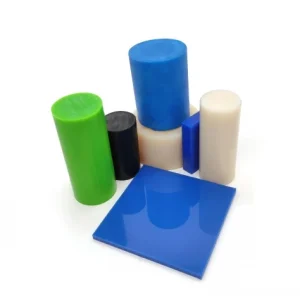
We hold over 800 centrifugal casting molds and plate compression matrices on site. Diameters ranging from 20 mm to 1,000 mm and plate thicknesses up to 200 mm are ready for prompt runs, slashing typical tooling lead times from months down to days.
Regulatory & Logistics
International Compliance & Export Verification Standards
Rigorous quality gate validations ensure our polymers satisfy EU, North American, and global technical and environmental frameworks.
RoHS & REACH Compliance
All virgin nylon, POM, HDPE, and UHMWPE formulations pass third-party spectrometer testing, ensuring complete absence of heavy metals, PBDEs, and SVHC restricted chemicals.
FDA / Food Contact Certification
Virgin natural nylon 6 and polyacetal stock grades can be formulated with FDA 21 CFR § 177.1500 compliant pigments and resins for conveyor components handling direct food contact.
Export Seaworthy Packaging
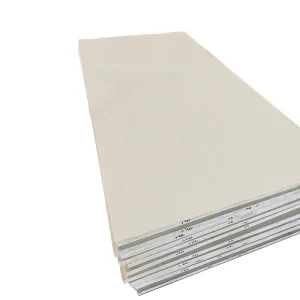
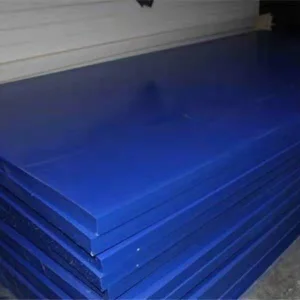
Plates are separated with scratch-resistant polyolefin films, edge-protected with high-density corrugated guards, and vacuum banded onto ISPM-15 heat-treated export timber skids.
FOB / CIF Door-to-Door Logistics
Factory-direct clearance via Tianjin (Xingang) or Qingdao maritime ports. We provide full mill test certs (MTC), origin documentation, and harmonized code validation before container sealing.
High-Performance Extrusion & Machining
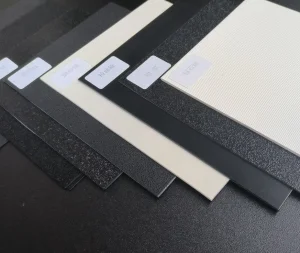
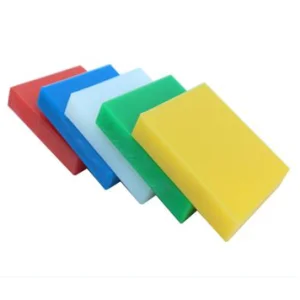
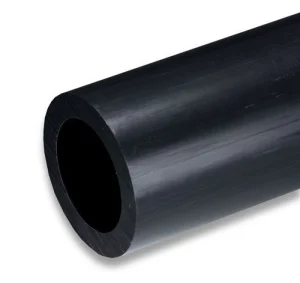
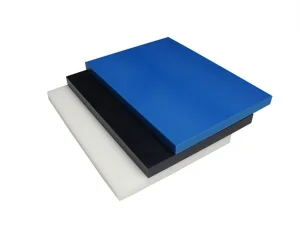
Custom Machining Stocks & Specialized Profiles
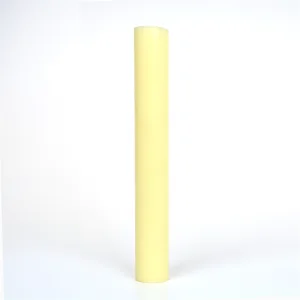
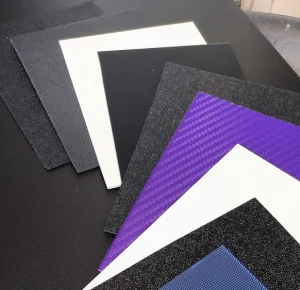
Complementary polymer profiles engineered for harsh wear, corrosive chemical storage, and tight-tolerance component manufacturing.
Technical Clarifications
Engineers & Procurement FAQ
Clear, direct answers regarding tolerances, moisture absorption, Machinability indices, and factory minimum order requirements.
What distinguishes Cast Nylon (PA6G) from Extruded Nylon (PA66)?
Cast Nylon (Monomer Cast, MC Nylon) is manufactured via liquid caprolactam polymerization inside open-air or centrifugal steel molds. This produces molecular weights reaching 300,000 to 1,000,000 g/mol—substantially higher than extruded stock. Cast nylon exhibits improved tensile strength, superior wear life, lower internal residual stress, and allows large billet cross-sections without internal center voids.
How does nylon hygroscopy impact machined part tolerances?
Polyamides absorb atmospheric humidity (roughly 2.5% to 3.0% at equilibrium and up to 7% under complete water immersion). This moisture causes volumetric expansion (roughly 0.2% to 0.3% per 1% moisture gain). For components requiring dynamic tolerances tighter than ±0.05 mm in wet environments, our engineering staff recommends POM (Acetal) or specialized glass-filled nylon composites.
Can SHUNDA deliver custom CNC parts directly from customer CAD drawings?
Yes. Our in-house machine shop operates 3-axis, 4-axis, and high-precision CNC turning centers. We accept STEP, IGES, DXF, and PDF engineering drawings. We review geometric dimensioning and tolerancing (GD&T) metrics before running prototypes, and perform full CMM inspections prior to packing.
What are the lead times for containerized nylon rod and sheet shipments?
Standard diameter rods (20 mm – 200 mm) and standard sheet sizes (1000×2000 mm, 1220×2440 mm) in natural or blue shades are held in semi-finished inventory. These dispatch within 5 to 7 days. Custom formulated billets, customized pigment matching, or complex CNC production runs typically take 15 to 20 days for a full 20ft container load.