Featured Polymer Inventory
Specialized Engineering Plastics & Fastener Blanks
Direct factory supply from our Xinhe County production hub, encompassing semi-finished stock, structural blocks, and precision-machined threaded hardware components.
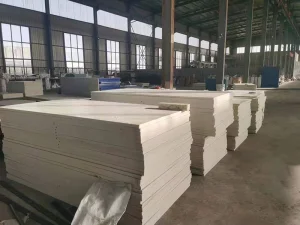
OEM China Engineering Plastic OEM Polyamide PA6 PA66 Nylon Sheet Customized Color
View Product Details
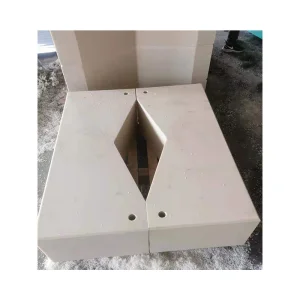
Famous China Supplier Bigfoot Solid Plastic Blocks Customized HDPE Safety Crane Outrigger Pads
View Product Details
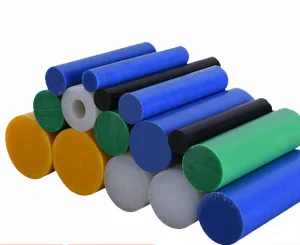
China White POM Rod, Black POM Rod, POM Bar, POM Plastic Rod Suppliers
View Product Details
OEM China Engineering Plastic Polyamide PA6 PA66 Nylon Rod and Bar Stock
View Product Details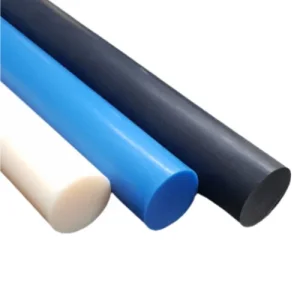
Cheap TEFLON Rod Precision High Performance Chemical Resistant Stock
View Product Details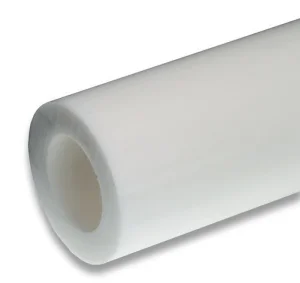
Cheap POM Tube White POM Tube, Black POM Tube, POM Pipe Engineering Plastic Stock
View Product Details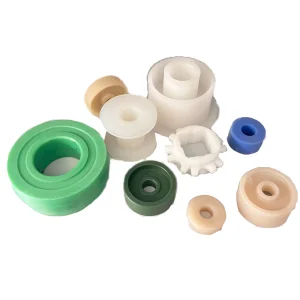
China CNC Machined Parts Precision Tolerances Custom Polyamide Fasteners
View Product Details
Technical Whitepaper: Strategic Procurement
Global Sourcing Dynamics for Nylon Hex Nuts & Fasteners
Evaluating technical trade-offs between unreinforced PA66, glass-filled nylon composites, and metallic fasteners in modern electrical, telecommunication, and automotive assemblies.
Dielectric Isolation & Safety
Unlike steel or brass hardware, nylon hex nuts eliminate conductive pathways in power distribution units, telecom chassis, and photovoltaic invertors. Polyamide 66 exhibits breakdown voltages exceeding 25 kV/mm, actively suppressing short-circuit risks in dense electronics.
Corrosion Immunity in Marine Environments
Where stainless steel (AISI 304/316) suffers crevice corrosion or galvanic decay in saline or acidic atmospheres, thermoplastic fasteners maintain non-reactive surface boundaries, making them indispensable in maritime instruments and water-treatment facilities.
Vibration Dampening & Self-Locking
The inherent viscoelastic damping of extruded and molded polyamides absorbs cyclical dynamic shock loads. Under intense thermal and vibrational resonance, the elastomeric recovery of nylon hex threads reduces joint loosening without requiring external split washers.
1.14 g/cm³
Ultra-Low Density (vs 7.85 for Steel)
85 MPa
PA66 Tensile Yield Strength
10¹⁴ Ω·cm
Volume Resistivity Standard
-40°C ~ +125°C
Continuous Working Range
Cross-Industry Implementation
Macro-Sector Engineering Applications
How OEMs deploy nylon hex nuts across harsh operating conditions to achieve weight minimization, non-magnetic neutrality, and chemical resistance.
Aerospace & UAV Light-Weighting
Shaving structural gram-weight in uncrewed aerial vehicles and cabin assemblies by substituting secondary metallic bracket fasteners with engineered nylon hex hardware.
Medical Diagnostics & MRI Rooms
Requiring completely non-magnetic elements to prevent artifact distortion within high-tesla magnetic resonance chambers and precision radiation testing suites.
Battery Energy Storage (BESS)
Preventing catastrophic internal arcs across lithium-ion cell modules, thermal interconnects, and busbars through reliable dielectric barrier insulation nuts.
Corrosive Chemical Processing
Withstanding aliphatic hydrocarbons, cleaning solvents, petroleum fluids, and moderate alkaline washes within wet processing and chemical dosing machinery.
Engineering Roadmap
Polymer Science Advances: Beyond Standard PA6
Navigating raw resin formulation, moisture stabilization, and the transition toward micro-reinforced composites for demanding mechanical tension joints.
Moisture Equilibrium Engineering
Polyamides naturally absorb ambient humidity (up to 2.5% - 8.5%), which elevates impact ductility while reducing tensile modulus. Our proprietary batch annealing cycles pre-equilibrate nylon hex nuts to target atmospheric humidity levels, stabilizing dimensioning to ISO 4032 / DIN 934 tolerances.
30% Glass-Fiber Reinforcement (PA66-GF30)
For applications demanding elevated shear strength and thermal resistance up to 180°C under load, we compound silane-treated short glass fibers directly into the polyamide chain matrix, yielding a 250% increase in flexural modulus and drastically minimizing creep relaxation.
Additive Optimization (MoS2 & UV Stabilizers)
Outdoor infrastructure requires stabilization against UV photo-degradation. Utilizing Hindered Amine Light Stabilizers (HALS) and molybdenum disulfide (MoS2) formulations, our fasteners maintain mechanical elasticity even when exposed to outdoor solar weathering.
E-E-A-T Manufacturing Integrity
Compliance, Thread Geometry & Factory Traceability
Manufactured in Hebei, China under strict quality controls to guarantee thread meshing fidelity and regulatory compliance for cross-border engineering deliveries.
Standardized Pitch & Dimensions
Produced compliant with DIN 934, ISO 4032, and ASME B18.2.2. Metric coarse (M2 to M36) and UNC/UNF standard threads are rigorously tested using calibrated GO/NO-GO thread plug gauges to prevent galling or cross-threading during automated assembly.
RoHS, REACH & UL94 Flammability
Every virgin polymer batch meets stringent European chemical directives (RoHS 3, REACH SVHC list). Self-extinguishing formulations are certified to UL94-V2 and UL94-V0 flammability tiers, essential for commercial consumer electronics and aerospace interiors.
Global Export Supply Chain
Supported by 20+ years of manufacturing experience, SHUNDA supports global logistics with moisture-barrier vacuum packaging, barcoding, customs certificates of origin (CO), and mill test reports (MTR) providing complete resin heat number traceability.
Engineering Inquiries
Frequently Asked Technical & Commercial Questions
Practical insights into tightening torque, polymer selection, thermal parameters, and custom production minimums.
What tightening torque limits apply to nylon hex nuts?
Nylon exhibits lower shear modulus compared to metals; therefore, tightening torque must be carefully limited to avoid thread stripping. An unreinforced M6 PA66 nut typically accommodates a maximum seating torque of 0.8 to 1.2 Nm, whereas an M10 nut supports approximately 4.5 to 5.5 Nm. For higher clamp load demands, 30% glass-fiber reinforced nylon (PA66-GF30) is recommended.
How does ambient humidity affect the dimensions of nylon nuts?
Polyamides absorb atmospheric water vapor through hydrogen bonding within the amide groups, leading to volumetric swelling (up to 0.5% - 1.5% linear dimension shift). For precision designs, our factory performs pre-conditioning or utilizes lower-hygroscopic engineering alternatives such as POM (acetal) or PEEK depending on tolerance specifications.
Can SHUNDA manufacture custom thread pitches and non-standard geometries?
Yes. In addition to high-speed multi-cavity injection tooling for standardized DIN 934 / ISO 4032 fasteners, our in-house CNC machining workshop turns and threads custom-dimensioned flange nuts, lock nuts, slotted hex nuts, and large-diameter hex nuts directly from extruded polyamide bar stock.
How does PA6 compare with PA66 for industrial fastener production?
PA66 possesses a tighter molecular structure, resulting in a higher melting point (260°C vs 220°C), superior initial hardness, and better creep resistance under continuous load. PA6 offers higher impact toughness and easier mold filling. Most threaded fasteners for electronics and aerospace default to PA66 for its dimensional retention.
Comprehensive Catalog
Precision Machined & Semi-Finished Plastic Range
Explore our full line of industrial wear shapes, extruded nylon rods, high-density polyethylene slabs, and specialized machining profiles.
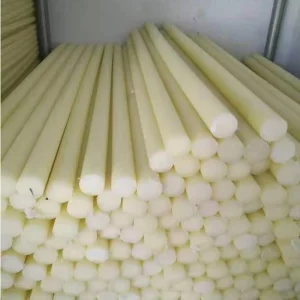
Discount ODM OEM Engineering Plastic Cast PA6 Polyamide Nylon Rod And Bar
View Product Details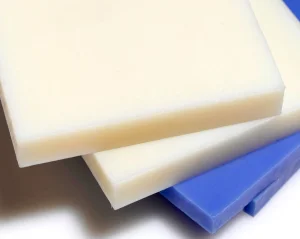
OEM Natural Nylon Plate/Sheet, Blue Nylon Plate/Sheet Factories
View Product Details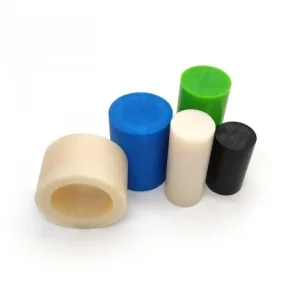
Discount Engineering Plastic Cast Board PA6 Polyamide Nylon Plastic Tube Rod
View Product Details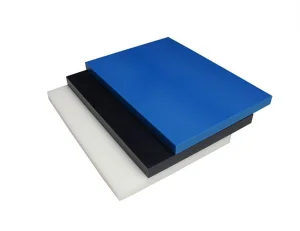
Cheap China Engineering Plastic PA6 Polyamide Nylon UHMWPE PTFE HDPE Board
View Product Details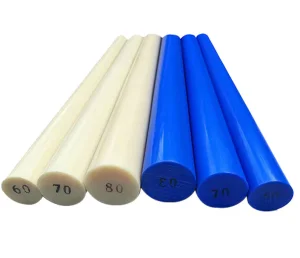
Cheap China MC Blue Cast Nylon Rod Plastic Round Rod And Bar
View Product Details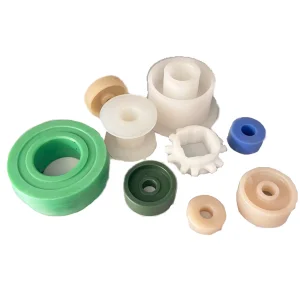
China Custom CNC Machining Components PEEK ABS/PTFE/Delrin/Nylon POM
View Product Details
China Engineering Plastic Polyamide PA6 PA66 Nylon Rod and Bar Stock
View Product Details