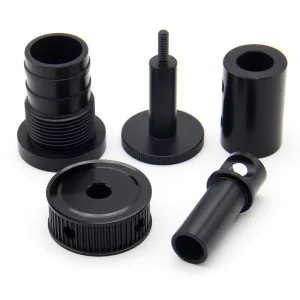
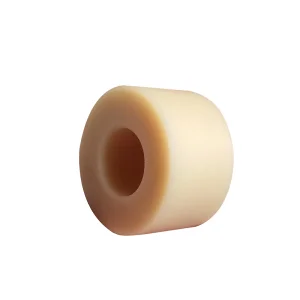
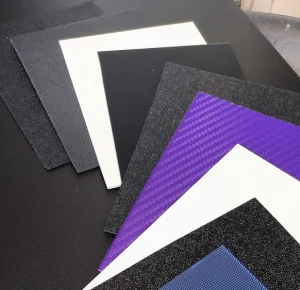
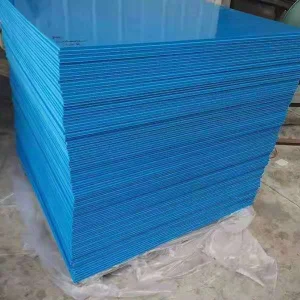
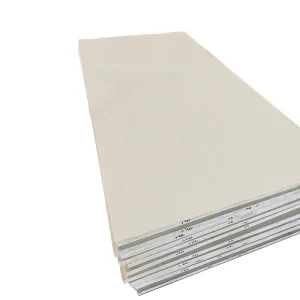
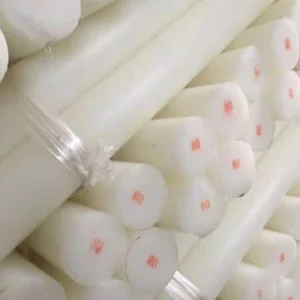
Featured Polymer Stock & Semi-Finished Components
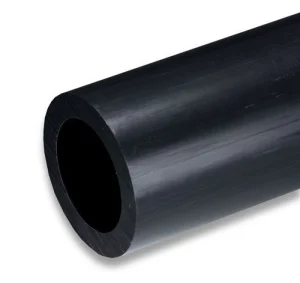
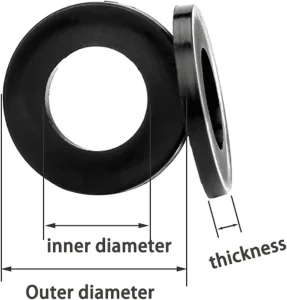
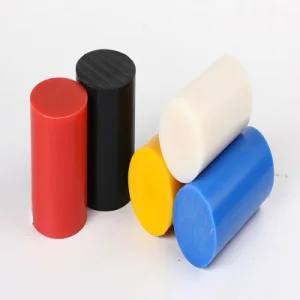
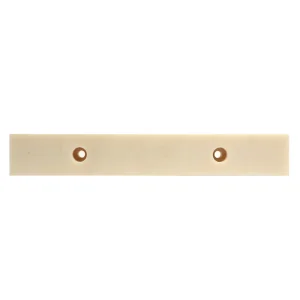
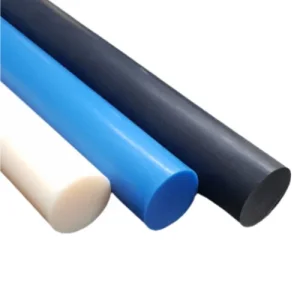
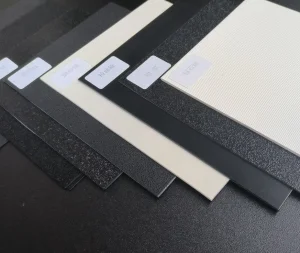
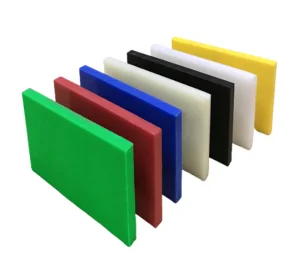
Direct supply from Hebei production lines: raw profile stock, hollow tubes, and custom-milled engineering parts tested to ISO and DIN criteria.
Global Market Drivers & Modern Industry Trends
An in-depth analysis of high-performance Monomer Cast (MC) natural and white polyamide bars in modern automation, decarbonization, and mechanical engineering.
Metal-to-Polymer Weight Elimination
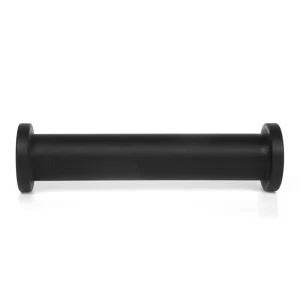
Global mechanical systems are replacing bronze, carbon steel, and cast iron bushings with cast nylon stock. Delivering a 1:7 weight advantage over bronze without sacrificing wear life, MC White Bars drastically reduce rotational inertia and drive energy requirements.
- Eliminates cyclic metal-to-metal fatigue
- Significant reduction in acoustic emissions (dB drop)
- Extended dry startup capabilities under heavy load
Additive-Enhanced tribology
Modern applications require clean operation without supplemental grease lubricants. Pure virgin white/natural nylon cast stocks ensure minimal cross-contamination in pristine environments while retaining high natural lubricity and tensile retention.
- Non-marking contact surfaces for finished web processing
- Cleanroom compatible polymer formulations
- High coefficient of restitution dampening impact shocks
Large-Diameter Void-Free Polymer Castings
Extrusion processes suffer from center-line porosity in diameters over 100mm. SHUNDA applies vertical liquid caprolactam monomer casting inside pressurized, heated vacuum molds to produce solid bars up to 500mm diameter with dense crystalline integrity.
- Zero centerline voids during deep hole boring
- Uniform Shore D hardness across core and periphery
- Controlled thermal cool-down avoiding residual internal stress
Comprehensive Material Performance Comparison
Quantitative empirical properties of cast MC nylon (PA6G) versus commonly specified alternative engineering thermoplastics under standardized test protocols.
| Physical / Mechanical Property | Test Standard | MC White Nylon (Cast PA6) | POM (Polyacetal / Delrin) | UHMWPE (Ultra-High PE) | PTFE (Polytetrafluoroethylene) |
|---|---|---|---|---|---|
| Tensile Strength at Yield (MPa) | ISO 527 / ASTM D638 | 80 - 90 | 65 - 72 | 22 - 30 | 20 - 35 |
| Tensile Modulus of Elasticity (GPa) | ISO 527 | 3.2 - 3.5 | 2.8 - 3.1 | 0.7 - 0.9 | 0.4 - 0.7 |
| Shore Hardness | ISO 868 / ASTM D2240 | D 82 - 85 | D 80 - 84 | D 60 - 65 | D 55 - 60 |
| Charpy Notched Impact (kJ/m²) | ISO 179 | 4.5 - 6.0 | 5.5 - 6.5 | No Break (>80) | 12 - 16 |
| Continuous Operating Temp (°C) | UL 746B | -40 to +110 | -50 to +100 | -150 to +80 | -200 to +260 |
| Coefficient of Dynamic Friction (Dry) | Pin-on-disk vs Steel | 0.20 - 0.28 | 0.25 - 0.32 | 0.10 - 0.15 | 0.04 - 0.08 |
| Machinability & Chip Breaking | Internal CNC Rating | Excellent (Continuous ribbon) | Superior (Short chips) | Moderate (Burr formation) | Soft (Creep deformation) |
Technical Roadmap: Monomer Casting to Sub-Millimeter Parts
A rigorous five-stage manufacturing and quality-assurance cycle executed at SHUNDA's dedicated Hebei production complex.
Stage 1: Monomer Conditioning & Catalysis
High-purity molten caprolactam monomer is heated to 120°C–140°C in an inert nitrogen environment. Specialized activators and alkaline catalysts are injected into the low-viscosity liquid under continuous deaeration to eliminate micro-bubbles prior to casting.
Stage 2: Vacuum-Assisted Mold Ingress
Melted liquid polycaprolactam is fed under gravity or slight positive pressure into preheated vertical centrifugal and static bar tooling. Due to the ultra-low viscosity of the monomer, the mold cavity fills without high shearing forces, avoiding internal stresses found in conventional extruders.
Stage 3: Polymerization & Multi-Step Annealing
Rapid anionic polymerization converts the liquid caprolactam into a high-molecular-weight crystalline solid. Following demolding, the solid white bars undergo oil-bath or air-circulating annealing at controlled cooling curves over 24 to 48 hours to fully relieve internal crystallization stresses.
Stage 4: CNC Lathe Machining & Milling
Annealed MC white bars are set on 3-axis, 4-axis, and 5-axis CNC machining centers. Using razor-sharp positive rake tooling and optimized feeds that avoid thermal plasticization, components achieve tight tolerances within ±0.02 mm.
Stage 5: Coordinate Metrology & Quality Gate
Every batch is verified on automated 3D CMM inspection tables, verifying bore roundness, axial runout, surface roughness (Ra 0.8), and hardness conformity. Full raw material mill certificates are tagged before packaging.
Global Compliance, Localization & Supply Security
Built for overseas OEMs, international engineering distributors, and assembly operations requiring documented traceability and export handling.
RoHS, REACH & Heavy-Metal Testing
All monomer base stock and color pigments comply with EU REACH Annex XVII regulations and RoHS Directive 2011/65/EU. Complete SVHC screening documentation is updated annually through SGS/TÜV testing laboratories.
Moisture Barriers & Marine Export Crating
Nylon exhibits hygroscopic properties. To ensure bars and finished parts arrive without hygroscopic expansion or warp, products are hermetically sealed inside heat-welded foil liners with active desiccant pouches inside ISPM-15 heat-treated export crates.
Flexible Export Terms & Rapid RFQ Support
SHUNDA maintains export pipelines through Tianjin, Qingdao, and Shanghai ports. We provide full trade documentation (CO, Form E, Bill of Lading, Packing Lists) with responsive sales engineers answering RFQs within 12 hours.
Frequently Asked Questions (FAQ)
Direct technical answers from our engineering group covering cast nylon procurement, machinability, tolerances, and logistics.
What is the primary operational difference between Cast MC White Nylon and Extruded PA6/PA66?
Cast MC Nylon (Monomer Cast PA6G) is synthesized directly from liquid caprolactam via pressureless anionic polymerization inside a mold. This results in significantly higher molecular weight, increased crystallinity (up to 45-50%), superior tensile stiffness, better dimensional stability, and notably lower internal stress compared to extruded nylon, especially in larger solid profiles exceeding 50mm in diameter.
How does SHUNDA address moisture absorption and dimensional stability in MC nylon parts?
Nylon will absorb 1.5% to 3.0% ambient moisture at equilibrium. We mitigate tolerance shifts through three proprietary steps: rigorous factory thermal annealing to relieve internal casting stress, precise CNC compensation allowances based on projected end-use humidity, and protective vapor-barrier vacuum packaging for overseas sea transit.
Can you provide custom outside diameters (OD) and cut-to-length stock to reduce turning waste?
Yes. Our in-house mold foundry manufactures customized tooling for non-standard solid bar diameters, thick-walled bushings, and near-net shape blanks. By purchasing near-net cast profiles or cut-to-length blanks, buyers reduce raw scrap rates by 30% to 50% compared to machining down standard off-the-shelf bars.
What cutting parameters and tooling geometries are recommended for CNC turning MC White Bars?
Use high-speed steel (HSS) or uncoated fine-grain tungsten carbide cutters with sharp cutting edges and high positive rake angles (15° to 25°). Maintain aggressive feeds (0.2–0.4 mm/rev) with sufficient clearance (8° to 12°) to avoid friction rub. Air blast or water-soluble flood coolant should be applied to continuously clear chips and maintain cool core temperatures.
What file formats and minimum order quantities (MOQ) are required for custom CNC machining quotes?
We accept 3D models in STEP, IGES, and Parasolid formats, supported by 2D dimensioned PDF/DWG drawings that specify tolerances and surface finish callouts. For standard semi-finished bars, we maintain low MOQs (from single pieces on stock sizes), while custom tailored runs are budgeted economically based on raw weight.
Complete Polymer Inventory & Industrial Solutions
Explore our extensive range of high-performance plastic rods, wear plates, heavy impact pads, and precision machined components.