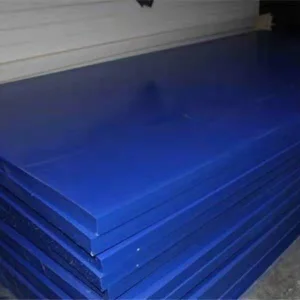
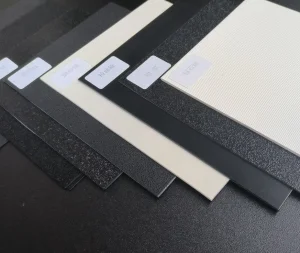
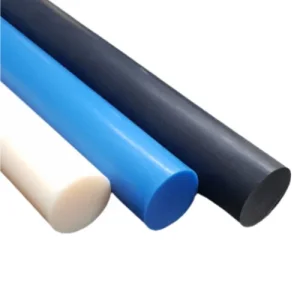
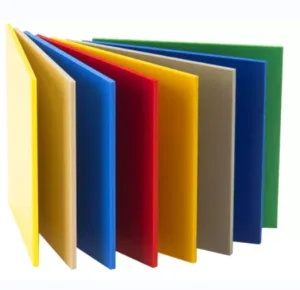
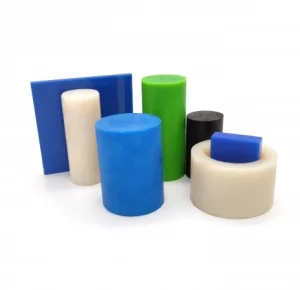
Featured Engineering Cast Elastomers & Precision Polymer Bars
Engineered in our Hebei manufacturing facility to withstand aggressive mechanical attrition, cyclic shock loading, and high chemical exposure across harsh global industrial settings.
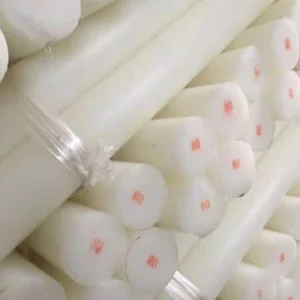
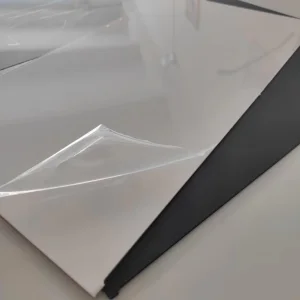
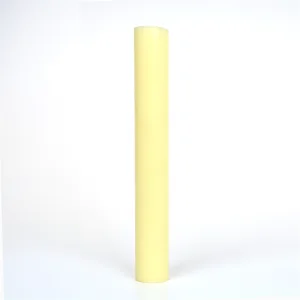
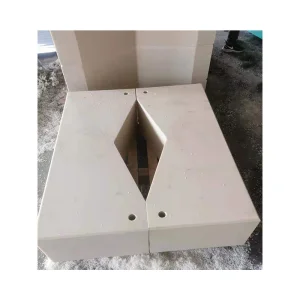
The Global Industrial Landscape for Monomer Cast (MC) Rubber & Elastomer Bars
As heavy industrial operations demand ever-longer component lifecycle intervals, traditional vulcanized rubber components are reaching their mechanical limits under combined frictional, chemical, and cyclical impact loads.
Transition from Vulcanized Rubber to Cast Elastomers
Conventional synthetic rubbers (NBR, SBR, EPDM) processed via sulfur vulcanization exhibit continuous polymer degradation under sustained mechanical shear and aggressive lubricants. Monomer Cast (MC) polyurethane rubber bars provide up to 500% greater abrasion resistance, dramatically reducing emergency plant shutdowns in mining slurry circuits and rolling mills.
- Elimination of micro-delamination during high-velocity particle contact
- Superior retention of elastic memory under unrelaxed compression
- Resistance to oil swell and hydrocarbon hydrocarbon embrittlement
Supply Chain Consolidation & Geopolitical Reality
Global procurement teams in North America, Western Europe, and Southeast Asia face acute margin pressures and unpredictable raw material supply chains. As an integrated China manufacturer with over two decades of monomer casting infrastructure, Shunda Polymer provides scalable bar stock and finished parts directly from production lines in Hebei.
- Direct batch-to-batch polymer raw material synthesis control
- Complete domestic supply stability insulated from regional sub-tier delays
- Export packaging compliant with ISPM 15 standards for rapid customs transit
Total Cost of Ownership (TCO) Re-Evaluation
While low-grade commodity rubber bars may appear cost-effective on initial invoice bills of material, their high replacement frequency, unscheduled maintenance downtime, and mating surface wear impose severe operational penalties. MC rubber bars shift engineering economics to predictable lifecycle intervals.
- Up to 4x longer operational service life in cyclic impact zones
- Zero maintenance lubrication required due to internal elastomer slip agents
- Significant reduction in mating steel shaft and roller wear
Polymer Architecture of MC Cast Rubber & Polyamide Hybrids
Unlike extruded plastics or compression-molded rubbers, Monomer Casting (MC) utilizes liquid-phase gravity or centrifugal reactive casting under controlled temperatures, yielding ultra-high molecular weight networks with virtually zero internal stress.
Anionic In-Mold Polymerization
Our casting line uses high-purity caprolactam monomer or polyurethane prepolymers, catalyzed and activated directly in precision-machined steel tooling. The resulting polymer chain exhibits a degree of crystallization between 45% and 50%, providing exceptional stiffness alongside damping.
Microcellular Energy Absorption
Under severe compressive hammer impacts (such as in piling machines or hydraulic forge cushions), the elastomer segments deflect elastically, converting peak shock wave energy into benign, dispersed thermal dissipative loads without structural fracture.
Thermal Annealing & Stress Relief
Every bar, rod, and sheet produced at the Shunda facility undergoes a computer-controlled post-cure annealing process in thermal oil or circulating air ovens. This completely eliminates residual skin stresses, ensuring dimensional stability during aggressive CNC turning and milling.
Additives & Tribological Upgrades
We compound our cast bars with specialized internal lubricants, including MoS2 (Molybdenum Disulfide), specialized oil esters, and antistatic graphite matrices, achieving dry dynamic coefficients of friction as low as 0.12 against polished carbon steels.
| Physical / Mechanical Property | Test Standard (ASTM / ISO) | Standard MC Nylon Bar | High-Elastic MC Rubber Bar | High-Impact Cushioned PA6 |
|---|---|---|---|---|
| Shore Hardness | ISO 868 / ASTM D2240 | 80 - 85 Shore D | 85 - 95 Shore A / 45 Shore D | 76 - 80 Shore D |
| Tensile Strength at Yield (MPa) | ISO 527 / ASTM D638 | 82 - 95 MPa | 42 - 58 MPa | 70 - 85 MPa |
| Elongation at Break (%) | ISO 527 / ASTM D638 | 25 - 45% | 350 - 550% | 60 - 110% |
| Charpy Notched Impact (kJ/m²) | ISO 179 / ASTM D256 | 6.0 - 9.0 kJ/m² | No Break | 16.0 - 25.0 kJ/m² |
| Abrasion Volume Loss (DIN 53516 mm³) | DIN 53516 | 45 - 65 mm³ | 18 - 28 mm³ | 35 - 50 mm³ |
| Dynamic Coeff. of Friction (Dry) | ASTM D1894 | 0.28 - 0.38 | 0.35 - 0.45 | 0.22 - 0.30 |
| Continuous Operating Temp Range | IEC 60216 | -40°C to +105°C | -35°C to +90°C | -40°C to +115°C |
Engineering Solutions Across Global Core Industries
From deep-pit gold mines in Western Australia to offshore wind turbine assembly quays in the North Sea, Shunda MC Rubber Bars and engineered polymer components deliver certified reliability in non-forgiving environments.
Piling Hammers & Heavy Construction Rig Cushions
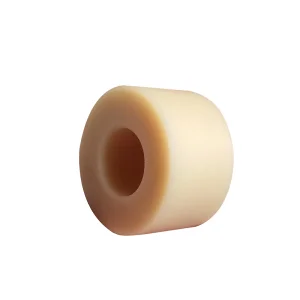
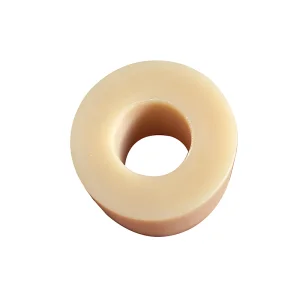
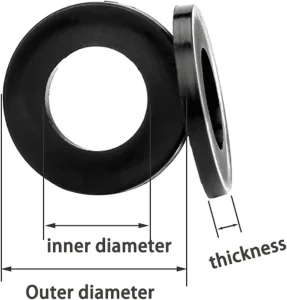
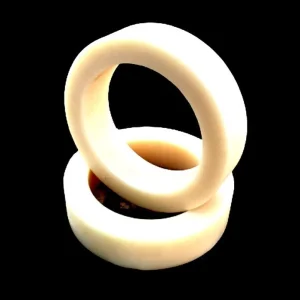
Used widely across foundation piling operations, our specialized black impact cushions absorb catastrophic hydraulic piston rebound energy without shattering. Unlike traditional hardwood or lead cap blocks, Shunda cast nylon and rubber ring cushions provide sustained energy transmission while insulating expensive hammer ram components.
Port Fendering & Vessel Berthing Protective Bars
Marine environments require materials with near-zero saltwater swell, ultra-high tear strength, and resilience against continuous vessel berthing friction. Our custom MC rubber bars and UHMWPE composite wear strips form robust face pads on dock walls, preventing metal-to-hull galling and absorbing tidal wave kinetic surges.
Conveyor Transfer Chutes & Ore Extraction Skirting
Handling thousands of tons of sharp taconite, copper concentrate, or crushed granite every hour destroys ordinary rubber skirts within days. Shunda cast elastomer impact bars cushion drop points, sealing transfer skirts tightly to eliminate airborne fugitive dust while stopping material spillage cold.
Industrial Automation & Shock-Absorbing Stops
In automated packaging sorting plants and automotive staging conveyors, repetitive high-speed pallet impact generates noise pollution and equipment stress. Our machined MC rubber bumper bars provide rapid kinetic deceleration with noise abatement ratings exceeding 18 dBA.
Steel Mill Rolling Guides & Pinch Roll Sleeves
In rod and wire rolling mills, steel guides cause surface scratching and require constant water cooling. Cast MC nylon and elastomer bars provide a forgiving interface that guides raw red-hot and cold-drawn metal billets without galling or pick-up defects.
International Quality Standards & Export Compliance Architecture
Procuring engineered polymers from China requires complete transparency, certified testing documentation, and adherence to Western regulatory frameworks.
Rigorous Batch Traceability & Mill Test Reports
Every cast polymer bar is marked with a laser or stamped batch identifier linked to raw chemical lot numbers, catalyst mix ratios, and curing thermal logs. We furnish EN 10204 3.1 equivalent Certificate of Analysis (COA) records covering density, tensile properties, and Shore hardness with every export shipment.
RoHS 3 & EU REACH Annex XVII Compliance
We strictly control all plasticizers, curing agents, and colorants. Our MC rubber and cast polyamide bars are formulated without prohibited phthalates, polybrominated biphenyls (PBB/PBDE), short-chain chlorinated paraffins (SCCP), or Substances of Very High Concern (SVHC), making them fully compliant for European imports.
CNC Precision Machining to ISO 2768 Tolerances
In addition to raw stock bars, our in-house multi-axis CNC machine park turns and mills intricate geometry directly from 3D CAD models (STEP, IGES, DXF). We execute precision chamfering, radial grooves, counterbored through-holes, and custom keyways with dimensional checks performed under calibrated coordinate measuring machines (CMM).
Need Custom Bar Dimensions or Material Formulations?
Our polymer synthesis team can adjust Shore hardness (from 70 Shore A to 65 Shore D), introduce internal lubricants (PTFE, graphite, MoS2), or produce custom cross-sections up to 500 mm in diameter and 3,000 mm in length.
Technology Roadmap: Next-Generation Cast Polymers
As modern heavy industries pursue net-zero targets and autonomous continuous operations, Shunda Polymer is actively advancing its composite casting chemistry and manufacturing capabilities.
Nanoparticle Graphene Infusion
Dispersing functionalized graphene nanoplatelets within the caprolactam monomer matrix to elevate thermal conductivity by 120%, preventing localized heat buildup in high-speed dry-running bushings and slide blocks.
Bio-Based Monomer Chemistry
Synthesizing monomer casting resins utilizing castor-oil-derived sebacic acid precursors, lowering the cradle-to-gate carbon footprint of industrial wear stock by 42% while retaining high chemical resilience.
Embedded Sensor Matrices
Co-casting conductive elastomer traces directly into the core of heavy mining impact bars to enable real-time wireless wear depth and cyclical shock telemetry directly to plant DCS platforms.
Zero-Tolerance Centrifugal Casting
Automated vertical centrifugal casting systems designed for extra-large diameter hollow bars up to 1,500 mm OD, eliminating porosity while reducing finish-machining material loss to under 5%.
CNC Machining Best Practices for MC Rubber & Nylon Bars
Optimized machining parameters developed by Shunda production engineers to achieve tight tolerances and mirror surface finishes while avoiding thermal distortion.
Tooling Geometry & Cutting Edges
Use high-speed steel (HSS) or sharp polished tungsten carbide cutters with generous positive rake angles (15° to 25°) and clearance angles (10° to 15°). Avoid dull inserts used for metals, as excessive friction generates surface softening and material smearing.
Thermal Dissipation & Coolants
Engineering plastics have roughly 1/10th the thermal conductivity of carbon steel and significantly higher thermal expansion coefficients. Utilize compressed cold air jets or clean water-soluble synthetic emulsions during heavy roughing passes to prevent dimensional drift.
Clamping Forces & Workholding
Do not over-clamp cast bars in hydraulic 3-jaw chucks, which can induce localized ovalization and elastic deformation. Utilize full-wrap soft jaws, pie jaws, or custom fixtures to distribute clamping forces evenly across the polymer circumference.
Frequently Asked Questions by Industrial Buyers
Clear, authoritative technical answers addressing engineering verification, logistics, quality documentation, and custom manufacturing capabilities.
What distinguishes an MC (Monomer Cast) Rubber Bar from standard extruded polyurethane or vulcanized rubber?
Monomer Casting is an in-mold, liquid-phase reactive chemical polymerization process. Unlike high-pressure screw extrusion which subjects polymer chains to extreme mechanical shear degradation, casting preserves ultra-long macromolecular chains. The resulting MC elastomer bar features significantly higher tensile strength, superior tear resistance under notch propagation, negligible internal stress, and superior elastic recovery compared to conventional compression-molded rubber bars.
Can Shunda produce customized cross-sections, hollow profiles, and custom colors?
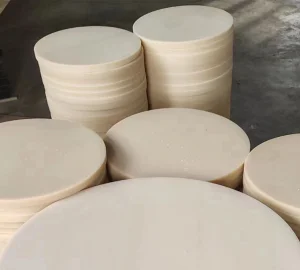
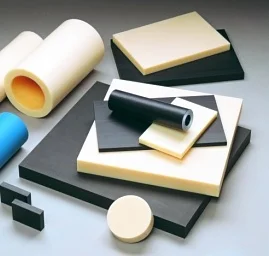
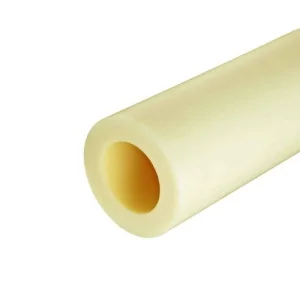
Yes. Our in-house tooling division engineers custom steel gravity casting molds, centrifugal tooling, and specialized cooling profiles. We supply solid round bars from 15 mm to 800 mm in diameter, rectangular wear bars up to 2,000 mm lengths, and hollow bars/tubes with wall thicknesses tailored to minimize internal bore machining scrap. Custom RAL/Pantone color masterbatches (including safety yellow, high-visibility blue, deep black, and natural ivory) are blended with UV stabilizers on request.
How does cast MC nylon and rubber perform when exposed to water, oils, and industrial chemicals?
Cast polyamides and polyurethane elastomers offer exceptional chemical immunity against petroleum hydrocarbons, hydraulic oils, greases, diesel, and aliphatic solvents. While standard PA6 absorbs atmospheric humidity (up to 2.5% equilibrium moisture at 50% RH), our modified oil-filled grades and cast elastomer blends exhibit markedly suppressed moisture uptake, preserving tight tolerances in underwater marine berthing or outdoor mining applications.
What lead times and export shipping documentation does Shunda offer for global sea/air consignments?
Standard semi-finished bar stock typically dispatches within 7 to 14 business days from order confirmation. Fully machined CNC components requiring custom tooling run on 15 to 25 business-day cycles. All export shipments from our Xingtai, Hebei facility include fumigated solid wood crating (ISPM 15 compliant), vacuum plastic wrapping, detailed packing lists, commercial invoices, Certificates of Origin (Form E, CO, etc.), and complete physical test reports.
How do I submit technical drawings for a rapid quoting process?
Direct your engineering drawings (PDF for 2D dimensional tolerances; STEP, IGES, or DXF for 3D surfaces) to our engineering desk at [email protected]. Please include operating parameters (estimated load, velocity, temperature, and environmental chemical contact) so our metallurgical and polymer specialists can confirm the exact formulation, grade, and machining route within 12 business hours.
Comprehensive Engineering Polymer Rod, Sheet & Cushion Catalog
Manufactured to ISO specifications and exported globally. Browse our core stock forms or submit your customized bill of materials for direct factory pricing.