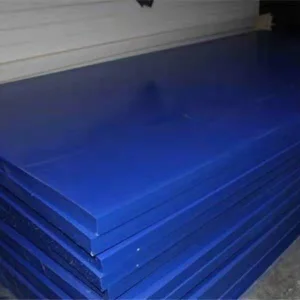
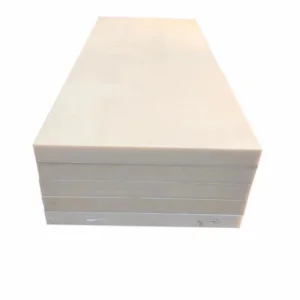
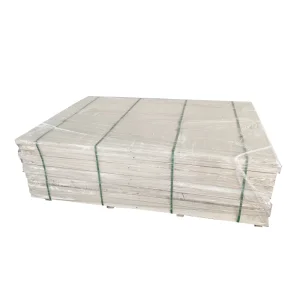
Heavy-Duty Semi-Finished Stock & Custom Fabrications
Direct from manufacturing lines in Hebei, China: impact dampeners, hollow engineering bars, heavy-capacity stabilizing outrigger pads, and resilient polymer formulations tested under extreme physical stress.
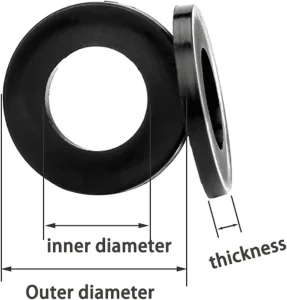
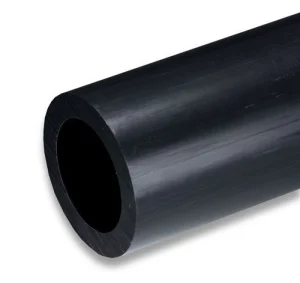
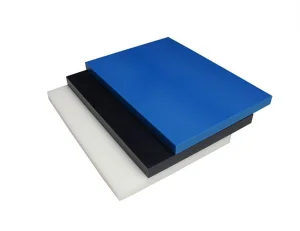
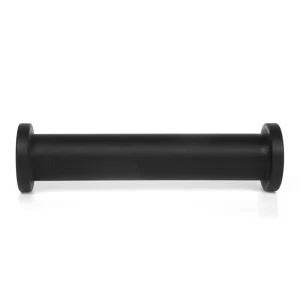
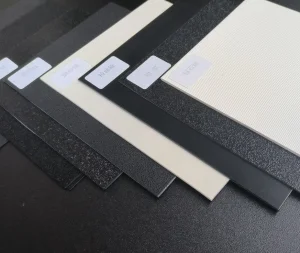
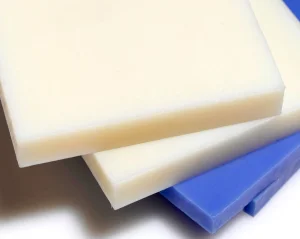
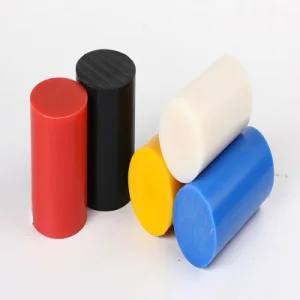
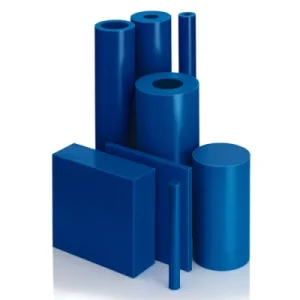
Decoding the "HDPE Rubber" Convergence in Precision Engineering
Bridging the performance gap between ultra-rigid semi-crystalline thermopolymers and high-damping synthetic elastomers for demanding mechanical systems.
In global procurement specifications, the classification HDPE Rubber identifies advanced material compounds, dynamically vulcanized composites, and co-formulations where high-density polyethylene (HDPE) polymer backbones are blended or co-processed with elastomeric rubber phases (such as EPDM, polybutadiene, or thermoplastic olefin elastomers). This molecular hybridization resolves a historic industrial trade-off: bridging the extreme chemical inertness, high dielectric strength, and low surface coefficient of friction characteristic of HDPE with the cyclic rebound memory, flexural crack resistance, and dynamic acoustic dampening inherent to industrial rubbers.
When heavy equipment undergoes repetitive dynamic impact—such as piling rigs, crane outriggers, ball mill linings, or slurry handling conduits—pure unplasticized thermoplastics risk fatigue cracking under cold-weather impacts, whereas standard natural or synthetic rubbers suffer premature abrasion and severe chemical swelling. By integrating polyolefin engineering plastics with elastomeric shock barriers, manufacturing engineers achieve an exceptional wear-to-damping ratio, operating seamlessly in temperatures from -40°C to +85°C.
Strategic Advantages of Sourcing from Chinese Polymer Plants
How localized supply chains, deep petrochemical integration, and modern multi-axis machining facilities deliver distinct technical and cost efficiencies.
Vertically Integrated Resin Refining
Located in Hebei's primary industrial cluster, our facilities benefit from immediate pipeline access to stabilized high-molecular-weight polyethylene and polymer compounding agents. Direct feed control eliminates secondary heating cycles, preventing premature molecular chain degradation and preserving uniform tensile toughness.
High-Tonnage Compression Moulding
Standard extrusion often locks internal thermal stress into heavy polymer cross-sections, causing warped profiles during machining. Chinese specialty plants utilize multi-day ultra-slow cycle hydraulic compression presses (exceeding 2,500 metric tons), delivering isotropic blanks up to 300 mm thick that are virtually stress-free.
Direct CAD/CAM Precision CNC Turning
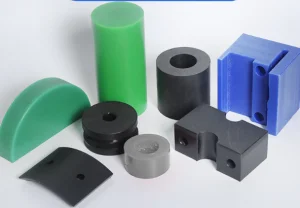
We run dedicated in-house CNC routing tables, 5-axis vertical machining cells, and specialized high-speed turning lathes optimized for non-ferrous, gummy elastomeric polymers. We produce tight clearance components, custom dovetail grooves, bevelled wear guides, and perforated filter elements within ±0.05 mm dimensional limits.
Engineering Plastic & Elastomer Performance Matrix
Select the ideal polymer compound by evaluating friction, wear resistance, damping, and dimensional tolerances under continuous industrial service.
| Polymer / Grade | Yield Strength (MPa) | Dynamic Friction (μ) | Water Absorption (%) | Impact Damping Quality | Best Matched Industrial Role |
|---|---|---|---|---|---|
|
HDPE Rubber / Elastomer Alloy PE-80 / PE-100 Blends |
24 – 32 | 0.15 – 0.22 | < 0.01% | High Dynamic Absorption | Impact cushions, pile driving rings, vibration isolate blocks, slurry pipe gaskets |
|
Cast MC Nylon (PA6C / Blue) Cast Polyamide |
78 – 85 | 0.25 – 0.35 | 5.5 – 6.5% (At Saturation) | Moderate Viscoelastic | Heavy-load sheaves, crane cable drums, pin bushings, slide wear plates |
|
POM-C (Polyacetal Acetal) Delrin Equiv. |
65 – 72 | 0.20 – 0.28 | 0.22% | Low (Elastic Rigid) | Precision metric gears, fuel metering valves, precision dimensional bushings |
|
UHMWPE (Ultra-High PE) Molecular Wt. > 5M |
21 – 28 | 0.10 – 0.14 | < 0.01% | Very High Impact Resistance | Harbor dock marine fenders, mining hopper drop chutes, chain guides, outrigger plates |
|
PTFE (Virgin Polytetrafluoroethylene) Fluoropolymer |
20 – 30 | 0.04 – 0.08 | < 0.005% | Low Yield Recovery | Cryogenic seals, thermal bridge sliders, aggressive acid line valve seats |
Macro-Industry Solutions & Engineered Implementations
Engineered for extreme operating environments across deep foundation machinery, bulk mineral handling, marine structures, and process engineering.
Foundation & Impact Piling
Our specialized elastomeric nylon and HDPE hammer cushion rings absorb repeated 1,200 kN peak hydraulic impacts without brittle shatter, protecting the steel anvil and extending piling rig service life during harsh offshore and bridge foundation works.
Heavy Mobile Cranes & Access
We produce high-tonnage UHMWPE and blended HDPE outrigger pads. With zero water intake, they never rot, splinter, or delaminate under seasonal freezes, distributing ground pressures safely under rough construction conditions.
Port Logistics & Marine Fendering
Marine dock bumper facings formulated from low-friction, UV-stabilized polymer blends endure continuous tidal saltwater submersion, resisting micro-cracking and shielding ship hulls without causing paint abrasion.
Mining & Bulk Solid Conveying
Non-stick, self-lubricating hopper lining boards prevent fine mineral cake agglomeration and material freezing. Low sliding friction minimizes drag, decreases conveyor drive energy draw, and prevents high-frequency chute wear.
Frequently Asked Questions for Overseas Buyers
Direct answers to the most common engineering, testing, logistics, and quality assurance inquiries handled by our international export division.
Polymer Stock Shapes, Extruded Rods & Moulded Sheets
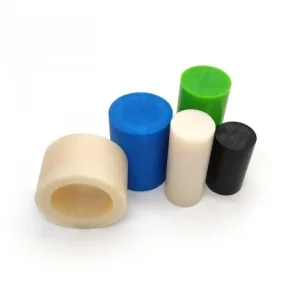
Browse our core catalogue of PA6, POM, HDPE, UHMWPE, ABS, and PTFE stock materials, manufactured for smooth machining and dimensional stability.