
Featured Engineering Plastics & Extruded Stock
Direct factory production covering specialized polymer sheets, rods, solid flat profiles, and CNC precision-machined elements engineered for rigorous mechanical environments.
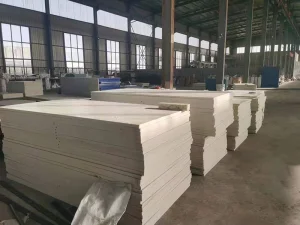
OEM China Engineering Plastic OEM Polyamide PA6 PA66 Nylon PP UHMWPE PTFE HDPE ABS Plastic Sheet Factory Customized Color With Size Suppliers, Exporter
View Product Details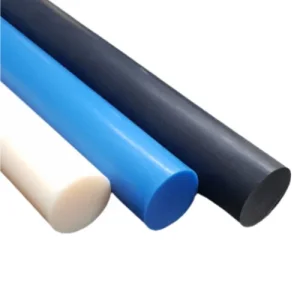
OEM Cast MC Nylon Rod Suppliers, Product
View Product Details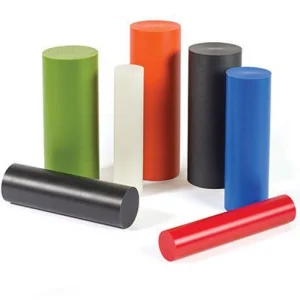
Buy Engineering Plastic Cast Board PA6 Polyamide Nylon ABS PP PTFE Plastic Rod And Bar Tube Customized Color With Size Factory, Companies
View Product Details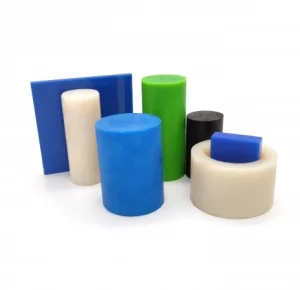
Buy Gold Supplier Engineering Plastic Polyamide PA66 Nylon PP UHMWPE PTFE HDPE ABS Plastic Sheet Rod And Bar Customized Color With Size Manufacturers, Exporters
View Product Details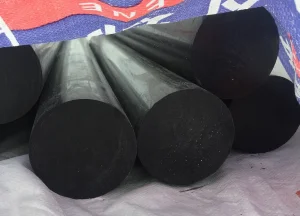
Wholesale POM Rod Black POM Rod, White POM Rod, POM Bar, POM Plastic Rod Factories, Products
View Product Details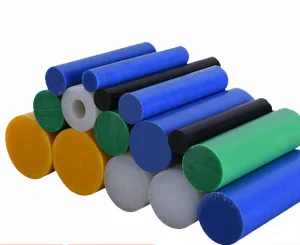
Discount Cast Nylon Tube Rod Cast Nylon Pipe Bar MC Nylon Tube Rod Bar Exporters, Products
View Product Details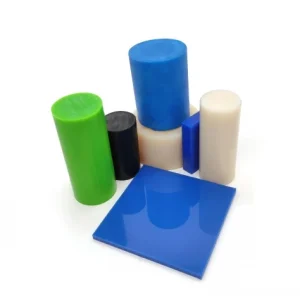
Wholesale Engineering Plastic Polyamide PA6 PA66 Solid Nylon Rod , PTFE Rod, ABS Rod Plastic Solid Rod And Bar Customized Color With Size Factory, Companies
View Product Details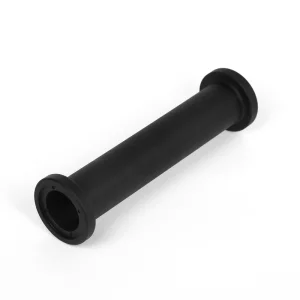
China Nylon Roller Manufacturers, Company
View Product DetailsThe Commercial Landscape of Industrial HDPE Flat Bars
Examining the structural shift from metallic wear strips and thermosets to highly consolidated polyolefin flat extrusions across worldwide capital projects.
Supply Chain Consolidation
Global original equipment manufacturers (OEMs) are progressively transitioning procurement strategies toward consolidated Chinese manufacturing clusters. The concentration of petrochemical polymer upstream cracking facilities and specialized continuous extrusion lines in regions like Hebei and Jiangsu allows Chinese flat bar producers to offer exceptional thickness consistency (±0.15mm), reduced internal void rates, and direct container-load economies of scale.
Corrosion & TCO Optimization
Traditional carbon steel, bronze bushings, and painted timber facings incur unsustainable maintenance expenditures within marine and chemical corridors. High-Density Polyethylene flat bars deliver a virtually zero-porosity surface that remains inert against aggressive acids, alkaline reagents, and hypersaline environments, extending asset life spans beyond 15 years without cathodic protection or re-coating.
Standardization & Regulatory Shifts
Modern conveyor systems, wastewater handling scrapers, and food processing lines now mandate compliance with strict migration thresholds. Premium China HDPE factories maintain strict raw material control utilizing prime virgin resins conforming to FDA 21 CFR 177.1520 and EU Regulation 10/2011, establishing dependable documentation trails for multinational regulatory audits.
Comparative Polymer Matrix for Semi-Finished Flat Bars
A granular technical comparison detailing mechanical thresholds, thermal performance, and friction coefficients across leading industrial engineering plastics.
| Property Parameter | Test Standard | HDPE (PE-300 High Density) | UHMWPE (PE-1000 Ultra High) | Cast Nylon (PA6C) | Acetal (POM-C Copolymer) |
|---|---|---|---|---|---|
| Density (g/cm³) | ISO 1183 / ASTM D792 | 0.95 – 0.96 | 0.93 – 0.94 | 1.15 – 1.16 | 1.41 – 1.42 |
| Tensile Strength at Yield (MPa) | ISO 527 / ASTM D638 | 23 – 28 | 21 – 25 | 75 – 85 | 65 – 70 |
| Flexural Modulus (MPa) | ISO 178 / ASTM D790 | 1,000 – 1,400 | 700 – 900 | 3,000 – 3,400 | 2,800 – 3,000 |
| Dynamic Coeff. of Friction (Dry) | Against Steel (23°C) | 0.20 – 0.28 | 0.10 – 0.15 | 0.30 – 0.40 | 0.25 – 0.32 |
| Charpy Impact Strength (kJ/m²) | ISO 179 Notched | 10 – 14 (No Break Unnotched) | No Break (>100) | 4 – 9 | 6 – 8 |
| Water Absorption (24h immersion) | ISO 62 / ASTM D570 | < 0.01% | < 0.01% | 1.5% – 2.2% | 0.2% – 0.25% |
| Coeff. of Thermal Expansion (10⁻⁵/K) | ISO 11359-2 | 13 – 20 | 15 – 20 | 8 – 10 | 10 – 12 |
| Operating Temp Range (°C) | Continuous Service | -50 to +80 | -200 to +80 | -40 to +105 | -50 to +100 |
Stress Whitening & Yield Behavior
Under severe mechanical flexion, HDPE exhibits ductile elongation rather than catastrophic brittle fracture. This crystalline macromolecular realignment prevents rapid crack propagation, making HDPE flat bar strips ideal for shock-absorption bumpers and dynamic conveyor guide rails subjected to repeated container impacts.
Hygroscopic Stability
Unlike Polyamide (PA6/PA66) profiles which absorb significant atmospheric humidity resulting in dimensional swelling and reduced flexural rigidity, HDPE maintains total non-polar chemical inertia. Machined tolerances on HDPE flat bars remain constant even when fully submerged in liquid manure, municipal wastewater, or chemical processing tanks.
Weldability & Fabrication
HDPE flat bars can be readily joined using hot-gas extrusion welding, butt fusion, or socket fusion. This enables structural mechanical fabricators to seamlessly integrate wear strips into large-scale polyethylene tanks, marine pontoon assemblies, or bulk solid liner chutes without mechanical fasteners.
The Engineering Roadmap of Modern Flat Profile Extrusion
How leading China HDPE manufacturing facilities minimize residual internal stresses and ensure strict flatness tolerances through sophisticated downstream calibration.
01. Melt Homogenization
Utilizing high L/D ratio (33:1 to 38:1) single-screw extruders featuring specialized barrier screws and dispersive mixing heads. This ensures uniform temperature distribution across the melt curtain, preventing localized polymer degradation and ensuring balanced molecular orientation.
02. Vacuum Sizing Calibration
As the molten rectangular profile emerges from the extrusion die, it passes directly through multi-stage stainless steel vacuum sizing calibrators submerged in intensive recirculating water baths. Precise negative pressure prevents profile distortion and hollow warpage.
03. Controlled Annealing
To eliminate frozen-in stresses caused by rapid cooling rates between the outer skin and profile core, industrial flat bars are subjected to offline continuous convection annealing tunnels. This crucial step guarantees absolute post-machining dimensional stability without bow or twist.
04. Laser Dimensional Scanning
Continuous closed-loop laser measurement calipers monitor bar width, thickness, and angular squareness in real-time. Automated haul-off speed adjustments maintain cross-sectional tolerances within DIN 16972 precision classifications before automatic cross-cutting.
Mission-Critical Industrial Applications for HDPE Flat Bars
From maritime berthing infrastructures to high-speed automation conveying systems, HDPE flat bars serve as the primary defensive barrier against mechanical wear and chemical attack.
Conveyor Wear Strips & Chain Guides
Installed beneath steel or acetal conveyor chains in bottling, packaging, and sorting plants. The low dynamic friction of HDPE flat bars prevents chain galling, cuts drive motor electrical loads by up to 25%, and lowers decibel levels across high-speed packaging lines.
Marine Fender Facings & Pier Buffers
Fastened onto steel dolphin piles, harbor docks, and tugboat hulls. HDPE flat bars resist severe UV degradation (formulated with carbon black or hindered amine light stabilizers), zero marine borer infestation, and imperviousness to saline tidal cycles.
Wastewater Clarifier Scraper Blades
Attached to sludge collector bridges and scum trough wipers in municipal sewage plants. HDPE flat bar sections glide smoothly over concrete pool beds without abrading civil coatings, remaining completely unaffected by biological H₂S gas and liquid chlorine compounds.
Cold Storage & Food Processing Fixtures
Used as impact wall kick-plates and pallet bumper rails inside industrial flash-freezers operating down to -40°C. HDPE flat profiles retain uncompromised notch impact resistance without embrittlement, easily withstanding frequent high-pressure caustic sanitize washdowns.
Electrochemical & Plating Tank Stiffeners
Employed as non-conductive structural spacer bars, anode rail supports, and tank rim stiffeners inside chromium, zinc, and copper electroplating tanks. HDPE offers zero dielectric breakdown along with complete resistance to aggressive hot chromic acid mists.
Bulk Material Hopper Chute Liners
Cut-to-size HDPE flat bars are mounted along the wear patterns of coal silos, grain hoppers, and aggregate transport shoots. Its ultra-slick surface prevents bridging and rat-holing of damp clays and bulk powdered ores, dramatically accelerating cycle throughput.
Factory Selection Criteria: Evaluating China HDPE Suppliers
Key quality assurance variables, testing protocols, and compliance benchmarks international sourcing teams must audit before issuing purchase contracts.
Virgin vs. Regrind Verification
Low-tier fabricators frequently dilute virgin HDPE resin with post-industrial scrap or low-grade regrind, leading to premature environmental stress cracking (ESCR failure) and inconsistent tensile yield. Verifiable China manufacturers supply batch-specific Certificate of Analysis (COA) specifying density (ISO 1183) and Melt Flow Rate (MFR 190°C/2.16kg) to guarantee pristine polymer chain integrity.
Machining & Secondary CNC Finishing
For applications demanding countersunk mounting holes, chamfered slide entries, or tongue-and-groove joint profiles, verify whether the factory possesses in-house multi-axis CNC routing equipment. Purchasing pre-machined, ready-to-assemble flat bars reduces international freight costs by shedding excess machining swarf prior to containerization.
Export Packaging & Ocean Protection
Long flat plastic profiles are susceptible to cumulative gravitational bending and thermal warp when stowed loosely inside humid ocean shipping containers. Authoritative exporters pack flat bars flatwise on rigid steel-reinforced wooden pallets, wrapped in UV-resistant stretch film with full edge guards to guarantee straightness upon arrival at destination ports.
Specialty High-Polymer Industrial Profiles & Components
Explore our full line of specialized crane outrigger pads, modified wear blocks, industrial chains, and fluoropolymer components engineered to complete your operational requirements.

Wholesale Ordinary Discount China Pure Nylon Rod for Sale High-Quality Nylon Rods for Industrial Applications Factories, Products
View Product Details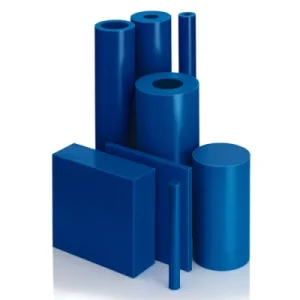
Discount Hot Sale for UHMWPE Heavy Duty Jacking Pads Crane Foot Support Plate Plastic Stabilizer Pad Manufacturer, Companies
View Product Details
Cheap TEFLON Rod Manufacturers, Exporter
View Product Details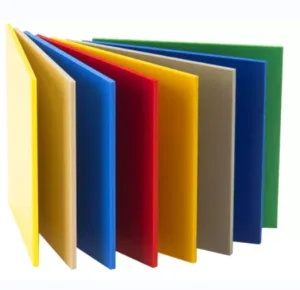
OEM China Engineering Plastic Polyamide PA6 PA66 Nylon PP UHMWPE PTFE HDPE ABS Plastic Sheet Rod And Bar Customized Color Manufacturer, Suppliers
View Product Details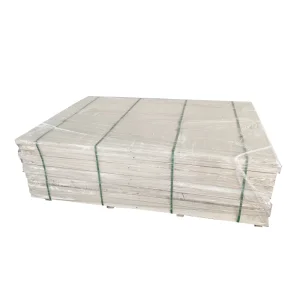
High-Quality China Engineering Plastic Polyamide PA6 PA66 Nylon PP UHMWPE PTFE HDPE ABS Plastic Sheet Tube Rod And Bar Customized Color With Size Suppliers, Factory
View Product Details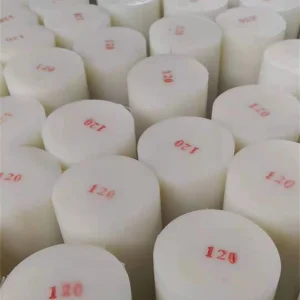
Discount ODM OEM Engineering Plastic Cast PA6 Polyamide Nylon Oil Filled Nylon Rod Glass Filled Nylon Rod Plastic Tube Rod And Bar Customized Color With Size Manufacturers, Company
View Product Details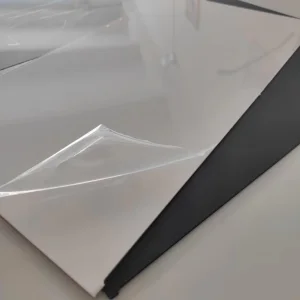
Wholesale China Engineering Plastic OEM Smooth ABS Plastic Sheet Factory Customized Color With Size For Refrigerator Door Company, Product
View Product Details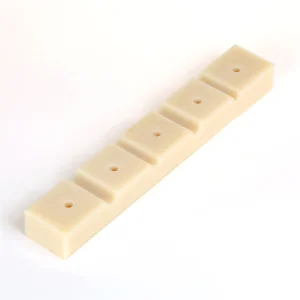
Wholesale Nylon Chain,Plastic Chain, Plastic Pad,Nylon Pad Manufacturer, Products
View Product DetailsFrequently Asked Questions for HDPE Flat Bar Procurement
In-depth technical answers addressing material selection, manufacturing tolerances, thermal behaviors, and global shipping logistics.