
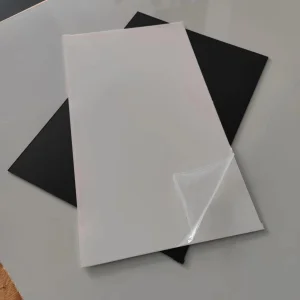
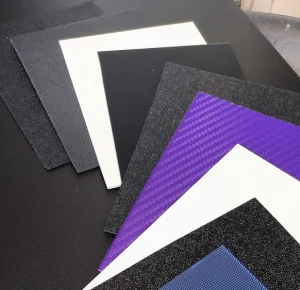
Cheap China Engineering Plastic OEM Polyamide PA6 PA66 Nylon PP UHMWPE PTFE HDPE Smooth ABS Plastic Sheet Factory Customized Color With Size For Refrigerator Door Manufacturer, Companies
View Product Detail
A Comprehensive Engineering & Global Procurement Guide to High-Yield Polyoxymethylene Copolymer (POM-C) Solid Stock, Centerline-Porosity Control, and High-Throughput CNC Machining Solutions.
Explore initial selection of factory-direct virgin POM, Cast Polyamide (PA6/PA66), Polypropylene, and composite profiles precision-calibrated for global export.
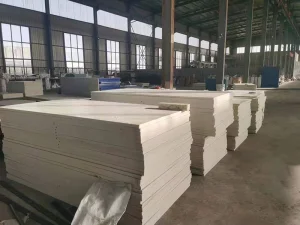
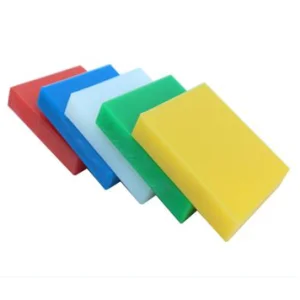
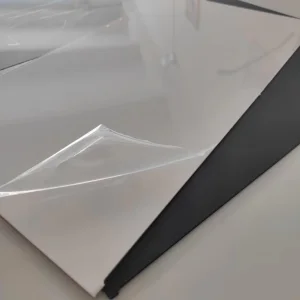
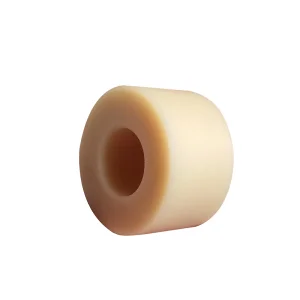
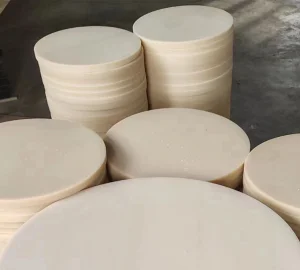
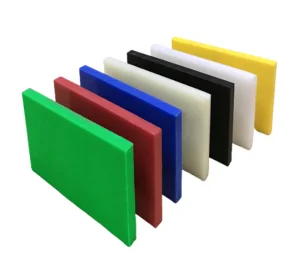
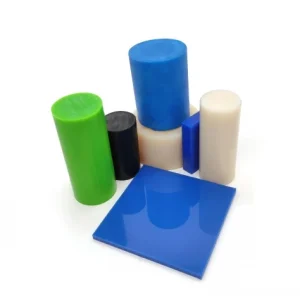
Evaluating commercial cost advantages, high-volume production paradigms, and supply chain rationalization across Western and Asian manufacturing bases.
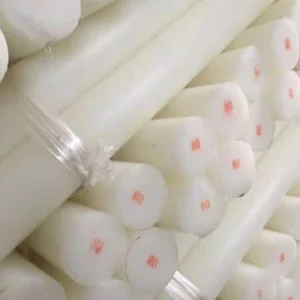
The term "cheap POM C bar" within procurement operations is rapidly shifting from meaning substandard regrind toward optimized direct-line extrusion. Through integrated supply chains, automated single-screw extrusion, and centralized Hebei raw material compounding, manufacturing operations have lowered energy-per-ton expenditure by 18%, delivering affordable bar stock without compromising mechanical integrity.
Polyoxymethylene Copolymer (POM-C) dominates 78% of the global bar market over Delrin (POM-H). POM-C eliminates centerline porosity, mitigates catastrophic central voids during thick-section turning, delivers superior resistance against thermal degradation, and provides robust chemical stability in high-pH alkaline wash-down environments ubiquitous in commercial processing.
Tier-1 automotive and industrial machinery OEMs are bypassing local distribution surcharges by engaging verified semi-finished extrusion plants. Utilizing strict ultrasonic non-destructive testing (NDT), dimensional tolerance adherence under ISO 2768-m, and integrated heat-lot tracking, overseas engineering firms realize 30–45% procurement savings.
Comprehensive physical, mechanical, and tribological property matrix evaluating semi-crystalline plastics under continuous dynamic operational load.
| Property Metric / Test Norm | POM-C (Polyacetal Copolymer) | Cast Nylon 6 (PA6G) | UHMW-PE (1000 Grade) | PTFE (Virgin Polytetrafluoroethylene) |
|---|---|---|---|---|
| Density (ISO 1183) | 1.41 g/cm³ | 1.15 g/cm³ | 0.93 g/cm³ | 2.16 g/cm³ |
| Yield Tensile Strength (ISO 527) | 65 - 70 MPa | 75 - 85 MPa | 21 - 25 MPa | 20 - 30 MPa |
| Modulus of Elasticity (ISO 527) | 2,800 - 3,100 MPa | 3,200 - 3,500 MPa | 700 MPa | 750 MPa |
| 24h Water Absorption (23°C, Saturation) | 0.20% (Max 0.8% Sat.) | 2.2% (Up to 6.5% Sat.) | < 0.01% (Impervious) | < 0.01% (Hydrophobic) |
| Coefficient of Dynamic Friction (Dry on Steel) | 0.28 - 0.35 | 0.35 - 0.42 | 0.12 - 0.20 | 0.08 - 0.10 |
| Continuous Service Temperature | -50°C to +100°C | -40°C to +105°C | -150°C to +80°C | -200°C to +260°C |
| Centerline Porosity Vulnerability | Zero (Controlled Solid Core) | Micro-shrinkage on large dia. | Negligible | Sintered Uniform Density |
| Machinability & Chip Formation | Exceptional (Short, crisp chips) | Tough (Continuous curling chips) | Moderate (Burr sensitive) | Soft (Creep deformation prone) |
Demonstrating how mechanical characteristics translate to mission-critical operational reliability across varied industrial ecosystems.
Extensively converted into fuel system sending units, door latch gears, windshield wiper linkages, and steering column bushes. POM-C's high resistance to fuel hydrocarbons, motor oils, and cleaning solvents combined with minimal stick-slip behavior delivers squeak-free, long-lifespan cabin mechanisms.
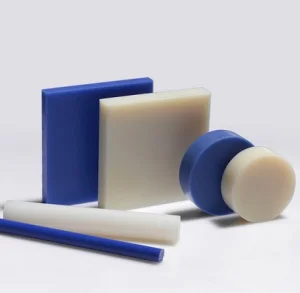
EU 10/2011 and FDA-compliant natural white and blue POM-C bars provide superior resistance to hot water caustic sanitization cycles. Unlike Nylon, POM-C avoids swelling in high-humidity food sorting, conveying star wheels, scraper blades, and volumetric dosing piston shafts.
Precision-turned valve bodies, manifolds, impellers, and threaded connectors operate continuously under potable water and mild acidic/alkaline environments. Superior dimensional stability prevents thermal binding or bore deformation under alternating pressurized hydraulic lines.
Deep-dive technological methodology implemented at the extrusion factory level to ensure flawless machining performance on heavy cross-sections.
Extrusion cooling causes high differential shrinkage between outer skin and core. Our manufacturing process subjects extruded POM-C rods to computer-controlled liquid-medium or circulating air annealing ovens at 145°C for up to 36 hours. This relieves latent tensile stresses and eliminates tool deflection or cracking during heavy bore-boring operations.
Homopolymer acetal (Delrin) experiences significant central voiding due to crystalline contraction. By utilizing virgin POM Copolymer resin coupled with extended-land cooled calibrator dies and positive back-pressure screw profiles, our bars demonstrate isotropic core density verified up to 300 mm diameter stock.
Every industrial extrusion run dedicated to high-precision CNC parts undergoes continuous non-destructive acoustic scanning. Internal gas pockets, inclusions, or un-melted crystalline lumps are flagged and cropped before bar bundling, safeguarding our clients from downstream tool breakage and scrapped machining hours.
Anticipating industrial transformation through modified nano-composite additives, renewable bio-feedstock, and integrated smart supply networks.
Commercialization of mass-balanced POM-C derived from bio-methanol, reducing carbon footprint by 65% while keeping equivalent ASTM D6100 physical performance.
Advanced permanently anti-static (ESD) and electrically dissipative carbon-nanotube filled stock for semiconductor and ATEX explosive atmosphere handling.
Real-time optical infrared die feedback controlling melt flow rate, completely removing ovality and outer dimension runout across continuous 3-meter bars.
High-purity chemical de-polymerization infrastructure returning clean CNC machining swarf back to virgin monomer state without polymer chain degradation.
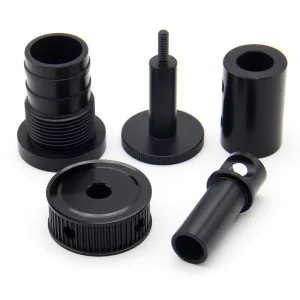
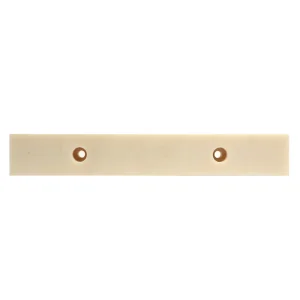
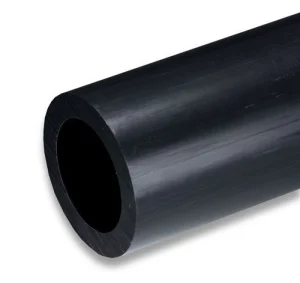
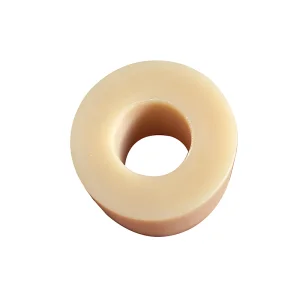
Complete your supply chain requirement with full-spectrum stock bars, specialized hollow sections, and custom-toleranced CNC finished parts.
Operational best practices for cutting tools, chip evacuation, cooling agents, and clamping pressures to maximize output yield.
Utilize polished, razor-sharp HSS or micro-grain uncoated carbide inserts. Maintain positive top rake angles (15° to 30°) and clearance angles (10° to 15°) to minimize frictional heating and prevent material smearing along the cutting edge.
Operate at cutting speeds of 250–450 m/min with high feed rates (0.15–0.40 mm/rev). Fast feeds evacuate heat via continuous crisp chips rather than soaking heat into the workpiece, maintaining strict tolerance repeatability under +/- 0.02 mm.
While dry cutting is standard due to POM-C's self-lubricity, deep drilling or narrow groove slotting mandates cold air guns or water-soluble synthetic emulsions. Avoid chlorinated or heavily esterified coolants to prevent environmental stress-cracking.
Because POM-C has a significantly lower flexural modulus than steel or brass, high hydraulic chuck pressure causes out-of-round bores upon jaw release. Employ soft pie-jaws, collet chucks, or custom nylon sleeves during secondary operation clamping.
Direct answers for purchasing managers, machining facility directors, and industrial distributors regarding tolerances, testing, and shipping logistics.
Our pricing advantage stems from optimized high-volume extrusion located near Hebei primary petrochemical supply hubs, zero broker margins, multi-strand automated extrusion lines, and streamlined energy-efficient heating cycles. All our bars use virgin-grade resin compounding with certified molecular weight distribution.
Standard rod diameters range from 5 mm to 300 mm. For diameters from 10–50 mm, standard tolerances are +0.1 to +0.6 mm (ground h9/h8 available on request). Standard extruded bar length is 1000 mm or 2000 mm, with custom cut-to-length billets supplied to minimize CNC scrap.
Yes. Our natural white and jet-black POM-C stocks satisfy FDA 21 CFR §177.2470 and EU Regulation 10/2011 criteria for direct contact with fatty, aqueous, and dry foodstuffs. For medical tools, it withstands standard autoclave, chemical sterilization, and gamma cleaning without color shifting or surface brittleness.
Post-extrusion dynamic thermal stress relief (annealing) removes the internal frozen core tension common to rapid air-cooled rods. For intricate asymmetric milling, we recommend a secondary mid-cycle stress-relief bake at 120°C for 2 hours per 25 mm wall thickness prior to finish cutting.
Absolutely. While natural white and black make up 85% of volume, we run continuous custom masterbatch colors with accurate RAL/Pantone matching. Food-grade visual detection blue (RAL 5002) is frequently extruded for optical sorting scanners on food manufacturing packaging conveyors.
Every commercial container shipment is dispatched with complete EN 10204 3.1 Material Test Certificates (MTC), lot-specific Melt Flow Index (MFI) verification, density verification, RoHS & REACH declaration of conformity, and heat-fumigated wooden crate packaging certification for customs clearance.