Primary Engineering Stock & Semi-Finished Portfolio
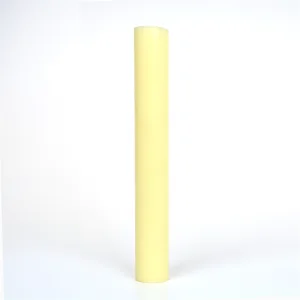
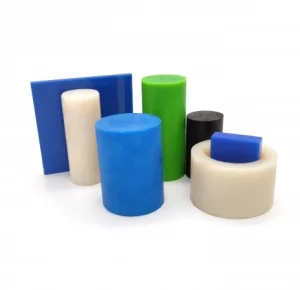
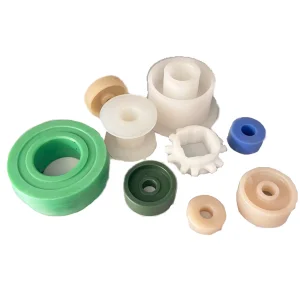
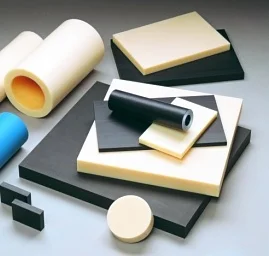
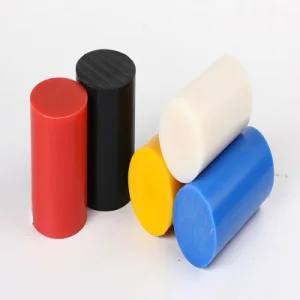
Direct manufacturer solutions across nylon casting, UHMWPE wear plates, acetal rods, and engineered multi-layer ABS polymers manufactured to tight ISO tolerances.
Global Commercial Landscape & Supply Mechanics
Navigating the transition from high-cost domestic distribution to high-efficiency direct extrusion channels without sacrificing mechanical integrity.
In modern industrial procurement, the terminology "cheap plastic board" has evolved significantly. Historically associated with lower-grade, non-virgin regrind materials, cost minimization in the post-pandemic polymer sector is driven by continuous casting innovations, automated sheet extrusion, and vertical upstream monomer synthesis. For original equipment manufacturers (OEMs), precision machine shops, and plant operations managers across North America, Europe, and the Asia-Pacific, true cost efficiency reflects a minimization of total ownership cost: reducing scrap rates, preventing in-service crack propagation, and avoiding premature mechanical replacement cycles.
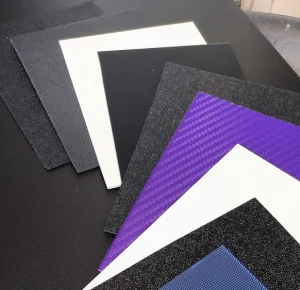
Semi-finished engineering plastics—including Polyamide (PA6 / MC Cast Nylon), Polyoxymethylene (POM Acetal), Ultra-High-Molecular-Weight Polyethylene (UHMWPE), High-Density Polyethylene (HDPE), Acrylonitrile Butadiene Styrene (ABS), and Polypropylene (PP)—represent critical foundations in heavy industry. The key to securing low-cost plastic boards lies in volume container optimization, single-source factory manufacturing without intermediary markup, and controlled thermal annealing which eliminates residual interior stress before arrival.
Material Performance & Operational Benchmarks
Cross-functional physical, thermal, and economic matrix designed by plant engineers to simplify polymer specification for wear, bearing, and structural duties.
| Polymer Variant | Tensile Strength (MPa) | Impact Strength (kJ/m²) | Max Operating Temp (°C) | Wear Coefficient | Primary Industrial Utility |
|---|---|---|---|---|---|
| MC Cast Nylon (PA6G) | 78 - 85 | > 6.0 (Charpy) | 105 (Long-term) | 0.28 (Dry steel) | Crane sheaves, heavy wear pads, sprockets, track pads |
| POM-C (Acetal Copolymer) | 65 - 70 | 6.5 | 100 | 0.32 | Precision dimensioned gears, valves, bushings, fuel components |
| UHMWPE (Virgin 9M MW) | 22 - 28 | No Break (Notched) | 80 | 0.12 (Ultra-low) | Bulk hopper liners, conveyor guide tracks, marine wharf fenders |
| HDPE (High Density PE) | 24 - 32 | 12 | 80 | 0.29 | Chemical storage, food chopping surfaces, scrub tanks |
| Rigid ABS Board | 40 - 48 | 18 - 25 | 75 | 0.45 | Automotive fixtures, protective housings, thermoformed enclosures |
| Polypropylene (PP-H) | 30 - 36 | 4.5 | 95 | 0.38 | Acid pickling tanks, electroplating barrels, ventilation ducts |
| Virgin PTFE Board | 20 - 30 | 16 | 260 | 0.04 (Extreme) | Cryogenic gaskets, slide pads, aggressive acid flanged barriers |
Localized Industrial Applications & In-Service Case Studies
How international manufacturers apply SHUNDA engineering polymers to replace bronze, stainless steel, and cast iron parts at 40-60% reduced overall weight.
Heavy Lifting & Construction Cranes
Telescopic boom sliding pads and outrigger support plates require extreme compressive load capability without brittle rupture. SHUNDA custom-cast MC nylon pads and backing boards eliminate grease maintenance regimes while buffering metal boom surfaces from scratching and scoring.
Mining, Chutes & Bulk Handling
Cohesive ore, coal fines, and silica slurry cause rapid abrasion and build-up across transit steel hoppers. UHMWPE and cross-linked casting sheets act as non-stick, low-friction sacrificial liners, increasing daily volumetric throughput while extending vessel shell life by decades.
Food Grade Packaging & Bottling Lines
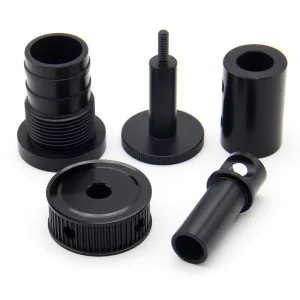
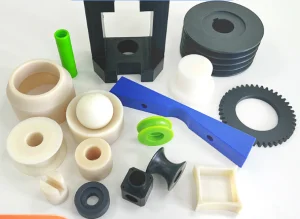
FDA-compliant natural POM and HDPE boards provide exact dimensional stability under wet chemical clean-down operations. Custom CNC machined star wheels, curves, timing screws, and guide channels minimize line noise and eliminate lubrication contamination risks entirely.
Manufacturing Precision & Factory Engineering Roadmap
Addressing the core risk vectors in engineering plastic fabrication through systematic production controls and secondary thermal cycles.
Monomer Vacuum Casting
Liquid caprolactam monomer is catalytically polymerized directly inside steel molds at ambient pressures. This yields exceptionally high molecular weight PA6 chains with minimal internal stresses, making them ideal for heavy structural machining.
Thermal Annealing
Every plastic board leaves the cooling stage and enters oil-bath or air-circulating annealing chambers. Slow heating and cooling ramp cycles relieve latent extrusion stresses, completely neutralizing the risk of warped plates during post-purchase CNC milling.
Ultrasonic Void Detection
Thick-gauge nylon, POM, and UHMWPE boards undergo comprehensive non-destructive ultrasonic verification to guarantee zero micro-porosity, bubbles, or core shrink holes within the critical working thickness of the sheet.
Custom Compound Formulation
In-house compounding enables exact formulation: adding molybdenum disulfide (MoS2) for dry self-lubrication, glass fiber reinforcements for flexural stiffness, and conductive carbon black for ATEX antistatic safety compliance.
Procurement & Technical Engineering FAQ
Authoritative responses addressing common engineering and supply chain inquiries regarding plastic board selection, sizing, and export compliance.
How does SHUNDA achieve low board prices while maintaining mechanical standards?
Cost reductions are achieved through continuous large-scale extrusion lines, local bulk monomer sourcing in Hebei, integrated mold creation, and the elimination of intermediaries. All products use 100% certified resin without non-specified low-grade fillers.
When should an engineer specify Cast Nylon over Acetal (POM)?
Cast Nylon offers higher tensile capacity, superior impact tolerance, and superior wear characteristics under high abrasive stress. POM should be prioritized when water absorption (PA absorbs 1.5-3%) would compromise sub-millimeter tolerances in damp assemblies.
What is the standard tolerance capability for cut plastic boards?
Standard extruded plastic sheets are supplied with ISO 2768-m dimensional tolerances. Custom saw-cut blanks are held within +/-0.5mm, while secondary precision CNC surface milling achieves planar parallelism within +/-0.05mm across 1000mm.
Can you provide customized pigments and UV stabilization packages?
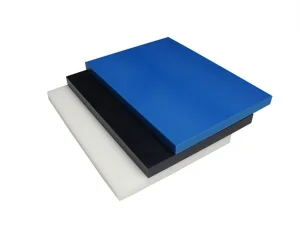
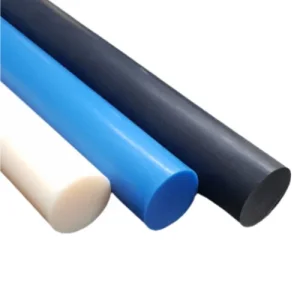
Yes. In addition to natural, jet black, and industry-standard MC blue, boards can be color-matched to RAL/Pantone references. Carbon black and HALS stabilizers are available for extended outdoor exposure and crane applications.
Secondary Stock & Custom Machined Components
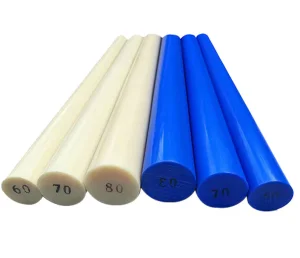
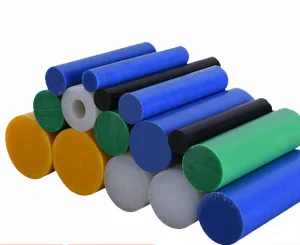
Browse additional standardized rods, multi-polymer boards, and finished precision parts ready for rapid containerized export.