
Precision Engineered Polymers & CNC Turned Components
Direct factory inventory and customized production run capabilities for critical mechanical polymers, solid ground balls, semi-finished extrusions, and precision machined components.
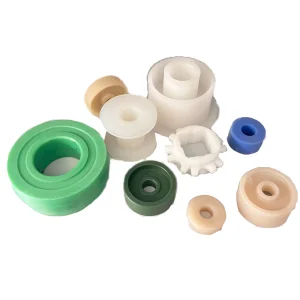
China CNC Machined Parts Exporters, Product
View Product Details
High-Quality UHMWPE Sheet Manufacturer, Company
View Product Details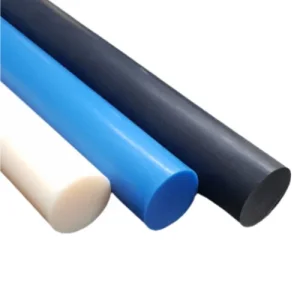
China Engineering Plastic PA6 PA66 Nylon PP POM UHMWPE PTFE HDPE ABS Rod & Bar
View Product Details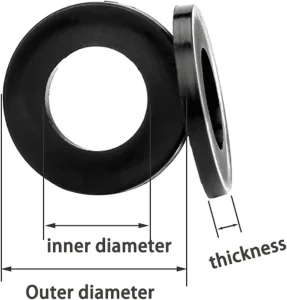
OEM Natural MC Nylon Ring & Cast Nylon Tube PA6 POM Rod Exporter
View Product Details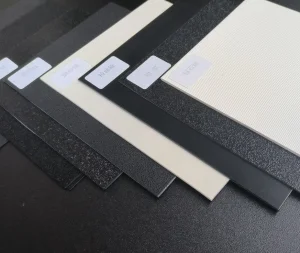
OEM Smooth Texture ABS Plastic Sheet Factory Customized Color & Size
View Product Details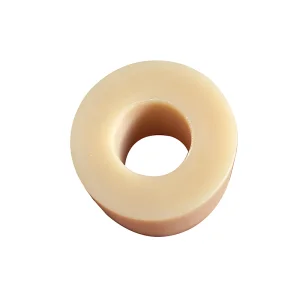
PA6 Polyamide Nylon POM PTFE HDPE PVC Plastic Tube, Rod & Bar Supplier
View Product Details
China White POM Rod & Black POM Acetal Plastic Bar Suppliers
View Product Details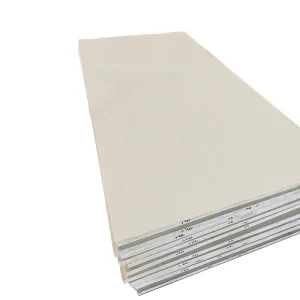
Casting Polyamide Nylon ABS PTFE HDPE UHMWPE Sheet Tube Rod Companies
View Product DetailsThe Global Commercial Reality of Industrial Plastic Spheres
A comprehensive examination of how advanced thermoplastic spheroids are systematically replacing metals in fluid control, aerospace instrumentation, chemical processing, and low-friction kinematic systems.
Global Supply Shifts: Why Polymer Spheres Outperform Traditional Metallurgy
The acceleration toward non-metallic spherical media is propelled by multi-factor physics: galvanic corrosion immunity, radical acoustic dampening, extreme electrical and thermal insulative capacity, and inherent self-lubrication. While metallic ball bearings and valve floats degrade catastrophically under hydrochloric or sulfuric exposure, polymers such as Polytetrafluoroethylene (PTFE), Polyoxymethylene (POM / Acetal), and Polypropylene (PP) maintain structural tenacity across aggressive pH spectrums (pH 1 through 14).
Furthermore, in rotational dynamics, the centrifugal inertia of a solid steel ball is nearly six times greater than that of an identical Delrin/POM ball. In high-cycle reciprocating check valves or high-RPM polymer bearings, lower mass translates directly into reduced inertial impact forces against valve seats, drastically mitigating seat indentation, extending maintenance intervals, and conserving substantial motive power across large industrial installations.
Chemical & Corrosive Immunity
Zero oxidative rusting or electrolytic degradation when exposed to marine water, harsh decontaminants, petroleum fractions, and chlorinated solvents.
Dry Running Friction Coefficients
Polymer-to-polymer and polymer-to-metal kinetic friction indices as low as 0.04 (PTFE) and 0.15 (POM), eradicating the need for external grease or synthetic oils.
Near-Zero Magnetic Interference
Essential for MRI diagnostic apparatus, semiconductor wafer handlers, and sensitive electronic navigation systems requiring complete electromagnetic transparency.
The Chinese Factory Advantage: Deconstructing Cost vs Quality
A transparent look inside high-throughput precision polymer processing: How Chinese manufacturing efficiency delivers globally competitive price points without compromising ISO 3290-2 tolerances.
Demystifying the "Cheap" Paradigm in Polymer Ball Production
In global industrial commerce, purchasing professionals frequently encounter wide pricing disparities between Western boutique processors and Chinese high-capacity factories. The lower unit procurement cost achieved by Tier-1 Chinese manufacturers like SHUNDA is not engineered by cutting raw material corners. Instead, it is the programmatic result of structural, supply chain, and kinetic automation advantages:
Upstream Polymer Synthesis Proximity
Direct bulk pipeline sourcing of certified virgin resins (Sinopec PA6, Wanhua POM, Formosa PP) eliminates third-party resin distribution surcharges and overseas freight compounding, slashing base polymer costs by up to 22%.
Multi-Cavity High-Speed Tooling
In-house CNC mold engineering permits 64-cavity and 128-cavity hot-runner tooling designs with ultra-balanced runner flow channels, achieving cycle-time economies that Western batch-machined alternatives cannot match.
Proprietary Centerless Lapping Cascades
Rough-molded blanks undergo continuous automated centerless rough-grinding, cryogenic tumbling flash removal, and sub-micron fine lapping cascades operating 24/7 with laser-guided inline sphericity sorting.
Comprehensive Polymer Spherical Media Matrix
A rigorous empirical comparison of technical plastics utilized in ball manufacturing. Review mechanical, thermal, and tribological parameters to align with specific operating boundaries.
| Polymer Type | Common Trade Names | Density (g/cm³) | Rockwell Hardness | Max Temp (°C) | Dynamic Friction (µ) | Core Application Environments |
|---|---|---|---|---|---|---|
| POM (Acetal / Polyacetal) | Delrin®, Celcon® | 1.41 - 1.43 | M85 - M90 | +100°C | 0.15 - 0.25 | Valves & Bearings Precision metering, aerosol pumps, check valves. High mechanical stiffness and exceptional dimensional stability. |
| PA66 / Polyamide (Nylon) | Zytel®, Akulon® | 1.13 - 1.15 | R115 - R120 | +120°C | 0.20 - 0.35 | Heavy Impact Castor wheels, toggle switches, heavy-load rollers. High tensile strength, superb energy and shock absorption. |
| PTFE (Fluoropolymer) | Teflon® | 2.15 - 2.20 | Shore D 50-65 | +260°C | 0.04 - 0.10 | Cryogenic & Acid Extreme acid metering valves, cryogenic manifolds, aerospace fuel regulators. Near-zero static friction. |
| PP (Polypropylene) | Profax®, Novolen® | 0.90 - 0.92 | R80 - R95 | +90°C | 0.25 - 0.30 | Floating & Cosmetic Hollow float balls for tank evaporation control, roll-on cosmetic applicators, blood transfusion check valves. |
| UHMWPE | GUR®, Polystone® | 0.93 - 0.95 | Shore D 65-70 | +80°C | 0.10 - 0.20 | Slurry & Abrasion Mining slurry valves, abrasive powder handling, high-wear sanitary seating without micro-cracking. |
| PEEK | Victrex®, KetaSpire® | 1.30 - 1.32 | M100 - M105 | +250°C | 0.30 - 0.38 | Oilfield & Downhole Downhole oil & gas tool check valves, autoclave medical devices, high-temperature hydraulic manifolds. |
ISO 3290-2 / DIN 5401 Ball Sphericity & Tolerance Grading Standards
Unlike loose commodity plastics, precision plastic balls produced for industrial export are categorized into recognized international grades. Choosing the proper grade balances tight sealing performance with production economy:
Grade 0 to Grade I (Precision)
Diameter Tolerance: ±0.0025 mm (0.0001 in)
Sphericity: 0.0025 mm
Surface Roughness: Ra < 0.05 µm
Utilized in high-pressure hydraulic manifolds, medical dialysis pumps, micro-fluidic analytical machines, and instrument calibration bearings.
Grade II (Standard Industrial)
Diameter Tolerance: ±0.0125 mm (0.0005 in)
Sphericity: 0.0125 mm
Surface Roughness: Ra < 0.15 µm
The primary international volume standard for industrial non-return valves, aerosol actuation valves, trackballs, and low-friction linear slide bearings.
Grade III & IV (Commercial Utility)
Diameter Tolerance: ±0.025 mm to ±0.050 mm
Sphericity: 0.025 mm to 0.050 mm
Surface Roughness: Ra < 0.40 µm
Highly economical solution for mechanical float switches, decorative assemblies, mixing agitation beads, roll-on cosmetic bottles, and open liquid reservoir surface blankets.
Localized Engineering Applications Across Global Verticals
Real-world integration points where precision polymer spheres solve systemic sealing, lubrication, and reliability challenges for modern industry.
Aerosol & Fluid Metering Valves
Precision POM (Acetal) balls act as self-seating springs and sealing shut-offs in high-volume sprayers, liquid soap dispensers, and perfume atomizers. Resisting clogging and chemical swelling from surfactants and alcohols, they maintain leak-free integrity through millions of cycles.
Medical Instrumentation & Cleanrooms
PTFE and PEEK balls are ubiquitous in pharmaceutical fluid transfer, peristaltic pump valves, and blood purification systems. Their bio-inertness, USP Class VI compliance, and sterilization resilience (gamma radiation, EtO, and steam autoclaving) eliminate trace metallic leaching.
Automotive Fuel & Emission Systems
Polyamide 66 and POM spheres provide life-of-vehicle reliability inside fuel tank roll-over valves (ROVs), crankcase ventilation check valves, and windshield washer pumps. They maintain dimensional sphericity despite direct immersion in unleaded petrol, diesel, and ethanol blends.
Dry-Running Kinetic Bearings
Glass and polymer hybrid ball bearings utilize POM or PEEK spherical balls held in nylon cages. Widely deployed in optical inspection tables, conveyor lines in electro-coating baths, and underwater instrumentation where traditional grease lubricants would immediately wash away.
Open Tank Evaporation & Vapor Blankets
Massive arrays of hollow Polypropylene (PP) or HDPE floating balls cover mining leach ponds, electroplating acid tanks, and industrial wastewater lagoons. They reduce liquid evaporation by over 90% and suppress hazardous odors and volatile toxic emissions without restricting access.
Specialized Agitation & Media Milling
Wear-resistant solid PA6 and UHMWPE spheres serve as low-impact milling media for grinding delicate organic pigments, agrochemical active ingredients, and pharmaceutical suspensions, completely preventing heavy-metal cross-contamination common with steel grinding balls.
Next-Generation Technology Trends in Plastic Spheres
The convergence of advanced materials science, multi-spectrum automated optical sorting, and green closed-loop regrind cycles is redefining manufacturing capabilities.
AI-Powered Multi-Camera Sphericity Inspection
Modern Chinese production lines now incorporate multi-angle CCD telecentric visual sorting machines capable of evaluating 2,000 balls per minute. Automated algorithms check for sub-micron surface blemishes, parting-line burrs, and ovality deviation in real time, guaranteeing 100% zero-defect export consignments.
Nano-Composite & Self-Lubricating Resins
Demand is surging for specialized compound formulations: POM reinforced with PTFE micro-powders, molybdenum disulfide (MoS2) filled nylon, and carbon-fiber doped PEEK spheres. These composite balls demonstrate virtually zero stick-slip phenomenon under high initial starting torque.
Circular Economy & Bio-Based Formulations
To comply with stringent EU CSRD and carbon border directives, forward-looking manufacturers are piloting bio-based polyamides (PA610 derived from castor oil) and circular chemically recycled polyoxymethylene (rPOM) with full mass-balance certification for consumer packaging applications.
Strategic Sourcing Guidelines for Overseas B2B Buyers
A structured auditing framework developed for Supply Chain Directors and Quality Assurance Engineers sourcing plastic balls from China factories.
1. Resin Traceability & Virgin Certification
Always demand lot-traceable resin batch certificates, RoHS, REACH, and FDA declaration of conformity (where applicable). Avoid unverified brokers who introduce post-consumer regrind into engineering POM or PA66 batches, which causes micro-porosity and catastrophic brittle failure under pressure.
2. Sphericity & Surface Metrology Verification
Verify that your supplier utilizes specialized metrology equipment: Talyrond circularity instruments, non-contact optical profilometers, and micrometer dial comparators. Specify both Sphericity (Out-of-Roundness) tolerance and Surface Roughness ($Ra$) explicitly on your engineering drawings.
3. Cryogenic Deflashing & Parting-Line Integrity
In high-precision ball valves, even a sub-micron molding seam will create fluid leak pathways. Require that injection-molded balls undergo cryogenic liquid nitrogen tumbling deflashing followed by centerless planetary lapping to completely erase all vestige of parting seams.
Frequently Asked Questions: Polymer Ball Sourcing & Engineering
Authoritative technical answers to common queries raised by mechanical designers, quality auditors, and overseas procurement teams.
What causes a "cheap" plastic ball to leak in valve applications, and how is it prevented?
How do solid plastic balls compare to hollow plastic balls in cost and function?
Which polymer offers the tightest dimensional stability in moist environments: Nylon or POM?
What is the standard lead time and Minimum Order Quantity (MOQ) for custom sizes?
How are precision plastic balls packaged for trans-oceanic export to prevent surface damage?
High-Performance Engineering Semi-Finished & Machined Stocks
Explore our export-ready range of cast nylons, acetal rods, impact pads, and custom engineered polymers manufactured to tight international tolerances.
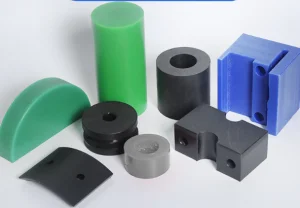
Discount MC Nylon Machined Parts Manufacturers, Exporter
View Product Details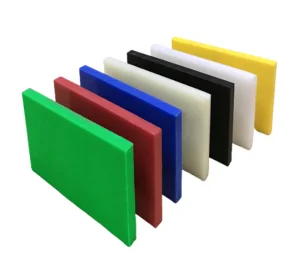
China PA6 PA66 PP UHMWPE PTFE Sheet, Rod & Bar Exporter
View Product Details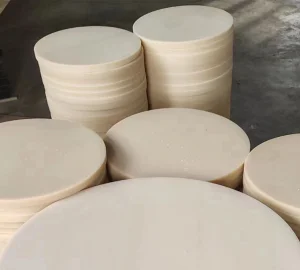
Impact Nylon Cushion Use For Hammer Piling Machine Supplier
View Product Details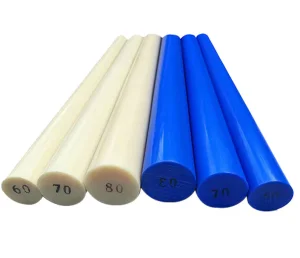
Cheap China MC Blue Cast Nylon Rod & Round Bar Factories
View Product Details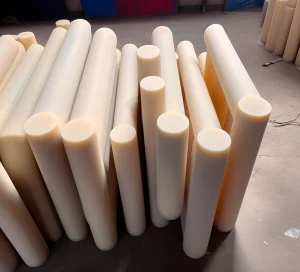
High-Quality MC Nylon Rod Manufacturer, Exporter
View Product Details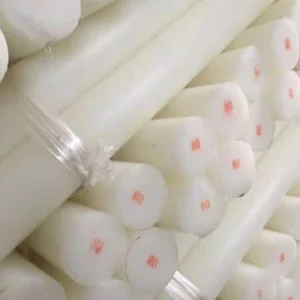
Cast PA6 Polyamide POM ABS PP PTFE Plastic Rod & Bar Suppliers
View Product Details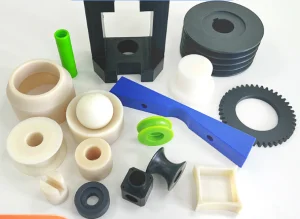
Discount Heavy Duty MC Nylon Pad Product, Products
View Product Details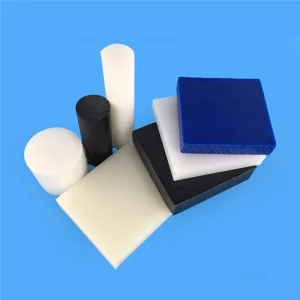
Cast Sheet Board PA6 PP HDPE ABS Rod & Bar Customized Exporters
View Product DetailsRequest an Engineering Consultation & Bulk Price Schedule
Contact SHUNDA's direct factory engineering desk. Submit your required sphere diameter, polymer grade, annual volume, and sphericity tolerance for a formal technical quotation within 12 business hours.