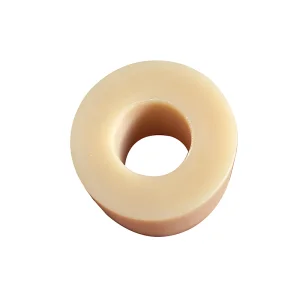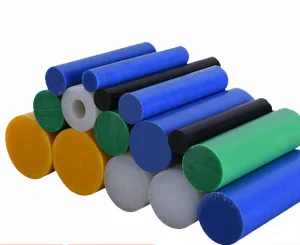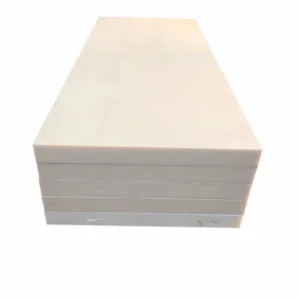
Buy Engineering Plastic Cast Board PA6 Polyamide Nylon ABS PP PTFE Plastic Rod And Bar Tube Customized Color With Size Factory, Companies
Review Specifications
Direct export configurations engineered from pristine virgin caprolactam monomer and cast nylon matrices for global industrial applications.
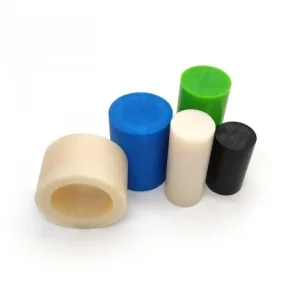
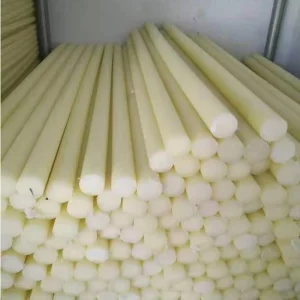

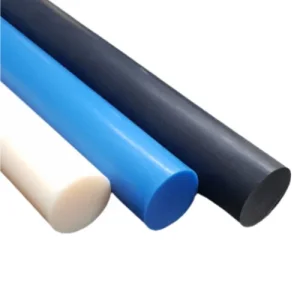
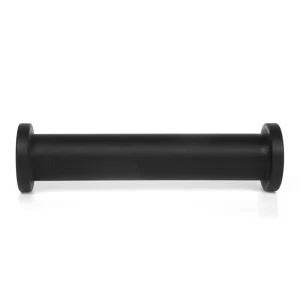
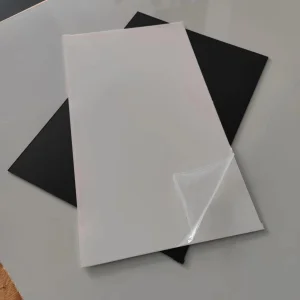
In global procurement, "cheap" often raises concerns of regrind dilution, internal cavitation, and uncontrolled thermal shrinkage. Here is the engineering reality behind China’s upstream cost leadership.
International sourcing managers frequently encounter a paradoxical quote disparity: certified European and North American Polyamide 6 (PA6) plates trade at roughly $5.50 to $8.20 per kilogram, whereas verified export-grade PA6 semi-finished sheets from Chinese manufacturing epicenters like Hebei trade at substantially lower price points. Sourcing professionals must discern whether this delta reflects sub-par molecular weights or structural efficiency. As an engineering manufacturer with over two decades on the shop floor, SHUNDA demonstrates that competitive pricing is the consequence of structural upstream verticalization, direct monomer pipeline integration, and automated thermal-cycle casting, not substandard formulation.
China commands over 62% of the world’s synthesized caprolactam (C6H11NO) capacity. By locating semi-finished casting lines directly within contiguous logistics zones of petrochemical catalytic polymerization plants, our foundry eliminates oceanic shipping on base feedstocks, secondary remelting cycles, and inter-distributor markup compounding. When casting Monomer Cast Nylon (MC Nylon / PA6G), molten caprolactam undergoes anionic ring-opening polymerization directly within vertical heated mold cavities at atmospheric pressure. This direct-casting pathway completely skips the energy-intensive step of extrusion pelletizing, yielding a significantly higher molecular weight (MW > 35,000 to 70,000 g/mol) and heightened crystalline density compared to re-extruded pellets.
By polymerizing liquid caprolactam monomer directly in precision cast beds, our facility minimizes thermal degradation cycles, achieving an ultra-pure crystalline structure at a lower unit cost.
Every cast PA6 plate undergoes a multi-stage oil or circulating-air annealing cycle for up to 48 hours, fully releasing polymerization cooling stresses to eliminate machining distortion.
Operating dedicated extrusion and heavy-tonnage casting beds under one roof enables us to amortize tooling, calibration, and QC across vast multi-tonnage international export runs.
Choosing between extruded and monomer-cast Polyamide 6 determines mechanical stability, wear longevity, and CNC tooling dynamics. Compare baseline physical constants below.
| Mechanical / Thermal Property | Test Standard | Extruded PA6 (Natural/Black) | Cast MC PA6G (Natural/Blue) | MoS2 Lubricated Cast PA6 |
|---|---|---|---|---|
| Density (g/cm³) | ISO 1183 | 1.14 | 1.16 | 1.17 |
| Tensile Strength at Yield (MPa) | ISO 527 | 78 – 82 | 85 – 92 | 88 – 95 |
| Tensile Modulus of Elasticity (MPa) | ISO 527 | 3,100 | 3,450 | 3,600 |
| Elongation at Break (%) | ISO 527 | > 45% | 25% – 35% | 20% – 28% |
| Charpy Notched Impact Strength (kJ/m²) | ISO 179 | 5.5 | 4.5 – 6.0 | 4.0 |
| Ball Indentation Hardness / Rockwell | ISO 2039-1 / M | M 82 | M 88 – M 92 | M 90 |
| Melting Temperature (°C) | ISO 11357 | 220 °C | 220 °C | 220 °C |
| Thermal Deflection Temp (HDT 1.8 MPa) | ISO 75 | 75 °C | 95 °C | 105 °C |
| Coefficient of Dynamic Friction (Dry vs. Steel) | ASTM D1894 | 0.38 | 0.30 | 0.22 (Self-lubricating) |
| Moisture Absorption to Equilibrium (%) | ISO 62 (23°C, 50% RH) | 2.8% | 2.2% | 2.0% |
Engineering Insight for Procurement Teams: Extruded PA6 sheet is optimal for small, thin-wall components (1mm to 25mm) requiring superior elongation and burst toughness. Monomer Cast Nylon (MC PA6G) is indispensable for thick sections (30mm to 200mm+), offering superior dimensional stiffness, 20% higher yield strength, lower moisture swelling, and zero die-extrusion stress lines.
How SHUNDA leverages Hebei’s polymer cluster to supply distributors and OEMs across Europe, North America, Southeast Asia, and the Middle East with zero compromise.
Dual-stage, computer-monitored preheat and polymerization cycles ensure homogenous curing from the core to the peripheral plate edges, eliminating interior voids.
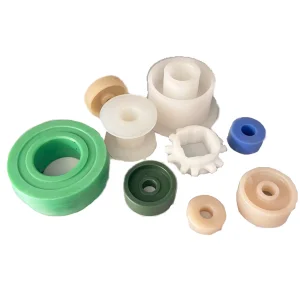
We convert stock sheets into turnkey pulleys, sheaves, wear pads, and helical gears directly in our plant, cutting out middleman transit and markup entirely.
Polyamides naturally absorb airborne moisture. We preserve dry-as-molded dimensional tolerances using heat-sealed multi-layer barrier foil and reinforced crates.
Every single extruded slab and cast batch receives a dedicated production heat code linked to incoming caprolactam monomer certificates and ultrasonic density logs.
From deep-sea ports to automated bottling conveyors, our polyamide stock replaces bronze, phosphor copper, and cast iron, reducing mechanical deadweight by up to 85%.
Cast PA6G rope sheaves dramatically diminish wear on wire cables compared to steel drums. The innate elastomeric dampening of MC nylon absorbs jarring shock loads during rapid acceleration.
Our high-molecular impact-resistant blue nylon cushions sit directly between pile hammers and steel casings, soaking up gigawatt-level shockwaves without fracturing or spalling.
Replacing heavy alloy liners with lubricated cast PA6 plates eradicates sticky coal and ore agglomeration, cutting unjamming downtime and noise pollution by 15 dB.
From low-friction conveyor skid shoes on EV paint lines to vacuum-thermoformed ABS/PA composite panels for refrigerator liners, our sheets withstand oil immersion and cleanrooms.
High-speed canning and beverage bottling demands low coefficient of friction and high wear without grease lubrication. Custom machined PA6 stars and scroll screws ensure quiet operation.
Cast MC nylon slipper blocks on rolling mill universal drive spindles operate under extreme Hertzian contact pressure, outperforming bronze blocks in greasy, scale-laden environments.
Bypassing trading houses and managing technical risk: An actionable QA verification framework for importing bulk polyamide stock directly from Chinese factories.
Procuring engineering plastics across oceans requires clear validation criteria. Leading global purchasers follow a 4-step material verification protocol before releasing final purchase orders for container-load PA6 sheet consignments:
Unscrupulous intermediaries may blend mineral talc or reground PA6 scrap, degrading impact resilience. Virgin PA6 sheet must consistently register 1.14 to 1.16 g/cm³ via Archimedean water displacement.
Requesting an oil bath stress test (submerging cross-cut samples in 120°C oil for 2 hours) reveals if the factory thoroughly annealed the sheets. Un-annealed plates will warp or show micro-fissures.
Thick cast nylon boards (over 40mm) risk center shrinkage cavities if cooled improperly. Premium factories use automated ultrasonic probe scans across the plate center to prove zero porosity.
Ensure the supplier uses vapor-sealed barrier wrapping. Direct exposure to sea container condensation will swell PA6 sheet thickness prior to customs clearance, causing CNC sizing errors.
Technological innovations in functional additives, closed-loop monomer recovery, and self-lubricating micro-encapsulations shaping modern procurement.
Traditional oil-filled nylon suffers from leaching under intense pressure. Next-generation PA6 utilizes chemically grafted ceramic micro-spheres and colloidal MoS2, lowering dry friction to under 0.16 while boosting compressive yield strength by 18%.
With global net-zero ESG mandates, Chinese industrial research clusters are scaling fermentation-derived bio-caprolactam synthesized from agricultural waste, matching petroleum PA6 physical properties with a 45% smaller carbon footprint.
Laser feedback micrometers linked to automated extrusion die lip heaters now adjust real-time cross-plate profile flow in milliseconds. This narrows sheet thickness variance to ±0.08mm, eliminating surface skim milling prior to CNC routing.
Comprehensive answers addressing moisture conditioning, CNC cutting parameters, minimum order quantities, and custom casting formulations.
Chinese cost efficiency stems from upstream raw material integration and economies of scale. China produces the majority of the world’s virgin caprolactam monomer. Foundries like SHUNDA source directly from localized cracking plants, avoiding intermediary tariffs and sea freight on raw chemical feedstock.
Furthermore, casting liquid monomer directly into plates uses far less electrical energy than multi-pass extrusion from pre-pelletized polymers.
PA6 is hygroscopic and will absorb 2.5% to 3.0% ambient moisture in 50% relative humidity, swelling by approximately 0.2% to 0.3% linearly while increasing impact toughness. When machining ultra-tight tolerance components (±0.05mm), stock must be machined in its "dry-as-molded" state and conditioned to equilibrium before final fitment, or switched to POM/Acetal if wet environment dimensional stability is primary.
Natural MC nylon uses pure, unfilled caprolactam, conforming to general FDA/food-grade contact standards. Blue MC nylon contains specialized organic color pigments and heat-stabilizing additives that enhance flexural fatigue life and UV resistance under open sky operations. It is commonly selected for heavy crane pulleys, harbor wear pads, and piling cushion rings.
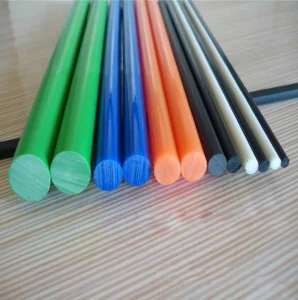
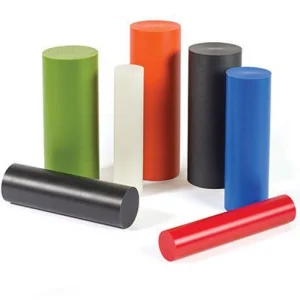
Yes. Because we operate our own casting molds and vertical batch polymerization units, we produce non-standard thicknesses from 5mm up to 250mm, plate dimensions up to 1250mm × 2500mm or 2000mm × 1000mm, and custom RAL/Pantone color batches (including high-visibility safety yellow, deep black, and emerald green) with minimal batch minimums.
Use sharp, single-flute or two-flute polished carbide or diamond-like carbon (DLC) tooling with high rake angles (15°–25°) and wide chip clearance flutes. Maintain high feed rates (0.15 to 0.4 mm/tooth) with moderate cutting speeds (250–450 m/min) and continuous compressed-air or water-soluble flood coolant to prevent plastic gumming and thermal expansion build-up.
Cast PA6 possesses superior tensile shock resistance, higher Rockwell compressive limits, and better abrasive slurry resistance compared to POM. POM is chosen when zero water absorption, low continuous friction, and chemical fuel resistance are required. For shock-heavy, abrasive crane pins and slurry bushings, cast PA6 generally delivers superior longevity.
Every commercial export order includes clean On-Board Ocean Bills of Lading, Commercial Invoice, Detailed Packing List, Certificate of Origin (CO, Form E, or Form R), Factory Material Test Reports (EN 10204 3.1) detailing mechanical yield and hardness, and RoHS / REACH compliance statements.
Standard lead times for full 20ft or 40ft container loads (20–26 metric tons of mixed PA6 sheets, round rods, and tubes) range between 12 and 18 business days. Common metric sizes (10mm to 100mm thickness) are held in stock for rapid dispatch within 5 days.
Expand your procurement portfolio with our precision-extruded Polypropylene, POM, HDPE, PTFE, and specialized CNC machined assemblies.