
Featured Polymer Stock & Precision Machined Stock
Explore our high-demand engineering thermoplastic sheets, rods, and CNC fabricated profiles ready for fast international dispatch.
Demystifying the "Cheap Nylon Sheet": High Quality Engineering at Scale
Why procurement teams no longer compromise between mechanical integrity and factory-direct wholesale pricing in modern polyamide extrusion and monomer casting.
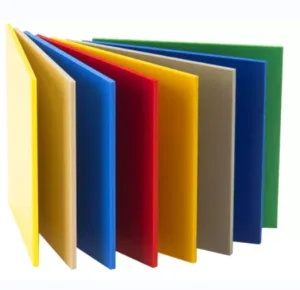
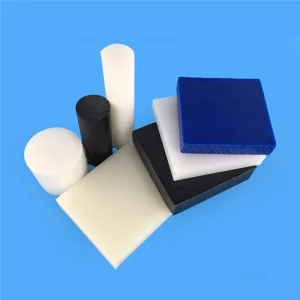
In global industrial manufacturing, procurement managers and design engineers frequently search for a "cheap nylon sheet". However, in modern mechanical engineering, "cheap" does not mean sub-par performance, recycled brittle scrap, or structural microporosity. Instead, semantic search intent reveals that industrial buyers demand maximum cost efficiency, reduced Total Cost of Ownership (TCO), and direct-from-source wholesale scalability. Polyamide sheets—predominantly available in Polyamide 6 (PA6), Polyamide 66 (PA66), and Monomer Cast Nylon (MC Nylon)—are fundamental engineering thermoplastics that replace bronze, brass, steel, and aluminum across heavy industry, material handling, robotics, and port logistics.
At our automated Hebei manufacturing facility, we reconcile low commercial pricing with premium mechanical grades. By integrating vertical feedstock handling, utilizing purified caprolactam monomer for vacuum pressure casting, and leveraging computer-controlled annealing ovens, we eliminate internal thermal stresses. The result is an economical nylon plate that maintains superior modulus of elasticity, exceptional notched impact resistance (Charpy > 5 kJ/m²), and self-lubricating characteristics that extend service intervals under violent mechanical friction.
Feedstock Cost Optimization
By procuring virgin caprolactam directly at bulk tanker volumes and running continuous automated polymerization, our production line bypasses intermediate brokers, driving factory pricing down 22%–35% compared to regional distribution warehouses.
- 100% Virgin Grade Resin (Zero unblended regrind)
- Direct liquid caprolactam vacuum polymerization
- Closed-loop scrap recycling for non-structural grades
Thermal Annealing & Flatness
Cheap imported nylon plates often curl or warp when machined. We subject every extruded and cast nylon slab to a multi-stage oil or hot-air stress-relief annealing cycle lasting up to 72 hours, ensuring dimensional stability during high-speed CNC routing.
- Elimination of internal frozen casting stresses
- Residual stress reduction to under 4.2 MPa
- Near-zero warp during multi-pass pocket milling
Comprehensive Certification
Our nylon sheets and custom components adhere strictly to international testing standards including ISO 527 (tensile), ISO 178 (flexural), ASTM D638, RoHS 2.0, and REACH regulations for chemical non-toxicity and mechanical predictability.
- Material Test Reports (MTR) with every shipment
- Traceable heat and batch tracking numbers
- Custom third-party SGS / TÜV laboratory verification
Engineering Plastics Comparative Benchmark Matrix
Evaluate mechanical, thermal, and economic trade-offs between cast nylon, extruded PA66, POM-C acetal, and UHMWPE.
| Polymer Parameter | MC Cast Nylon (PA6G) | Extruded Nylon (PA66) | Acetal POM-C (Polyacetal) | UHMWPE (Ultra-High PE) |
|---|---|---|---|---|
| Density (g/cm³) | 1.15 - 1.16 | 1.14 - 1.15 | 1.41 - 1.42 | 0.93 - 0.94 |
| Tensile Strength (MPa) | 80 - 88 | 82 - 90 | 65 - 70 | 22 - 32 |
| Flexural Modulus (GPa) | 3.2 - 3.5 | 3.0 - 3.4 | 2.8 - 3.0 | 0.7 - 0.8 |
| Elongation at Break (%) | 25 - 40 | 30 - 60 | 30 - 40 | > 300 |
| Max Service Temp (Air, °C) | 105 (Short-term 165) | 100 (Short-term 170) | 100 (Short-term 140) | 80 (Short-term 90) |
| Moisture Absorption (Sat. %) | 6.0 - 7.0 | 7.5 - 8.5 | 0.7 - 0.85 | < 0.01 |
| Dynamic Coeff. of Friction | 0.20 - 0.28 | 0.25 - 0.35 | 0.20 - 0.30 | 0.10 - 0.15 |
| Relative Cost Index ($) | Economic ($$) | Moderate ($$$) | Moderate-High ($$$) | Economic-Moderate ($$) |
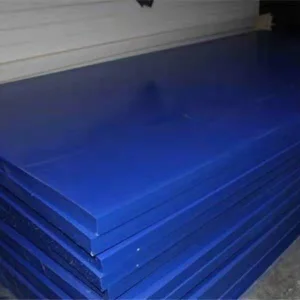
Design Engineer Takeaway: When a mechanical component is subjected to heavy compressive static load, severe impact, or elevated temperatures, Cast MC Nylon 6 (Natural or Blue) represents the most cost-effective alternative to traditional metals. While POM-C offers tighter moisture dimensional stability, its unit raw material density is approximately 23% higher, resulting in increased weight and elevated raw resin cost per cubic centimeter. UHMWPE demonstrates unbeatable sliding coefficient and chemical indifference, but lacks the high-load deflection temperature and rigidity necessary for structural spur gears, wear rings, or overhead crane sheaves.
Global Polyamide Plate Sourcing Trends & Industrial Evolution
How automation, lightweighting initiatives, and supply-chain nearshoring are transforming engineering plastics procurement.
Lightweighting in Mining & Construction
Global original equipment manufacturers (OEMs) in mobile cranes, aerial work platforms, and material excavators are systematically replacing cast iron sheaves and bronze bushings with MC nylon sheets and machined pads. Nylon reduces component mass by 85%, significantly lowering fuel consumption and structural deadweight while preventing wire rope premature fatigue.
Automation & Intralogistics Surge
The rapid expansion of automated storage and retrieval systems (ASRS), high-speed sortation cross-belts, and robotic packaging lines demands non-marking, quiet, self-lubricating wear strips. Extruded natural white nylon sheets and oil-impregnated green MC nylon plates provide the ultimate friction pair against moving anodized aluminum and stainless steel tracks.
TCO Optimization & Direct Sourcing
Western distributor markups regularly inflate semi-finished engineering plastic shapes by 60% to 120%. Modern enterprise procurement leverages factory-direct supply arrangements from specialized Chinese manufacturers like SHUNDA, locking in containerized freight contracts and pre-cut billet programs that free up corporate capital reserves.
Localized Industrial Applications: Where Nylon Sheets Excel
Field-proven performance across five primary industrial domains where polyamide slabs solve acute engineering challenges.
Telescopic Boom Wear Pads
Challenge: Hydraulic crane telescopic booms suffer high contact friction and galling under cantilevered moments.
Nylon Solution: Precision-milled Oil-Filled Green MC Nylon / MoS2 Black Nylon plates provide continuous self-lubrication, preventing metal-to-metal binding and extending overhaul periods from 12 to 36 months.
Piling Hammer Impact Cushions
Challenge: Heavy hydraulic impact hammers pulverize standard rubber or urethane cushions within dozens of pile driving cycles.
Nylon Solution: Our high-molecular-weight Cast Nylon Impact Rings absorb kinetic shock, disperse mechanical energy uniformly, and prevent steel anvil fracture in deep foundation construction.
Bottling Plant Star Wheels & Guides
Challenge: High-speed beverage bottling conveyors operate at 60,000 units/hr, where metal components dent containers and generate excessive dB noise.
Nylon Solution: FDA-compliant natural white extruded nylon sheets machined into star wheels and pocket scroll guides dampen acoustic resonance and eliminate glass micro-scratches.
Heavy Outrigger Crane Support Pads
Challenge: Mobile concrete pumps and rough-terrain cranes sinking or cracking timber dunnage on unstable ground.
Nylon Solution: High-tonnage cast nylon slabs (custom thicknesses up to 150mm) distribute point-load ground pressure across wide footprints without bending, splitting, or water rot.
Quarry Chute & Hopper Liners
Challenge: Crushed aggregate and limestone causing abrasive scour and catastrophic wall erosion on steel chutes.
Nylon Solution: Replaceable sacrificial nylon plates exhibit elastic rebound under heavy particle velocity, yielding 4x greater wear endurance compared to mild carbon steel liners.
Spur Gears & Drive Sprockets
Challenge: Industrial paper and textile machinery requiring unlubricated operation to prevent grease contamination on finished webs.
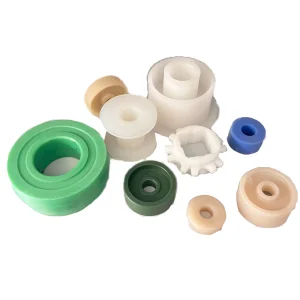
Nylon Solution: Hobbed and CNC-milled gear rings machined from cast nylon sheets operate bone-dry, absorb torsional vibration, and self-mesh quietly against steel counter-pinions.
The Production Lifecycle: From Monomer Polymerization to CNC Parts
A rigorous 5-stage manufacturing and inspection protocol ensuring zero internal voids, precise thicknesses, and verified chemical integrity.
Stage 1: Monomer Vacuum Degas
Purified solid caprolactam is melted in heated nitrogen-jacketed kettles at 130°C. High vacuum (under 5 mbar) extracts dissolved moisture, oxygen, and micro-bubbles, preventing internal structural voids during exothermic polymerization.
Stage 2: Anionic Polymerization
Catalysts (sodium caprolactam) and activators are metered through automated dynamic mixing heads. The activated mixture is gravity-cast into pre-heated vertical and horizontal precision mold cassettes maintained at 160°C–180°C.
Stage 3: Deep Thermal Annealing
Cast plates are transferred to computer-regulated thermal annealing chambers. Slabs undergo controlled heating followed by ultra-slow cooling (0.5°C/hr) to re-align polymer crystalline lamellae, neutralizing internal shrink stresses.
Stage 4: CNC Surface Milling & Slicing
Semi-finished slabs pass through high-rigidity CNC gantry planers and multi-blade beam saws. Slabs are calibrated to within ±0.05 mm thickness tolerances, with diamond-tipped fly cutters achieving mirror or matte surface finishes.
Stage 5: Ultrasonic Flaw Inspection
Every thick plate (>20mm) undergoes multi-point ultrasonic transducer flaw detection to guarantee 100% density integrity, confirming the absence of subsurface micro-cracks, inclusions, or density gradients prior to packaging.
Stage 6: Anti-UV Ocean Export Crating
Plates are interleaved with polyethylene protective films, vacuum-wrapped with moisture-barrier desiccant foils, and secured inside fumigated ISPM-15 plywood crates designed to withstand 60+ days of maritime humidity and container transit.
Frequently Asked Questions for Sourcing Cheap Nylon Sheets
Direct answers from our senior materials engineers addressing dimensions, tolerances, moisture absorption, and bulk procurement logistics.
How can your nylon sheet prices be so competitive without sacrificing physical quality?
What is the core engineering difference between Extruded PA6 and Cast MC Nylon sheets?
How do you accommodate nylon's known moisture absorption in precision CNC tolerances?
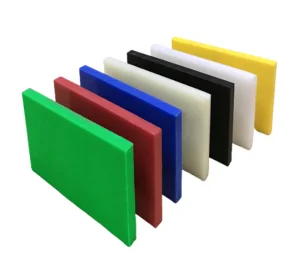
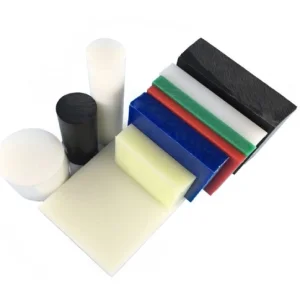
What standard sheet sizes, thicknesses, and colors are kept in ready stock?
Can you supply finished custom machined parts directly from CAD drawings?
What are the minimum order quantities (MOQ) and sample lead times?
Specialty Polymer Rods, Tubes & Heavy-Duty Components
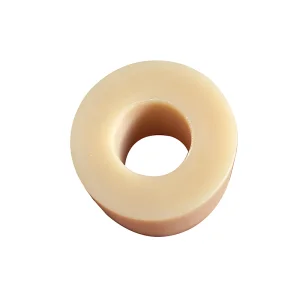
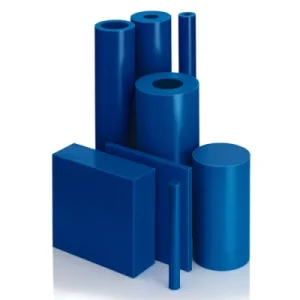
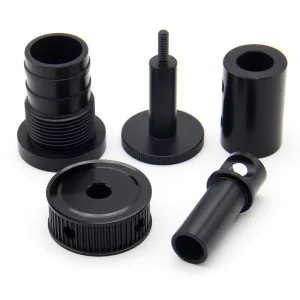
Complete your supply requisition with matching extruded rods, high-wear cast tubing, custom CNC turning components, and composite structural materials.
Request Direct Wholesale Pricing & Engineering Material Data
Whether you require standard size semi-finished nylon slabs, full 20ft container volume shipments, or tight-tolerance CNC finished components, our chemical and mechanical engineering sales desk is at your service.