
High-Efficiency Semi-Finished Engineering Plastics
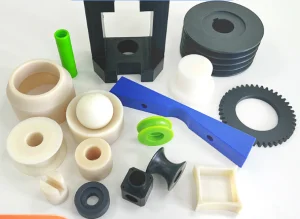
Explore our core volume-manufactured polyamide stock, cast nylon slabs, fluoropolymers, and acetal stock shapes.
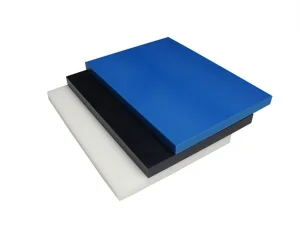
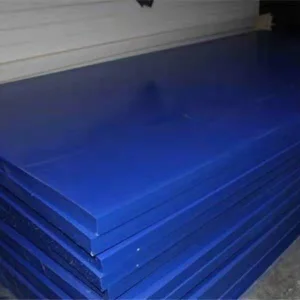
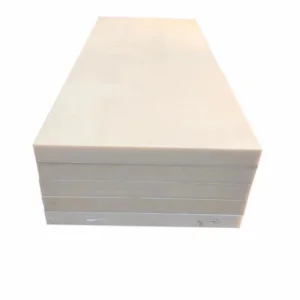
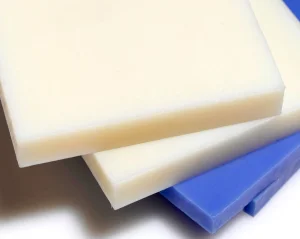
Decoupling Cost from Reliability: Sourcing Polyamide Billets
Procuring "cheap nylon rods" no longer demands compromising mechanical tensile thresholds or bearing performance. Global supply chain maturity and direct cast-polymer engineering yield unmatched cost efficiency.
The Total Cost of Ownership (TCO) Shift
Traditional procurement conflates cheap unit prices with inferior secondary regrind material. Leading tier-one Chinese polymer producers utilize continuous polymerization and high-yield casting to reduce cost by 35% through pure scale efficiency and automation rather than material degradation.
Supply Chain Resilience & Volume Pricing
Global manufacturing hubs demand stable, reliable supply lines for bulk semi-finished shapes. Direct manufacturer agreements mitigate middleman markups, providing long-term indexed polymer pricing linked transparently to caprolactam monomer markets.
Precision Pre-Machining & Near-Net Shapes
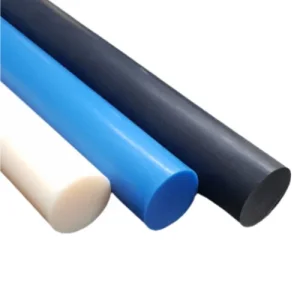
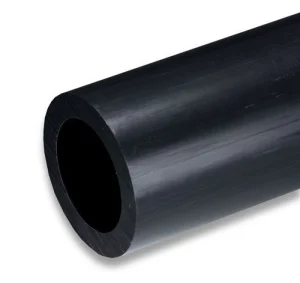
Advanced foundries offer centerless-ground rods and custom hollow tubes (cast sleeves). Delivering near-net dimensions slashes chip waste during subtractive CNC turning, transforming raw stock acquisition into an optimized manufacturing process.
Comparative Mechanics: Cast Nylon (PA6G) vs Extruded Nylon (PA66) vs Acetal
Selecting the most cost-effective polymer requires aligning operating shear, chemical vulnerability, and moisture absorption with targeted raw-material costs.
| Polymer Grade / Form | Tensile Strength (MPa) | Flexural Modulus (GPa) | Thermal Deflection (HDT @ 1.8MPa) | Moisture Saturation (23°C, 50% RH) | Cost Efficiency Tier |
|---|---|---|---|---|---|
| Cast PA6 (MC Nylon Natural/Blue) Monomer cast via atmospheric mould |
80 - 85 | 3.2 - 3.5 | 95 °C | 2.2% | Highest (Best for Large Diameters) |
| Extruded PA66 (Polyamide 6/6) High molecular chain orientation |
85 - 90 | 3.0 - 3.3 | 100 °C | 2.5% | Medium (Standard Rod Sizes) |
| PA6 + MoS₂ (Molybdenum Disulfide) Self-lubricating wear resistance |
82 - 88 | 3.6 - 3.8 | 105 °C | 1.9% | High (Extended Wear Lifecycle) |
| POM-C (Polyacetal Copolymer) Low moisture dimensional reference |
65 - 70 | 2.8 - 3.0 | 110 °C | 0.2% | Competitive (Tight Tolerance Part) |
| UHMWPE (Ultra-High Molecular Weight) Impact resistance reference |
22 - 35 | 0.7 - 0.9 | 45 °C | <0.01% | Economical for Sliding Chutes |
Advanced Foundry Roadmap: Solving Internal Porosity and Residual Stress
The primary pitfall of low-grade nylon stock is internal voiding and structural stress warping during high-speed spindle operations. Modern casting implements tight industrial controls.
Liquid Anionic Polymerization
By polymerizing caprolactam directly within the casting mould via basic catalysts and activators, we achieve molecular weights exceeding 200,000 to 400,000 g/mol—nearly double that of conventional extrusion methods—substantially improving dynamic shear limits.
Dual-Cycle Thermal Annealing
Cheap nylon rods often warp post-machining due to residual cooling gradients. Our processing utilizes oil-bath and forced-convection annealing chambers over a 48-hour ramp-down, stabilizing the internal crystalline matrix and eliminating tool-grab hazards.
Automated Ultrasonic Verification
Each cast billet undergoing precision machining is validated using high-frequency ultrasonic flaw-detection arrays. This eliminates subsurface voids and density fluctuations before export packaging, guaranteeing zero-defect billet delivery.
Full Regulatory Alignment for OEM & Distributor Supply
Adhering to strict international trade, safety, and operational standards is crucial when integrating Chinese manufacturing directly into global equipment pipelines.
RoHS & REACH Directives
All virgin resin formulations and custom pigments comply with EU REACH 233 SVHC restrictions and RoHS hazardous material directives, ensuring safe chemical compatibility.
FDA Food Contact Compliance
Natural unmodified PA6 and Polyacetal stock profiles are formulated to comply with FDA 21 CFR 177.1500 criteria, certified for food-grade conveyor bearings and auger screws.
Mill Test Reports (MTR)
Orders are shipped with certified batch testing reports detailing density, Rockwell hardness (M scale), Shore D, and heat deflections for complete material traceability.
Protective Ocean Packaging
Extruded and cast rods are sealed in moisture-barrier PE shrink wraps, bundled in impact-resistant crates to mitigate maritime humidity absorption during deep-sea logistics.
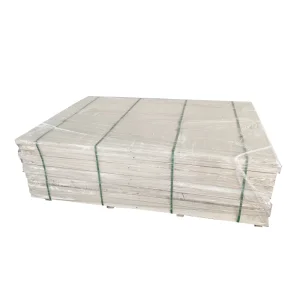
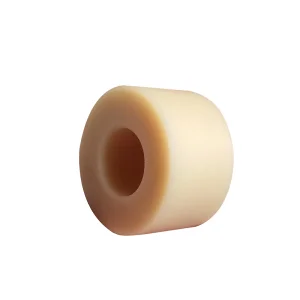
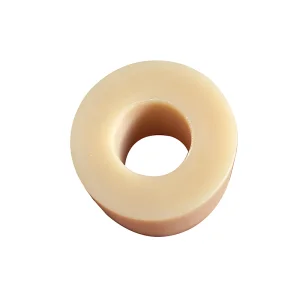
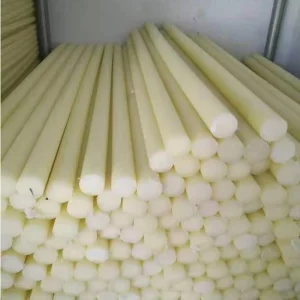
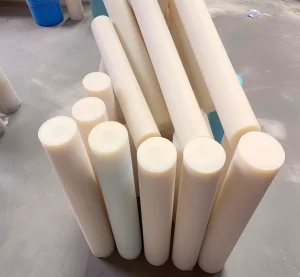
Precision Cast PA6, Extruded Tubes, and Hybrid Polymers
Factory-direct stock forms manufactured to narrow metric and imperial dimensions for instant chucking and spindle tooling.

Navigating Polyamide Stock Rod Sourcing & Machinability
Direct technical answers addressing the concerns mechanical engineers and procurement directors encounter when sourcing bulk nylon rounds.
Why is cast MC nylon often cheaper than extruded nylon rods?
Cast nylon (PA6G) involves atmospheric chemical casting directly from liquid caprolactam monomer into heated tooling. It bypasses expensive high-tonnage extruders, heavy electric drives, and granule synthesis, dramatically cutting tooling costs and energy overhead—especially on large diameters (>50mm).
How do you mitigate moisture-related dimensional drift?
Polyamide is hydroscopic, absorbing moisture up to saturation equilibrium (approx. 6–7% total immersion, 2% ambient). For tight tolerance components (±0.02mm), we recommend pre-conditioning billets before finish machining, substituting POM-C acetal, or applying molybdenum/oil-filled grades to slow moisture absorption.
What tooling geometries produce optimal surface finishes on PA6?
Nylon requires positive rake angles (15°–30°), wide clearance angles (10°–15°), and razor-sharp polished carbide or PCD tips. High surface feeds (250–500 m/min) prevent localized frictional melting. High-volume flood coolant or mist air-cooling prevents chip re-welding on deep turning channels.
What is the standard minimum order quantity (MOQ) for custom colors/diameters?
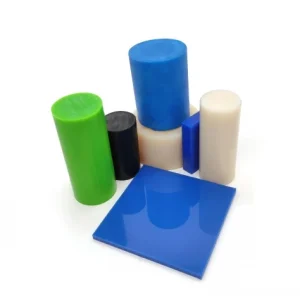
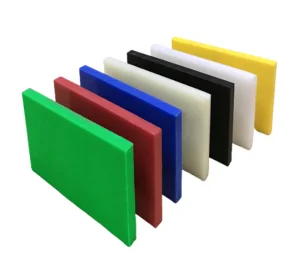
Standard off-the-shelf natural white, jet black, and blue cast rods maintain zero minimum purchase quantity for test verification. Custom formulated shades (green, yellow, safety orange) or non-standard profiles (e.g., 325mm, 450mm OD) generally feature an accessible 300kg to 500kg threshold.