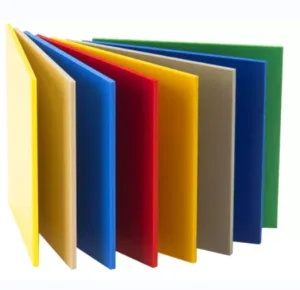
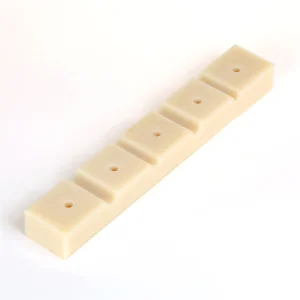
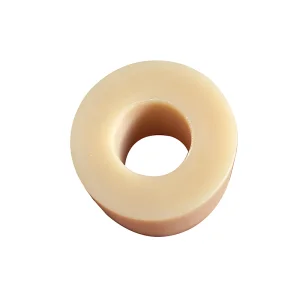
Direct-Sourced Engineering Stock & Semi-Finished Components
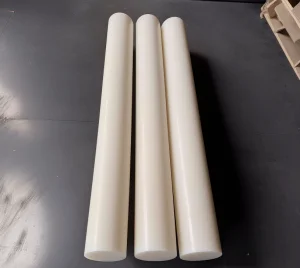
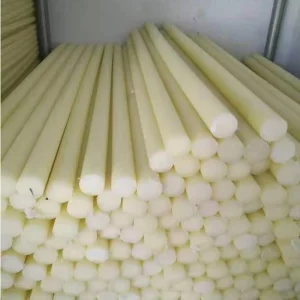
Streamline your supply chain with our factory-direct solid extruded PA6 rods, oil-impregnated cast nylon stock, and high-performance polymer shapes built to tight DIN/ISO tolerances.
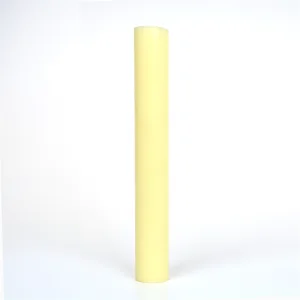
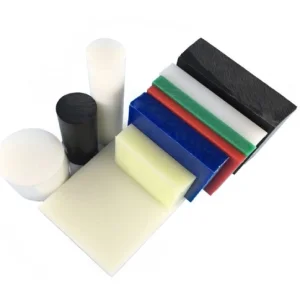
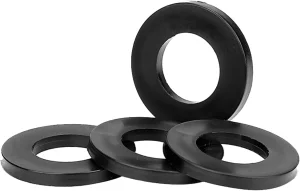
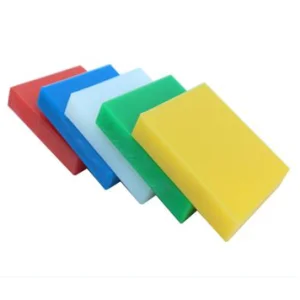
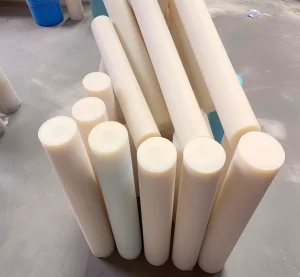
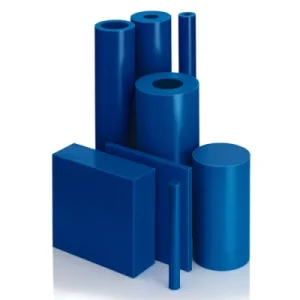
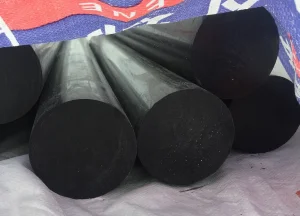
Why “Cheap Nylon Bar” Does Not Mean Sacrificing Quality: Direct-From-Source Economics
In the global engineering plastics procurement landscape, sourcing low-cost polyamide round bars often exposes buyers to porosity risks, excessive moisture warpage, and unpredictable hardness gradients. True supply chain optimization lies in factory integration.
Upstream Monomer Caprolactam Synthesis
By establishing manufacturing operations in Hebei’s industrial core, factories like SHUNDA eliminate tiered broker markups. Our direct access to liquid caprolactam monomer feeds anionic polymerization reaction lines, cutting polymer synthesis costs by 18% to 24% compared to regional European extruders.
Horizontal Annealing & Stress Elimination
Budget nylon suppliers often skip thermal post-curing cycles. SHUNDA executes a 48-hour liquid oil annealing cycle on all PA6 and MC nylon bars. This thermal stabilization converts residual inner stresses into stable alpha-crystalline domains, delivering zero-twist machinability for precision CNC turning.
Economies of Scale & Scrap Minimization
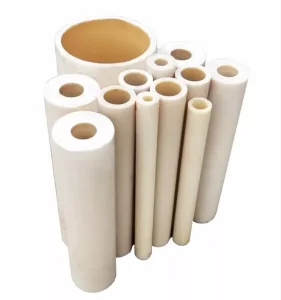
With continuous casting diameters ranging from 15mm to over 500mm, stock sizes align strictly with finished component geometry. Machine shops eliminate up to 32% metalworking swarf waste by utilizing near-net diameter cast bars or ready-to-turn hollow tubular nylon profiles.
Localized Heavy-Industry Application Profiles
Nylon bars (Polyamide 6 / PA66 / Cast MC Nylon) offer unmatched wear longevity and high mechanical dampening. Here is how international engineering sectors utilize cost-effective Chinese nylon bar inventory.
Heavy Mining & Bulk Material Handling
In Australian and Chilean open-pit copper and iron mines, high-load cast nylon round bars are machined into conveyor cable sheaves, rollers, and impact bushings. Replacing bronze collars with oil-filled blue MC nylon bars reduces mating steel cable abrasive wear by 40%, eliminating spontaneous grease maintenance cycles in dust-choked desert installations.
Port Logistics & Mobile Crane Cranage
For heavy crane support systems across European deep-water ports (Rotterdam, Hamburg), solid black MoS2-filled nylon bars are turned into high-torsion boom slide blocks, pivot bearings, and stabilizing outrigger cushions. Low friction coefficients prevent stick-slip chatter under extreme 80-ton vertical axial thrust loads.
Packaging & Bottling Automation Lines
North American pharmaceutical packaging and high-speed beverage bottling operations rely on natural white virgin PA6 bars. Machined into star wheels, timing screws, and guide bushings, the non-marking and food-grade compliant composition operates noiselessly at linear speeds exceeding 1,200 units/min without lubricating fluid risk.
Material Performance & Engineering Properties Matrix
Choosing between extruded PA6, cast MC nylon, and competitive acetal/POM or UHMWPE options requires clear comparative property data. Review our lab-certified parameters below.
| Polymer Classification | Tensile Strength (MPa) | Impact Strength (kJ/m²) | Coefficient of Friction (μ) | Continuous Max Temp (°C) | Typical Machined Components |
|---|---|---|---|---|---|
| Extruded PA6 Nylon | 78 - 85 | 5.5 (Notched) | 0.28 - 0.35 | 100°C | Fasteners, precision gears, mechanical bushings |
| MC Cast Nylon (Natural/Blue) | 85 - 92 | 7.0 (Notched) | 0.22 - 0.28 | 115°C | Crane sheaves, heavy wear rings, crane rollers |
| MoS2 Filled Cast PA6 | 82 - 88 | 4.8 (Notched) | 0.18 - 0.24 | 120°C | High-load dry sliders, crane pads, heavy bushings |
| POM-C (Polyacetal) | 65 - 72 | 6.0 (Notched) | 0.25 - 0.32 | 90°C | Dimensional cams, water-submerged valves, tight gears |
| UHMWPE 1000 | 22 - 28 | No Break | 0.10 - 0.15 | 80°C | Chute liners, conveyor tracks, cryogenic slides |
Technical Roadmap & Sustainable Global Compliance (2025–2030)
Navigating environmental audits and performance mandates requires continuous innovation. Explore our technical pathways for high-integrity industrial polymers.
Bio-Based Polyamides & Circular Monomers
To comply with the EU Carbon Border Adjustment Mechanism (CBAM) and ISO 14067 life-cycle standards, our R&D lines are deploying sebacic acid derived from non-edible castor oil feeds, engineering drop-in bio-PA610 and bio-PA11 rods that cut embedded cradle-to-gate carbon footprint by up to 42% without sacrificing yield strength.
Continuous Nanocomposite Compounding
Next-generation nylon rod extrusions incorporate graphene platelets and ceramic nano-particulates. These additives mitigate nylon's classic hydrophilic nature, lowering water absorption from 6.5% down to under 1.8% at saturation, and matching POM's dimensional stability while preserving nylon's superior impact resistance.
Full Traceability & RoHS/REACH SVHC Auditing
Every export lot ships with EN 10204 3.1 chemical inspection certificates. Virgin polymer resins undergo third-party laboratory gas chromatography-mass spectrometry (GC-MS) verification to guarantee strict compliance with RoHS directive 2011/65/EU and EU REACH Annex XVII hazardous chemical thresholds.
Frequently Asked Questions (FAQ)
Addressing crucial engineering, pricing, minimum orders, and machining tolerance queries from engineering teams worldwide.
How can Chinese nylon bar suppliers offer prices 30%-50% lower than European and US stockists?
The price advantage stems from three factors: Upstream Proximity (direct pipeline feeds of raw caprolactam monomer within China's petro-industrial corridors), Massive Industrial Scale (continuous automated horizontal casting and multi-cavity extrusion clusters), and Elimination of Intermediaries. When procuring directly from primary manufacturers like SHUNDA, you bypass regional importers, master distributors, and retail markups.
What is the structural performance difference between extruded PA6 and cast MC nylon bars?
Extruded PA6 is produced by melting polymer pellets through a screw die; it yields consistent molecular density at smaller diameters (10mm - 100mm) but carries higher residual mechanical stress. MC Cast Nylon is synthesized directly in liquid molds via gravity or centrifugal casting without high pressure. Cast nylon delivers higher molecular weight, increased crystallinity, greater surface hardness (Rockwell M85 vs M75), superior heat deflection thresholds, and allows production of bars exceeding 500mm in diameter without centerline porosity.
How does moisture absorption affect precision-machined nylon bar parts?
Polyamides are naturally hygroscopic, absorbing up to 2.5% - 3.0% ambient moisture at equilibrium and expanding up to 0.5% - 0.8% dimensionally. For applications with critical tolerances (e.g., ±0.02mm), our engineering team recommends post-machining conditioning, opting for MoS2-filled cast nylon, or substituting with Polyacetal (POM-C), which absorbs negligible water (<0.2%) while maintaining comparable stiffness.
What are the standard tolerances and cut-to-length capabilities for nylon rods?
Our standard production diameter tolerances range from +0.2mm to +1.2mm oversize, providing sufficient cleanup stock for turning centers. For tight ground-rod requirements, we offer secondary centerless grinding with tolerances held within h9 to h7. Standard bar lengths are 1,000mm, 2,000mm, and 3,000mm, with custom automated bandsaw cutting available for individual billets.
How does SHUNDA ensure export cargo integrity during ocean freight?
To prevent bowing, warpage, and moisture infiltration across 30+ day ocean voyages, our bars are sealed in vacuum polyethylene stretch wrap, packed with silica gel desiccants, and banded inside heavy-duty multi-layer fumigated wooden cases with internal structural dividing ribs.
Industrial Tubes, Machined Profiles & Specialized Engineering Plastics
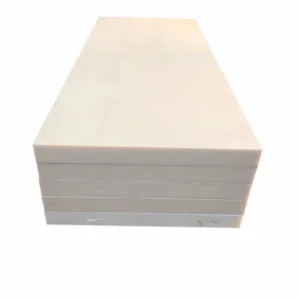
Consolidate container loads with hollow bars, engineering sheets, and precision CNC components across all high-performance polymers directly from our Xinhe facility.