20+
Years Production Heritage
±0.02mm
CNC Machining Tolerance
300°C
Extreme Thermal Envelope
100%
Batch Traceability (ASTM/RoHS)
Primary Portfolio Index
Precision Structural Plastics & Elastomer Stocks (Batch I)
Direct supply from state-of-the-art Chinese casting, extrusion, and secondary vulcanization lines designed to interface with demanding industrial fluid, gas, and vacuum seals.
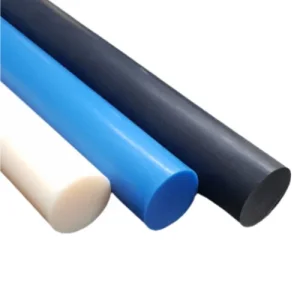
OEM Cast MC Nylon Rod Suppliers, Product
View Specifications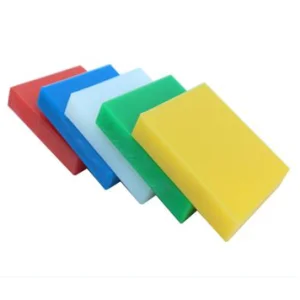
Buy China Engineering Plastic Polyamide PA6 PA66 Nylon PP UHMWPE PTFE HDPE ABS Plastic Sheet Rod Bar Suppliers, Product
View Specifications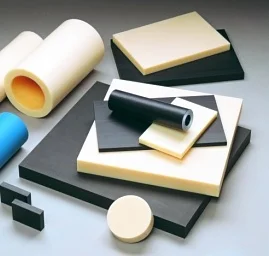
OEM Engineering Plastic Backing Casting Board Nylon PP ABS PTFE UHMWPE Board Sheet Rod Tube Waterproof Customized Color Made In China Manufacturer, Factories
View Specifications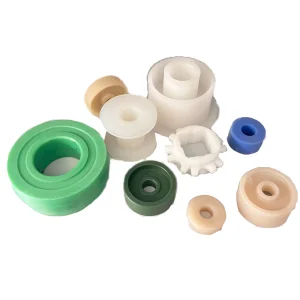
China CNC Machined Parts Exporters, Product
View Specifications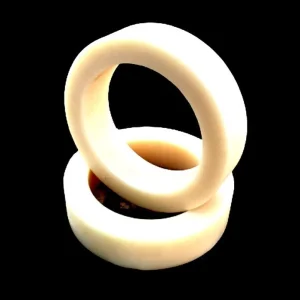
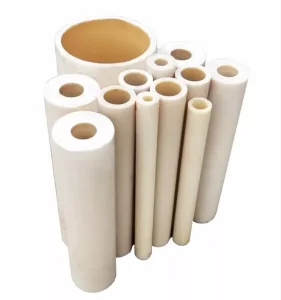
Buy Plastics Polyamide Natural MC Nylon Ring Cast Nylon Tube PA6 POM Rod Round Bar Engineering Plastic Black Polyamide PA66 Nylon PP UHMWPE PTFE HDPE ABS Plastic Ring Bar Factory, Companies
View Specifications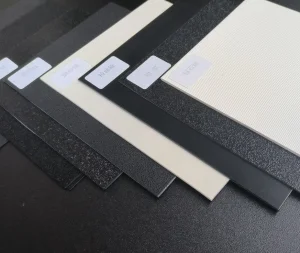
OEM China Engineering Plastic OEM Smooth Texture ABS Plastic Sheet Factory Customized Color With Size For Refrigerator Door Exporter, Products
View Specifications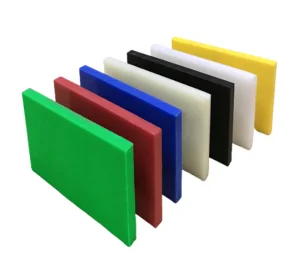
Cheap China Engineering Plastic Polyamide PA6 PA66 Nylon PP UHMWPE PTFE HDPE ABS Plastic Sheet Rod And Bar Customized Color With Size Suppliers, Exporters
View Specifications
Macro Dynamics & Market Intelligence
Evolutionary Paradigms in Industrial Rubber Plugs & Elastomer Sealing
How the global shift toward automated manufacturing, tight chemical containment, and electric mobility is redefining elastomeric material selection and manufacturing precision.
Transition to High-Purity Fluorosilicone & EPDM
Traditional natural rubber plugs are increasingly superseded by cross-linked fluorosilicone (FVMQ) and peroxide-cured EPDM. The modern demand centers on zero outgassing, high ozone resistance, and non-reactive properties under aggressive chemical washes and high-voltage battery electrolytes.
Sub-Millimeter Masking Precision in E-Coating
Industrial powder coating, electrodeposition, and anodizing lines demand tapered rubber plugs that maintain structural elasticity at temperatures over 260°C. Defect-free sealing prevents chemical intrusion into critical threaded blind holes and cylindrical fluid ports.
Hybrid Thermoplastic-Elastomer (TPE/TPV) Conversion
For repeatable dynamic damping and sealing, industrial OEMs are shifting toward recyclable, fully vulcanized Thermoplastic Vulcanizates (TPV). These provide the recovery properties of thermoset vulcanized rubber with the tighter dimensional control and weldability of technical thermoplastics.
Procurement Matrix
Global Enterprise Sourcing Architecture: Engineering the Correct Polymer
Material failure in rubber plugs directly correlates with hydraulic contamination, vacuum leakage, or chemical degradation. Use our technical matrix to evaluate mechanical elasticity against environmental severity.
| Elastomeric Compound | Shore Hardness (A) | Thermal Boundary | Tensile / Rebound Dynamics | Primary Industrial Vector |
|---|---|---|---|---|
| Silicone (VMQ / LSR) | 30 to 80 Shore A | -60°C to +260°C (Intermittent 300°C) | Excellent elongation (>400%), low compression set | Powder coating masking, medical isolation, cleanroom laboratory fluid ports. |
| EPDM (Peroxide Cured) | 40 to 85 Shore A | -45°C to +150°C | Superb polar solvent resistance, extreme weather/ozone stability | Automotive cooling systems, hydraulic testing plugs, municipal piping infrastructure. |
| Fluorocarbon (FKM / Viton®) | 60 to 90 Shore A | -20°C to +200°C | Impervious to hydrocarbons, synthetic lubricants, and aromatic fuels | Aerospace fuel plugs, chemical processing shut-off valves, downhole oil extraction. |
| Nitrile (NBR / Buna-N) | 50 to 90 Shore A | -35°C to +120°C | High mechanical abrasion resistance, superior tear threshold | General machinery oil drain plugs, gearboxes, marine mechanical seals. |
| Chloroprene (Neoprene®) | 40 to 75 Shore A | -40°C to +110°C | Balanced balance of flame retardancy, flexural fatigue, weatherability | HVAC insulation plugs, marine deck scuppers, vibrational mount dampening. |
Macro Enterprise Solutions
Integrated Engineering Solutions for High-Stress Sealing Interfaces
Combining primary polymer production, compression molding, and 5-axis CNC machining under one roof to resolve systemic assembly and containment challenges.
Pressure & Vacuum Integrity Assurance
For pressure testing up to 100 Bar (1,450 PSI), standard push-in plugs experience blowouts. We engineer mechanically expanding plugs featuring an internal cast POM or 316 stainless-steel mandrel that compresses an outer precision rubber sleeve, creating absolute radial friction against pipe IDs.
Custom Micro-Tapered Geometries
Threaded components and precision orifices present dimensional tolerances that off-the-shelf catalog stoppers cannot address. Utilizing CAD/CAM multi-cavity tooling and direct cryogenic deflashing, we deliver rubber plugs with flash lines under 0.05mm, preventing spiral leak paths.
Thermoplastic Hybrid Backing Plates
High dynamic loads can cause elastomeric plugs to dish or shear. By manufacturing nylon (PA66), MC Cast Nylon, and UHMWPE backing boards in-house, SHUNDA provides integrated assembly plugs with structural load distribution backplates for heavy machinery vibratory dampening.
Quality Control System
From Raw Monomer to Final Component: Five-Tier Manufacturing Workflow
Our ISO-audited workflow delivers zero-defect delivery across million-part runs and custom engineered tooling.
PHASE 01
Polymer Compounding
Virgin synthetic rubber polymers are compounded with precise antioxidant, plasticizer, and cross-linking agents inside controlled internal mixers.
PHASE 02
Precision Tooling Design
High-tensile P20 and H13 steel molds are CNC machined and mirror-polished with shrinkage compensations calculated to 0.01% accuracy.
PHASE 03
Vacuum Vulcanization
High-tonnage compression and transfer molding machines employ automated vacuum chambers to eliminate air entrapment and micro-voids.
PHASE 04
Cryogenic Deflashing
Molded plugs enter liquid nitrogen tumbling barrels where flash freezes and is blasted away, leaving perfectly clean edges and radii.
PHASE 05
Optical Sorting & Pack
High-speed visual inspection machines verify dimensional concentricity, surface pitting, and shore durometer before export moisture-barrier packaging.
Compliance & Governance
Regulatory Assurances, Traceability & Global Supply Chain Resilience
Delivering comprehensive certification to simplify international customs clearance and OEM line validation.
Material Test Reports (MTR / CoC)
Every shipment is accompanied by complete mill test certificates documenting tensile strength (ASTM D412), tear resistance (ASTM D624), and compression set under heat (ASTM D395 Method B), ensuring full batch-level traceability.
Global Environmental Compliance
Our raw material compounds undergo strict quarterly testing through SGS and TÜV Rheinland to verify non-detection of restricted substances under EU RoHS 3 (Directive 2015/863) and REACH SVHC Candidate Lists, alongside FDA 21 CFR 177.2600 food contact grades.
Localized Logistics & Engineering Support
Operating a dedicated English-speaking technical support unit, we partner with bonded warehousing facilities and international express routes to supply prototypes within 7 days, full production tooling within 21 days, and sea freight logistics to all major Western ports.
Technology Roadmap 2026–2030
Next-Generation Elastomer Technology & Circular Polymers
Pioneering advancements in intelligent self-sensing elastomeric seals and bio-circular monomer substitution.
Conductive Carbon-Nanotube Impregnation
Developing anti-static (ESD) and electrically dissipative rubber plugs designed to shield sensitive electronic sensor ports during robotic assembly, preventing catastrophic electrostatic discharge events in semiconductor and EV manufacturing.
Bio-Based & Depolymerizable Rubbers
Collaborating with polymer research institutes to introduce natural silica and bio-derived monomers into standard EPDM matrices, lowering compound carbon intensity by 35% without reducing oil swell resistance or elongation recovery.
Additive Manufacturing of Complex Elastomers
Investing in continuous liquid interface production (CLIP) 3D printing for rapid elastomeric functional prototyping, enabling customers to validate complex sealing geometries without committing to upfront tooling costs.
Frequently Asked Questions
Technical & Procurement FAQ for Industrial Rubber Plugs
In-depth responses resolving engineering tolerances, durometer selection, and export supply terms.
How do I determine whether to specify Silicone or EPDM for a masking plug?
Specify Silicone when peak operational temperatures exceed 150°C (up to 260°C continuous, 300°C intermittent) as typical in powder coating and bake ovens. Choose EPDM if your operation centers on lower temperatures (under 130°C) with heavy exposure to polar acids, alkalines, steam, or aggressive chemical degreasing washes, as EPDM provides superior tear resistance and lower cost.
What is the standard sizing interference fit for leak-free rubber plug installation?
For manual insertion without tools, an interference fit of 3% to 6% larger than the internal diameter (ID) of the bore is standard. For high-pressure test plugs or pneumatic retaining seals, interference levels of 10% to 15% combined with a 50–60 Shore A durometer are utilized to ensure proper radial wall contact without causing plug shearing.
Can you provide rubber plugs compliant with FDA food-contact standards?
Yes. We formulate and vulcanize custom white and translucent silicone or EPDM plugs strictly conforming to FDA 21 CFR 177.2600 (rubber articles intended for repeated use). We provide formal compliance statements along with migration test reports for sanitary pipework, dairy, and beverage bottling applications.
What are your manufacturing minimum order quantities (MOQs) and lead times?
For catalog sizes held in stock, our minimum order threshold is 500 units with immediate 48-hour dispatch. For custom tooling developments, prototype sample molds take approximately 7 to 10 days, with complete multi-cavity mass production tooling taking 15 to 21 days depending on geometric complexity.
Secondary Portfolio Index
Precision Structural Plastics & Elastomer Stocks (Batch II)
Explore our heavy-duty engineering thermoplastics, wear plates, and precision extruded profiles that complement our elastomeric manufacturing systems.
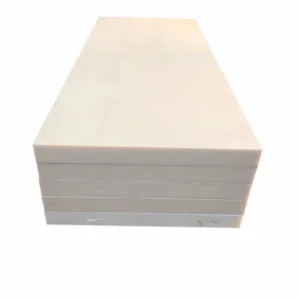
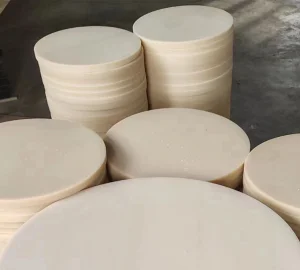
Buy Natural MC Nylon Plate Companies, Products
View Specifications
Cheap China Engineering Plastic polyamide PA6 PA66 Nylon PP UHMWPE PTFE HDPE ABS plastic Sheet Companies, Products
View Specifications
China Engineering Plastic Polyamide PA6 PA66 Nylon PP POM UHMWPE PTFE HDPE ABS Plastic Rod And Bar Manufacturers, Product
View Specifications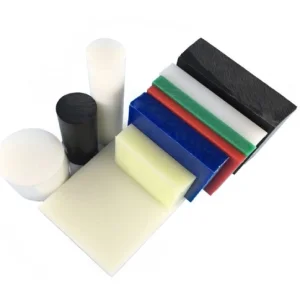
High-Quality Engineering Plastic Polyamide PA66 Nylon PP UHMWPE PTFE HDPE ABS Plastic Sheet Rod And Bar Customized Color With Size Manufacturers, Suppliers
View Specifications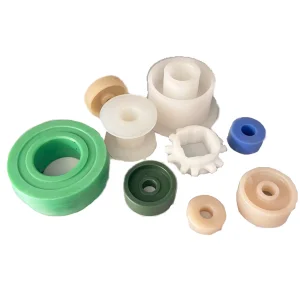
China Custom CNC Machining Components Peek ABS/PTFE/Derlin/Nylon POM CNC All Kinds Of Pulley Wheel Suppliers, Exporters
View Specifications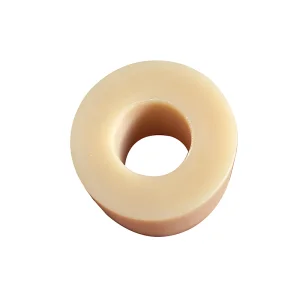
High-Quality China Engineering Plastic PA6 polyamide Nylon POM PTFE HDPE PVC Plastic Tube Rod And Bar Customized Color With Size Manufacturers, Supplier
View Specifications
Buy Factory Free sample HDPE Sheet Panel Board Plate Manufacturer High Density Polyethylene Plastic Sheet Factory, Exporters
View Specifications