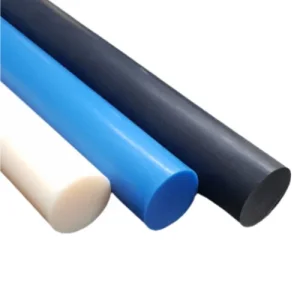
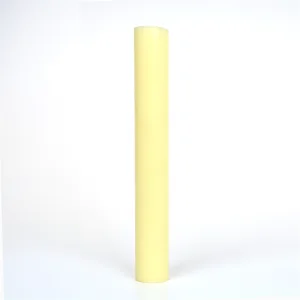
Factory-Direct Engineering Plastic Stock & Machined Components
Premium grade pure virgin and modified PTFE bars, rods, sheets, and CNC machined parts for chemical processing, semiconductors, aerospace, and high-frequency electronics.
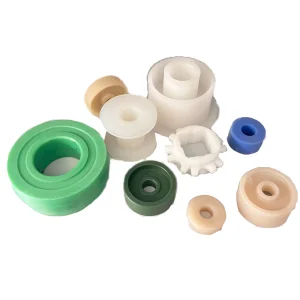
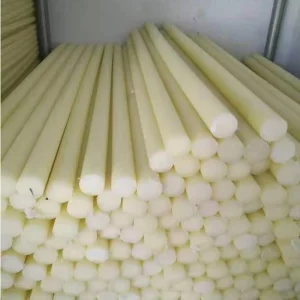
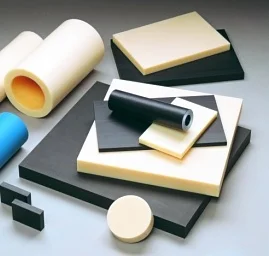
Material Science Benchmark: Virgin vs. Filled PTFE Rod Formulations
Polytetrafluoroethylene (PTFE) represents the apex of non-reactive, low-friction synthetic fluoropolymers. To solve cold-flow deformation and optimize wear performance under hydrodynamic or dry contact, our manufacturing plant incorporates precision micro-fillers.
| PTFE Grade / Matrix | Composition Ratio | Tensile Strength (MPa) | Elongation (%) | Shore D Hardness | Key Operational Utility |
|---|---|---|---|---|---|
| Virgin Pure PTFE | 100% Virgin Granular PTFE | ≥ 25.0 | ≥ 280 | 54 - 58 | FDA food contact, ultra-pure semiconductor wet benches, cryogenic insulation. |
| Glass Fiber Filled | 15% – 25% E-Glass Fibers | ≥ 18.5 | ≥ 210 | 62 - 66 | Elevated compressive creep resistance, chemical pump impellers, hydraulic guides. |
| Carbon / Graphite Filled | 10% – 15% Carbon + 5% Graphite | ≥ 16.0 | ≥ 150 | 63 - 68 | Anti-static dissipation, high PV-value dynamic seals, piston rings in oil-free compressors. |
| Bronze Powder Filled | 40% – 60% Spherical Bronze | ≥ 17.0 | ≥ 120 | 68 - 72 | Maximum thermal conductivity, superior dimensional stability under heavy radial loads. |
| MOS2 Filled | 5% Molybdenum Disulfide | ≥ 20.0 | ≥ 230 | 58 - 62 | Reduced stick-slip, lowest initial startup torque, vacuum bearings and bushings. |
Integrated Extrusion, Controlled Sintering & Stress Annealing
Our Hebei production facility eliminates internal voids, micro-porosity, and anisotropic stress patterns through multi-zone computerized sintering curves and proprietary ram-extrusion mechanics.
Isostatic & Ram Compression
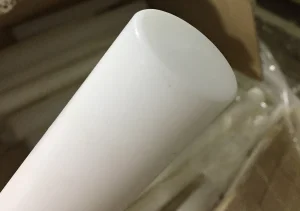
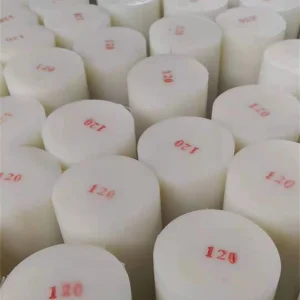
We deploy dual processing: continuous Ram Extrusion for high-volume rods (Φ5mm to Φ120mm) and Isostatic Molded Compaction for heavy billet diameters (Φ130mm up to Φ450mm), guaranteeing consistent molecular bulk density (>2.16 g/cm³).
Digital Sintering Profiles
Fluctuating temperatures trigger crystalline disorganization. Our ovens execute PLC-controlled ramps up to 380°C followed by prolonged multi-stage sub-critical crystallization halts, preventing core shear fracture during high-speed CNC turning.
High-Precision CNC Finish
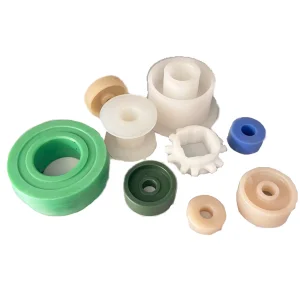
Equipped with 3-axis, 4-axis, and multi-spindle Swiss turning centers, we transform raw PTFE, POM, PEEK, and Nylon billets directly into finished ball valve seats, chevron V-rings, and wafer carrier components to tight dimensional tolerances (±0.01mm).
Mission-Critical Solutions Across Demanding Vertical Sectors
Engineered plastics are replacing bronzes, stainless steels, and elastomeric compounds. Here is how our PTFE rod formulations mitigate downtime and chemical breakdown globally.
Semiconductor Wet Processing
Virgin semiconductor-grade PTFE rods machined into DI water fittings, chemical delivery blocks, and CMP slurry valves featuring ultra-low metallic ionic leaching (<10 ppb).
Oil, Gas & Subsea Valves
Glass and carbon-reinforced PTFE valve seats withstand continuous immersion in sour gas (H2S), aromatic hydrocarbons, and concentrated amines without swelling or softening.
Pharma & Sanitary Fluids
Fully compliant with FDA 21 CFR 177.1550, USP Class VI, and 3-A Sanitary Standards. Highly resistant to repeated clean-in-place (CIP) and steam-in-place (SIP) sterilization routines.
5G / Microwave High-Frequency
Unmatched dielectric constant (2.1 at 1 MHz to 10 GHz) and dissipation factor (<0.0002) for coaxial cable connectors, radar feedhorns, and satellite RF antenna radomes.
Empowering Global OEM Procurement with Supply Chain Resilience
Purchasing technical polymer stock internationally requires uncompromising transparency, standard compliance, trace-audit trails, and risk-mitigated logistical protocols.
Total Compliance Dossier
Each delivery is issued with lot-numbered EN 10204 3.1 Material Test Reports (MTR), full chemical traceability certificates, and validation reports covering RoHS 3, REACH SVHC, and PFAS restriction documentation.
Export Packaging & Warehousing
Round bars are precision-ground, protected with scratch-resistant poly sleeves, moisture-barrier wrapping, and export-grade fumigated solid plywood crates to protect roundness and straightness across long maritime transits.
Consolidated Polymer Sourcing
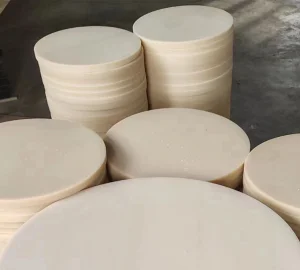
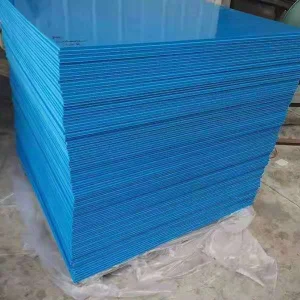
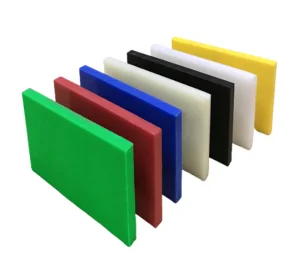
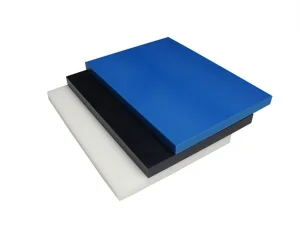
Eliminate complex multi-vendor logistics. Our warehouse provides mixed-container consolidations bundling PTFE rods with Cast Nylon (PA6), POM Acetal, UHMWPE liners, HDPE plates, PP sheets, and PEEK precision parts.
Frequently Asked Questions on Sourcing PTFE Rods Directly
Direct technical answers to clarify resin formulation, dimensional limits, extrusion vs. molding parameters, and commercial export terms.
What is the structural difference between Ram Extruded and Molded PTFE Rods?
Ram Extrusion is a continuous feed process ideal for rod diameters between Φ5mm and Φ120mm, providing consistent lengths (1m, 2m, or coils) and high longitudinal uniformity. Molded rods are compacted under isostatic presses for diameters ranging from Φ130mm up to Φ450mm (usually 100mm–300mm length), offering uniform multi-directional density and zero internal shear lines.
How does your factory prevent dimensional deformation during CNC machining?
PTFE exhibits a thermal expansion coefficient significantly higher than metals and undergoes a phase transition near 19°C. We subject our raw stock to post-sinter thermal stress-relief cycles (annealing at 280°C with controlled slow cool-down). We advise our clients to utilize sharp tooling geometry, adequate coolant or air-blast, and perform roughing cuts prior to final dimensioning.
Do you supply chemically etched PTFE rods for structural adhesive bonding?
Yes. PTFE's non-stick properties prevent standard epoxy and adhesive adhesion. Our facility operates dedicated chemical surface treating lines utilizing sodium-naphthalene complexes to etch external outer diameters (OD). The treated dark brown surface enables robust shear bonding to carbon steels, brass, and composite structures.
What testing procedures are conducted prior to factory container loading?
Every production batch undergoes five quality audits: Bulk density verification (ASTM D792), Tensile strength & elongation testing (ASTM D4894), Dielectric breakdown validation, Laser-micrometer dimensional runout analysis, and ultrasonic internal void detection on large molded billets.
Comprehensive Semi-Finished Polymeric Stock & Structural Solutions
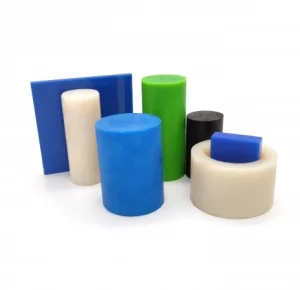
In addition to PTFE rods, our manufacturing complex in Xinhe, Hebei produces premium-grade polyamides, polyacetals, and olefins engineered to withstand high wear, abrasive friction, and corrosive environments.