Featured Engineering Plastic Tubes, Stock & Semi-Finished Shapes
Explore our top-tier inventory of solid and hollow extrusion stock, high-impact casting polymers, and industrial friction-grade components supplied directly from the factory floor.

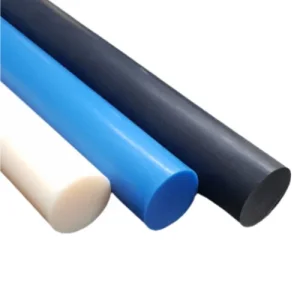
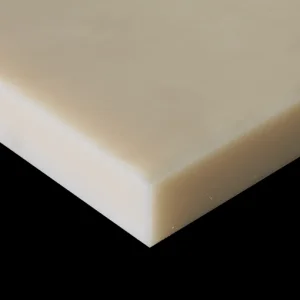
The Commercial Landscape of Engineering Plastic Tubes & Hollow Cylinders
Across modern automotive, chemical handling, semiconductor production, and automated logistics, precision plastic tubes have evolved from basic conduits to structural, tribological, and thermodynamic components replacing heavy metals.
Metal-to-Plastic Conversion
Aerospace, marine, and high-speed rotary equipment actively phase out phosphor bronze, stainless steel, and cast iron bushings. Engineering plastic tubes (MC Nylon PA6, POM-H/C, and PEEK) reduce component weight by up to 85%, eliminate external grease requirements via internal lubrication, and dampen high-frequency operational vibrations.
- Zero galvanic corrosion against mating shafts
- Significant reduction in centrifugal moment of inertia
- Extended dry-run emergency operational safety
Global Supply Chain Re-Engineering
Procurement directors face increasing pressure around material traceability and total landed cost. Global OEMs are shifting away from fragmented trading intermediaries toward integrated manufacturers who control primary monomer casting, continuous extrusion, and secondary 5-axis CNC machining under ISO 9001 certified facilities.
- Integrated lot-to-lot spectroscopic tracking
- Pre-annealed stock minimizing internal hoop stress
- Direct containerized multimodal logistics
Near-Net-Shape Cost Optimization
Purchasing solid engineering rod to bore out central cavities generates severe swarf waste and increases cycle times. Cast and extruded heavy-wall plastic tubes supply near-net geometries, yielding up to 60% savings in raw polymer weight, reducing tooling heat buildup, and preventing internal wall distortion.
- Dramatically reduced boring cycle duration
- Minimized heat deflection at interior bore faces
- Tailored wall thickness custom-molded to specification
Engineering Plastic Tube Specification Guide
Select the appropriate polymer chemistry to balance mechanical yield strength, thermal continuous-use limits, moisture absorption coefficient, and tribological wear resistance.
Critical Design Insight: Moisture Absorption vs. Acetal Dimensional Stability
While Polyamide 6 (PA6) offers exceptional tensile elongation and impact absorption, its hygroscopic nature causes hygroscopic swelling (up to 2.5–3.0% at ambient equilibrium). For high-precision hydraulic valve sleeves, submerged marine metering collars, and food packaging guide rings, Polyoxymethylene (POM Acetal) or UHMWPE provide near-zero moisture uptake (<0.01%), ensuring micron-level dimensional permanence.
| Polymer Class | Specific Density (g/cm³) | Tensile Strength (MPa) | Operating Temp Range (°C) | Key Mechanical Advantage | Primary Industrial Applications |
|---|---|---|---|---|---|
| Cast MC Nylon (PA6G) Monomer CastOil-Filled |
1.15 – 1.18 | 75 – 90 | -40 to +110 | Exceptional mechanical shock dampening, superior surface hardness, and outstanding resistance to abrasive slurry wear. | Crane outrigger sleeves, heavy conveyor rollers, rope sheaves, rotary mechanical bushings. |
| POM-C / Acetal Copolymer ExtrudedLow-Friction |
1.41 | 65 – 72 | -50 to +105 | Zero center-line porosity, negligible water swelling, crisp machinability for tight-tolerance external threads. | Sanitary fluid pistons, fuel delivery housings, precision counting gears, underwater instrumentation. |
| UHMW-PE (PE-1000) Ultra-High Molecular |
0.93 – 0.95 | 22 – 30 | -150 to +80 | Self-lubricating coefficient (μ=0.10–0.15), ultra-low surface tension preventing caking, high cryogenic toughness. | Chute liners, chemical transfer pipelines, bottling starwheels, guide tube rails in freezing tunnels. |
| HDPE (High-Density PE) ExtrudedWeldable |
0.95 – 0.96 | 24 – 32 | -40 to +80 | Hydrolytic stability, outstanding chemical inertness against concentrated alkalis, high stress cracking resistance. | Drainage piping, marine cage sleeves, electroplating rinse tubes, tank connection ferrules. |
| PTFE (Fluoropolymer) High Performance |
2.15 – 2.20 | 20 – 35 | -200 to +260 | Near universal chemical resistance (pH 0-14), non-flammable (UL94 V-0), lowest static coefficient of friction. | Semiconductor ultrapure chemical lines, pharmaceutical reactor sleeves, high-voltage electrical isolators. |
| Polypropylene (PP-H / PP-R) Thermal Extruded |
0.90 – 0.91 | 30 – 38 | 0 to +100 | High flexural modulus, superior resistance to environmental stress cracking under inorganic acids. | Acid etching ducts, laboratory fume scrubber tubes, wastewater neutralization plumbing, electroplating rollers. |
Engineered Tube Solutions Across Demanding Vertical Sectors
From offshore dredging to aseptic medical packaging, our precision extruded and cast engineering plastic tubes eliminate down-time and maintain structural stability under adverse duty cycles.
Mining, Quarrying & Bulk Solid Handling
In belt conveyor transfer points and slurry extraction flumes, steel idler rollers rapidly score, seize, and ruin expensive vulcanized rubber belts. Heavy-wall cast nylon and UHMWPE sleeve tubes resist particulate embedment, repel sticky aggregate mud, and sustain intense abrasive pounding without catastrophic fracture.
- Idler roll sleeves reducing conveyor power consumption
- Slurry discharge suction sleeves with 4x abrasion resistance
- Zero sparking risk in explosive coal processing silos
Food, Beverage & Sterile Pharmaceutical
FDA and EU 10/2011 compliant POM and virgin HDPE tubes serve as low-friction transport mandrels, filler nozzles, and hygienic guide sleeves. Completely non-porous extruded surfaces prevent bacterial colonization, endure harsh clean-in-place (CIP) hot alkaline washdowns, and feature complete chemical resistance to peracetic acid sanitizers.
- Zero fluid absorption preserving aseptic packaging standards
- High resistance to chlorinated disinfection detergents
- Custom optical blue and visual contrast colors available
Chemical Processing & Pickling Tanks
Handling concentrated hydrochloric, sulfuric, and hydrofluoric acids requires elimination of all metallic components. Extruded Polypropylene (PP) and PTFE hollow cylinders serve as heat exchanger tube bundles, acid-dip immersion guides, and level indicator tubes that do not pit, scale, or suffer electrochemical dissolution.
- Resistant to aggressive oxidizers and boiling acidic solutions
- High dielectric breakdown resistance preventing sparking
- Easily thermal-butt welded or flanged to existing piping
Semiconductor & Electronics Manufacturing
Static-dissipative (ESD) and carbon-black reinforced nylon or POM tubes protect micro-electronic circuits from devastating electro-static discharge during high-speed vacuum wafer sorting and pneumatic component pick-and-place lines.
- Controlled surface resistivity (10^6 to 10^9 Ω/sq)
- Negligible outgassing in vacuum cleanroom environments
- Precision turned internal steps with Ra ≤ 0.4 μm
Marine, Port Cranes & Offshore Mooring
Saltwater creates rapid corrosion cells in conventional metallic sleeve bearings. Heavy-wall oil-impregnated cast nylon tubes provide self-lubricating pivot bushings, rudder shaft collars, and underwater winch cable sheaves that never rust, swell, or seize under continuous oceanic submersion.
- Internal lubricant dispersion eliminating greasing maintenance
- High dynamic load capacity up to 80 MPa static pressure
- Immune to barnacle growth degradation and biofouling
State-of-the-Art Polymer Casting, Extrusion & Secondary CNC Turning
From virgin liquid caprolactam polymerization to multi-axis secondary lathe machining, SHUNDA executes end-to-end quality validation at every processing node.
Polymer Formulation
100% prime virgin raw polymers are dehumidified in automated desiccant dryers. For specialty runs, high-temperature compounding incorporates solid MoS2, PTFE wax lubricants, glass fiber reinforcements, or conductive carbon nanotubes.
Centrifugal & Extrusion Casting
Heavy-wall tubes are cast via centrifugal cylindrical molds spinning at dynamic controlled rates. Extruded polymers (POM, HDPE, PP) pass through barrier-screw vacuum degassing extruders to ensure complete absence of internal bubbles and air cavities.
Thermal Annealing & Stress Relief
Semi-finished tubes undergo multi-stage thermal annealing chambers over 48 to 72 hours. Gradual soaking and slow ramp cooling completely discharge crystalline internal stress, ensuring tubes do not warp or snap during aggressive lathe boring.
Secondary CNC Machining
High-speed CNC lathes and 4-axis milling centers turn outer diameters, bore precision internal steps, cut snap ring grooves, and thread fine helical pitches to tolerances within ±0.02 mm conforming to client CAD / STEP geometries.
Metrology & Export Packaging
Coordinate measuring machines (CMM) and laser dial calipers verify concentricity, wall thickness uniformity, and surface finish (Ra). Products are vacuum-sleeved, padded with edge protection, and boxed in ISPM-15 heat-treated maritime crates.
Solving the Global Plastic Tube Sourcing Dilemma
International industrial buyers frequently encounter hidden defect liabilities when procuring semi-finished plastics from low-tier brokers. Learn how factory-direct production mitigates project risk.
Defeating Center-Line Porosity
Unregulated extrusion of thick-wall acetal or nylon rods often suffers from vacuum voiding along the core. When your machine shop cuts the part open, costly scrap occurs. Our hollow casting technology ensures solid, pore-free wall integrity from the ID surface out to the outer perimeter, preventing internal burst pressure failures.
Predictable Dimensional Stability
Improperly cooled plastic tubes retain severe residual tensile stress. When machined on a lathe, they deform into an oval shape or twist off-axis. By implementing strict closed-loop thermodynamic annealing protocols, our stock guarantees dimensional roundness and straightness throughout heavy multi-pass turning operations.
Comprehensive Cost Transparency
Eliminate multi-tier broker markups. By ordering custom outer and inner diameters directly from our Chinese manufacturing base in Xinhe County, clients optimize material utilization, consolidate mixed-polymer orders within single sea containers, and drastically cut total cost of ownership (TCO).
Frequently Asked Questions for Sourcing Engineering Plastic Tubes
Direct answers to the most critical technical and commercial questions posed by OEM design engineers and procurement professionals.
Monomer Cast (MC) Nylon is polymerized directly in the mold at atmospheric pressure via anionic chemical polymerization. This produces a polymer chain with significantly higher molecular weight and superior crystallinity compared to extruded nylon. As a result, Cast MC Nylon exhibits higher tensile modulus, greater compressive yield strength, superior abrasion resistance, and substantially lower internal residual stress, making it easier to machine into massive, distortion-free tubular sleeves.
Yes. In addition to our wide array of standard off-the-shelf metric tooling (OD 20mm up to 1000mm), we operate an in-house tooling workshop. We fabricate tailored centrifugal casting molds and customized extrusion dies to deliver your exact near-net tubular dimensions, substantially reducing your raw material scrap losses and machining run-time.
All semi-finished heavy-wall hollow stock undergoes a computer-controlled post-production annealing thermal cycle. The tubes are heated in programmable recirculating air ovens to just below their crystalline melting threshold, held for hours to relax molded polymer chain entanglements, and brought down to room temperature at an ultra-slow rate (often 5°C to 10°C per hour). This guarantees dimensional stability throughout deep cavity boring and slotting operations.
POM Acetal (Polyoxymethylene) is strongly recommended for submerged fluid pump bearings and valve sleeves. Nylon can absorb up to 6–8% water by weight at total saturation, leading to swelling and potential shaft lockup. POM has a saturation moisture absorption rate of less than 0.2%, maintaining tight bearing clearance tolerances and superior continuous sliding friction performance under aquatic immersion.
Every export consignment includes a comprehensive Certificate of Analysis (COA), Raw Material Virgin Resin Verification, Mill Test Reports (MTR) specifying density, tensile yield, and Shore hardness, alongside strict dimensional inspection sign-offs. We can also provide RoHS, REACH, and FDA compliance declarations on applicable virgin polymer product series.
Standard tube stock sizes ship within 3–7 business days. Custom non-standard casting hollow bars or CNC turned component batches generally require 10–18 working days depending on tooling complexity and surface tolerance criteria. Urgent rush air-cargo batches can be accommodated upon technical review.
Additional Engineering Polymer Rods, Boards, Tubes & Custom Shapes
Review our comprehensive selection of abrasion-resistant boards, extruded engineering polymers, and custom colored semi-finished profiles engineered to international industrial benchmarks.