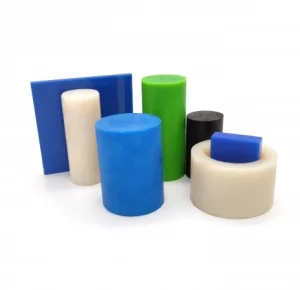
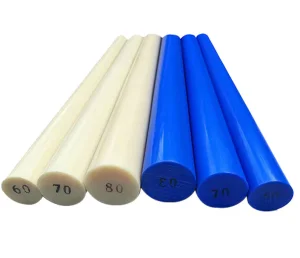
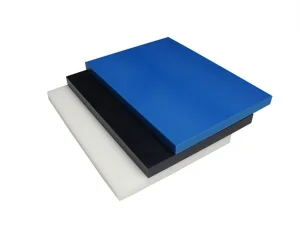
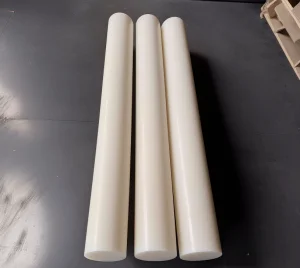
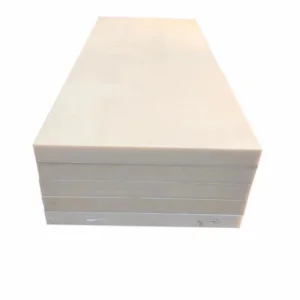
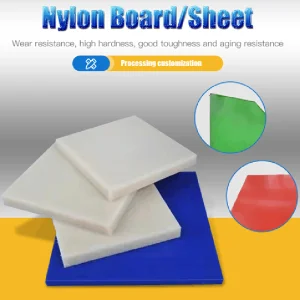
High-Precision Semi-Finished Engineering Plastics
Explore our industrial-grade stock shapes produced under tight thermal annealing profiles to guarantee zero residual stress, ultra-low porosity, and supreme machinability for critical turned parts.

Macro Trends Transforming the Engineering Plastic Rods Sector
The global mechanical engineering sector is accelerating the transition from non-ferrous metals to high-modulus, self-lubricating polymeric solids. Understanding the drivers behind this paradigm shift empowers technical buyers to reduce total operational expenditures.
Aggressive Metal-to-Polymer Substitution
By replacing bronze, brass, cast iron, and stainless steel with materials such as PA6, POM-C, and UHMWPE rods, equipment builders achieve up to a 75% reduction in dead weight, superior vibrational damping, and extended maintenance cycles in abrasive slurry conditions.
Advanced Annealing & Stress Relief
Modern high-speed CNC turning and multi-axis milling demand round bar stock free from asymmetric frozen-in internal stresses. Our proprietary post-extrusion and post-casting thermal cycling programs prevent rod warping and centerline porosity during machining.
Tribological Functionalization
Demand is surging for modified formulations. Solid lubricant additives including MoS2, graphite, oil-impregnated monomers, and PTFE powders directly compound into the nylon or polyacetal matrix, eliminating the need for external grease in cleanroom and subsea operations.
Comprehensive Material Selection Guide for Round Stock
A deep engineering reference designed for lead mechanical designers, manufacturing engineers, and procurement directors evaluating mechanical properties, machinability, and chemical tolerance.
| Polymer Type | Tensile Strength (MPa) | Continuous Service Temp | Moisture Absorption (24h) | Optimal Industrial Use Cases |
|---|---|---|---|---|
| PA6 / Cast MC Nylon | 75 - 90 MPa | -40°C to +110°C | 1.8% - 2.5% | Heavy-duty sheaves, wire rope pulleys, crane outrigger components, wear sliders, massive gear wheels. |
| POM-C (Polyacetal) | 65 - 72 MPa | -50°C to +100°C | 0.2% | High-precision gears, fluid manifolds, tight-tolerance valves, food handling scrolls, electrical insulators. |
| UHMW-PE (Ultra-High MW) | 22 - 35 MPa | -150°C to +80°C | <0.01% | Chute linings, bottling line guide rails, suction box covers, sub-zero conveyor wear strips, marine fender faces. |
| HDPE (High Density PE) | 25 - 32 MPa | -50°C to +80°C | <0.01% | Chemical storage tanks, secondary containment collars, low-load spacers, outdoor marine structural plates. |
| PTFE (Fluoropolymer) | 20 - 30 MPa | -200°C to +260°C | 0.00% | Cryogenic seals, non-stick chemical pump diaphragms, severe chemical exposure valve seats, aerospace bushings. |
| PEEK (Polyetheretherketone) | 100 - 115 MPa | -60°C to +250°C | 0.1% | Downhole oilfield backup rings, semiconductor wafer handling wands, autoclave-sterilizable medical handpieces. |
Macro Industry Solutions & Tailored Procurement Pathways
Global supply chain resilience depends on verifiable material authenticity, dependable dimensional stock availability, and turn-key manufacturing flexibility.
Heavy Machinery & Mining
Resistant to high impact, dust, and aggregate abrasive wear. We formulate large-diameter MC nylon rods up to 1000mm OD for robust cable sheaves, slurry pump wear rings, and heavy dump box track pads.
Automated Packaging & Intralogistics
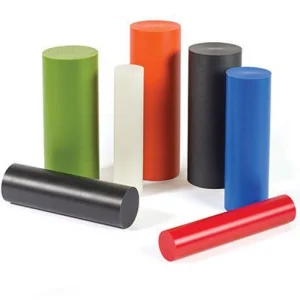
Quiet operation and zero contamination. Food-grade natural POM-C, UHMWPE, and blue-tinted visual detection plastics eliminate lubrication needs across automated sorting conveyors and sorting starwheels.
Fluid Handling & Chemical Process
Total resistance to inorganic acids, bases, and oxidizing agents. Pure virgin PTFE, PP, and HDPE bars are precision turned into valve plugs, custom flanges, labware fixtures, and scrubber pump shafts.
Marine & Offshore Infrastructure
Zero corrosion in saltwater environments. Self-lubricating nylon rudder bearings and UV-stabilized UHMWPE dock fender sliders guarantee 15+ years of maintenance-free performance without greasing bays.
Localized Support & Rigorous Compliance Frameworks
Ensuring cross-border shipments conform seamlessly with international regulatory standards, material transparency protocols, and localized delivery timelines.
Full Regulatory Traceability
Every shipment comes complete with mill test reports, heat-batch traceability, and compliance documentation including RoHS, REACH, and FDA 21 CFR 177.1500 certifications for direct food contact components.
Advanced Metrology & Quality QA
Round rods and customized finished parts undergo rigorous non-destructive ultrasonic defect scanning, laser micrometer diameter gauging, and optical comparator contour checking prior to packaging.
Global Logistics & Packing Protection
We implement climate-controlled vapor-barrier wrapping, heavy-duty honeycomb cradles, and impact-resistant fumigated plywood crating to protect bar straightness and optical surface integrity worldwide.
Technology Roadmap & Next-Generation Polymer Engineering
Continuous investment in polymer chemistry, intelligent casting process monitoring, and sustainable manufacturing guarantees long-term supply advantage.
Zero-Stress Extrusion
Integration of infrared line heating and multi-zone closed-loop cooling towers to guarantee stress-free PA6 and POM-C rods.
Nano-Reinforced Blends
Incorporating graphene and carbon nanotube additives into MC cast formulations for enhanced antistatic (ESD) and thermal conductivity.
Bio-Based High Polymers
Pioneering cast polyamides derived from non-food castor seed polyols, reducing product carbon intensity by over 40%.
Integrated Sensor Stocks
Researching embedded micro-dielectric sensors inside heavy stock rods to provide real-time wear and temperature telemetry in operating machinery.
Frequently Asked Questions on Engineering Plastic Rods
In-depth responses to core engineering and procurement questions regarding rod machinability, tolerances, annealing, and polymer behavior.
Why do standard nylon rods distort or bow during deep center drilling or turning?
Nylon exhibits residual internal hoop stresses when cooled too quickly after extrusion. When skin layers are removed during turning or boring, internal stresses rebalance, causing the rod to bow. SHUNDA executes a dual-cycle oven annealing schedule over 48 hours to fully relax the semi-crystalline lattice, guaranteeing dead-straight stability even during aggressive core-drilling operations.
What are the primary differences between extruded PA66 and monomer cast (MC) nylon rods?
Extruded PA66 has high hardness and stiffness but is limited in diameter and contains higher internal stress. Monomer Cast (MC PA6) nylon is produced via gravity or centrifugal chemical polymerisation inside open moulds, creating higher molecular weight, increased crystallinity, superior wear endurance, and the capacity to cast billets from 50mm up to 1000mm in outside diameter without voids.
How should machine shops control thermal expansion when turning POM-C rod stock?
Engineering plastics possess thermal expansion coefficients 5 to 10 times higher than carbon steels. For POM-C, maintain razor-sharp carbide or diamond tooling with generous positive rake angles, high feed rates to evacuate heat inside the chip, and continuous flood coolant. Parts must be allowed to equilibrate to 20°C ambient temperature before final critical dimension verification.
Can UHMWPE rod stock be turned into precision bushings and bearings?
Yes, though UHMWPE requires specialized machining techniques due to its extreme abrasion resistance, ductility, and tendency to generate long, unbroken ribbon chips. Rigid chip breakers, sharp ground tooling, and reduced cutting speeds are mandatory. Furthermore, UHMWPE is recommended for moderate-speed, heavy-load reciprocating pivots rather than high-RPM continuous bushings.
Premium Stock Shapes & Precision Components
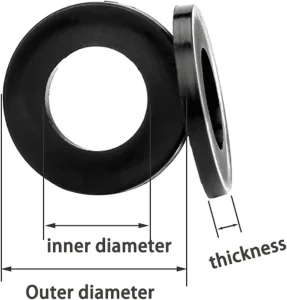
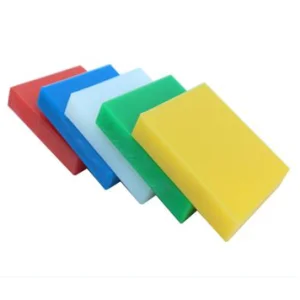
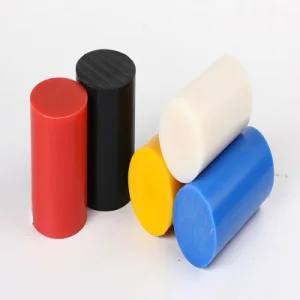
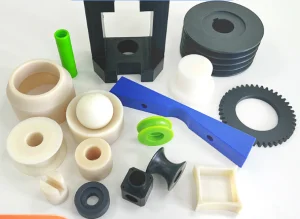
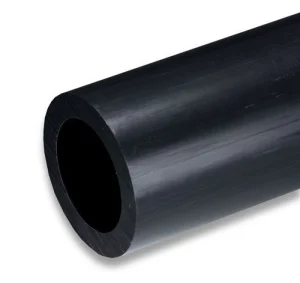
Complete product range of extruded round bars, hollow cast tubes, and finished machined products ready for immediate global logistics dispatch.