
Primary Engineering Stock & Semi-Finished Nylon Profiles
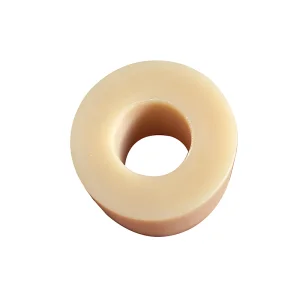
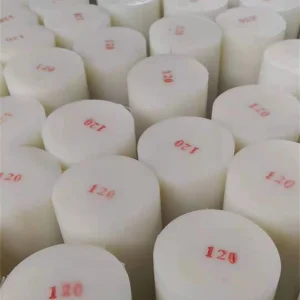
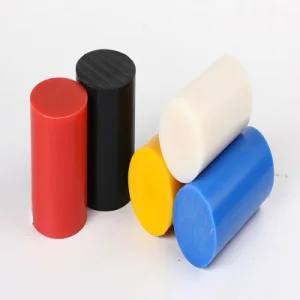
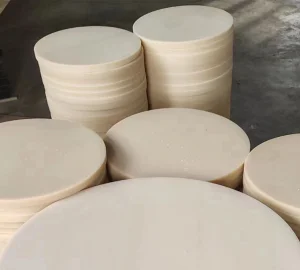
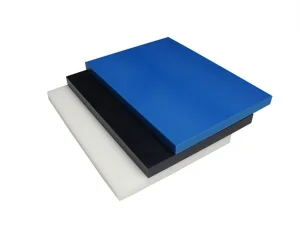
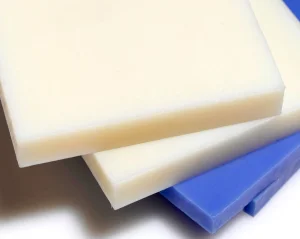
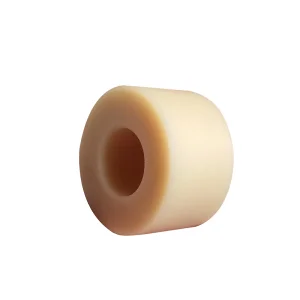
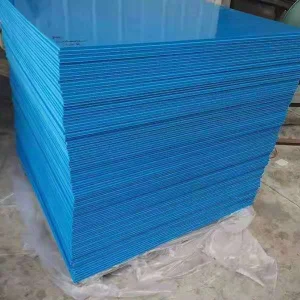
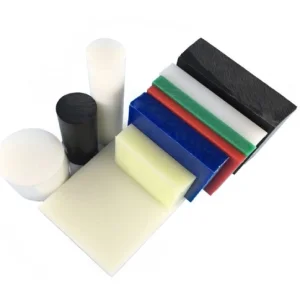
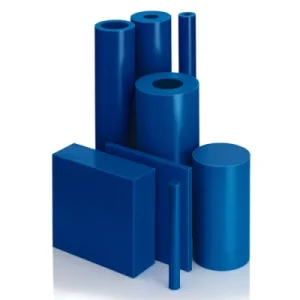
Explore our core calibrated stock lines manufactured under strict internal stress-relief protocols, including extruded polyamide 6 round bars, custom MC cast nylon profiles, impact dampers, and composite matrix polymers.
Global Market Dynamics & Engineering Demand for PA6 Bar
Polyamide 6 (Nylon 6) round bars and cast billets represent the foundational workhorse of modern mechanical power transmission, heavy material handling, and fluid dynamics containment. Understanding its global supply trajectory is paramount for procurement officers and design engineers.
Polymer Morphology & Crystalline Equilibrium
Unlike aliphatic polyamides synthesized via diamines and dicarboxylic acids (such as PA66), Nylon 6 is generated via the ring-opening polymerization of caprolactam. This molecular configuration yields an exact spacing of recurring amide (-CONH-) groups along the hydrocarbon backbone, producing alternating crystalline lamellae (alpha and gamma structures) surrounded by amorphous elastomeric domains.
- Superior Damping: Exceptional dissipation of mechanical shock and high-frequency vibrational excitation.
- Wear Kinematics: Micro-surface burnishing without abrasive scoring of mating stainless or bronze shafts.
- Viscoelastic Ductility: Retains high fracture energy at elevated strain rates compared to acetal resins.
Global Shift from Metallic Bushings to Polyamides
Worldwide original equipment manufacturers (OEMs) in maritime docking, heavy crane fabrication, and railway switch infrastructure have accelerated the substitution of phosphated steel and tin bronze alloys with PA6 and MC cast nylon round bars. This shift is driven by severe total cost of ownership (TCO) constraints, lubricant pollution legislation, and mass reduction targets.
- Weight Mitigation: 85% lighter than bronze, drastically minimizing rotational inertia in high-speed pulleys.
- Zero Galling: Eliminates micro-weld friction seizure during dry boundary lubrication transitions.
- Corrosion Immunity: Complete resistance to saline wash, hydraulic emulsions, and alkaline environments.
Monomer Casting (MC) vs. Continuous Extrusion
A critical technical distinction in purchasing Nylon 6 bars is selecting between Extruded PA6 and Cast Nylon (MC Nylon). Extrusion relies on pre-polymerized granules driven through a heated barrel and calibration dies, whereas Monomer Casting utilizes liquid caprolactam introduced into preheated metallic molds with catalytic initiators, facilitating virtually stress-free, high-molecular-weight bars up to 1000mm in diameter.
- Extruded PA6: Higher flexibility, optimal for small diameters (5mm to 150mm) and high-speed CNC lathing.
- Cast MC Nylon: Higher hardness (Rockwell M85-90), higher tensile strength, minimal residual cooling stresses.
- Custom Blends: Ease of casting with embedded MoS2, synthetic oil, or ceramic friction modifiers.
The Chinese Factory Advantage: Raw Material Scale & Production Speed
Why Tier-1 international buyers, industrial distributors, and machining houses worldwide partner with SHUNDA and specialized Chinese nylon bar manufacturers for their annual contract orders.
Upstream Caprolactam Integration
China is home to the world's most consolidated caprolactam and cyclohexanone refining infrastructure. Our facility in Hebei Province leverages direct pipe and tanker feedstocks of high-purity virgin polymer flake, eliminating intermediate supply trading markups and insulating contract buyers from international petrochemical spot volatility.
Automated Thermal Annealing Lehrs
Internal skin-to-core thermal gradient stress is the number one cause of warping when machining large-diameter solid nylon bars. Chinese manufacturing facilities implement automated, multi-stage convective annealing tunnels, soaking bars at 165°C for 24 to 72 hours under an inert nitrogen blanket to homogenize spherulite size and eliminate catastrophic parting tool binding.
Ultrasonic Non-Destructive Billet Testing
Every batch of heavy-gauge Nylon 6 round bars (>100mm OD) undergoes ultrasonic pulse-echo non-destructive inspection (NDI). We verify that center-line vacuum cavities, shrinkage voids, and density discrepancies are thoroughly detected before shipping, preventing costly CNC spindle crashes during high-precision deep boring operations.
Nylon 6 Bar Material Grades & Empirical Physical Characteristics
Compare baseline mechanical, thermal, and electrical metrics across unfilled virgin PA6, Monomer Cast MC Nylon, MoS2 self-lubricating, and 30% glass-fiber reinforced formulations.
| Property Parameter (ASTM / ISO) | Extruded PA6 Virgin | Cast MC Nylon (Natural/Blue) | Cast PA6 + MoS2 (Grey/Black) | PA6-GF30 (30% Glass Filled) | Oil-Impregnated Cast Nylon |
|---|---|---|---|---|---|
| Specific Density (g/cm³) | 1.14 | 1.15 - 1.16 | 1.16 | 1.35 | 1.14 |
| Tensile Strength at Yield (MPa) | 78 - 82 | 85 - 92 | 84 - 88 | 145 - 170 | 72 - 76 |
| Elongation at Break (%) | 45 - 60 | 25 - 40 | 20 - 30 | 4 - 8 | 35 - 50 |
| Flexural Modulus (MPa) | 2,800 | 3,300 - 3,500 | 3,450 | 7,800 - 8,500 | 2,900 |
| Rockwell Hardness | R115 / M82 | R118 / M88 | R119 / M89 | M96 | R112 / M78 |
| Dynamic Coeff. of Friction (Dry) | 0.28 - 0.35 | 0.22 - 0.28 | 0.18 - 0.22 | 0.32 - 0.40 | 0.12 - 0.16 |
| Continuous Service Temp (°C) | -40 to +100 | -40 to +105 | -40 to +110 | -40 to +120 | -40 to +105 |
| Water Absorption (Saturation, 23°C) | 8.5% | 6.8% | 6.5% | 5.5% | 5.8% |
| Dielectric Strength (kV/mm) | 25 | 28 | 22 | 30 | 24 |
*Note: Data derived under dry-as-molded (DAM) conditions per ASTM D638, D790, and ISO 527. Moisture conditioning to ambient relative humidity (50% RH) will increase elongation at break and impact toughness while proportionally moderating tensile yield strength and flexural modulus.
Localized Heavy Industrial Applications for Nylon 6 Bar Stock
From high-tonnage mining draglines in Western Australia to deep-sea winch sheaves in the North Sea, PA6 round bars provide uncompromising structural resilience.
Heavy Mobile Cranes & Offshore Sheaves
Crane boom point sheaves, whip line pulleys, and hoisting drum sleeves fabricated from Blue MC Cast Nylon bars dramatically lengthen wire rope fatigue life. Unlike forged steel sheaves that pinch and work-harden steel cable strands, the elastic modulus of cast PA6 matches the contact pressure profile, yielding an average 3.5× increase in wire rope service life.
Piling Hammer Impact Cushions & Caps
Civil engineering pile-driving vibratory and hydraulic hammers require severe compression dampening. High-molecular-weight cast nylon billet cushions absorb extreme shock loads (exceeding 250 kN per impact blow) while transferring axial force cleanly into prestressed concrete or steel casing piles without cracking or shattering under rapid cyclic compression.
Hydraulic Cylinder Wear Rings & Bushings
Excavator boom pivots, agricultural linkage joints, and mining tippers replace bronze bearings with internally lubricated or MoS2-infused PA6 bars. The material embeds grit and quartz particles harmlessly below its functional contact surface, safeguarding expensive hardened cylinder rods against catastrophic galling.
Pulp, Paper & Bulk Handling Rollers
Continuous chemical pulp bleachers, conveyor idler rollers, and scrapers demand chemical tolerance across pH 4 through 11. Nylon 6 bars machined into feed rollers and stars run smoothly with zero lubrication, preventing oil dripping and product contamination across consumer packaging and tissue converting lines.
High-Voltage Switchgear & Railway Insulators
With high dielectric withstand (28 kV/mm) and class-leading arc-tracking resistance (CTI > 600V), PA6 bars serve as heavy mechanical standoff insulators, breaker rods, and pantograph linkage guides across urban electrified light-rail and locomotive catenary infrastructures.
Global Enterprise Sourcing Protocols: QA, Tolerances & Inspection
A rigorous checklist for supplier audits, dimensional stability standards (DIN ISO 2768), and ocean-freight humidity control for technical polymer shipments.
Machining Allowance & Centerline Shrinkage
Solid nylon round bars naturally experience volumetric thermal shrinkage during cooling. For extruded and cast bars, diameters below 100mm feature oversized tolerances of +0.5mm to +2.5mm to provide clean turning cleanup. Large-diameter bars (150mm to 800mm) include intentional machining allowances of +2.0mm to +6.0mm per DIN EN 15860, ensuring your final CNC turned bushing reaches nominal outer dimension without surface skin inclusions.
Moisture Management & Ocean Freight Packaging
Because virgin PA6 exhibits hygroscopic absorption of up to 2.5% to 3.0% under ambient equilibrium (and 8.5% at complete water saturation), unprotected sea transit through humid equatorial sea lanes causes premature dimensional swelling. SHUNDA executes multi-layer vacuum heat-sealed barrier wrapping and desiccant buffering for all export containers, assuring bars arrive with DAM (Dry-As-Molded) moisture levels under 0.3%.
Mill Test Certification & Traceability
All production runs are accompanied by EN 10204 Type 3.1 Mill Test Certificates. Testing covers melt mass-flow rate (MFR/MFI), specific density, Shore D / Rockwell M hardness, tensile yield stress, and RoHS/REACH compliance documentation verifying absence of restricted halogenated flame retardants or heavy metal pigments.
CNC Machining & Tooling Best Practices for Nylon 6 Bars
Eliminate melting, chip wrapping, and bore ovalization with factory-verified tooling geometries, cutting fluids, and feed parameters.
Lathe Turning & Facing Parameters
Use polished carbide or polycrystalline diamond (PCD) inserts with aggressive positive rake angles (+15° to +25°) and clearance angles (+8° to +12°). Maintain surface speeds between 250 m/min and 450 m/min. In contrast to metal cutting, light finishing cuts below 0.25mm must be avoided, as tool deflection and friction rubbing create localized melting rather than crisp chip shearing.
Deep Hole Drilling & Core Boring
Nylon exhibits lower thermal conductivity than mild steel by a factor of 250. During center drilling, heat accumulates rapidly within the drill flutes. Utilize wide-helix parabolic drills with polished flutes, frequent pecking cycles (every 2-3× diameter), and continuous compressed-air or water-soluble flood coolant to evacuate continuous stringy chips and prevent internal thermal burst cracking.
Post-Machining Stress Annealing
When high-precision bearings or thin-walled bush sleeves require dimensional stability below ±0.03mm, perform intermediate rough machining leaving 2-3mm envelope, followed by secondary oil-bath or air-circulating annealing at 140°C-150°C (1 hour per 6mm wall thickness) and gradual cooling at <10°C per hour before executing the final finishing passes.
Emerging Trends: Circular Economy, Chemical Depolymerization & Nano-Blends
The technical roadmap of polyamide bar manufacturing is undergoing rapid evolution to meet carbon neutrality and extreme tribological requirements.
Chemical Depolymerization Back to Pure Monomer
Unlike standard mechanical recycling that causes thermal chain scission and drops mechanical strength by 30-40%, advanced Chinese polymer facilities are adopting catalytic pyrolysis and subcritical water hydrolysis. CNC turning turnings and end cuts are depolymerized back into pharmaceutical-grade caprolactam, recreating virgin-purity Nylon 6 bars with 70% lower cradle-to-gate carbon footprints.
Graphene & Nano-Ceramic Compound Additions
Novel custom formulation runs integrate nano-graphene platelets and boron nitride nanoparticles into monomer cast matrixes. This boosts thermal conductivity from 0.23 W/m·K up to 1.1 W/m·K, allowing high-speed sliding bearings to evacuate frictional flash heat four times faster, thereby doubling continuous PV (Pressure-Velocity) operational limits.
Near-Net Shape Cast Billets for Giant Rings
To eliminate expensive raw material loss when turning massive 1000mm to 2000mm outside-diameter marine slew bearings, centrifugal vertical mold casting enables the creation of thick-walled hollow cylinders directly, slashing machine time by over 60% and radically reducing per-component scrap rates.
Frequently Asked Questions: Buying Nylon 6 Bar Stock
In-depth technical clarifications for global procurement teams, machine shop estimators, and structural design engineers.
Specialized Semi-Finished Engineering Plastics & Component Stock
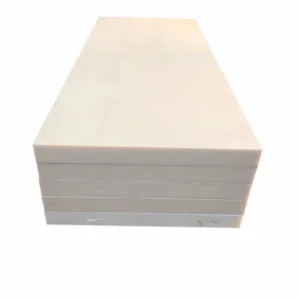
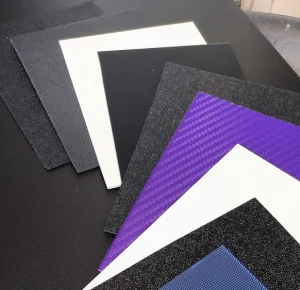
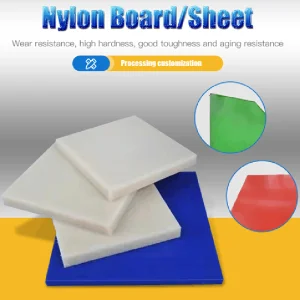
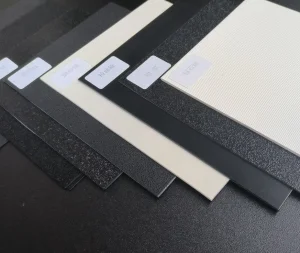
Review our extended heavy-duty product inventory, including crane stabilizer pads, cast polyamide sheets, industrial vibration dampening cushions, and co-polymer engineering stock.
Need Calibrated Nylon 6 Bars or Custom Precision Parts?
Connect directly with SHUNDA’s polymer metallurgical team. We evaluate your application friction velocity (PV limits), bore shrinkage parameters, ambient chemical environment, and provide complete mill test certifications within 12 hours.