
Featured Casting Bars & Heavy-Duty Engineering Plastics
Direct factory inventory manufactured under controlled crystallization cooling. Ideal for low-friction, high-tensile, and chemically inert industrial mechanical components.
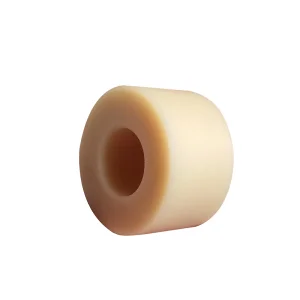
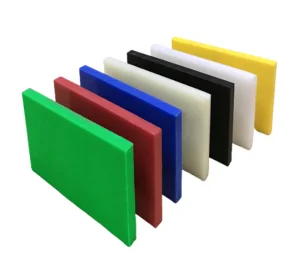
Global Procurement Demand for Cast Nylon Bars & Semi-Finished Shapes
Why modern original equipment manufacturers (OEMs), Tier-1 automotive integrators, and industrial fabrication shops are switching from conventional bronze, brass, and extruded rods to Cast Monomer (MC) Polyamide bars.
Zero Internal Residual Stress
Monomer casting takes place under ambient atmospheric pressure through base-catalyzed anionic polymerization. Unlike high-pressure extrusion which traps immense shear stress within thick bars, cast nylon bars do not warp, distort, or crack during heavy CNC milling, turning, or deep hole drilling operations.
Superior Molecular Weight & Crystallinity
Casting PA6 bars yields molecular chains exceeding 300,000 to 1,000,000 g/mol—more than triple that of conventional extruded nylon (PA66). This ultra-high degree of crystallization significantly boosts compressive yield strength, dampens vibration, and increases dry wear endurance in unlubricated environments.
Economies of Mass Weight Reduction
With a specific gravity of roughly 1.15 g/cm³ compared to 8.8 g/cm³ for phosphor bronze and 7.8 g/cm³ for alloy steel, cast bars deliver a 75% to 85% mechanical weight reduction. This dramatically reduces rotational inertia, lowers energy consumption on motor drives, and eases field maintenance logistics.
China Direct Factory Advantage: End-to-End Vertical Manufacturing
How SHUNDA's Xinhe County production base controls chemical purity, customized molds, stress-relief annealing chambers, and 5-axis CNC machining under one roof.
Pure Monomer Direct Sourcing
Direct procurement of caprolactam liquid allows precise activator-catalyst blending. We maintain strict control over moisture content (<0.02%), preventing micro-porosity and internal gas bubble voids.
Secondary Thermal Annealing
Every solid casting bar and slab undergoes controlled liquid thermal annealing cycles inside temperature-regulated oil/air vats for up to 48 hours to homogenize residual internal stresses.
Diameters Up To 1000mm
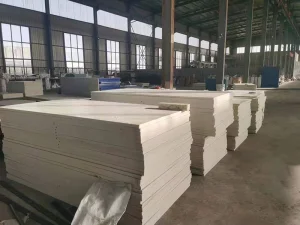
Our vertical centrifugal and static casting systems yield colossal round bars, rings, and ultra-thick sheets unattainable via standard extrusion lines, removing core cracking risks completely.
Integrated CNC Machine Shop
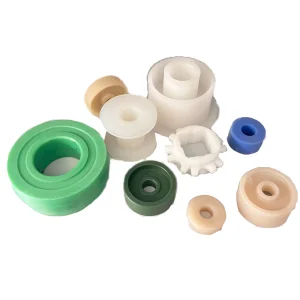
Eliminate intermediate middlemen markups. From stock solid bar to precision machined sheaves, bushings, and guide sprockets, we execute turnkey parts built directly to your CAD drawings.
Industrial Casting Bar & Polymer Selection Matrix
Compare critical physical, mechanical, and thermal parameters across our prime engineering casting rod and plate materials to balance cost-efficiency with working life.
| Polymer Designation | Specific Density (g/cm³) | Tensile Strength (MPa) | Flexural Modulus (GPa) | Impact Toughness (kJ/m²) | Continuous Max Temp (°C) | Coefficient of Friction (Dry) | Key Industry Application |
|---|---|---|---|---|---|---|---|
| Cast PA6 (Natural/Blue) | 1.15 | 82 – 88 | 3.2 – 3.5 | > 5.5 | 105 | 0.25 – 0.32 | Crane sheaves, large gears, wear shoes |
| Cast PA6 + MoS2 (Black) | 1.16 | 85 – 92 | 3.5 – 3.8 | > 4.8 | 110 | 0.20 – 0.26 | Self-lubricating heavy bushings, slideways |
| POM-C (Polyacetal Copolymer) | 1.41 | 65 – 70 | 2.8 – 3.0 | > 6.0 | 100 | 0.25 – 0.30 | Dimensional tight valves, food conveyor gears |
| UHMWPE (Molecular Wt > 5M) | 0.94 | 25 – 35 | 0.7 – 0.9 | No Break | 80 | 0.10 – 0.15 | Chute liners, scraper blades, starwheels |
| Virgin PTFE Bar | 2.18 | 22 – 30 | 0.5 – 0.7 | > 16.0 | 260 | 0.04 – 0.08 | Cryogenic seals, harsh chemical valve seats |
| Extruded HDPE | 0.96 | 28 – 32 | 1.0 – 1.2 | > 10.0 | 80 | 0.22 – 0.28 | Acid storage tanks, marine fender buffers |
Localized Regulatory Assurance & Quality Guarantee
Eliminating risk for global importers. Our production facilities maintain rigorous quality control aligned with EU, North American, and Asia-Pacific regulatory standards.
RoHS & REACH Compliance
All casting bars, pigments, internal additives, and masterbatches are rigorously tested via SGS/TUV testing agencies. We guarantee non-detectable levels of heavy metals (lead, cadmium, mercury), halogenated flame retardants, and SVHC chemical hazards.
FDA & EU Food Contact Directives
Virgin white POM and natural cast nylon resins comply with FDA 21 CFR 177.1500 and EU 10/2011 regulations. Safe for continuous dry food handling, direct grain transport, dairy bottling star wheels, and beverage capping parts.
EN 10204 3.1 Material Test Reports
Each outgoing production batch includes an inspection certificate detailing raw resin melt flow index (MFI), density verification, Rockwell hardness, and ultrasonic NDT porosity test clearance to guarantee structural integrity.
Localized Industrial Applications & Next-Gen Polymer Trends
From heavy crane cable sheaves in European ports to subsea petroleum pipe supports in the Gulf of Mexico, cast bars are setting new performance records.
Mobile Cranes & Marine Winches
Machining cable sheaves and rope pulleys from cast nylon bars multiplies wire rope service life by 4.5× compared to cast iron. The elastic resilience of MC PA6 prevents crushing deformations on outer wire rope strands under extreme tension loads.
Hydraulic Pile Drivers & Hammers
Specially cast blue high-impact nylon cushions absorb dynamic peak shock loads during piling without shattering. With high elastic memory and damping factors, they preserve expensive steel hammer heads and lower operating decibel levels.
Nanotech Solid Lubrication Trends
The casting bar industry is transitioning to internally lubricated and carbon-nanotube anti-static grades. By infusing specialized synthetic liquid wax or ceramic micro-particles during anionic polymerization, parts run dry with zero stick-slip effect.
Frequently Asked Technical & Sourcing Questions
Clear, engineering-backed answers addressing tolerances, moisture stabilization, CNC feeds, and international freight packaging.
Cast nylon is synthesized directly inside atmospheric pressure molds from caprolactam monomer, achieving ultra-high molecular weight (>300,000 g/mol) and superior crystallinity. It exhibits lower residual internal stress, making it exceptionally stable for large diameter bars (up to 1,000mm) where extruded rods would suffer center-line voids and high distortion upon machining.
Polyamides absorb atmospheric moisture (up to 2.5% equilibrium in 50% RH). When tight dimensional tolerances are necessary (±0.02mm), we recommend either artificial moisture pre-conditioning prior to final finishing, switching to POM-C (acetal) which absorbs less than 0.2% moisture, or factoring swelling expansion coefficients directly into the machining tolerances.
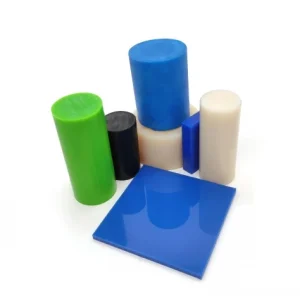
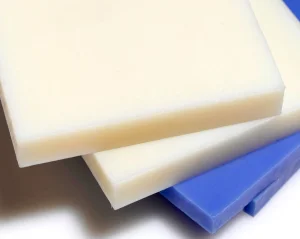
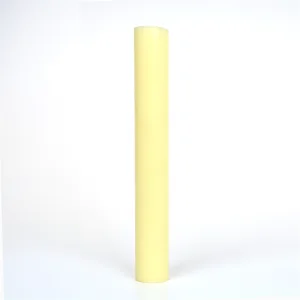
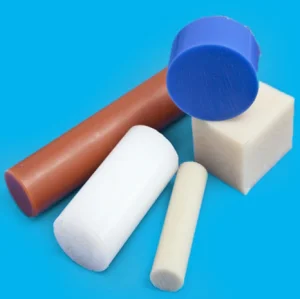
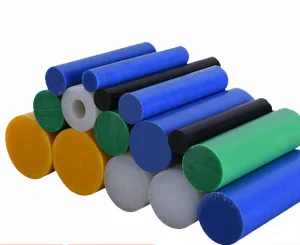
Yes. In addition to standard natural (ivory/white) and industrial blue, we formulate oil-filled yellow (internally lubricated), molybdenum disulfide (MoS2 grey-black for high-load sliding), green lubricated PA6, flame-retardant (UL94-V0), and heat-stabilized formulations customized to your target operating conditions.
Every casting bar over 50mm in diameter undergoes longitudinal ultrasonic non-destructive testing (NDT). This checks for centerline micro-voids, porosity, and thermal shrinkage discontinuities, ensuring structural integrity prior to machining or international shipment.
Use polished, high-rake carbide or diamond-tipped (PCD) cutting tools with generous relief angles (10°–15°). Maintain aggressive feeds and sharp cutting edges to shear rather than rub the plastic. High-flow air cooling or water-soluble coolants are essential to avoid local thermal melting and tool clogging.
Standard round bar diameters (20mm to 300mm) ship within 7–10 working days. Finished CNC components typically take 15–20 days. Shipments are packed with moisture-resistant PE stretch film wrapping, shock-absorbing corner buffers, and heavy-duty ISPM-15 heat-treated plywood crates to prevent distortion during ocean container voyages.
Full-Spectrum Engineering Plastics, Solid Bars & Turnkey CNC Components
From single prototypes to multi-container shipments. Choose semi-finished stock shapes or commission custom CNC turning and milling with verified tolerances.
Ready to Specify Your Casting Bar Procurement?
Send your engineering drawings (CAD, STEP, PDF) or stock bar dimensions (diameter, length, polymer grade). Our sales engineering team provides full factory pricing, batch lead-times, and compliance certifications.