
Direct OEM Supply: Engineered Cast Elastomers & Polyamide Stock
Explore initial catalog units certified for extreme compressive stress, severe mechanical impact, and dynamic hydraulic fatigue.

Macro-Industrial Landscape: The Global Pivot to High-Performance Cast Elastomers
Analyzing global supply chain trends, total cost of ownership (TCO) calculus, and why Fortune 500 equipment builders are moving beyond traditional vulcanized rubbers.
In modern high-stress heavy manufacturing, civil infrastructure, and bulk raw materials transportation, equipment failure is fundamentally tied to dynamic tribological wear, localized shear stresses, and unattenuated kinetic impact. For decades, natural and synthetic vulcanized black rubber dominated damping and lining applications. However, modern automated production lines, heavy piling rigs, and high-velocity hydraulic circuits routinely exceed the thermal, tensile, and chemical boundaries of conventionally cured sulfur-crosslinked elastomers. This technical threshold has triggered a massive global shift toward liquid cast polyurethane (CPU), liquid cast silicone rubber, and cast monomer polyamide (MC Nylon) hybrid systems.
International procurement executives facing tight maintenance windows and escalating equipment downtime costs are re-evaluating supplier selection through the lens of Total Life-Cycle Economy rather than simple component unit price. When a piling hammer cushion or mining hydrocyclone liner fails unexpectedly, the cost of scheduled extraction, lost production hours, and structural hammer head damage dwarfs the replacement cushion's invoice by multiple orders of magnitude. Consequently, high-resilience cast polymers—offering up to 6 times the impingement abrasion resistance and 4 times the compressive yield strength of conventional synthetic rubber—have transitioned from a premium alternative to an engineering mandate.
Supply Chain Reshoring & Dual-Sourcing
Global OEMs across North America and Europe are establishing dual-channel supply pipelines. While local rapid-prototyping workshops handle emergency bespoke jobs, continuous high-volume production of semi-finished rods, tubes, and cast cushions is centered in technologically upgraded facilities in Hebei, China, guaranteeing competitive economies of scale without dimensional variances.
Severe Operating Dynamics
Modern piling hammers deliver impact forces exceeding 3,000 kJ to drive deep foundation tubular steel casings into maritime bedrock. Standard vulcanized rubber compresses beyond elastic recovery, generating severe hysteresis and combustive internal breakdown. Liquid-cast polyurethanes dissipate this extreme energy while preventing hydraulic rebound shocks.
Hybrid Polymer Synergies
Industrial assemblies rarely operate with a single polymer grade. Progressive system designs integrate cast elastomeric damping layers (Shore 85A to 95A) with rigid, low-friction MC Nylon (PA66) or ultra-high-molecular-weight polyethylene (UHMWPE) guide plates, creating composite kinetic buffers that conquer both axial shock and continuous surface drag.
Engineering Tribology: Cast Polyurethane Chemistry vs. Vulcanized Rubber & Plastics
Understanding the molecular dynamics, isocyanate backbone differences, and comparative mechanical performance metrics.
The term "Cast Rubber" within heavy industrial engineering refers predominantly to Thermoset Cast Polyurethane Elastomers (CPU) synthesized via the controlled polymerization of diisocyanates (TDI, MDI, or high-performance aliphatic precursors) with high molecular weight polyols (polyester or polyether chains), extended with low-molecular aromatic diamines or aliphatic diols. Unlike thermoplastic elastomers (TPE) which melt upon reheating, or millable rubber compounded on open two-roll mills with carbon black fillers, cast polyurethane elastomers cure through an irreversible liquid-to-solid crosslinking reaction inside precision molds without internal mechanical stresses.
The molecular morphology consists of alternating thermodynamically incompatible segments: "soft segments" (long polyol chains providing elastic recovery, low-temperature flexibility, and impact dissipation) and "hard segments" (rigid urethane/urea domains formed by diisocyanate-chain extender reactions providing structural stiffness, tear strength, and tensile modulus). By precisely tuning the ratio of hard to soft domains, material engineers can formulate components spanning from soft Shore 40A damping rings to ultra-tough Shore 75D structural impact cushions.
| Property Evaluation Metric | Cast Polyurethane (TDI/MDI) | MC Cast Nylon (PA6 / PA66) | Vulcanized Nitrile/Natural Rubber | UHMWPE (PE-1000) |
|---|---|---|---|---|
| Durometer Range | Shore 50A – 75D | Rockwell R 115 – 120 | Shore 40A – 85A | Shore 62D – 68D |
| Tensile Strength (MPa) | 35 – 62 MPa | 75 – 90 MPa | 12 – 22 MPa | 22 – 38 MPa |
| Taber Abrasion (mg loss, H22/1kg) | 12 – 25 mg | 45 – 60 mg | 140 – 220 mg | 15 – 30 mg |
| Dynamic Impact Cushioning | Exceptional (Viscoelastic Damping) | Moderate (High Modulus Barrier) | High (Prone to Severe Heat Hysteresis) | Good (Cold Flow Susceptibility) |
| Tear Strength (Die C, kN/m) | 75 – 140 kN/m | Non-applicable (Rigid Yield) | 25 – 45 kN/m | Non-applicable (Ductile Shear) |
| Hydrolytic & Microbial Stability | High in Polyethers / Moderate in Polyesters | Moderate (Hygroscopic Absorption 1.5-6%) | Moderate to Poor in Extreme Oils | Immune (Zero Moisture Uptake) |
Polyether vs. Polyester Backbone Selection
When specifying cast rubber formulations, polyol backbone selection dictates longevity in field environments. Polyether-based cast systems deliver superior resistance to water hydrolysis, active microbes, and dynamic flexing heat buildup, making them the preferred choice for offshore subsea pipeline bend restrictors and piling cushions operating in humid maritime settings. Conversely, Polyester-based systems yield unparalleled cut, tear, and solvent resistance, ideal for severe sliding wear plates, slurries, and industrial wheels contacting petroleum oils.
Stress Dissipation via Annealing & Casting
A critical differentiator in professional casting is post-cure annealing. Uncontrolled cooling of thick-wall cast billets or round bars creates severe thermal gradients, trapping residual hoop stresses inside the polymer core. At our manufacturing facility, raw castings undergo computer-controlled secondary thermal curing at 100°C – 115°C for 16 to 24 hours. This eliminates core micro-porosity, stabilizes molecular crystallinity, and prevents catastrophic warping during secondary CNC turning or milling operations.
Macro-Industry Solutions: Engineered Field Deployments
Examining mission-critical installations across heavy piling, geotechnical engineering, slurry extraction, and high-load rolling stock.
Piling Hammer Impact Cushions
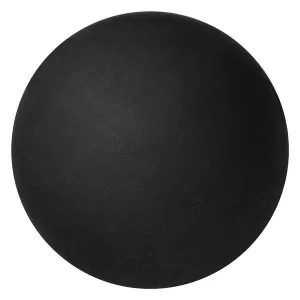
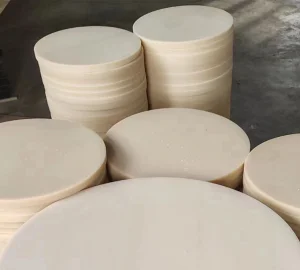
In hydraulic and diesel piling rigs, our black and blue impact cushions sit directly between the forged steel ram and the pile drive cap. Subjected to dynamic peak decelerations exceeding 1,200 g's, these specially formulated cast blocks attenuate damaging high-frequency stress waves, preventing premature pile-head fracturing while maximizing downward kinetic energy transfer into the foundation substrate.
- High dynamic rebound resilience (>65%) preventing energy trapping.
- Customized circular geometries up to 1,200 mm diameter.
- Extended field durability outlasting hardwood cushions by 10 to 1.
Mineral Processing & Bulk Handling
Mining operations handling quartz, iron ore, and abrasive aggregate experience extreme impingement wear in discharge chutes, vibrating screens, and transfer hoppers. Our elastomeric cast liners and MC Nylon slide plates absorb kinetic projectile impact through localized elastic deformation, bouncing jagged particulates off the wear face without surface tearing or brittle micro-cleavage.
- Dramatically reduces processing plant noise pollution by 12–18 dB.
- Zero chemical degradation when exposed to acidic mine drainage (pH 3–11).
- Lightweight modular panel assemblies reducing maintenance crane time.
Automated Material Handling & Rollers
Automated guided vehicles (AGVs), heavy overhead gantry cranes, and sorting conveyor hubs require drive wheels capable of supporting 5-ton wheel loads without permanent flat-spotting or interfacial debonding. Our liquid cast polyurethane chemistries feature proprietary metal-adhesion primers that achieve chemical bonding strengths greater than the tear strength of the elastomer itself.
- Low rolling resistance coefficient saving electrical battery reserve.
- Non-marking formulations preserving high-specification factory flooring.
- Zero delamination under high-frequency continuous cyclic loading.
Technical Roadmap (2025–2035): The Next Horizon of Cast Polymer Engineering
Anticipating structural engineering demands: Self-diagnosing elastomers, bio-based precursors, and high-heat continuous formulations.
Smart Nano-Sensor Integration
The convergence of industrial internet of things (IIoT) and polymer science has birthed conductive elastomeric matrices. By dispersing carbon nanotubes (CNTs) and multi-layer graphene flakes directly into the polyol prepolymer, our R&D roadmap introduces cast cushions that change electrical resistivity proportionally to internal strain and micro-cracking, facilitating true predictive maintenance for deep-foundation infrastructure.
Circular Bio-Polyols & Non-Isocyanate Syntheses
Global environmental mandates (REACH, EU Green Deal) are driving the shift toward non-toxic manufacturing. Our next-generation formulations explore polyols synthesized from non-food agricultural waste and lignin precursors, paired with bio-based diisocyanates, aiming for a 45% reduction in Scope 1 and Scope 2 embodied carbon footprints without sacrificing mechanical tensile or impact performance.
High-Temperature Continuous Resistance
Conventional urethanes degrade above 90°C due to urethane linkage dissociation. Advanced polymer synthesis incorporating specialty cycloaliphatic structures and crosslinked polycaprolactone polyols pushes stable continuous operating temperatures to 140°C with intermittent peaks up to 160°C, enabling deployment in engine bays and continuous mineral drying chutes.
Global Compliance & Quality Assurance Architecture
A zero-defect manufacturing methodology guaranteeing structural integrity, batch homogeneity, and international regulatory conformance.
Procuring cast rubber and engineering plastics from an overseas production base requires unquestioned traceability and strict compliance with international mechanical testing protocols. At our modern production facility in Hebei, every production run operates under rigorous ISO 9001:2015 quality management systems. From primary chemical synthesis to multi-axis CNC component finishing, products undergo 5 verified validation gates:
Gate 1: Raw Prepolymer Rheology
Automated titration to verify isocyanate (%NCO) content. Moisture detection down to <15 ppm in polyol stocks prevents exothermic CO2 foaming during hot casting.
Gate 2: Thermal Vacuum Degassing
Prepolymers undergo continuous thin-film vacuum degassing below 2 mbar to pull all micro-entrained ambient air, ensuring 100% solid, void-free finished castings.
Gate 3: Hardness Gradient Verification
Multi-point durometer verification (ASTM D2240) across axial and radial cross-sections to verify consistent curing without soft inner core defects.
Gate 4: CMM & Laser Dimensional Inspection
Finished CNC machined components are verified using 3-axis coordinate measuring machines (CMM) and laser micrometer arrays against customer CAD drawings.
International Standard Conformance Directory
Our cast rubber, nylon, POM, UHMWPE, and fluoropolymer components are produced and certified to the following international benchmarks:
- Tensile & Elongation: ASTM D412 / ISO 37 (Die C specimens tested at 500 mm/min crosshead speeds).
- Tear Resistance: ASTM D624 (Die B and Die C nicked angles for dynamic crack propagation tracking).
- Rotary Drum Abrasion: ISO 4649 / ASTM D5963 (Standardized test under 10 N contact pressure using grade 60 abrasive paper).
- Compression Set: ASTM D395 Method B (Deflection under 25% strain at 70°C for 22 continuous hours).
- Chemical & Environmental Directives: Full compliance with EU RoHS Directive 2011/65/EU and REACH (EC 1907/2006) SVHC candidate listing.
Localization Support & Cross-Border Logistics Framework
Delivering comprehensive engineering consulting, multilingual documentation, and rapid sea/air export capabilities worldwide.
12-Hour Engineering Response
Global procurement operates across varied time zones. Our engineering and international trade support group guarantees technical evaluation of STEP, DXF, DWG, and PDF engineering files within 12 business hours. Material selection reports accompany every formal quotation.
Export-Grade Vapor-Sealed Packaging
Cross-ocean maritime shipping exposes semi-finished rods, sheets, and impact rings to high humidity and salt atmospheres. All products are vacuum-wrapped with desiccant, sealed in heavy vapor-barrier polyethylene wraps, and crated in fumigated solid timber export cases.
Custom Tooling & Rapid Prototype Ramping
Need non-standard cylindrical geometry or bespoke stepped impact rings? Our in-house mold tooling shop fabricates precision aluminum and structural steel cast molds in 5 to 7 business days, providing sample validation runs before greenlighting high-volume automated production.
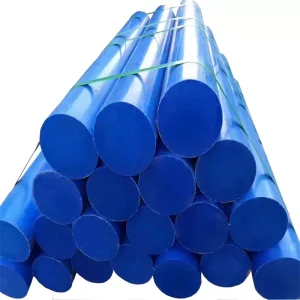
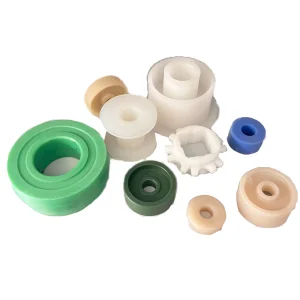
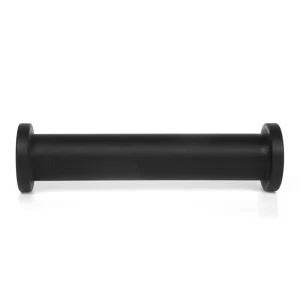
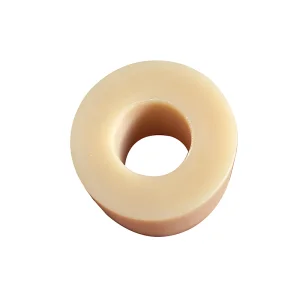
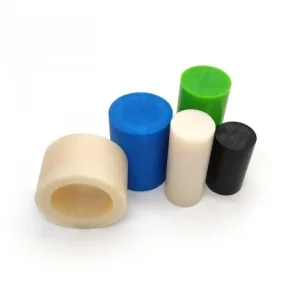
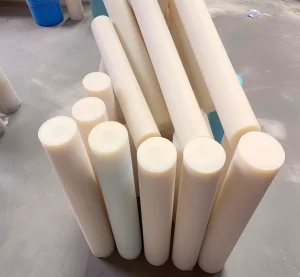
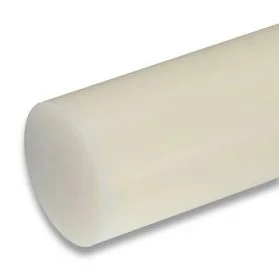
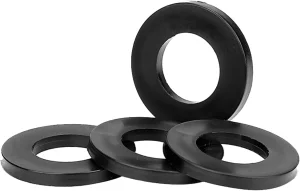
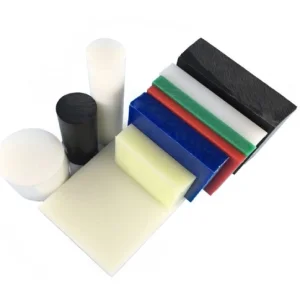
Heavy-Duty Engineering Stock: Cast Rods, Tubes & Impact Dampers
Complete product inventory ready for immediate global logistics dispatch and specialized industrial customization.
Technical FAQ: Authoritative Guidance for Engineering Teams
Addressing crucial design questions regarding durometer limits, dynamic shock behavior, mold costs, and chemical compatibilities.
Direct OEM Material Specification Blueprint
Ensure flawless execution on your next production run by following our standardized engineering submission protocol.
Phase 1: Material Grade Allocation
Determine whether your design requires pure elastomeric damping (Shore 70A–95A CPU), high-load impact distribution (MC Cast Nylon), low-friction wear surfaces (POM/UHMWPE), or extreme-temperature isolation (PTFE/PEEK). Our technical engineers will assist in cross-referencing your operating parameters against physical material limitations.
Phase 2: Drawing & Tolerance Review
Submit engineering prints with clear functional datum points. Unlike metals, polymer thermal expansion coefficients are roughly 5 to 10 times higher than carbon steel. Our design team will verify machining clearances and thermal compensation offsets so that components seat properly under active working conditions.
Phase 3: Production & Logistics Dispatch
Upon final prototype sign-off, scheduled series casting commences with material certifications (MTR, hardness reports, dimensional CMM verification sheets) linked directly to raw batch numbers. Goods are palletized and dispatched via rapid freight channels to international container ports for seamless delivery.