
What Is a Rubber Polymer Sheet Used For?

Time:2026-11-03 Author:Sophia
0%

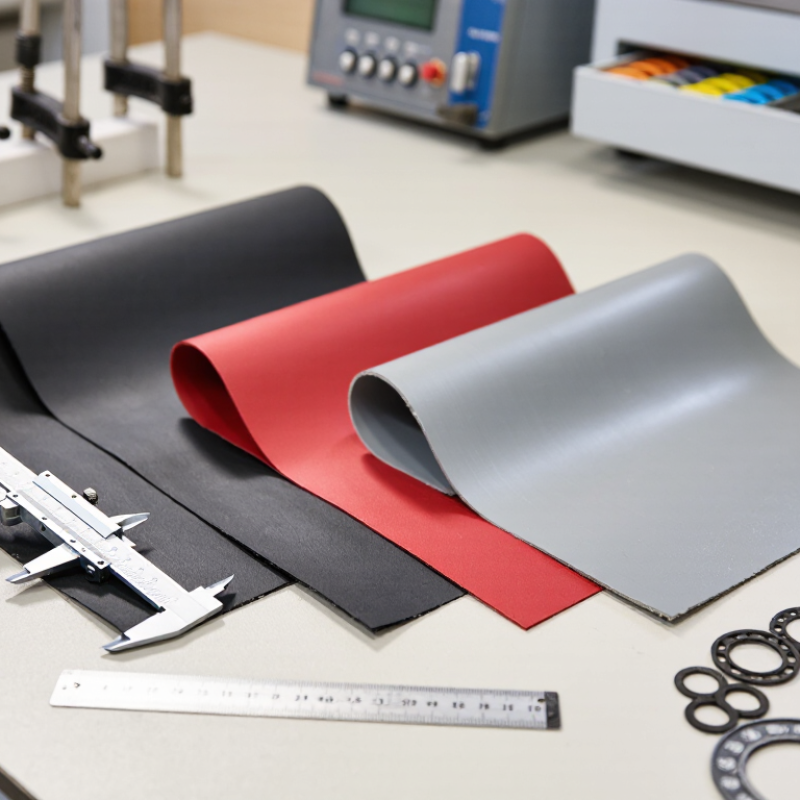
A Rubber Polymer Sheet may look simple on a workbench: a flat panel, a chosen thickness, and a surface ready to meet a demanding task. Its real value depends on the material, the environment, and the forces it must handle. Sheets made from different rubber compounds can help cushion vibration, reduce noise, create seals, or protect surfaces from abrasion. The right choice is rarely obvious from appearance alone.

Rubber-materials engineer Dr. Elena Ward puts the selection principle this way: “A sheet performs well only when its compound matches the job around it.” This is an illustrative quotation, not a verified statement from a real industry expert. In practice, buyers and engineers should check hardness, thickness, temperature range, chemical exposure, and compression needs against product data and application requirements. A soft sheet may seal a gap, yet wear quickly under repeated friction. A harder sheet may last longer, but fail to conform to an uneven flange.

Where does a Rubber Polymer Sheet make sense, and what details matter before installation? This guide explores uses in gaskets, flooring, machinery, transport, and protective linings. It also considers limits. Rubber is not a universal fix, and a product that works beside a workshop press may be unsuitable near heat, oil, or outdoor weather. Small details matter. A clean cut, a secure fit, and a suitable compound can change performance. Even then, real operating conditions can surprise you.
What Is a Rubber Polymer Sheet Used For?

What a Rubber Polymer Sheet Is

A rubber polymer sheet is a flat, flexible material made by combining an elastomer with ingredients such as fillers, stabilizers, and curing agents. The mix is pressed or calendared into a consistent thickness, then cured so its polymer chains form a resilient network. Natural rubber stretches readily; synthetic elastomers can be selected for resistance to oil, heat, weather, or chemicals. The exact behavior depends on the compound, not simply on the word “rubber.”

It feels solid, but it is not a single uniform substance. A sheet may have a smooth face, a fabric-reinforced core, or a slightly porous surface. ASTM International’s D2000 specification classifies rubber materials by properties including hardness, tensile strength, and resistance to heat or fluids. That matters when a sheet must seal a pipe flange or cushion a vibrating machine. A soft sheet may compress well, yet creep under a constant load. I have seen that detail overlooked.

The broader industry also shows how widely rubber compounds are used. The U.S. Geological Survey’s Mineral Commodity Summaries 2024 reports that global natural-rubber production was about 15 million metric tons in 2023. That figure covers raw rubber, not finished sheets, but it reflects the scale of a key feedstock. To identify a sheet accurately, check its polymer type, thickness, hardness, and test conditions; “rubber sheet” alone says very little.

Key Properties That Determine Its Performance

What Is a Rubber Polymer Sheet Used For?

Key Properties That Determine Its Performance

A rubber sheet succeeds or fails through hardness, tensile strength, compression set, and resistance to heat or chemicals. Hardness affects how firmly it seals against a flange; too soft, and pressure may squeeze it out. Many general-purpose sheets fall around 40–80 Shore A, though compound and test conditions change the result. ASTM D2240 measures hardness, while ASTM D412 evaluates tensile behavior. These are test methods, not guarantees of service life.

Small differences matter.

For a gasket beneath a pump, compression set is crucial: the sheet must recover after clamping, or leaks can develop. Oil, sunlight, ozone, and temperature can also shorten service life. Select material against the actual fluid and operating range, then check the supplier’s test data.

The USGS Mineral Commodity Summaries 2024 reports natural-rubber output at roughly 15 million metric tons worldwide in 2023, showing the scale of the raw-material supply—not the quality of any individual sheet. That distinction is easy to miss. A lab result may not capture an uneven surface, repeated vibration, or a badly tightened joint; real installations deserve a second look.

Common Uses in Industrial and Commercial Settings

Rubber polymer sheets serve as flexible barriers, seals, impact surfaces, and vibration controls in industrial and commercial spaces. Factories cut them into gaskets for pump housings and valve covers, where a compressed sheet helps limit leaks. Thick rubber strips also protect conveyor edges from abrasion. On loading docks, sheets can cushion contact between equipment and fixed surfaces. Small details matter.

The International Rubber Study Group’s World Rubber Industry Outlook 2024 estimated global rubber demand at roughly 30 million tonnes in 2023. That figure covers many rubber products, not sheets alone, but it shows the scale of rubber’s role in manufacturing. In buildings, textured sheets are used for workshop floors, walkways, and anti-fatigue mats. They can add grip and reduce the feel of hard concrete underfoot. Results depend on the compound, surface finish, and cleaning routine.

Selection is practical, not one-size-fits-all. Oil near a machine can swell an unsuitable sheet; sunlight and ozone can age some compounds. Check the supplier’s technical data for temperature range, hardness, chemical compatibility, and compression behavior. Then test a sample in the actual setting. It is tempting to choose by thickness alone, but that can miss the real failure point.

Specialized Applications in Different Environments

A rubber polymer sheet is rarely a one-material-fits-all solution. In a food-processing room, it may act as a splash barrier or cushioning layer beneath equipment. Frequent washdowns make water resistance and an easy-to-clean surface important. On a workshop floor, textured rubber can improve footing and absorb impacts from dropped tools. Details matter. The wrong surface may trap grime or wear quickly.

Outdoor installations face sunlight, rain, and temperature swings. Weather-resistant sheets can protect joints, cable routes, and exposed panels from moisture and abrasion. Near machinery, rubber pads may help reduce vibration and rattling, but they do not replace proper mounting. In oil-handling areas, ordinary rubber can swell or soften. Check compatibility with the specific fluid and operating temperature. A datasheet helps, though real conditions can be messier.

Cold rooms need rubber that stays flexible at low temperatures. Electrical enclosures may require sheets with specified insulating properties. Thickness, hardness, and surface finish all affect performance. Cut edges should fit closely, and fasteners should not create stress points. “Close enough” can become a maintenance problem. A small trial piece, checked after cleaning or seasonal exposure, may reveal issues before a full installation.

What Is a Rubber Polymer Sheet Used For? — Specialized Applications in Different Environments
Environment Common Rubber Type Typical Uses Useful Properties Selection Considerations
Outdoor and weather-exposed areas EPDM Weather seals, outdoor gaskets, roofing details, and protective covers Good resistance to ozone, sunlight, and weathering Generally unsuitable for applications involving substantial exposure to petroleum oils or fuels.
Oil- and fuel-contact environments Nitrile rubber (NBR) Oil-resistant gaskets, equipment seals, and protective linings Good resistance to many oils and fuels Resistance depends on the specific fluid and compound; outdoor ozone exposure can limit service life.
Marine and general industrial environments Neoprene (CR) Gaskets, vibration pads, protective barriers, and some marine seals Useful balance of weather, ozone, and moderate oil resistance Check compatibility with the particular chemicals, fluids, and operating conditions.
High- and low-temperature applications Silicone rubber Thermal seals, flexible covers, and gaskets in temperature-sensitive equipment Retains flexibility across a broad temperature range, depending on grade May be less suitable where high abrasion, tearing, or mechanical wear is expected.
Abrasive, impact-prone areas Natural rubber Wear liners, impact pads, and abrasion-resistant protective sheets High resilience and strong resistance to abrasion in suitable applications Typically performs poorly in prolonged exposure to oils, fuels, ozone, or outdoor weathering.
General-purpose indoor service Styrene-butadiene rubber (SBR) Flooring, pads, seals, and general-purpose protective sheets Useful abrasion resistance and economical general-purpose performance Not usually selected for prolonged outdoor exposure or contact with oils and fuels.
Electrical and equipment protection Compound selected for the electrical and mechanical requirements Insulating mats, equipment covers, and protective barriers Can provide electrical insulation and cushioning when specified for the application Confirm the required electrical rating, thickness, surface condition, and applicable safety standards.
Fluid handling and containment EPDM, NBR, or another fluid-compatible compound Tank liners, splash guards, and flexible seals Can form a flexible barrier against selected liquids Verify compatibility with the exact liquid, concentration, temperature, and exposure duration.

Material performance varies by formulation, thickness, and operating conditions. Confirm chemical compatibility and service requirements before selecting a rubber sheet.

How to Choose a Rubber Polymer Sheet for a Specific Use

Choosing a rubber polymer sheet starts with the conditions it must face, not its color or price. The International Rubber Study Group’s 2024 World Rubber Industry Outlook puts global rubber demand in 2023 at roughly 30 million tonnes. That scale reflects many applications, but it does not make one compound suitable for every job. List the actual exposures: oil, cleaning chemicals, sunlight, water, and operating temperature. A sheet sealing a pump may need oil resistance, while a floor mat may need grip and abrasion resistance. Fit matters.

Next, match measurable properties to the task. Check hardness, tensile strength, elongation, and compression set; ASTM D395 describes methods for measuring compression set. A gasket held under pressure needs to recover after compression. A protective liner may need greater tear and abrasion resistance instead. Confirm thickness and tolerance against the mating surfaces, then ask for test data at the intended temperature. Test it. A neat specification sheet can still hide a mismatch between laboratory conditions and the real machine. For critical service, trial a small sample under actual operating conditions, and record changes such as swelling, cracking, or loss of thickness. The right choice depends on the whole environment, not one headline property.

What Is a Rubber Polymer Sheet Used For? — How to Choose One for a Specific Use

Rubber sheets are used for sealing, cushioning, vibration isolation, and protection. Temperature is one useful starting point when comparing materials.

Indicative typical temperature ranges in °C; actual limits vary by compound and conditions. Choose a sheet based on temperature, chemicals, weather exposure, load, and required hardness, and confirm suitability with the supplier’s technical data.

FAQS

What is a rubber polymer sheet?

It is a flexible, flat material made from an elastomer and added ingredients. Heat and curing help form a resilient network. Not one uniform substance.

What affects how a rubber sheet performs?

Polymer type, thickness, hardness, and surface structure all matter. Fillers and curing agents also affect its behavior. The word “rubber” alone tells you little.

Where are rubber sheets commonly used?

They can form gaskets around pumps and valves, cushion loading docks, and protect conveyor edges. Textured sheets also cover workshop floors and walkways.

How can a rubber sheet help seal a machine?

A compressed sheet can limit leaks around a pipe flange or valve cover. Choose one compatible with the fluid and operating conditions. A poor fit can still leak.

What should I check before choosing a sheet?

Review its polymer type, thickness, hardness, temperature range, and chemical compatibility. Check how it behaves under compression. Thickness alone can mislead.

Can rubber sheets handle oil, heat, and sunlight?

Some compounds resist oil, heat, or weather better than others. Unsuitable material may swell near oil or age under sunlight and ozone. Test a sample.

Are softer sheets always better for cushioning?

No. A soft sheet may compress easily but gradually creep under a constant load. I might overlook that detail, too.

What do global rubber production figures tell us about sheets?

Global natural-rubber production was about 15 million metric tons in 2023. That measures raw rubber, not finished sheets. It shows the scale of a key material, not sheet output.

Conclusion

A Rubber Polymer Sheet is a flexible, durable material made from rubber compounds and designed to provide protection, cushioning, sealing, or grip. Its performance depends on factors such as thickness, hardness, elasticity, resistance to wear, and ability to tolerate heat, moisture, oils, or chemicals. Choosing the right combination of properties helps ensure the sheet performs reliably in its intended setting.

Rubber polymer sheets are commonly used in industrial and commercial environments as floor coverings, vibration dampeners, protective liners, gaskets, and seals. Specialized versions may suit areas with high temperatures, frequent exposure to liquids, outdoor conditions, or demanding mechanical wear. To select a sheet for a specific use, consider the operating environment, expected loads, contact materials, required lifespan, and installation method. Matching these needs to the sheet’s properties can improve safety, reduce wear, and support dependable performance.

Sophia

Sophia

Sophia is a dedicated marketing professional with an exceptional depth of knowledge about her company's products and services. With a keen understanding of market trends and customer needs, she crafts insightful blog posts that not only inform but also engage readers, enriching the company’s online......
[email protected] [email protected] Request a Catalog