
How to Choose the Right Polymer Welding Rods?
Choosing the right Polymer Welding Rods is not a guessing exercise. It is a material-matching decision that affects strength, appearance, flexibility, and service life. A rod may look identical to the base plastic, yet fail after cooling. That failure often begins with a small mismatch in polymer type, melt temperature, or moisture content.
T. J. B. Troughton, author of Handbook of Plastics Joining, states, “The welding rod should be compatible with the parent material, not merely similar in appearance.” This principle remains practical on the workshop floor. Polyethylene, polypropylene, PVC, and ABS each respond differently to heat. Their rods cannot be treated as interchangeable. Check the resin identification, welding temperature range, rod diameter, and supplier’s technical data before starting. A clean scraper, stable hot-air gun, and controlled travel speed also matter.
Real experience adds another warning. A rod can weld smoothly while hiding weak bonding beneath a glossy surface. Test a sample first. Bend it, cut it, and inspect the joint line. Look for voids, discoloration, bubbling, or sharp temperature damage. Some choices still require revision. Moisture, contamination, pigment, and recycled content can change performance unexpectedly. That is easy to overlook.
This guide explains how to compare Polymer Welding Rods with greater confidence. It considers chemical compatibility, processing conditions, application demands, and verification methods. The goal is not the fastest weld. It is a dependable joint that remains stable under pressure, vibration, chemicals, and temperature changes. Small details decide the result.
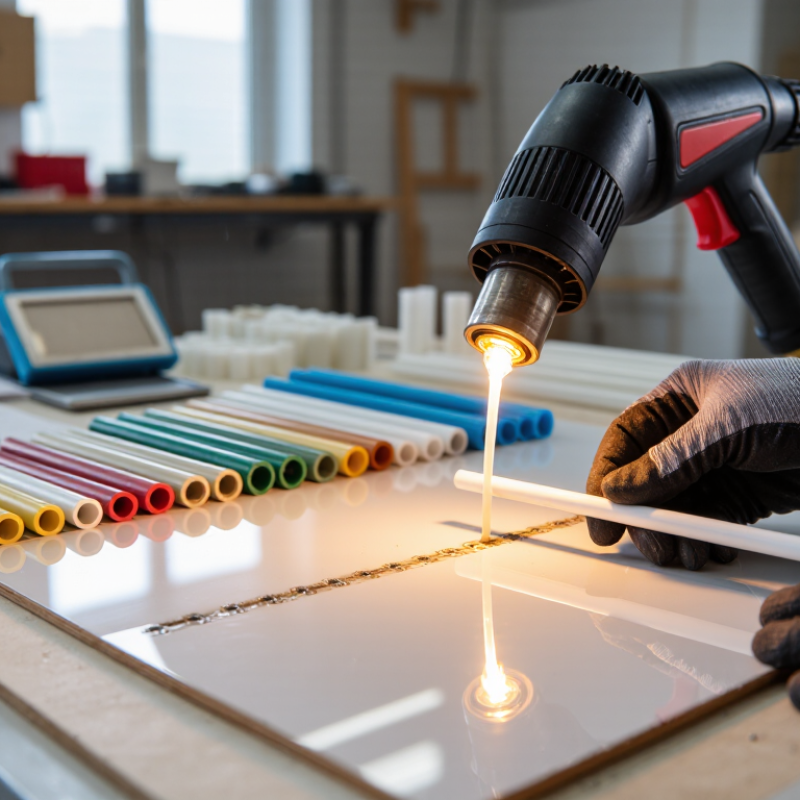
Understanding Polymer Welding Rod Types and Material Compatibility
How to Choose the Right Polymer Welding Rods?
Understanding polymer welding rod types and material compatibility prevents weak joints, surface distortion, and costly rework. The rod should match the parent plastic, not merely its color or shape. Polyethylene rods suit polyethylene sheets, while polypropylene rods belong with polypropylene components. PVC, ABS, polyamide, and PVDF each require different welding temperatures and handling methods.
Check the material marking first. Look for resin codes, technical drawings, or supplier data. Filler content also matters. Glass-filled plastic may need a compatible reinforced rod, not standard resin. Mixing materials can create a joint that looks acceptable but cracks under bending. That mistake is easy to miss.
Cleanliness changes the result. Remove grease, oxidation, moisture, and loose particles before heating. Keep the rod dry, especially when working with moisture-sensitive polymers. Set the tool temperature according to the plastic’s processing range. Too little heat leaves poor fusion. Too much heat burns the surface or weakens the polymer. Test on a scrap piece first.
Color is not proof. I once treated a visual match as confirmation, but the repair failed after repeated flexing. That experience supports a stricter check: compare the rod grade, melt behavior, and base material before welding. A small test bead can reveal contamination, incorrect temperature, or poor compatibility before the final repair begins.
| Polymer Welding Rod Type | Common Applications | Recommended Base Material Compatibility | Typical Hot-Air Welding Range | Key Material Characteristics | Compatibility Level | Selection and Welding Notes |
|---|---|---|---|---|---|---|
| Polyethylene (PE-HD / HDPE) | Tanks, ducts, liners, pipework, containers and chemical-handling fabrications | Best with PE-HD or the same polyethylene grade. PE-LD and PE-HD should not be treated as fully interchangeable for demanding joints. | Approximately 260–300 °C | Excellent chemical resistance, low surface energy and relatively high thermal expansion | High when resin grade matches | Use a clean, oxidation-free surface. Match the rod to the sheet or pipe grade whenever possible; color alone is not a reliable identification method. |
| Polyethylene (PE-LD / LLDPE) | Flexible tanks, liners, geomembranes, films and low-pressure fabricated parts | PE-LD or LLDPE substrates with a compatible polyethylene rod | Approximately 240–280 °C | Flexible, tough and more compliant than high-density polyethylene | High with matching grade | Choose a rod with similar flexibility. A rigid PE-HD rod may produce a joint with different shrinkage and bending behavior. |
| Polypropylene (PP) | Process tanks, laboratory equipment, ducts, battery components and chemical-resistant fabrications | PP-H, PP-R or another compatible PP grade; use the same formulation where possible | Approximately 280–320 °C | Good chemical resistance, low density and higher service temperature than most polyethylene grades | High with PP substrate | Do not substitute PE rod for PP. Allow sufficient heat input for fusion without scorching, and account for PP's relatively high thermal expansion. |
| Polyvinyl Chloride, Unplasticized (PVC-U) | Pipes, valves, tanks, ducts, covers and rigid chemical-processing equipment | PVC-U only, using a compatible PVC-U rod | Approximately 250–300 °C | Rigid, weatherable and chemically resistant; can degrade if overheated | High with PVC-U | Avoid overheating because hydrogen chloride and other decomposition products may be released. Provide suitable ventilation and follow the material supplier's safety data. |
| Chlorinated PVC (CPVC) | Higher-temperature piping, chemical tanks, ducts and industrial process components | CPVC substrates with CPVC welding rod; PVC-U rod is not a general substitute | Approximately 270–320 °C | Higher heat resistance than PVC-U with similar sensitivity to thermal degradation | High only with CPVC | Verify the exact CPVC formulation and processing window. A visually similar PVC rod may create weak or poorly fused joints. |
| Polyvinylidene Fluoride (PVDF) | High-purity piping, semiconductor equipment, chemical tanks, pumps and aggressive-fluid handling systems | PVDF substrates with a compatible PVDF rod | Approximately 330–380 °C | Excellent chemical resistance, high purity and strong temperature performance | High with PVDF | Use clean tools and prevent contamination. The processing temperature is substantially higher than for PE, PP and PVC materials. |
| Acrylonitrile Butadiene Styrene (ABS) | Machine housings, ducts, covers, automotive components and general fabricated parts | ABS substrates with ABS rod; compatibility depends on the specific ABS formulation | Approximately 230–280 °C | Good impact resistance and machinability; sensitive to excessive heat and prolonged exposure | High with matching ABS | Use controlled heat and avoid burning the surface. Confirm compatibility when the substrate is flame-retardant, filled or impact-modified. |
| Polycarbonate (PC) | Guards, transparent panels, machine covers and impact-resistant components | PC substrates with PC rod; transparent grades require careful visual and thermal control | Approximately 270–320 °C | High impact strength and dimensional stability; can be sensitive to moisture during processing | High with PC | Dry moisture-sensitive material before welding when required. Excessive heat can cause discoloration, bubbling or loss of optical quality. |
| Polymethyl Methacrylate (PMMA / Acrylic) | Displays, covers, light panels, transparent guards and fabricated signage | PMMA substrates with PMMA rod; match cast or extruded grade where appearance matters | Approximately 250–300 °C | High optical clarity and weather resistance, but relatively brittle compared with polycarbonate | High with PMMA | Use low mechanical stress and controlled cooling. The welded area may become visible or lose optical clarity. |
| Polyamide (PA6 / PA66) | Mechanical parts, wear-resistant components, guards and selected industrial fabrications | Use the same polyamide family and grade where possible; PA6 and PA66 are not automatically interchangeable | Approximately 280–340 °C | Strong and wear-resistant, but hygroscopic and sensitive to moisture-related defects | Medium to high with controlled preparation | Dry the rod and substrate according to the material specification. Moisture can cause porosity, foaming and reduced joint strength. |
| Polyoxymethylene (POM / Acetal) | Low-friction components, gears, guides and precision mechanical parts | Generally limited to the same POM formulation and a process specifically validated for the application | Approximately 220–270 °C | Low friction and good dimensional stability, but difficult to weld reliably because of narrow processing tolerance | Low to medium | Use only with a validated procedure. Thermal decomposition can release formaldehyde, so temperature control, extraction and safety precautions are essential. |
| Thermoplastic Elastomer (TPE / TPU) | Flexible seals, hoses, protective covers and vibration-isolating components | Use a rod from the same elastomer family and hardness range; TPU, TPE-S and TPO are not universally compatible | Approximately 210–280 °C | Flexible and elastic, with properties strongly affected by formulation and hardness | Medium to high with exact grade match | Match hardness, polarity and melt behavior. Test a sample joint because nominally similar elastomers can have substantially different welding performance. |
| Fluoropolymer Rods (PTFE and related materials) | Specialized seals, linings and high-chemical-resistance components | Usually not suitable for conventional hot-air rod welding; PTFE is generally non-melt-processable by standard welding methods | Not applicable for ordinary hot-air rod welding | Very low surface energy and exceptional chemical resistance | Generally unsuitable | Do not select a conventional fluoropolymer rod without confirming the exact resin and joining method. Specialized sintering, thermal welding or mechanical designs may be required. |
| General guidance only: actual welding temperature, air flow, rod diameter, joint design and travel speed depend on resin grade, filler content, sheet thickness, equipment and manufacturer-specific processing data. For critical applications, identify the base polymer, confirm compatibility with a technical data sheet, and validate the joint using the applicable test method. | ||||||
FAQS
Check hidden markings such as PP, PE, PVC, ABS, or PA.
Inspect a hidden edge for texture, flexibility, and controlled softening.
No. Odor is unreliable and should never be the only test.
Use professional testing for critical parts or confusing material blends.
Review its resin code, batch details, diameter, and color consistency.
Keep rods sealed, dry, and away from sunlight, oils, and workshop fumes.
The bead should appear even, fused, and free from bubbles or burnt edges.
Test a sample with bending, peeling, or tensile checks suited to the part.
Conclusion
Choosing the right Polymer Welding Rods begins with understanding the material and structure of the plastic being repaired. Different polymers require compatible welding rods to achieve proper bonding, so first identify the base material through markings, technical information, or a reliable material test. Once the plastic composition is confirmed, select a rod with the correct diameter and shape for the repair area and ensure it works with the available welding equipment. Proper matching helps create a stable weld and reduces the risk of weak joints, warping, or surface damage.
The intended application also determines the best rod characteristics. Consider the required welding temperature, mechanical strength, flexibility, and resistance to chemicals, heat, moisture, or impact. High-quality rods should have consistent dimensions, clean surfaces, and suitable storage conditions to prevent contamination or moisture absorption. Before completing the repair, test the welding performance on a sample whenever possible. Evaluating flow, adhesion, cooling behavior, and final strength will help confirm that the selected rod meets the project’s practical requirements.
